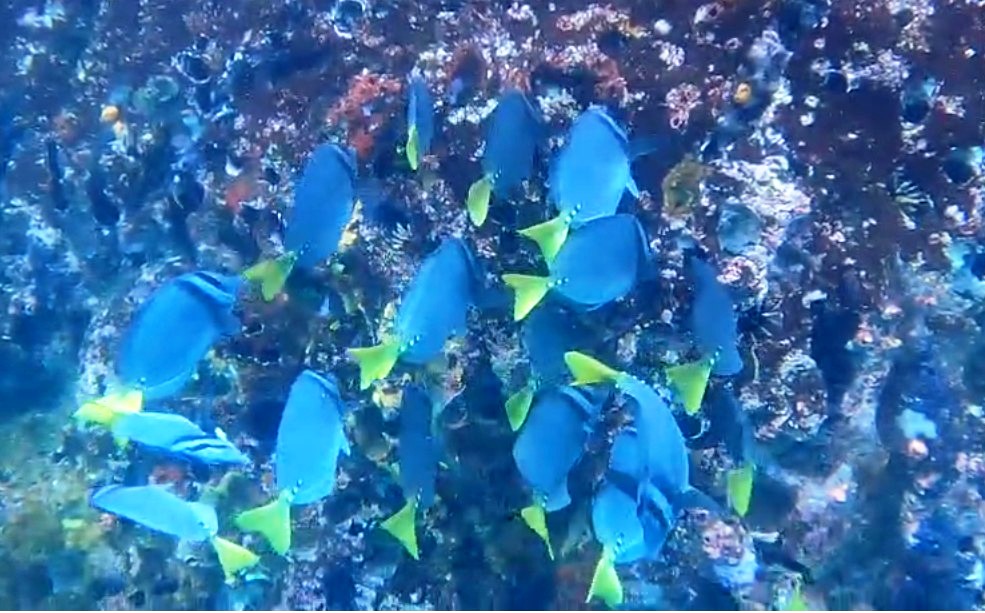
The Galapagos Islands are easier to visit than most people think, but knowing a few first time details can save you a lot of headaches.
Planning a trip to the Galapagos Islands can feel confusing fast. You want the wildlife, beaches, volcanic landscapes, and turquoise water — but then come the questions: Do you need a cruise? Which islands can you stay on? How do ferries work? Is the Galapagos only for luxury travelers? This Galapagos travel guide will answer those questions and more.
Bill and I spent 30 days in the Galapagos on a land-based trip, staying on Santa Cruz, Isabela, and San Cristobal. That gave us time to figure out what first-time visitors really need to know, what sounds more complicated than it is, and what I wish I had understood sooner.
This Galapagos travel guide pulls together the practical tips and first-hand advice that will make your first trip feel less overwhelming, so you can stop piecing together answers and get back to planning a Bucket List trip that feels as special as you hoped.
Galapagos Quick Facts for First-time Visitors
Before we get into the details, here are a few Galapagos Islands facts that will help you get your bearings quickly.
- Official country: Ecuador
- Official language: Spanish
- Currency: US dollar
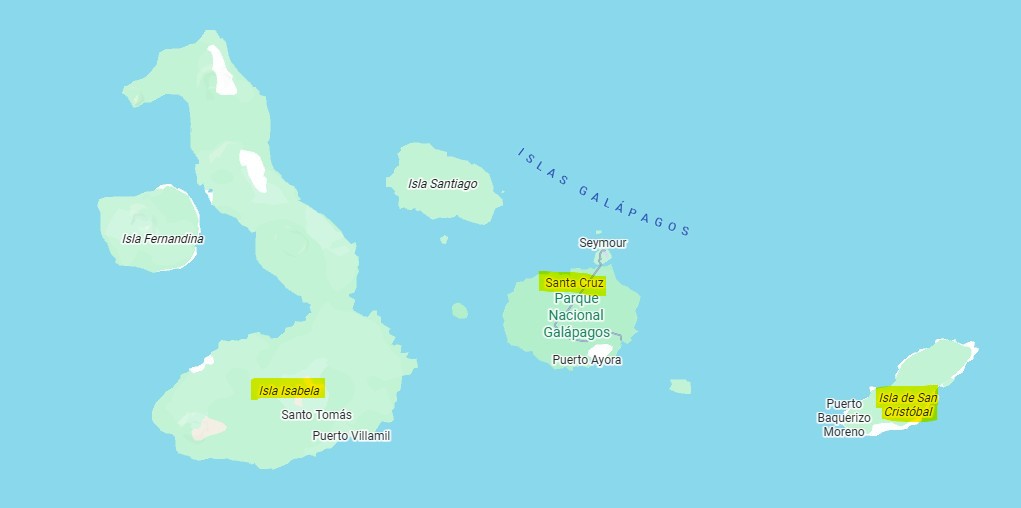
- Main islands: Santa Cruz, Isabela, and San Cristobal
- Traveling between islands: Passenger ferries take you between Santa Cruz, Isabela, and San Cristobal
- Known for: Wildlife, snorkeling, beaches, volcanic landscapes, photography, and once-in-a-lifetime nature experiences
Kari’s Travel Tip: The Galapagos Islands feel much easier once you understand the basic island setup. Most land-based travelers are really planning around three main islands: Santa Cruz, Isabela, and San Cristobal with day trips to other islands. Once that clicked for me, the whole trip felt a lot less overwhelming.
Where are the Galapagos Islands Located?
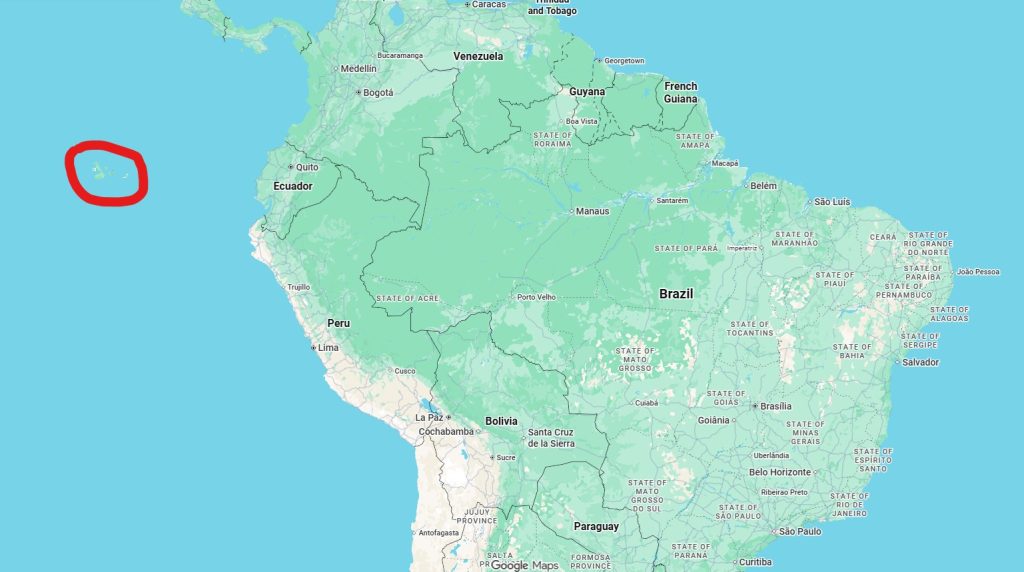
The Galapagos Islands are part of Ecuador, but they sit in the Pacific Ocean, about 600 miles off the coast, which makes planning this different from a typical beach or island vacation.
The Galapagos are also near the equator, which helps explain the mild year-round temperatures and strong sun. This is one of those places where you can look at a map, and still not realize how remote the islands actually are.
If you have wondered how many Galapagos Islands there are, there are more than 100 named islands, islets, and rocks. Land-based travelers focus on the three main islands: Santa Cruz, Isabela, and San Cristobal and take day trips to visit other islands.
Just over 30,000 people live in the Galapagos Islands and more than 200,000 tourists visit each year. So while the Galapagos can feel wild and remote, you are visiting real communities, not just a protected wildlife destination.
Because the Galapagos Islands are a UNESCO World Heritage Site, visiting comes with extra rules, protected areas, and a responsibility to give wildlife plenty of space. Keep on reading!
Do You Need a Cruise to Visit the Galapagos?
No, you do not need a cruise to visit the Galapagos Islands.
A liveaboard cruise can be wonderful for reaching more remote areas, and for some travelers, it is the right choice. But it is not the only way to experience the Galapagos.
Bill and I chose a land-based trip, staying on the islands and booking day tours to reach other islands and wildlife sites. That gave us more control over our schedule, budget, and downtime between big adventure days.
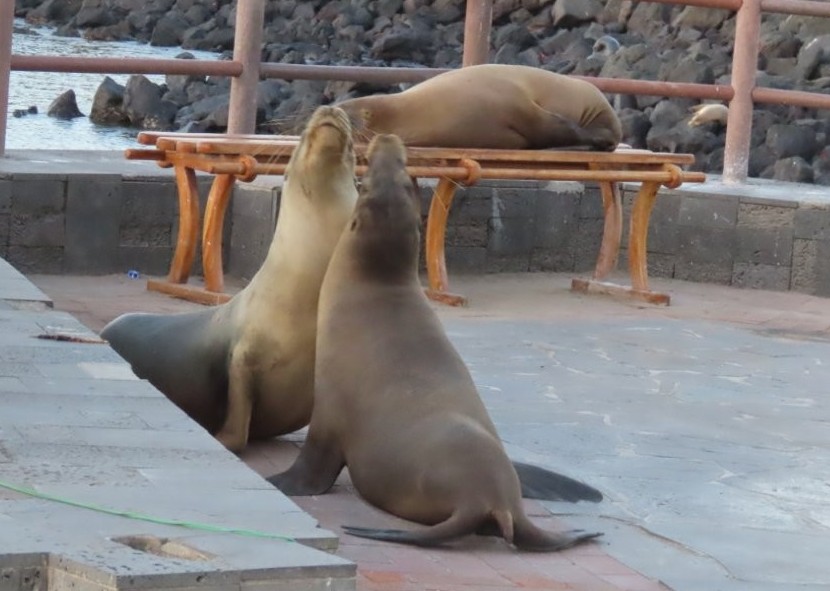
It also let us experience the towns themselves — walking to beaches, eating at local restaurants, watching sea lions take over benches, bird-watching, and having those everyday “only in the Galapagos” moments.
If you are deciding between a cruise and island hopping, my Galapagos Liveaboard vs Land-based Trip guide breaks down the pros and cons of both.
Kari’s Travel Tip: If you like the idea of choosing your own tours, building in rest days, and mixing paid activities with free or low-cost experiences, a land-based trip can work beautifully. Here’s how to build an Itinerary that fits your travel style.
Galapagos Travel Guide Basics: How to Get There
Getting to the Galapagos Islands takes a little extra planning because you cannot fly there directly from the United States or Canada. First, you fly to mainland Ecuador, usually Quito (UIO) or Guayaquil (GYE), then take a domestic flight to the islands.
There are two main Galapagos airports: Baltra (GPS) and San Cristobal (SCY). Baltra is the airport most travelers use for Santa Cruz, but it is not actually on Santa Cruz. After landing, you still need a bus, a ferry, and another bus or taxi to reach Puerto Ayora.
San Cristobal is easier. The airport is right near Puerto Baquerizo Moreno, so getting into town is quick.
Before flying to the Galapagos, you also need to complete the extra arrival steps: getting your Transit Control Card, having luggage inspected for restricted items, and paying the national park entry fee when you arrive. I cover all of that in my guide: How to Get to the Galapagos Islands – What No One Tells You
Kari’s Travel Tip: Do not treat your Galapagos flight like a normal domestic flight. Build in extra airport time in Quito or Guayaquil for paperwork, luggage inspection, and payment steps. This is one place where the trip starts before you even board the plane.
Getting Around on the Islands
Getting around the Galapagos is simpler once you understand the basic rhythm.
Walking is the main way to get around Santa Cruz, Isabela, and San Cristobal. We walked constantly — to restaurants, beaches, tour offices, docks, shops, and free activities. Once you are settled into town, day-to-day exploring feels pretty easy.
Taxis are useful for airport transfers, ferry docks with luggage, or places farther from town like the Highlands. You do not need to rent a car in the Galapagos.
Ferries are the main way to travel between Santa Cruz, Isabela, and San Cristobal. They are high-speed passenger boats, not big comfortable ferries, so it helps to know what to expect. Galapagos Ferry Guide – What We Wish We Had Known.
Day tours are how land-based travelers reach surrounding islands and more remote visitor sites like Bartolomé, Española, North Seymour, Kicker Rock, Los Túneles, Las Tintoreras, and Punta Pitt.
And then there are water taxis — the small boats that shuttle you from piers to ferries or day tour boats. They are a true Galapagos experience.
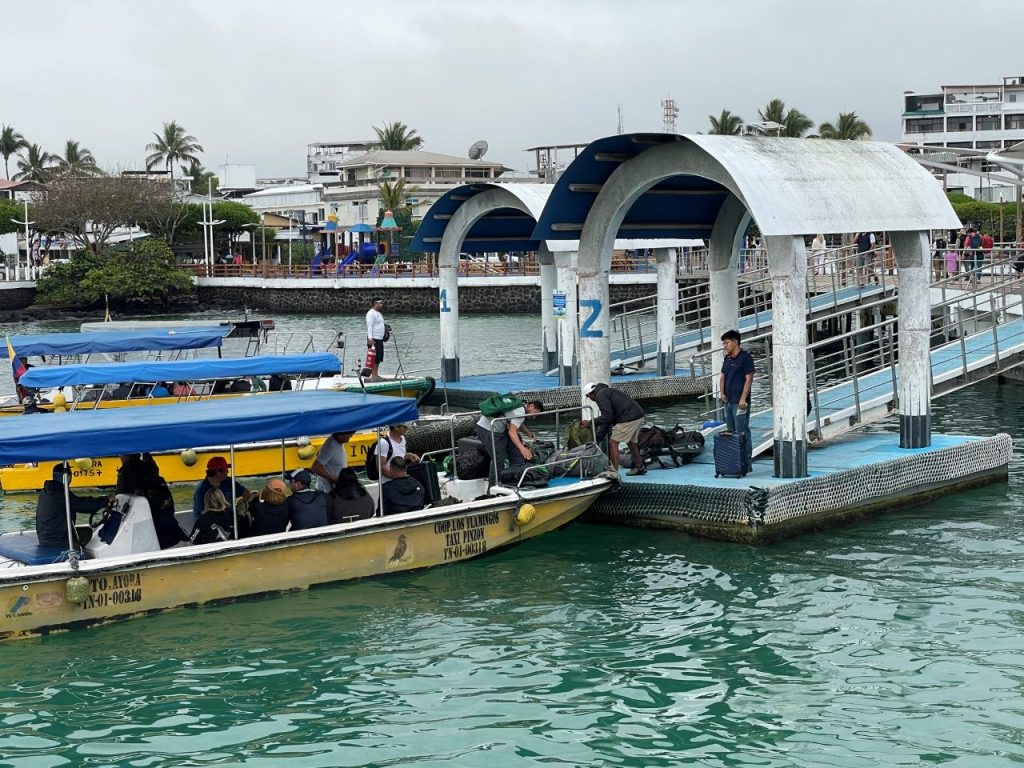
If you are trying to decide how long to stay and which islands to visit, my Galapagos Itinerary Guide walks through 5, 7, 10, and 14-day trip options.
Galapagos Travel Guide for Money, Cash, and Credit Cards
The easiest money surprise in the Galapagos is a good one: Ecuador uses the US dollar. If you are coming from the United States, there is no currency conversion to figure out.
But you still need cash. The paper bills are the same as the US, but Ecuador has its own coins, which you will often get back in change.
Credit cards are accepted at many hotels, tour offices, and some restaurants, but cash is still important. You will want small bills for taxis, water taxis, tips, small restaurants, ferries, snacks, mini-markets, entrance fees, and random little expenses.
Do not assume you can pay for everything by card. ATMs are available in the main towns, but they can run out of cash, so do not wait until the last second before a ferry, tour, or early-morning departure.
A few simple money tips:
- Make sure your bills are crisp, uncreased, and free of tears or markings. They will reject them if they are not clean.
- Bring more small bills than you think you need.
- Do not rely only on credit cards.
- Ask your lodging or tour office if they prefer cash.
- Plan ahead in case an ATM is out of money.
- Use larger bills at bigger businesses, and save smaller bills for taxis and tips.
Kari’s Travel Tip: Small bills are gold in the Galapagos. We used cash constantly, and it was much easier when we did not have to ask someone to break a $50 or $100.
Tipping in the Galapagos Islands
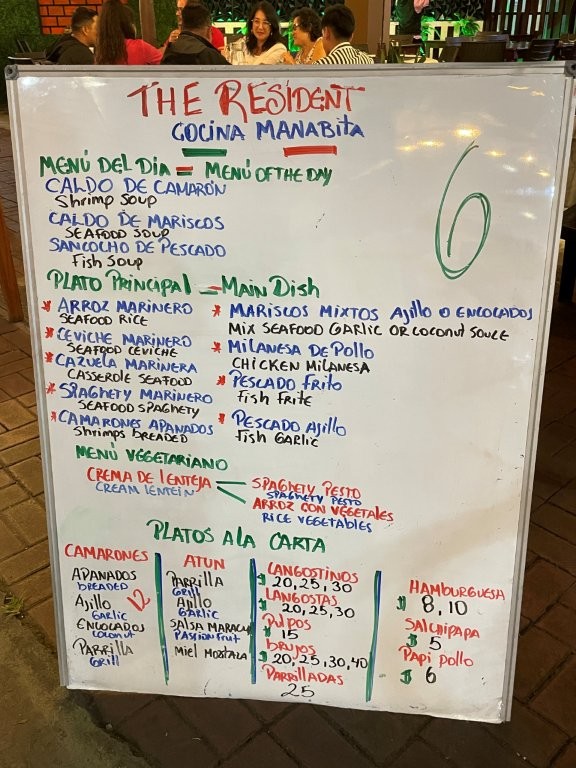
Tipping in the Galapagos is appreciated, especially for guides, boat crews, drivers, and hotel staff who help make your trip run smoothly. After a day trip, it is customary to tip the main naturalist guide $10-20 per person. If there is a boat crew, there may be a separate tip for them.
Restaurants can vary. Some may add a 10% service charge, while others may not, so I always checked the bill before deciding what to leave.
Kari’s Travel Tip: Keep a small stash of tip money separate from your main cash. After a long boat tour, wet landing, or early-morning ferry, the last thing you want to do is dig through your backpack looking for bills.
For a full budget breakdown, my Galapagos Trip Cost Guide shares what we spent over 30 days and where the money actually went.
Is the Galapagos Safe for Travelers?
The Galapagos Islands felt very safe to us. We walked constantly, including early in the morning and after dinner, and I never had the uneasy feeling I sometimes get in busier tourist destinations.
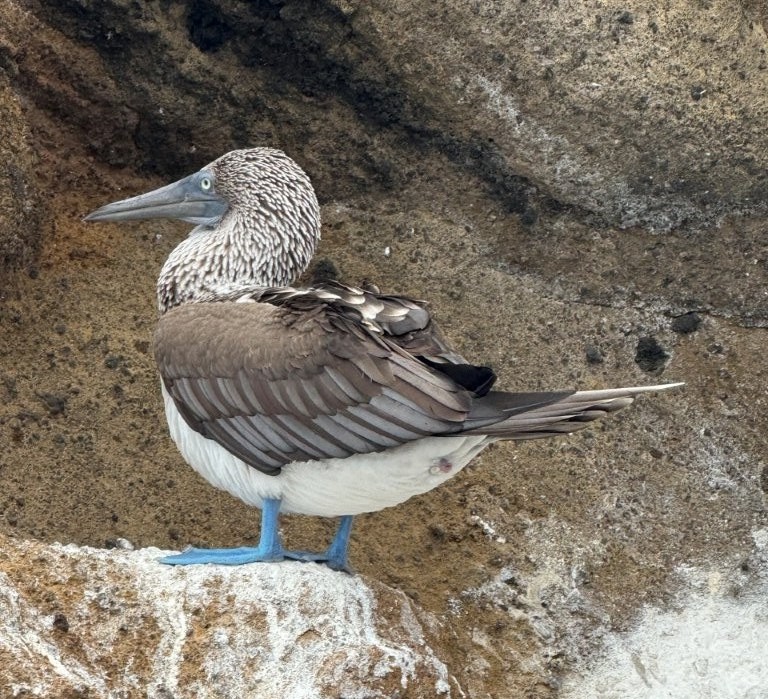
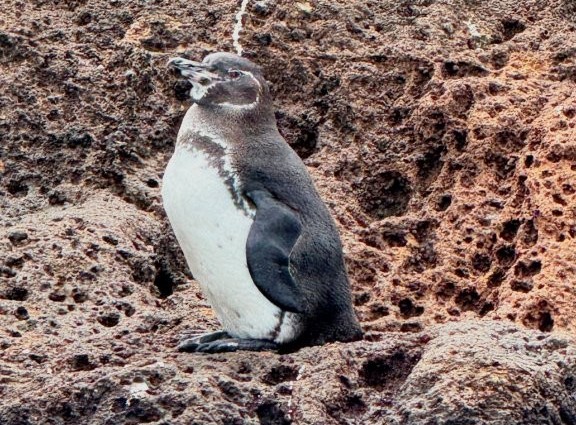
Still, use normal travel common sense. Watch your bag at beaches, docks, restaurants, and tour meeting points. Do not leave valuables unattended while you swim or snorkel, especially when everyone is distracted by sea lions, marine iguanas, or Blue-footed Boobies.
For most visitors, the bigger safety concerns are not crime. They are sun exposure, dehydration, seasickness, slippery lava rock, strong currents, and getting too close to wildlife.
The Galapagos feel magical because they are still wild. Trails can be rocky, boat landings can be wet, and snorkeling conditions can change quickly. Listen to your guide, follow national park rules, and do not push yourself just because something looks easy in photos.
Kari’s Travel Tip: Galapagos wildlife does not act afraid of people, which is part of what makes the islands so incredible. But that does not mean you should move closer. Give animals space, stay on marked trails, and let the moment happen naturally.
Galapagos Travel Guide: Language Tips
The official language of Ecuador, including the Galapagos Islands, is Spanish.
In the main tourist areas, some hotel staff, tour operators, and restaurant workers speak a little English. But we still ran into plenty of moments where a little Spanish, a translation app, or a lot of smiling and pointing made life easier.
On a guided tour, the guide will always provide information in both English and Spanish.
A few helpful Spanish words and phrases:
- Yes = Sí
- Please = Por favor
- Thank you = Gracias
- Hello = Hola
- Goodbye = Adiós
- Good morning = Buenos días
- Good evening = Buenos naches
- Bathroom = Banos
- Playa = Beach
- Mirador = Overlooks or Viewpoint
- Sendero = Trail
Google Translate
Google Translate is one of my most-used travel apps, and you should for sure download it before going to the Galapagos.
I used it for menus, signs, food labels, simple questions, and quick conversations when my Spanish was not good enough for what I needed to ask. The camera feature is especially helpful when you are standing in a mini-market trying to figure out what something is.
Kari’s Travel Tip: Download Spanish for offline use before you leave home. Wi-Fi and cell service in the Galapagos can be inconsistent, and you do not want your translation app to be useless right when you need it.

Time Zone, Dates, and Phone Basics
The Galapagos Islands are one hour behind mainland Ecuador. During Daylight Savings Time in the US, they are the same as the Mountain Time zone. When Daylight Savings ends in the US, they are the same as the Central Time zone.
Date Format
Ecuador uses the DD-MM-YYYY date format, which can be easy to mix up if you are used to the US format of MM-DD-YYYY.
Kari’s Travel Tip: Always double-check passport dates, birth dates, ferry tickets, and flight details anytime you fill out a form or confirm a booking. Make sure you match the format they are asking for.
International Phone Code
Ecuador’s country code is +593, followed by a 9-digit local number
To type the plus sign on most phones, press and hold the zero key for 1-2 seconds.
WhatsApp is the primary app many Ecuadorians use for calls, texts, and file sharing. You will likely need it to communicate with hotels, tour companies, guides, and drivers.
Download it before your trip and connect it to the phone number you will use while traveling.


Airalo eSIM
I use an Airalo eSIM when traveling abroad so I can use data without paying international roaming charges on my US based carrier.
Airalo eSIMs are usually inexpensive, and you can choose either an Ecuador plan or a regional Latin America plan if you are visiting multiple countries. Learn more about them here.
Cell service in the Galapagos can be spotty, and Wi-Fi is not always strong, so having data was still helpful for maps, WhatsApp, Google Translate, and checking tour details on the go.
Kari’s Travel Tip: Install and activate your eSIM before leaving home, and confirm your phone is unlocked before you buy the eSim.
Galapagos Travel Guide: Weather Things to Know
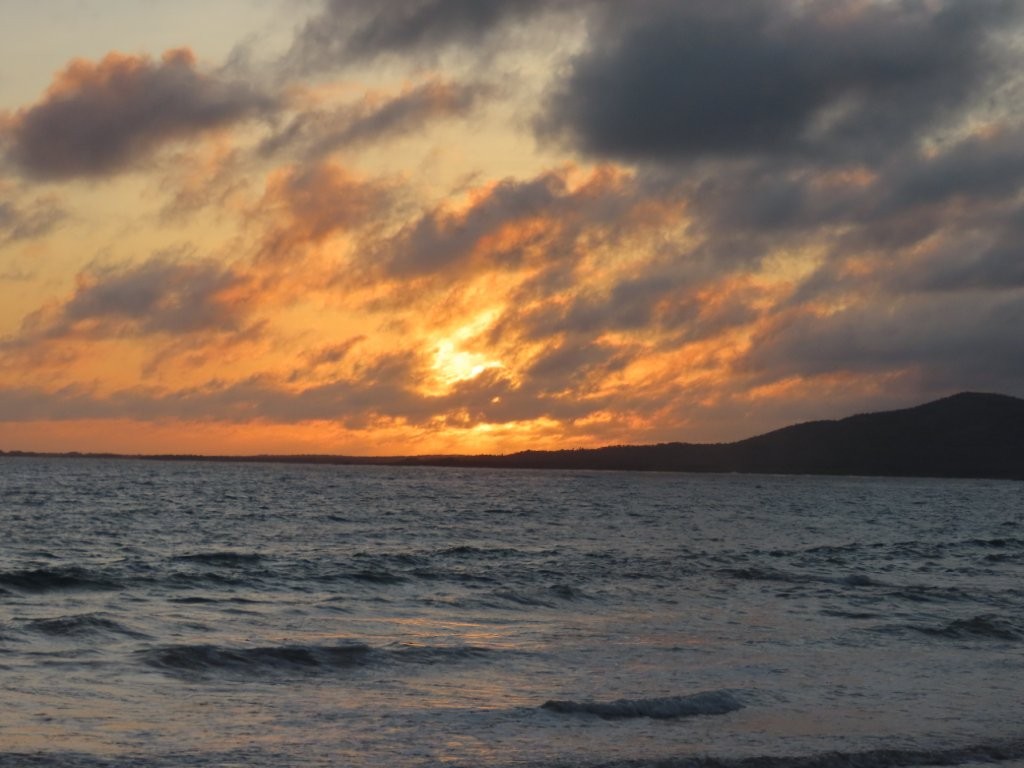
The Galapagos Islands are near the equator, so the weather is fairly constant year-round with temps ranging from 77-87 degrees Fahrenheit, but that does not mean every day feels the same.
There are two broad seasons: a warmer, wetter season (December – May) and a cooler, drier season (June – October). You can still have sun, clouds, wind, and rain in the same trip, so do not pack as if the Galapagos are a simple tropical beach vacation.
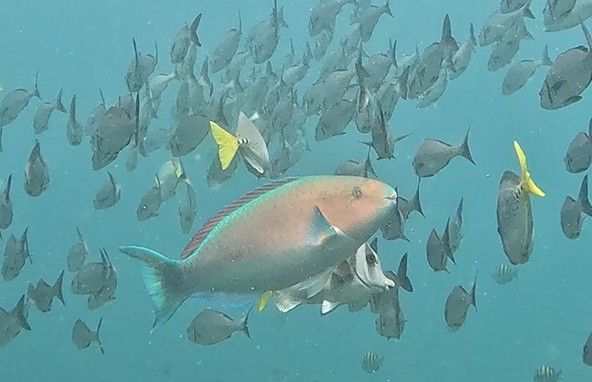
The ocean can also feel cooler than people expect, especially during the cooler season. If snorkeling is a big part of your trip, pay attention to whether your tour includes a wetsuit or if you need to rent one. We were there in December and I thought the water was quite cold.
A few quick weather tips:
- Pack sun protection, even on cloudy days. From my research, the best reef safe sunscreen contains Zinc Oxide and does not contain Oxybenzone or Octinoxate. I brought this one called Blue Lizard.
- Bring a light rain jacket and pants for early mornings and evening activities
- Expect wind on boats and on the beaches
- Do not assume every island will feel exactly the same
- Plan for cooler water than you might imagine near the equator
Kari’s Travel Tip: The Galapagos sun is strong. Even when the air feels comfortable, you can burn fast on boats, beaches, and exposed lava rock.
If your dates are flexible, my Best Time to Visit Galapagos Guide explains how weather, water temperature, and wildlife timing can affect your trip.
And my Galapagos Packing Guide covers what I’d bring again and what I’d leave at home.
Water, Toilets, and Outlet Things to Know in the Galapagos Islands
Can You Drink the Water in the Galapagos?
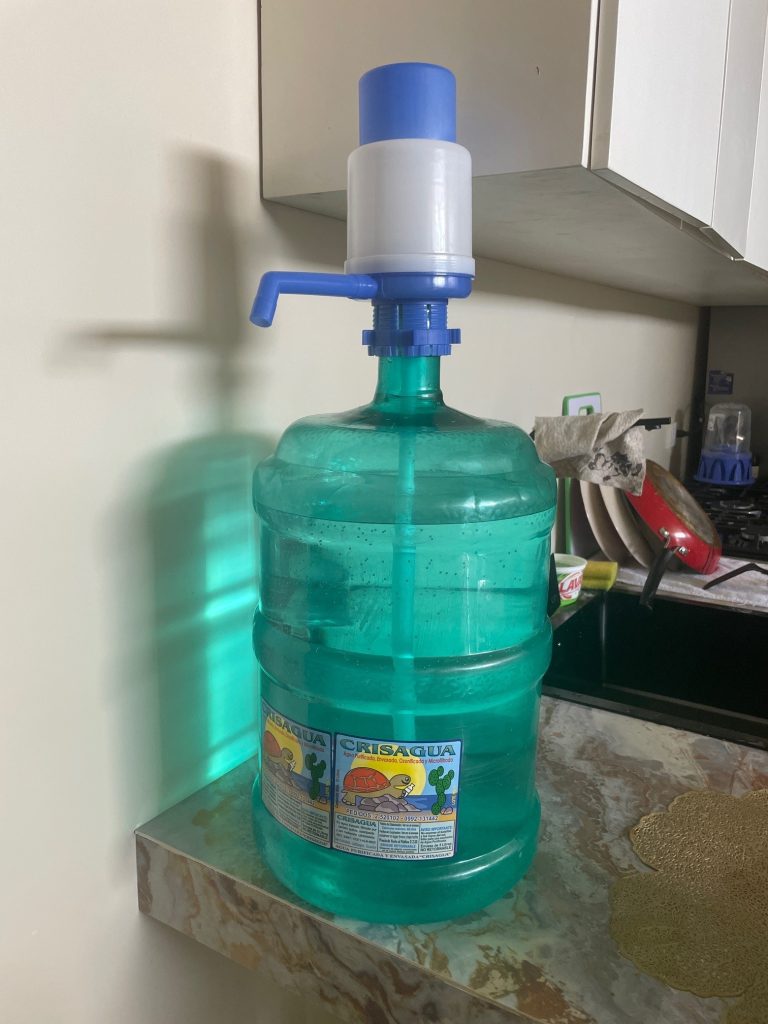
Do not drink the tap water in the Galapagos Islands unless your lodging specifically tells you it is filtered and safe.
Most hotels and rentals provide filtered water or large refill jugs – all of our lodging places did. And you can also buy bottled water in mini-markets. We carried refillable bottles everywhere, especially for boat tours, beach walks, and sunny hikes.
Can You Flush Toilet Paper?
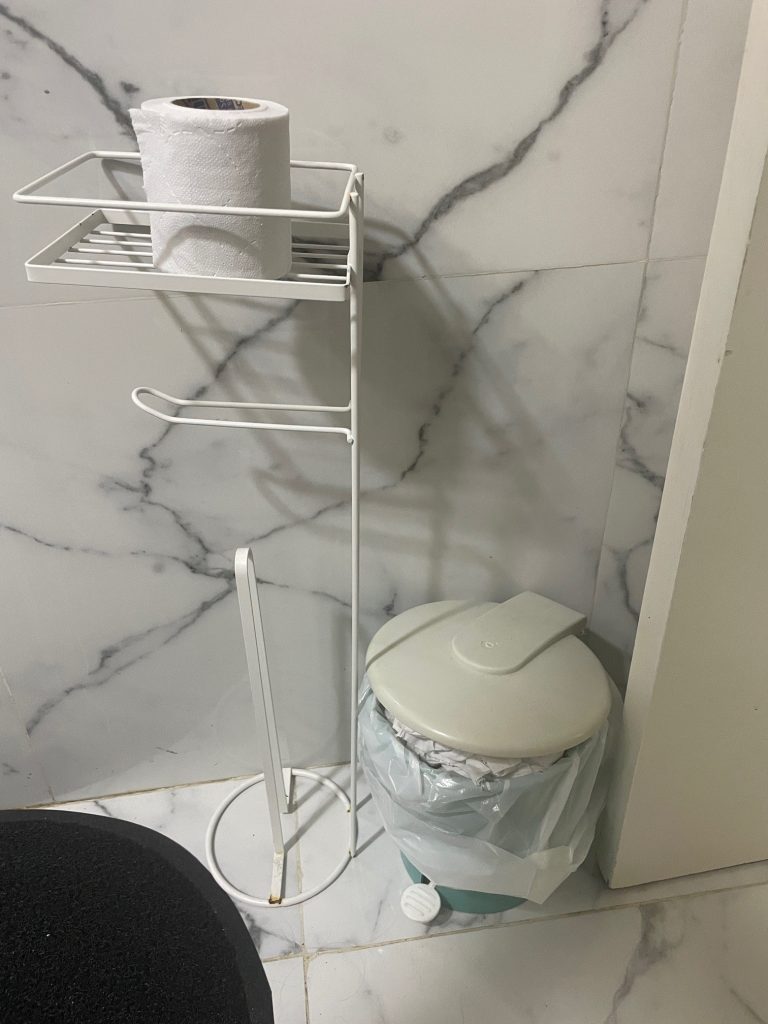
In most places in the Galapagos, toilet paper goes in the trash can, not the toilet.
Sometimes there is a sign. Often there is not. If you see a small covered trash can next to the toilet, that is usually your clue. I think all they just assume that we know that you’re not supposed to flush it? This is common across much of South America.
This is one of those little island details that is not glamorous, but you definitely want to know it!
Kari’s Travel Tip: When in doubt, do not flush it. Island plumbing can be sensitive, and it is better to follow the local norm than create a problem.
Do You Need a Plug Adapter?
If you are coming from the United States or Canada, you probably do not need a plug adapter.
Ecuador uses the same Type A and Type B outlets used in the US, so our regular chargers worked without an issue. I still recommend bringing a small power bank because you may be out all day on tours, ferries, or long walks without an easy place to recharge.
Galapagos Travel Guide: Entry Rules and Travel Requirements
For US travelers, entering Ecuador is usually straightforward. You typically do not need a tourist visa for stays under 90 days, but you do need a valid passport and proof of onward or return travel. Check current State Department guidance before you go because rules can change.
Don’t panic if Ecuador has a higher security advisory than expected. Those warnings usually apply to specific mainland areas, not the Galapagos. We felt very safe on the islands.
The Galapagos have extra steps because they are protected. Before your flight from mainland Ecuador, you’ll need a Transit Control Card and luggage inspection for restricted items like certain foods, seeds, plants, or anything that could harm the ecosystem.
When you arrive, you’ll also pay the Galapagos National Park entrance fee. This is separate from your flight, hotel, or tours, so check the current amount and payment rules before your trip.
Kari’s Travel Tip: The Galapagos arrival process is not hard, but it has more steps than a normal flight. Give yourself time, keep your documents easy to reach, and do not pack food in your luggage unless you know it is allowed. I explain all of these details in my How to Get to the Galapagos Guide
Kari’s Travel Tip: We always register our trips in the STEP (Smart Traveler Enrollment Program) run by the US State Department. They’ve sent us helpful alerts about emergencies, protests, risk changes, and embassy updates while traveling.
Conclusion: Is the Galapagos Worth Visiting?
Yes, the Galapagos are absolutely worth visiting.
This is one of those Bucket List destinations that feels completely different from anywhere else Bill and I have traveled. Where else can you walk past sea lions on a town bench, snorkel with marine iguanas, watch Blue-footed Boobies from a trail, and end the day eating dinner in a real island community?
The Galapagos can feel intimidating at first, but the trip gets easier once you understand the basics. You do not need a cruise, a rental car, or every island on your itinerary to have an incredible trip.
I hope this Galapagos travel guide makes your first visit feel less confusing and a lot more exciting. For help choosing your trip length and islands, my Galapagos Itinerary Guide walks you through an easy decision process based on your travel style.
More Galapagos Travel Guides
Here are some more posts about visiting the Galapagos Islands. If you’d like to receive emails when I’ve posted new content to the site, please complete the short form above.
Overall Galapagos Planning Guides
- First Time Galapagos Travel Guide: What I Wish I Knew Before Going
- Galapagos Itinerary: How Many Days Do You Really Need?
- How to Choose the Best Galapagos Snorkeling Tour for YOU
- Best Time to Visit Galapagos: What to Know Before You Go
- Galapagos Trip Cost: What We Spent For 30 Days (It’s Less Than You’d Think)
- What to Pack for the Galapagos – The Island-Hopping Packing List
- How to Get to the Galapagos Islands: What No One Tells You
- Galapagos Ferry Guide: What We Wish We Had Known
- Galapagos Liveaboard vs Land-Based Trip – Which Is Right for You
Santa Cruz Island Galapagos Guides
- Best Things To Do In Santa Cruz Galapagos + Tours Worth Booking
- Where To Stay In Santa Cruz Galapagos: 9 Hotels For Every Budget
- All The Best Low-Cost And Free Things To Do On Santa Cruz Island
- Bartolomé Island Tour Review: Bucket List Must-Do or Overrated?
Isabela Island Galapagos Guides
- Best Things To Do In Isabela Galapagos: Snorkeling, Beaches & Volcanoes
- Where to Stay in Isabela Galapagos: Best Hotels for Every Budget
- Best Low-Cost and Free Things to Do on Isabela Island Galapagos
- Los Túneles Tour Review: Did It Live Up To The Hype?
- Las Tintoreras Tour Review: Is It the Right Snorkeling Tour for You?
- Concha De Perla: Free DIY Snorkeling On Isabela Island Galapagos
San Cristobal Island Galapagos Guides
- Best Things to Do in San Cristobal Galapagos: Tours, Beaches & Wildlife
- Where To Stay in San Cristobal Galapagos: Best Hotels For Every Budget
- Budget Friendly And Free Things To Do On San Cristobal Island
- Kicker Rock Snorkeling Tour Review: Did It Live Up to the Hype?
- Española Island Tour Review: Rare Birds and Epic Snorkeling
- Punta Pitt Tour Review: The Remote Galapagos Tour Most Visitors Overlook
