You don’t need expensive tours every day to enjoy Santa Cruz Island in the Galapagos. There are plenty of budget-friendly and free things to do!
We didn’t exactly have a smooth arrival to Santa Cruz Island in the Galapagos. After two aborted landings and an unexpected return to Guayaquil, we finally made it late, tired, and relieved.
But the next morning, everything changed.
We walked down to the Puerto Ayora waterfront, and within minutes I was watching sea lions lounge on benches, pelicans circle overhead, and fishing boats bob in the harbor. After years of having the Galapagos Islands on my Bucket List, I remember thinking, OMG we are finally here. And some of those first unforgettable moments didn’t cost a thing.
If you’re looking for free things to do on Santa Cruz Island, this guide will help you find the easy wildlife encounters, waterfront walks, and budget-friendly experiences that are actually worth your time.
Good to know:
- Avenida Charles Darwin is the main street in town, running from the Ferry Pier all the way to the Charles Darwin Research Center.
- Because the Galapagos Islands are a protected UNESCO World Heritage Site, remember to give wildlife space, stay on marked paths, and never touch or feed animals.


PLAN YOUR TRIP WITH OUR
FAVORITE TOOLS
– Best Lodging site: Booking.com
– Book Day Tours here: Viator.com
– Rent Cars here: DiscoverCars.com
Best Waterfront Free Things to Do on Santa Cruz Island:
Santa Cruz may be the busiest of the three main Galapagos islands, but the Puerto Ayora waterfront is still packed with free wildlife moments if you slow down and look around.
1) Walk the Waterfront in Puerto Ayora
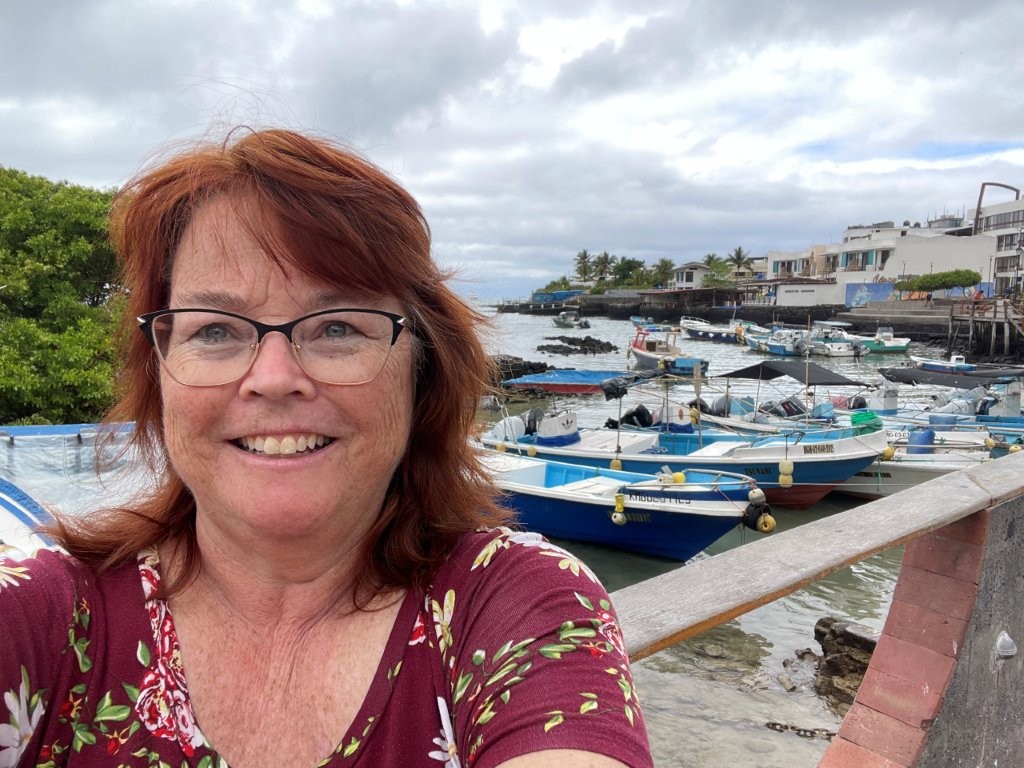
Start at the far western end of Avenida Charles Darwin near the ProInsular Market, which is also the biggest grocery store we found on Santa Cruz. This is where you can see tons of birds and sea lions and iguanas and crabs hanging around.
Spend some time around the Malecón pier, the Gus Angermeyer Ferry Pier, and Parque San Francisco watching the sharks, turtles and fish swim below, and the sea lions and birds hold court above.
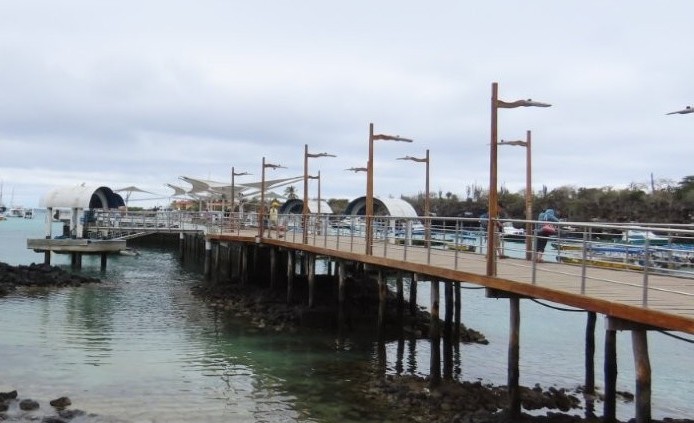
Continue down Avenida Charles Darwin. After a short stretch (about 350 meters) where you lose sight of the water, turn right at the Mercado Artesanal and follow the path back toward the waterfront.
Just past the Hotel Solymar Galapagos, turn right and walk through Plaza Pelican Bay, then join the boardwalk on the far side. This was one of my favorite little stretches for water views, birdwatching in the mangroves, and looking down into the water. I was surprised to see fish and even a sea turtle swimming below!
From there, continue to the Monumento al Pescador, a waterfront park with sculptures, benches, sea lions, and the main fish market nearby.
If you still have energy, keep walking toward the Ceramic Garden, Playa de la Estación, and Playa La Ratonera.
2) See How the Sea Lions Have Taken Over Puerto Ayora
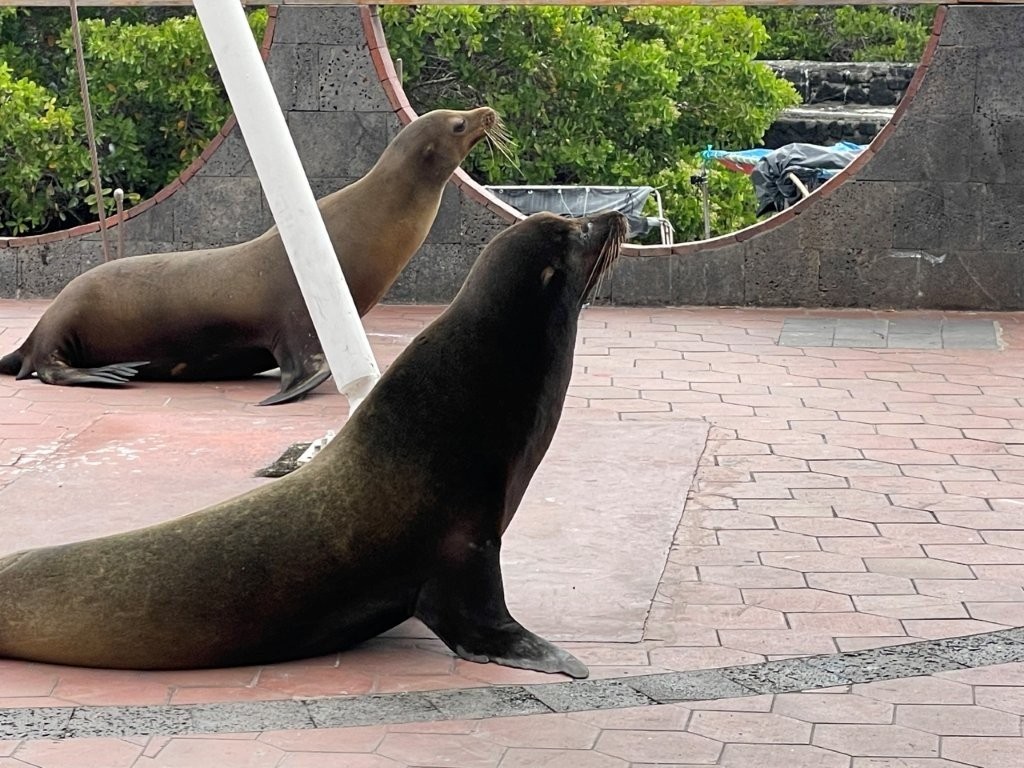
Sea lions are everywhere in Puerto Ayora — on benches, sidewalks, piers, and right in the middle of public spaces like they own the place.
After a while, you might start recognizing individual ones and watching their little routines. Just pay attention when you walk, because they really do take over the waterfront.
Best places to see them? At Monumento al Pescador and the Gus Angermeyer Pier.
3) Watch the Fish Market and the Lesser-Known Second Market
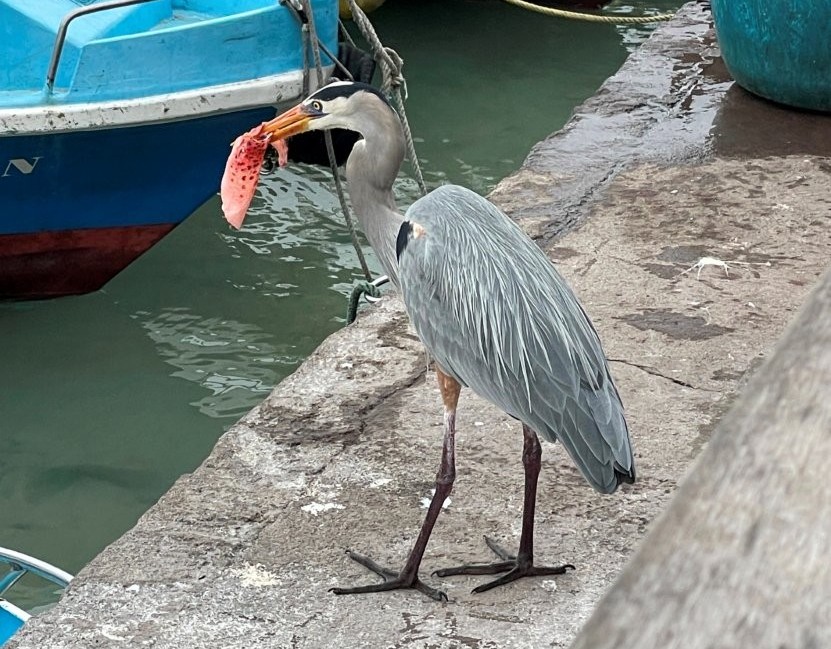
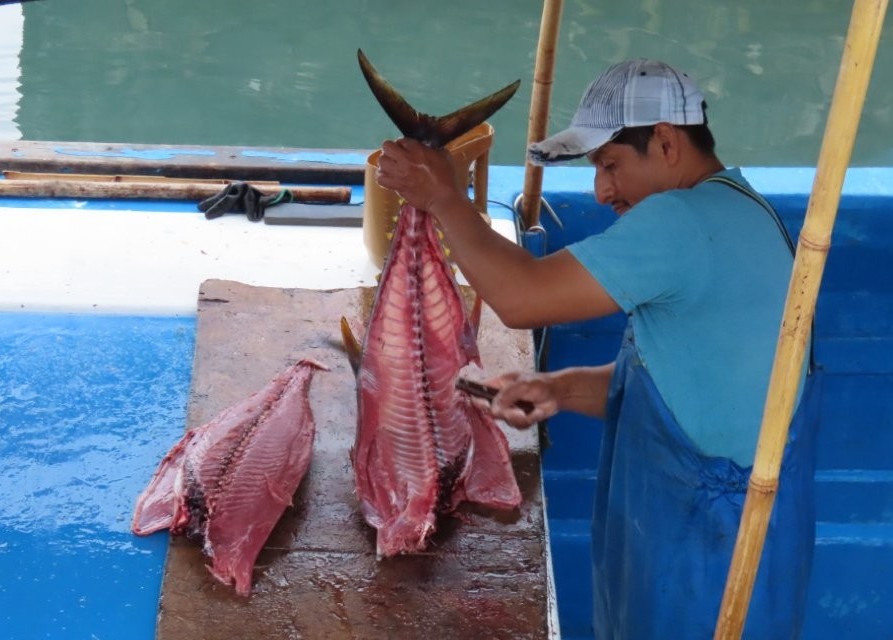
Most visitors know about the main fish market, marked on Google Maps as Muelle de Los Pescadores. It’s worth seeing, but it can get crowded with tourists watching the fishermen cut up their catch while pelicans and sea lions wait for scraps.
The quieter second fish market is at the beginning of Avenida Charles Darwin, right next to ProInsular Grocery Store. We actually liked this one better because it was less crowded and had a wider variety of birds hanging around. It doesn’t really have a name and it’s not on Google Maps, but you can’t miss it on the left if you’re standing at the Proinsular Grocery store.
If you’re squeamish or vegan, this may not be your favorite stop. But if you’re interested in real working waterfront life, it’s one of the most fascinating free things to do on Santa Cruz Island.
4) Watch Baby Sharks from the Ferry Pier
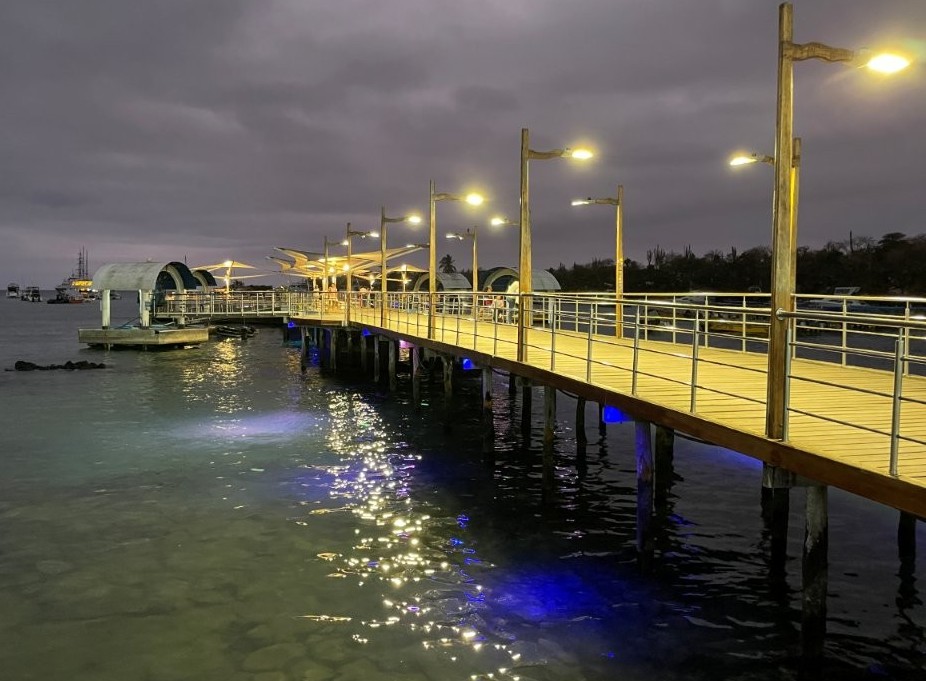
At the ferry pier, look down into the water and you may see baby sharks swimming below.
At night, the pier lights make them glow in the water, which makes the whole thing feel even more surreal. It’s quick, easy, and exactly the kind of unexpected wildlife moment that makes the Galapagos feel so special.
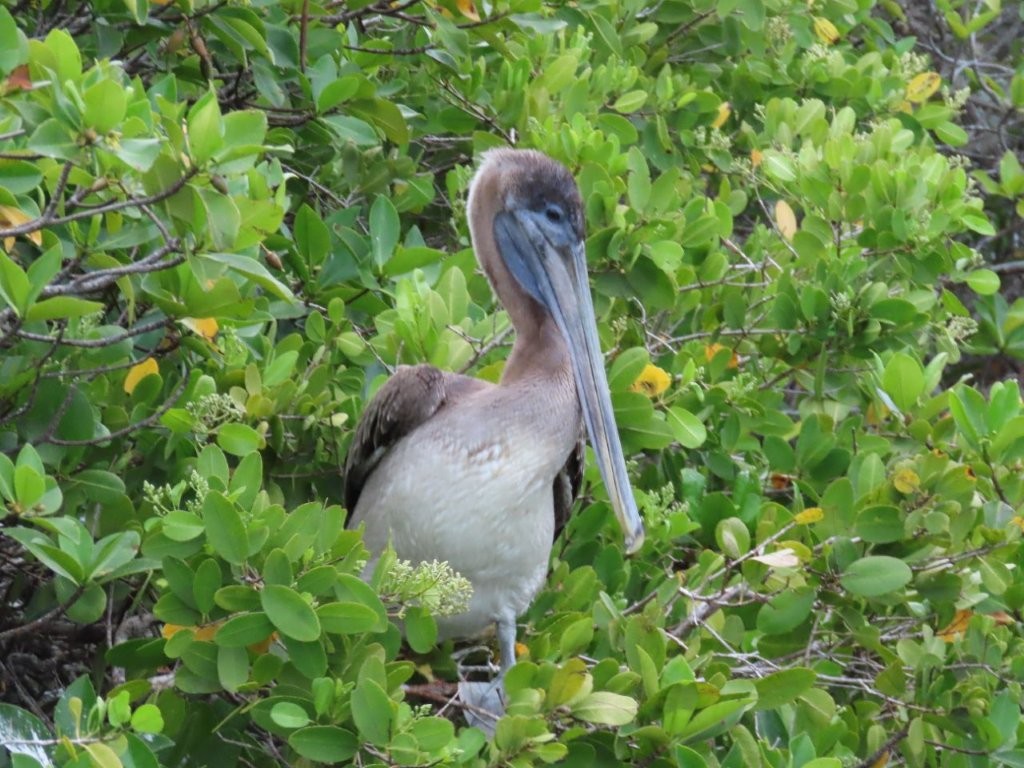
5) Go Birdwatching Right in Town
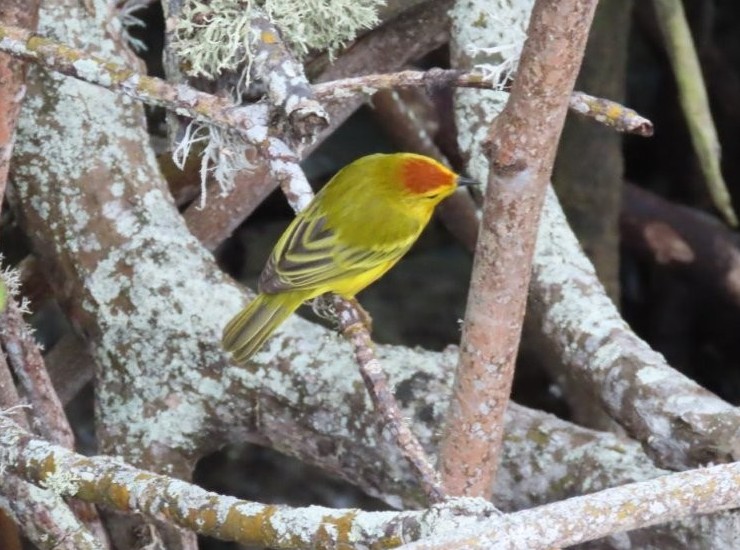
You don’t have to leave Puerto Ayora to see birds. My favorite area was the boardwalk between Hotel Solymar Galapagos and the Monumento al Pescador, where the mangroves and trees attracted all kinds of activity.
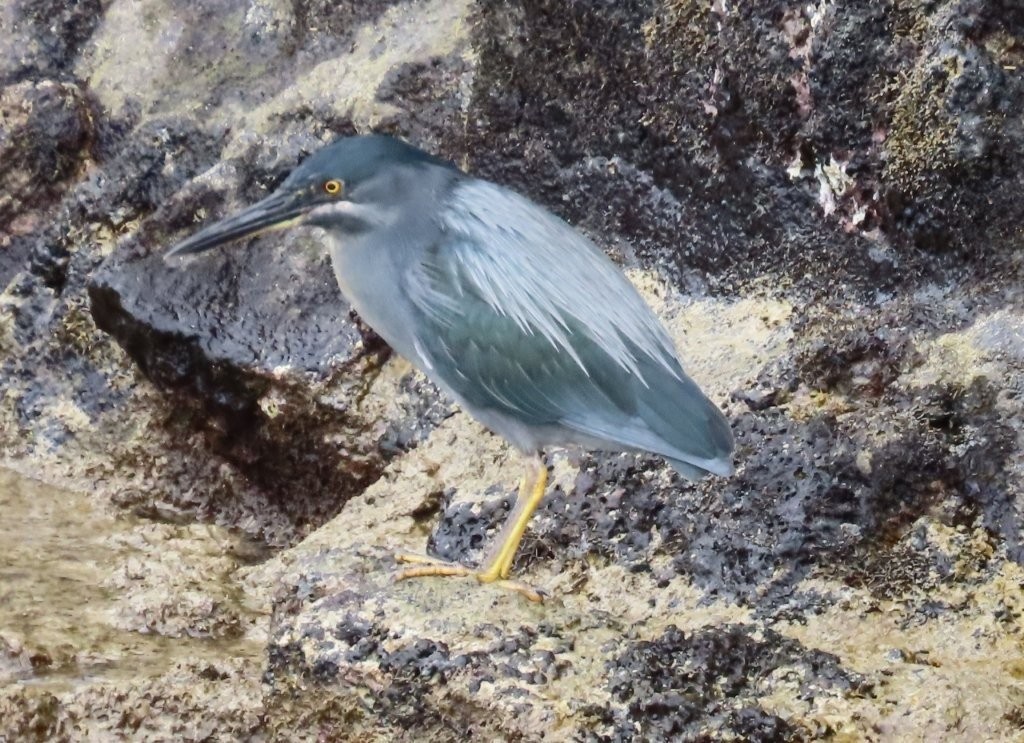
My second favorite spot was around the Malecón Pier and the Ferry Pier. Many of the birds we saw there were new to me, which is exactly why I kept walking slowly with my camera ready.
Best Culture and Town Free Things to Do on Santa Cruz Island
Santa Cruz has a much more developed feel than Isabela or San Cristóbal, and nowhere is that more obvious than in Puerto Ayora. Between the shops, museums, waterfront performances, and busy pedestrian streets, there’s a lot to explore even when you aren’t booking tours.
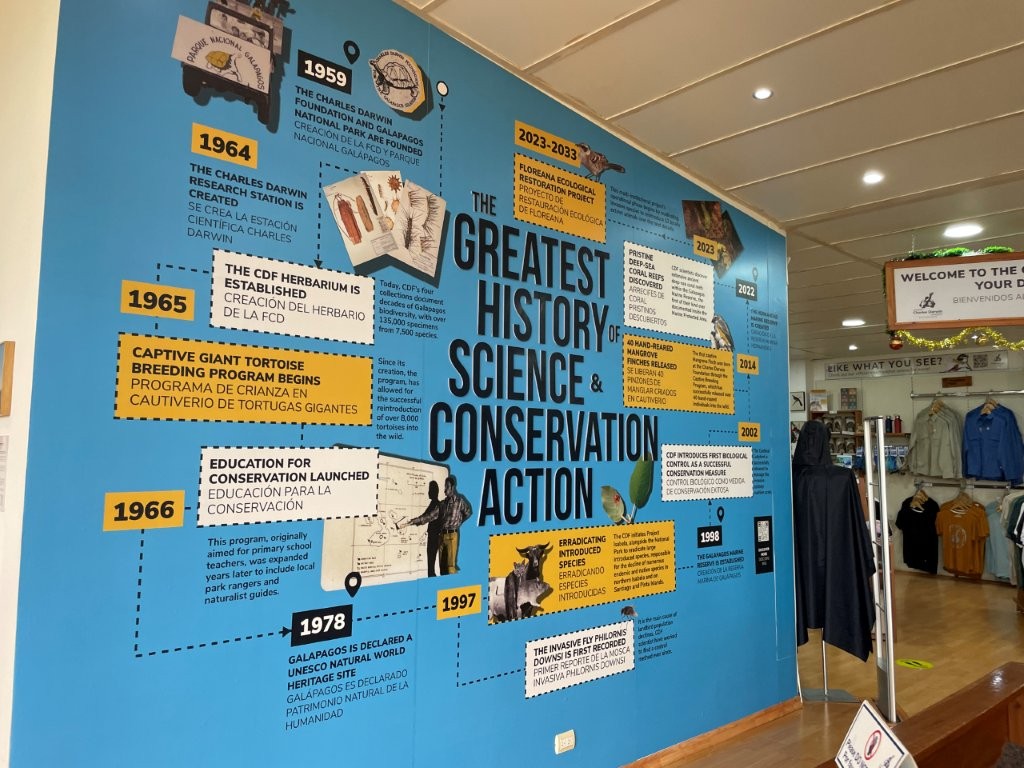
6 – Visit the Charles Darwin Visitor Center (Free Areas)
Do NOT let anyone convince you that you have to pay just to enter the Charles Darwin Visitor Center.
Yes, there is a paid guided area ($10 in 2025) if you want to see the giant tortoises and breeding program. But the main Visitor Center itself is completely free to visit on your own, and that’s exactly what we did.
Inside, you can learn more about Charles Darwin, the islands’ ecosystems, conservation efforts, and the work being done to protect the Galapagos. Since this was early in our trip, I actually appreciated having this background before we started island hopping.
If you enjoy understanding the “why” behind places you visit—not just snapping photos— this stop is worth your time.
7 – Walk Through Downtown Puerto Ayora
Puerto Ayora feels completely different from Puerto Villamil on Isabela.
It’s busier, more commercial, and packed with restaurants, coffee shops, galleries, tour agencies, souvenir stores, mini markets, and people everywhere. Some travelers may find it more overwhelming than the quieter islands, but it also gives you far more options.
We spent a lot of time just wandering the downtown streets, looking in shop windows, checking restaurant menus, people watching, and soaking in the energy. Even if you don’t buy anything, it’s still an interesting way to spend an afternoon.

8 – Watch Free Dancing Performances Along the Waterfront
Several evenings during our stay, we came across free dance performances happening near the waterfront.
One regular location was Parque San Francisco near the ferry pier, where local dance groups performed in colorful costumes while visitors and locals gathered to watch.
Another area was Plaza Pelican Bay, next to the Hotel Solymar Galapagos on Avenida Charles Darwin. Here, they usually placed a basket nearby for tips, but there was no charge to stop and enjoy the show.
It added a fun local energy to the evenings and made the waterfront feel even more lively after dark.

9 – Check out the Ceramic Garden
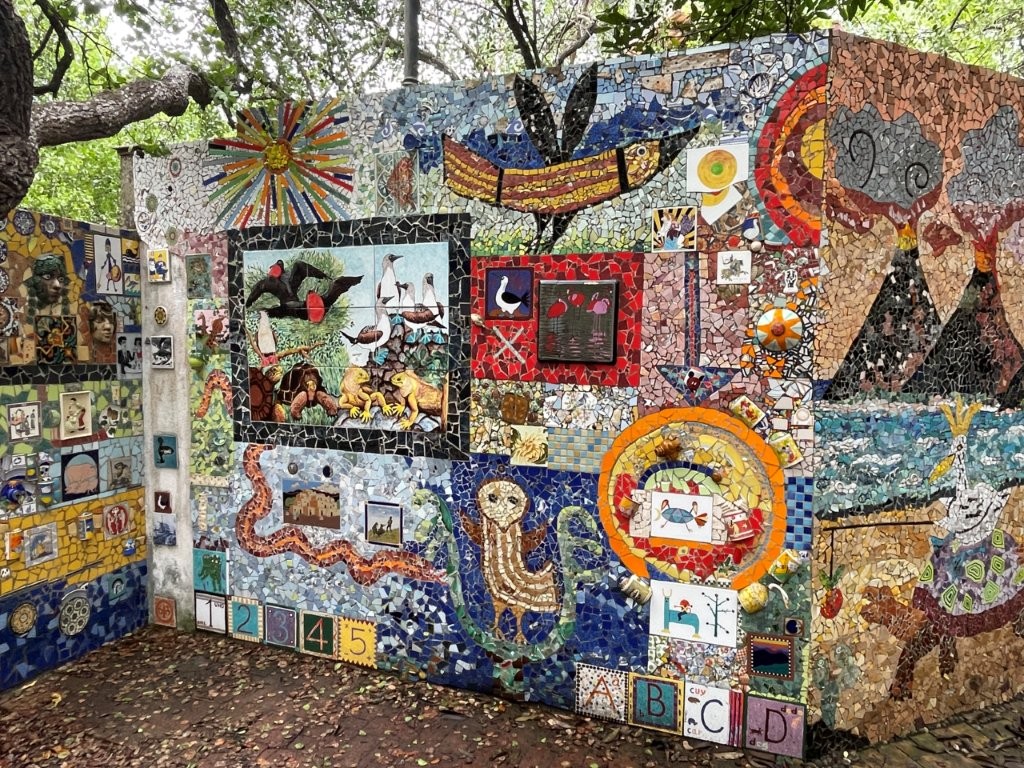
The Ceramic Garden (Jardin Ceramica) is a quick little stop near the Charles Darwin Research Station that many people probably walk right past without noticing.
I wandered through it while waiting for our tour of the Darwin Center to start, and ended up taking way more photos than I expected. The colorful ceramic artwork and mosaics make it feel cheerful and creative, and it only takes about 10 minutes to explore.
If you walk to the end, you get a different waterfront view of the harbor.
Sometimes those tiny unexpected stops end up being more memorable than you’d think.
10 – Visit the Origins Museum of Nature
The Origins Museum of Nature is one of the more unusual free attractions on Santa Cruz Island.
The museum combines science exhibits, environmental education, geology, crystals, and natural history displays with a strong Seventh-day Adventist perspective. Reviews are very mixed—some visitors love the modern interactive exhibits and environmental stewardship messaging, while others are surprised by the religious angle.
We didn’t go inside ourselves, but since it’s free and located right in Puerto Ayora, it may still be worth a quick stop if you enjoy museums or need an indoor activity on a rainy afternoon.

11 – Wander Through the Mercado Artesanal
The Mercado Artesanal is a local handicraft market where artisans sell handmade jewelry, paintings, wood carvings, textiles, and Galapagos-themed souvenirs.
Even if you’re not planning to shop, it’s fun to wander through and see the creativity on display. But fair warning… you may not leave empty-handed.
Best Beach Free Things to Do on Santa Cruz Island
One thing I appreciated about Santa Cruz is that even though Puerto Ayora feels busier and more developed than the other islands, you’re never very far from the water.
12 – Swim at Playa Los Alemanes (Germans Beach)
Playa Los Alemanes is usually combined with a visit to Las Grietas, since you pass right by it after taking the short $1 water taxi across to the Angermayer area.
From the boat landing, follow the path toward the Blue Heron Hotel, then turn left and continue along the boardwalk until you reach the large sandy beach.
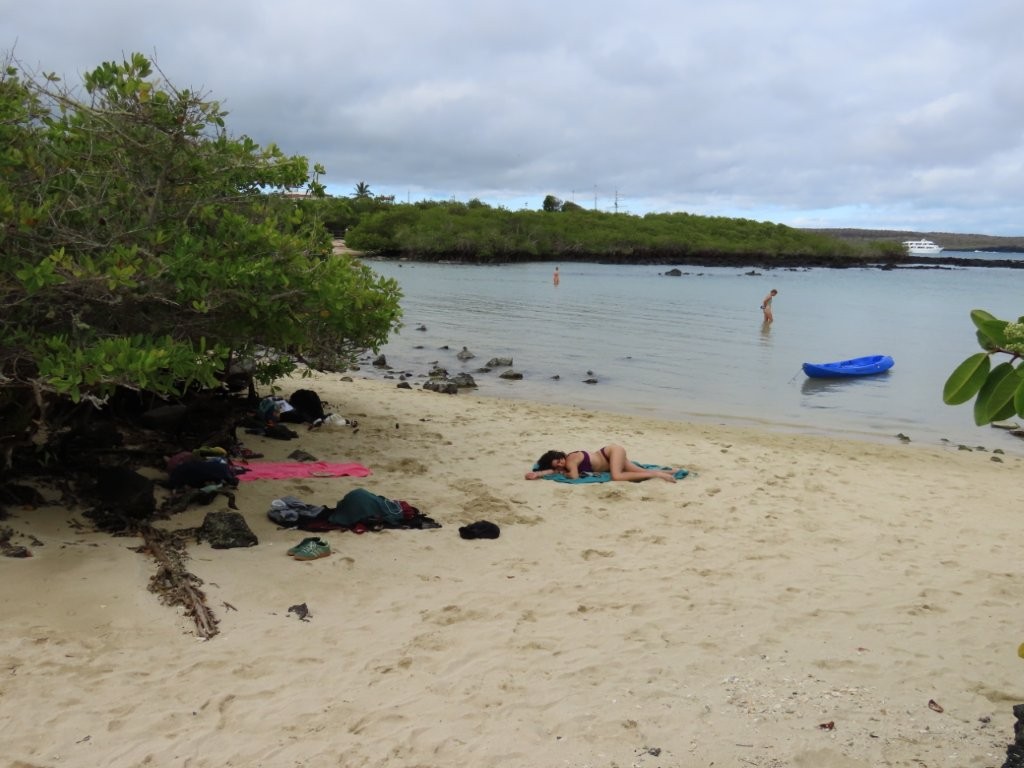
When we first passed through on our way to Las Grietas, lots of people were swimming, snorkeling, or just relaxing in the sun. On the way back, we stopped for awhile ourselves to photograph birds and watch the marine iguanas wandering around the rocks and sand.
The water here is much calmer than some of the rougher beaches around Santa Cruz, which makes it feel more relaxed and approachable.
13 – Relax at Playa de la Estación
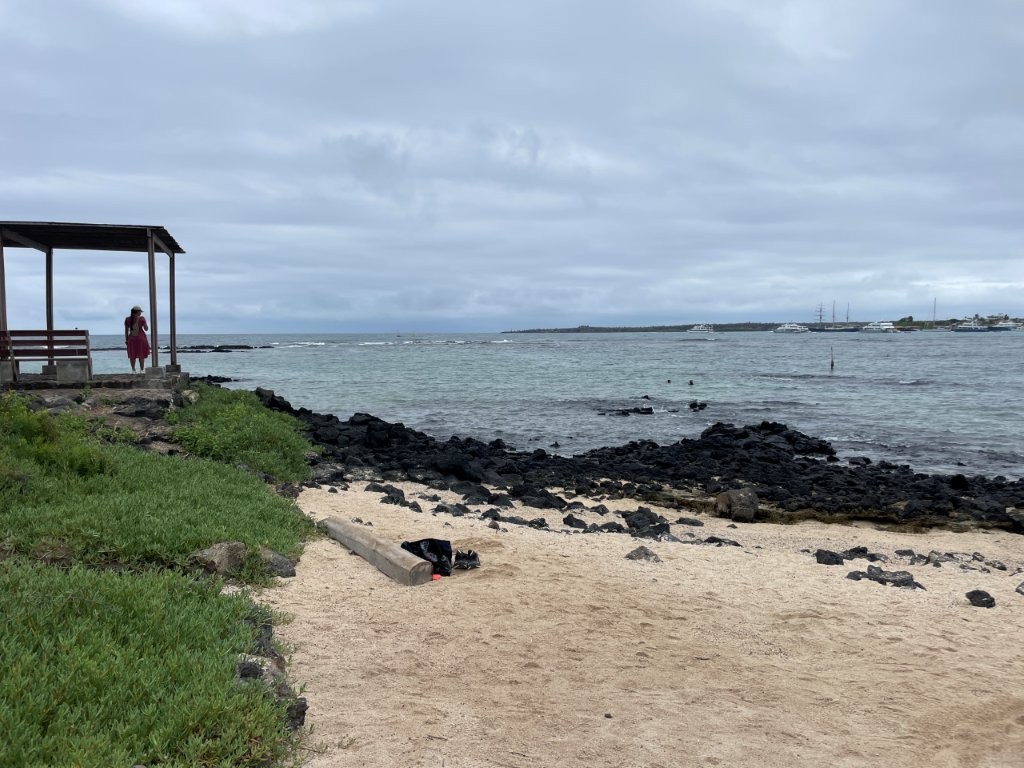
Near the Charles Darwin Research Station, Playa de la Estación is a small rocky beach that many visitors probably overlook.
As we made the long walk back from the Darwin area, we stopped briefly here to rest and look around. There were several people snorkeling and swimming in the calm water.
What stood out most to me were the birds. There were birds everywhere, and several elevated viewing platforms with benches where you could sit quietly and observe the activity around the shoreline.
It’s not necessarily a destination beach, but it’s an easy free stop if you’re already visiting the Darwin Station area.
14 – Walk to Tortuga Bay
Tortuga Bay is probably the most famous free beach on Santa Cruz Island, even though we did not make it there.
Almost everyone we talked to said the beach itself was beautiful, but they also warned us that the walk was longer and hotter than expected—about 3 km (40 minutes) each way with very little shade. If you go, bring plenty of water and try to start early before the midday heat sets in.
There are actually two different beaches at Tortuga Bay:
- Playa Brava, which has larger waves and is popular for surfing
- Playa Mansa, which is calmer and better for swimming or snorkeling
That said, some friends who visited Playa Mansa told us the water was murkier than they expected, it’s important to go with realistic expectations instead of assuming it will look like a perfect tropical postcard all the time.
If you go really early in the morning (like 6:00 AM), the water is likely to be clearer and you might have the whole place to yourself!
Even though we skipped it ourselves, Tortuga Bay still consistently comes up as one of the top free things to do on Santa Cruz Island.
Best Simple, Fun Free Things To Do Around Town
Not every memorable moment on Santa Cruz has to be a major activity. Some of our favorite moments happened just wandering around Puerto Ayora and soaking in the atmosphere.
15 – Get Your Photo Taken by the Santa Cruz Sign
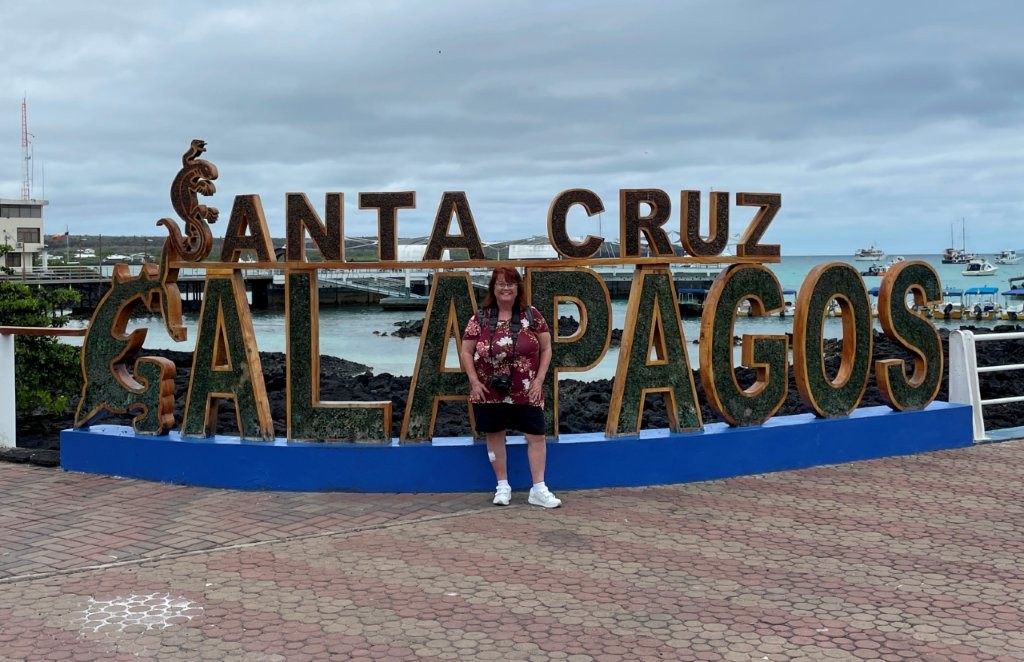
Like many tourist destinations, Puerto Ayora has its own colorful Santa Cruz sign at the entrance to the Malecon Pier.
It’s a quick stop, but after finally making it to the Galapagos after years on my Bucket List, I was absolutely taking the photo.
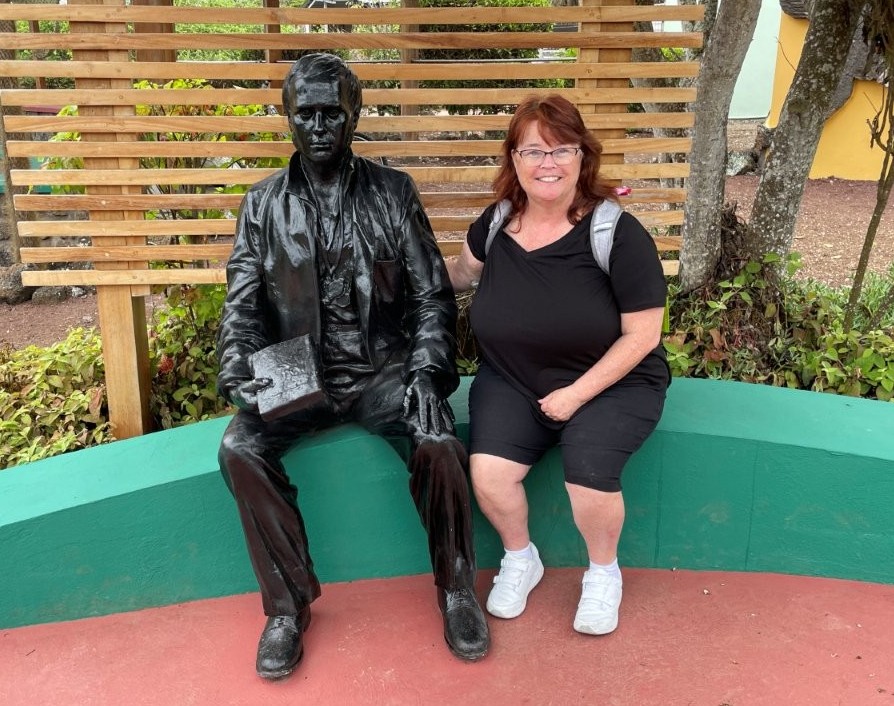
16 – Visit the Lonesome George Statue
Lonesome George became one of the most famous tortoises in the world after being considered the last known Pinta Island tortoise before his death in 2012.
There’s a statue dedicated to him in Puerto Ayora, and it’s a fun little photo op stop if you’ve already been learning about the conservation history of the Galapagos at the Darwin Center.
17 – Take Another Waterfront Stroll
Really, this became our main default activity on Santa Cruz.
Every time we walked the waterfront, something different was happening — fishermen unloading boats, sea lions napping on benches, pelicans diving for fish, or tourists and locals gathering around the piers at sunset.
It never really got old.
18 – Slow Down and People Watch
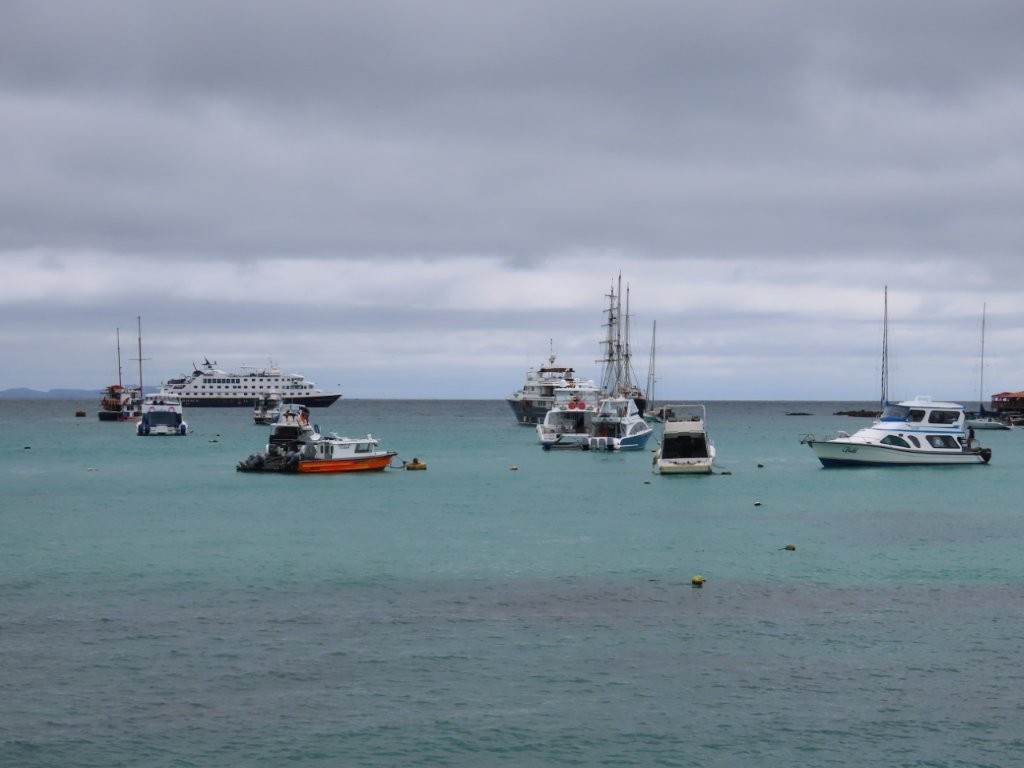
Puerto Ayora is by far the busiest and most energetic town we visited in the Galapagos.
Between the waterfront, the coffee shops, the tour groups coming and going, and the constant movement around town, it’s actually a pretty entertaining place to just sit for awhile and observe daily life unfolding around you.
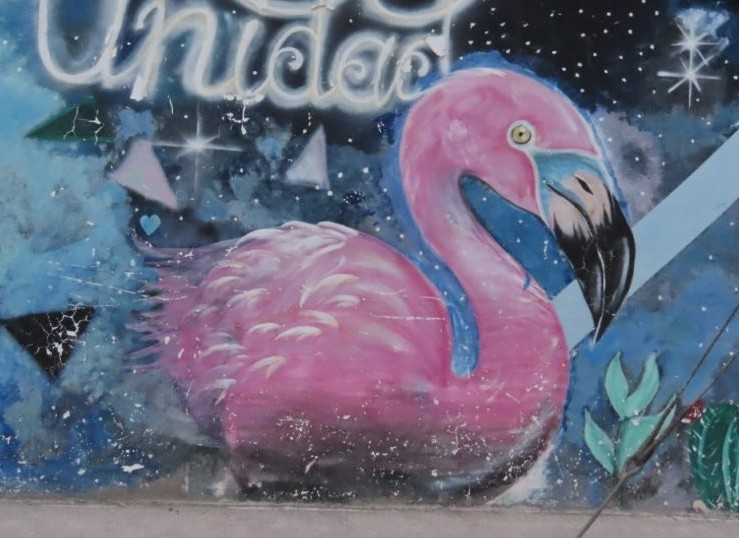
19 – Wander Around Looking for Street Art
Puerto Ayora will surprise you as you turn a corner to find beautiful colorful street art painted on the wall in front of you.
Best Budget-Friendly Things to Do on Santa Cruz Island
While Santa Cruz definitely has more expensive restaurants, hotels, and tour options than the other islands, there are still a handful of experiences that feel worth the money—especially if you want a taste of snorkeling or wildlife without booking a full-day excursion.
20 – Snorkel at Las Grietas + Relax at Playa Los Alemanes
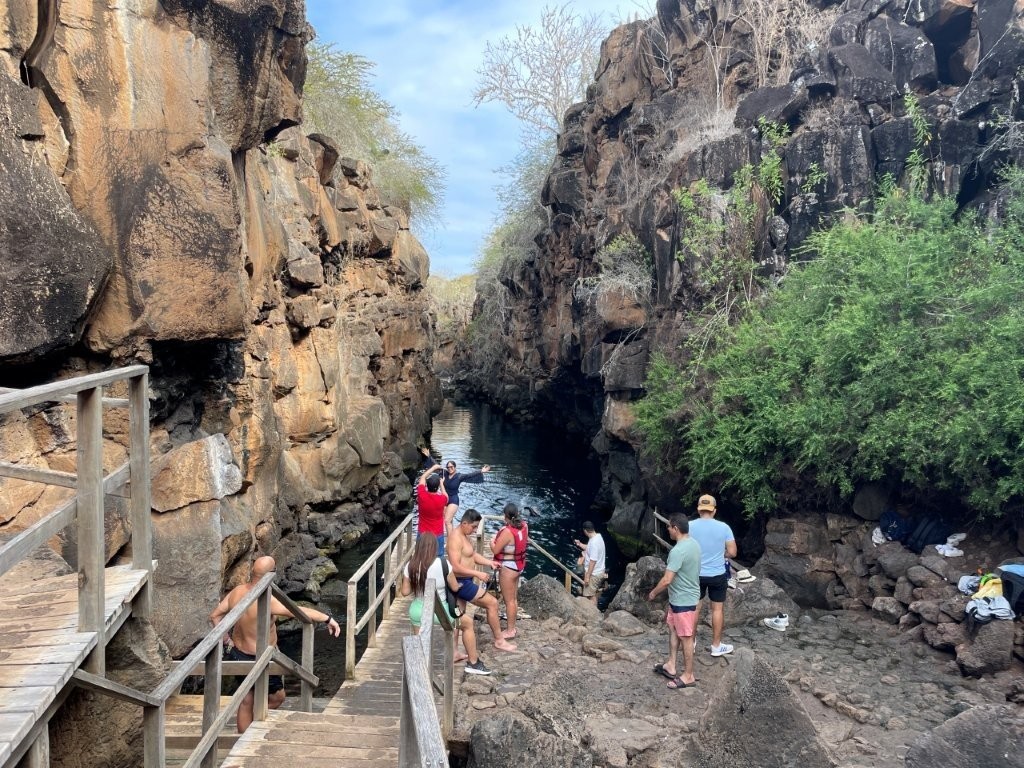
Las Grietas ended up being a really good introduction to snorkeling in the Galapagos.
To get there, we took a $1 water taxi from the main pier over to the Angermeyer area. Follow the path away from the boat landing and then turn left by the Blue Heron Lodge.
When you arrive near Las Grietas, you have to pay $10 per person (2025) for a required guide. The guides leave every 30 minutes with small groups.
As we walked, our guide Manuel pointed out birds and explained the environment in both English and Spanish. Then we climbed down into the narrow volcanic canyon itself.
The water was freezing at first—but it felt refreshing after the hot walk. Most people swam near the entrance, but Bill and I swam all the way to the far end of the canyon. The towering rock walls gave the water this dark green color that looked murky at first, but once I dipped my snorkel mask under the surface, the visibility improved dramatically.
We mostly saw yellow-tailed mullet swimming around us, but for me the experience was more about the setting itself. Snorkeling between those steep volcanic walls felt incredibly unique.
Total cost for us:
- $1 water taxi each direction per person
- $10 guide fee per person (2025)
- Additional cost if you need snorkel gear rentals
If you are comparing Santa Cruz tours and activities, my Best Things to Do in Santa Cruz Galapagos guide covers both free stops and paid tours worth considering.
21 – Take a Guided Tour at the Charles Darwin Research Center
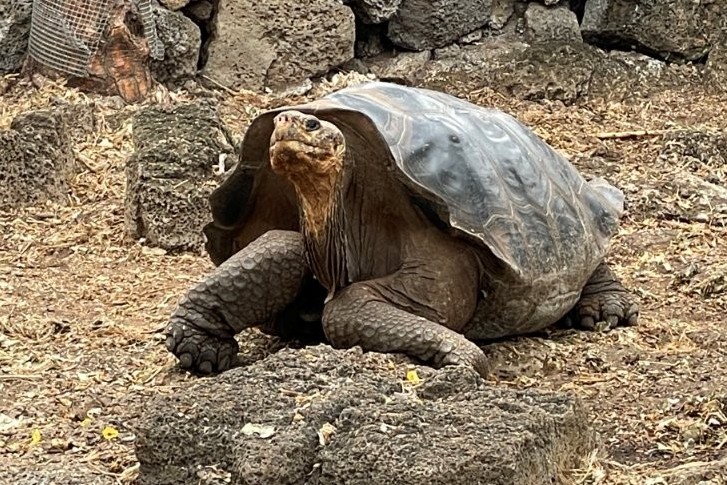
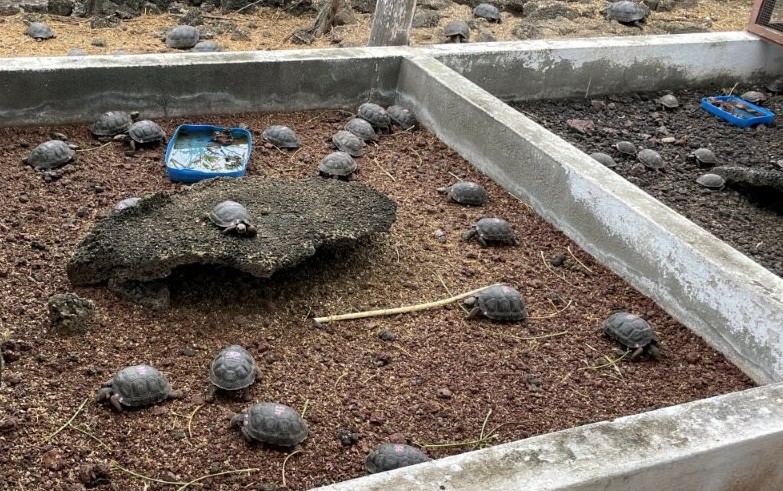
Earlier in the post I mentioned that the Visitor Center itself is free—but if you want to see the actual giant tortoises and breeding center, you’ll need the guided tour, which cost $10 per person in 2025.
We learned a lot so I do think the paid portion was worthwhile in addition to the free part.
Our guide explained the differences between the various tortoise species, including the saddleback tortoise, which we had never seen before. We also learned about the breeding and conservation efforts that help protect baby tortoises until their shells become hard enough to survive predators.
One thing that frustrated me a little was how aggressively both the taxi driver and ticket booth staff pushed the idea that the ONLY way to visit was with the paid guide. That’s simply not true. The actual Research Center exhibits remain free to visit on your own—you only need to pay if you want access to the live tortoise breeding areas.
That distinction matters, especially for budget travelers.
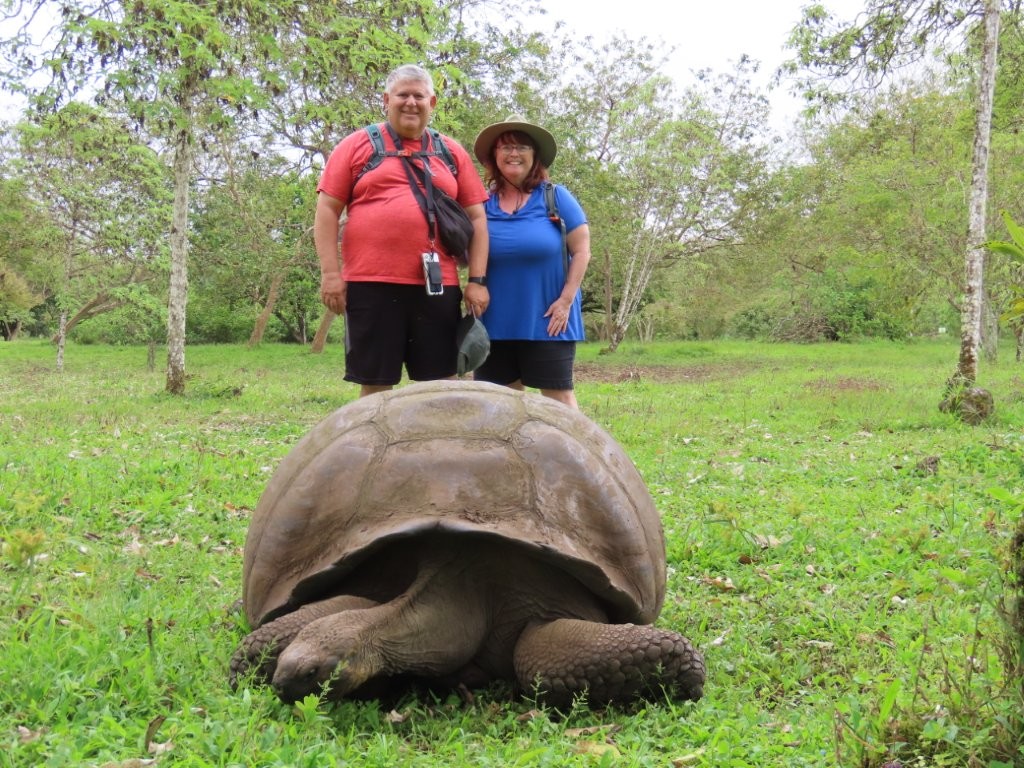
22 – Visit El Chato Ranch (Giant Tortoises in the Wild)
If you want to see giant tortoises roaming naturally in the wild instead of inside a breeding center, El Chato Ranch in the Santa Cruz highlands is probably the easiest and most popular option.
The tour itself cost $10 per person and included a guide named Luis, who walked us around the property explaining differences between male and female tortoises, their nesting habits, predators, and conservation efforts.
One thing I wasn’t expecting? We happened to witness a male mounting a female during the mating season. Definitely not something you see every day.
The property also includes lava tunnels, though if you’ve visited underground caves before, this part probably won’t wow you.
For me, the real highlight was simply seeing giant tortoises wandering naturally through the grasslands.
In addition to the entrance fee of $10 each, we hired a taxi for $50 round trip from Puerto Ayora and the driver waited for us while we explored.
Or, if you don’t want to worry about arranging a taxi, consider the highly rated Giant Turtle and Lava Tunnels Tour. This is a private guided tour that goes to the Galapagos Frontier Reserve as well as teaches you about local flora and endemic birds.
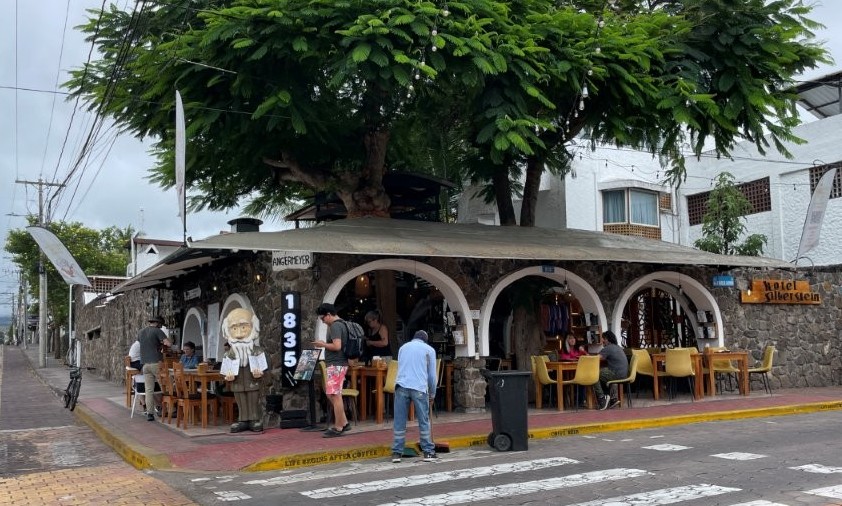
23 – Grab Coffee at the 1835 Coffee Café
The 1835 Coffee Café comes up constantly in recommendations from other travelers. My friend Celena said she went there every morning because the coffee and pastries were just that good.
If you’re a coffee person, this is probably one of the better budget-friendly splurges in Puerto Ayora.
24 – Eat at Kiosk Street (Affordable Local Meals)
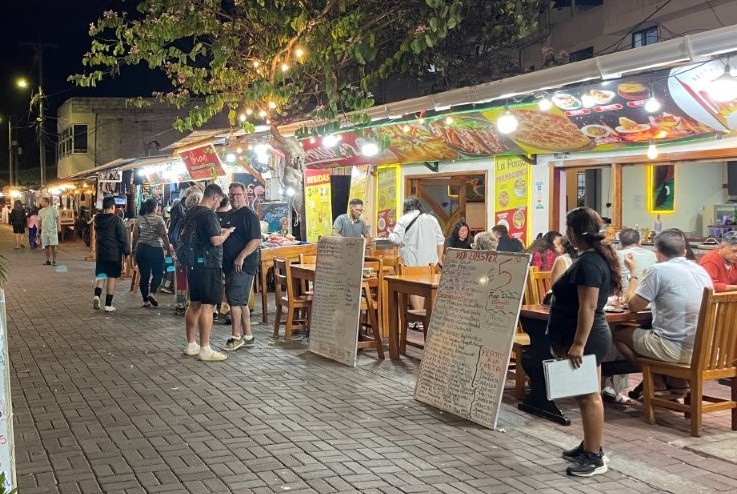
If you’re trying to save money on food in Puerto Ayora, head away from the waterfront and find Kiosk Street. It’s on Charles Binford Street for the block between Avenida Baltra and General Rodriguez Lara Street.
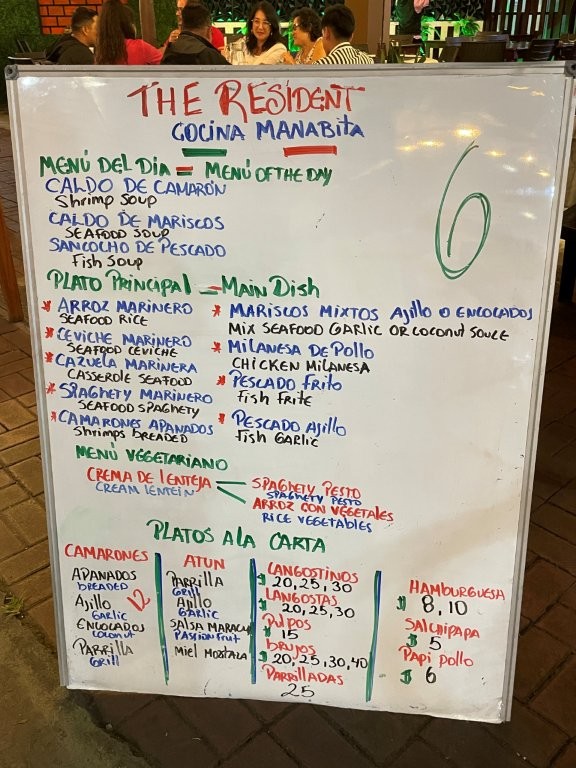
This street is lined with small outdoor restaurants where tables fill the street in the evenings, creating a lively open-air dining atmosphere. Many places advertised happy hour meal specials for around $6–8 (2025), which felt refreshingly affordable compared to some of the waterfront restaurants.
For me, those smaller meals (a choice of protein with rice and beans) were usually enough.
For Bill? Not so much. He was often still hungry afterward, which became a running joke between us during our time in the Galapagos.
Still, this ended up being one of our favorite budget-friendly food experiences on Santa Cruz.
Why Santa Cruz Feels So Different from the Other Islands
Out of the three main islands we visited, Santa Cruz easily felt the most developed and energetic.
Puerto Ayora has more restaurants, coffee shops, galleries, souvenir stores, mini markets, tour agencies, and nightlife than either Isabela or San Cristóbal. There’s almost always something happening along the waterfront, especially in the evenings when people come out to walk, eat dinner, watch performances, or gather around the piers.
Santa Cruz feels more commercial and connected to tourism infrastructure, while Isabela and San Cristóbal feel more relaxed and wildlife-focused. Neither is “better”—they’re just very different experiences.
Santa Cruz works best if:
- you enjoy having lots of restaurant and accommodation choices
- you like a little more energy and activity
- you want easy access to tours and transportation
- or you prefer balancing wildlife experiences with more comfort and convenience
FAQs About Visiting Santa Cruz Island
How Many Days Should You Spend on Santa Cruz Island?
I’d recommend at least 3–4 days on Santa Cruz, especially if it’s your main transportation hub for arriving and departing the Galapagos.
There’s enough here to fill several days between wildlife watching, snorkeling, beaches, restaurants, and day tours—and it’s also a good place to recover between more active excursions.
If you are still trying to figure out which islands and for how long, my Galapagos Itinerary: How Many Days Do You Really Need? Guide will help walk you through the decision process.
Is Santa Cruz Island Safe?
Yes — Santa Cruz felt very safe to us overall.
Puerto Ayora is busy and tourist-focused, so basic travel awareness still applies, but we felt comfortable walking around town during both the day and evening.
How Do You Get to Santa Cruz Island?
Most visitors fly into the Baltra Airport (GPS), then take a combination of:
- airport shuttle bus
- ferry across the channel
- taxi or bus to Puerto Ayora
You can also reach Santa Cruz by ferry from San Cristóbal or Isabela. We break down the entire process—including the parts nobody explains very well—in our Galapagos Transportation Guide.
Where Should You Stay on Santa Cruz Island?
Most travelers stay in Puerto Ayora, which has the largest selection of hotels, restaurants, grocery stores, and tour operators in the Galapagos.
We’ll break down the best neighborhoods, budget options, and what we learned from staying there in our full Where to Stay on Santa Cruz guide.
If you’re trying to keep your full trip affordable, my Galapagos Trip Cost Guide breaks down what we spent over 30 days and where we saved most.
Is Santa Cruz Island Worth Visiting on a Budget?
Yes — especially if you want a balance between wildlife experiences and convenience.
Santa Cruz gives you far more restaurant choices, coffee shops, grocery stores, museums, and tour options than the other islands, while still offering plenty of free things to do on Santa Cruz Island if you’re willing to explore on your own.
Some of our favorite moments here cost almost nothing: walking the waterfront, watching sea lions take over the docks, spotting birds in town, and snorkeling between volcanic walls at Las Grietas.
If you want a mix of wildlife, comfort, energy, and flexibility without booking expensive tours every single day, Santa Cruz is absolutely worth including in your Galapagos itinerary.
More Galapagos Travel Guides
Here are some more posts about visiting the Galapagos Islands. If you’d like to receive emails when I’ve posted new content to the site, please complete the short form above.
Overall Galapagos Planning Guides
- First Time Galapagos Travel Guide: What I Wish I Knew Before Going
- Galapagos Itinerary: How Many Days Do You Really Need?
- How to Choose the Best Galapagos Snorkeling Tour for YOU
- Best Time to Visit Galapagos: What to Know Before You Go
- Galapagos Trip Cost: What We Spent For 30 Days (It’s Less Than You’d Think)
- What to Pack for the Galapagos – The Island-Hopping Packing List
- How to Get to the Galapagos Islands: What No One Tells You
- Galapagos Ferry Guide: What We Wish We Had Known
- Galapagos Liveaboard vs Land-Based Trip – Which Is Right for You
Santa Cruz Island Galapagos Guides
- Best Things To Do In Santa Cruz Galapagos + Tours Worth Booking
- Where To Stay In Santa Cruz Galapagos: 9 Hotels For Every Budget
- All The Best Low-Cost And Free Things To Do On Santa Cruz Island
- Bartolomé Island Tour Review: Bucket List Must-Do or Overrated?
Isabela Island Galapagos Guides
- Best Things To Do In Isabela Galapagos: Snorkeling, Beaches & Volcanoes
- Where to Stay in Isabela Galapagos: Best Hotels for Every Budget
- Best Low-Cost and Free Things to Do on Isabela Island Galapagos
- Los Túneles Tour Review: Did It Live Up To The Hype?
- Las Tintoreras Tour Review: Is It the Right Snorkeling Tour for You?
- Concha De Perla: Free DIY Snorkeling On Isabela Island Galapagos
San Cristobal Island Galapagos Guides
- Best Things to Do in San Cristobal Galapagos: Tours, Beaches & Wildlife
- Where To Stay in San Cristobal Galapagos: Best Hotels For Every Budget
- Budget Friendly And Free Things To Do On San Cristobal Island
- Kicker Rock Snorkeling Tour Review: Did It Live Up to the Hype?
- Española Island Tour Review: Rare Birds and Epic Snorkeling
- Punta Pitt Tour Review: The Remote Galapagos Tour Most Visitors Overlook
