The Atacama Desert may look barren at first glance, but slow down and you’ll discover flamingos, vicuñas, foxes, and dozens of birds that thrive in this remarkable landscape.
When most people picture the Atacama Desert, they imagine a harsh, barren landscape where very little can survive. Wildlife usually isn’t the first thing that comes to mind. But during our 17 days exploring northern Chile, Bill and I were surprised by just how much wildlife we saw.
From graceful flamingos feeding in shimmering lagoons to herds of vicuñas grazing on the high-altitude plains, wildlife became one of my favorite parts of visiting the Atacama. We also spotted a curious fox, colorful ducks, elegant avocets, and dozens of birds I’d never seen before.
In this guide, I’ll show you the Atacama Desert animals we encountered, where we had the best luck spotting them, and a few simple tips to help you enjoy the wildlife—even if you’re not a birder.
Quick Overview: Atacama Desert Wildlife at a Glance
The Atacama Desert may look harsh and empty at first glance, but it supports an impressive variety of wildlife. During our 17 days exploring northern Chile, these are the Atacama Desert animals we saw most often.
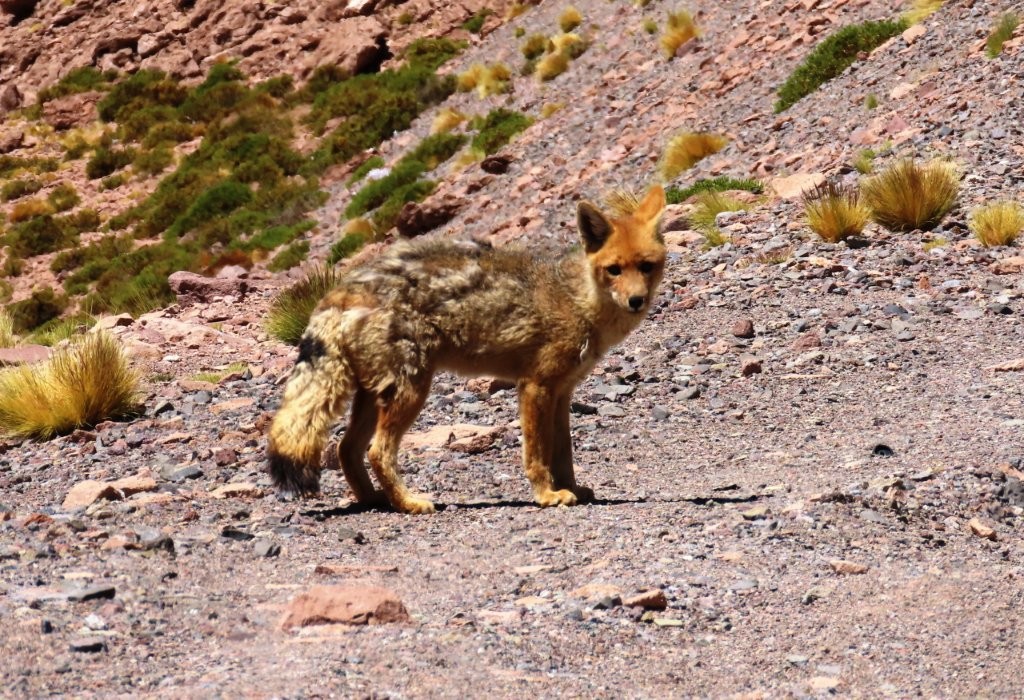
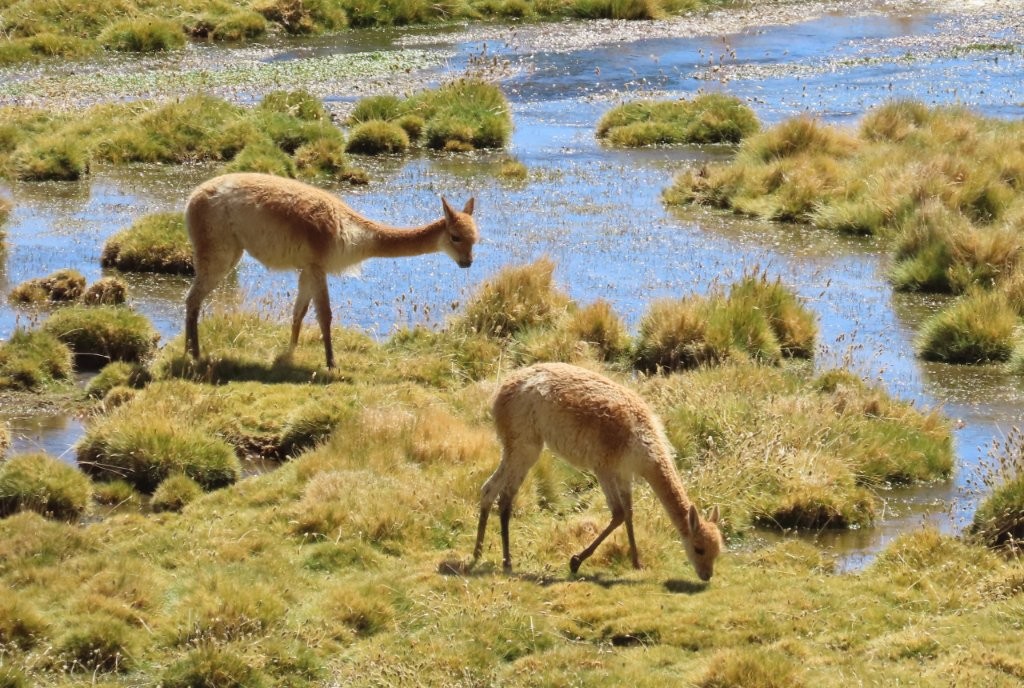
- Mammals: Vicuñas were by far the most common mammal we encountered, but we were also lucky enough to spot Guanacos, wild donkeys, llamas and a Culpeo Fox in the high desert.
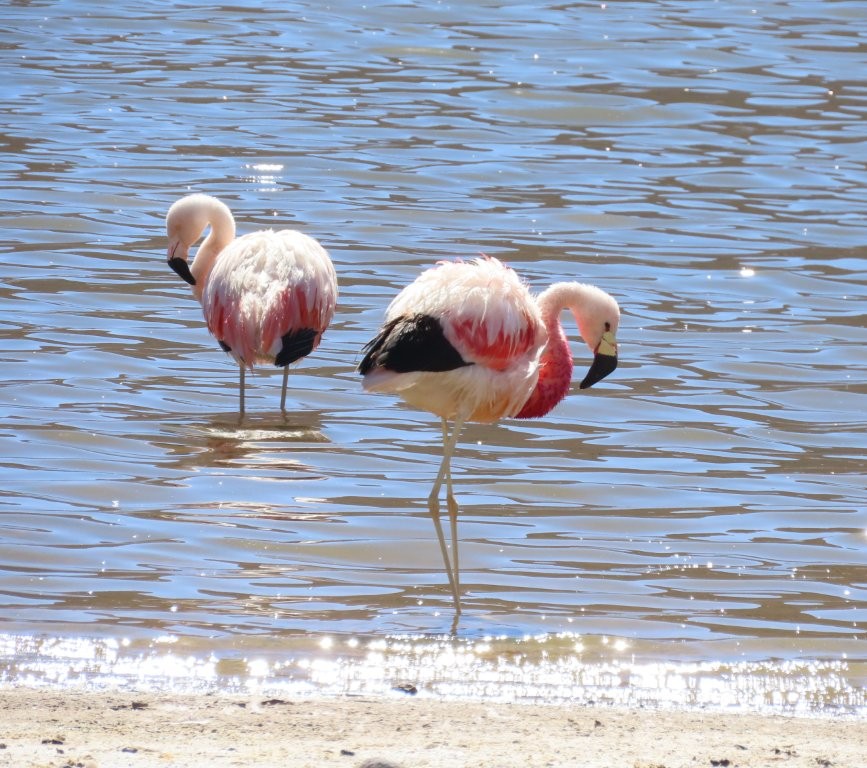
- Flamingos: The Atacama is home to three different species of flamingos—Chilean, Andean, and James’s Flamingos. Seeing all three was one of the highlights of our trip.
- Water Birds: Wetlands and lagoons attracted an incredible variety of ducks, geese, coots, grebes, avocets, sandpipers, and other shorebirds.
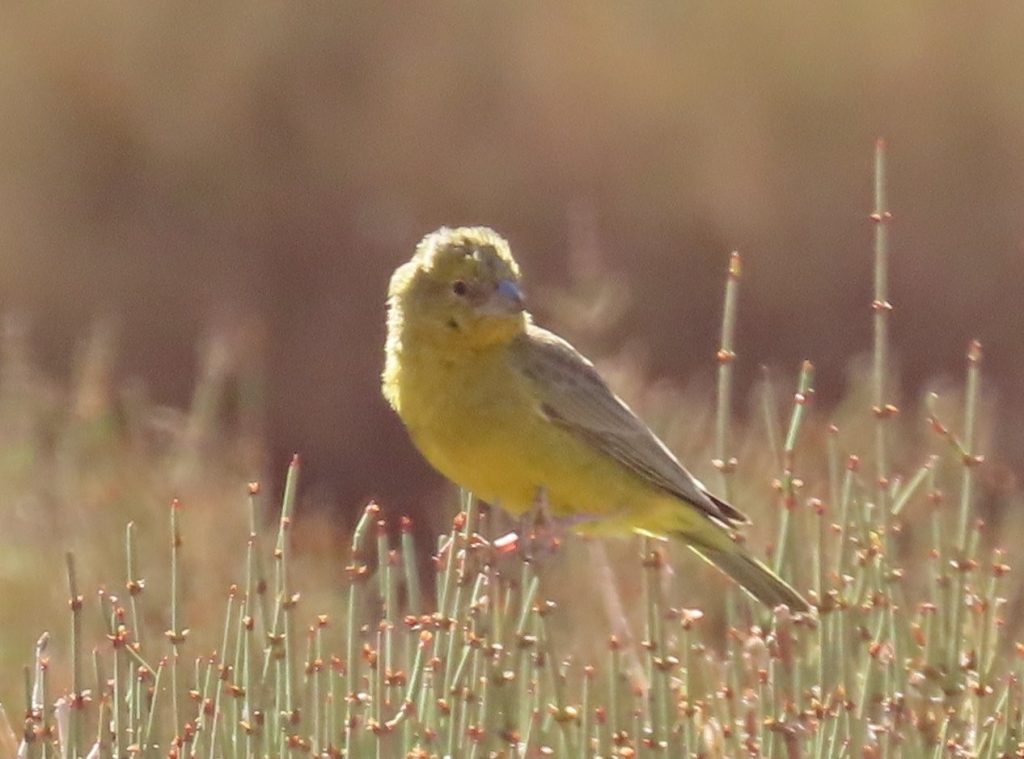
- Small Desert Birds: Even the driest landscapes were home to finches, ground-tyrants, cinclodes, doves, and other small birds that seemed perfectly adapted to life in the desert.
- Best Habitats for Wildlife Viewing: We had our best luck anywhere water was present. Lagoons, wetlands, and small streams consistently attracted the greatest variety of animals and birds. Even so, we learned to keep our eyes open everywhere because wildlife often appeared when we least expected it.
- Altitude: Many of the best wildlife areas are located in the Atacama’s high-altitude wetlands, making altitude part of the wildlife experience too.

Flamingos: The Stars of the Atacama
One of my favorite surprises in the Atacama Desert was learning that I wasn’t looking at just “flamingos.” Three different species live here, and once I learned what to look for, they became surprisingly easy to recognize.
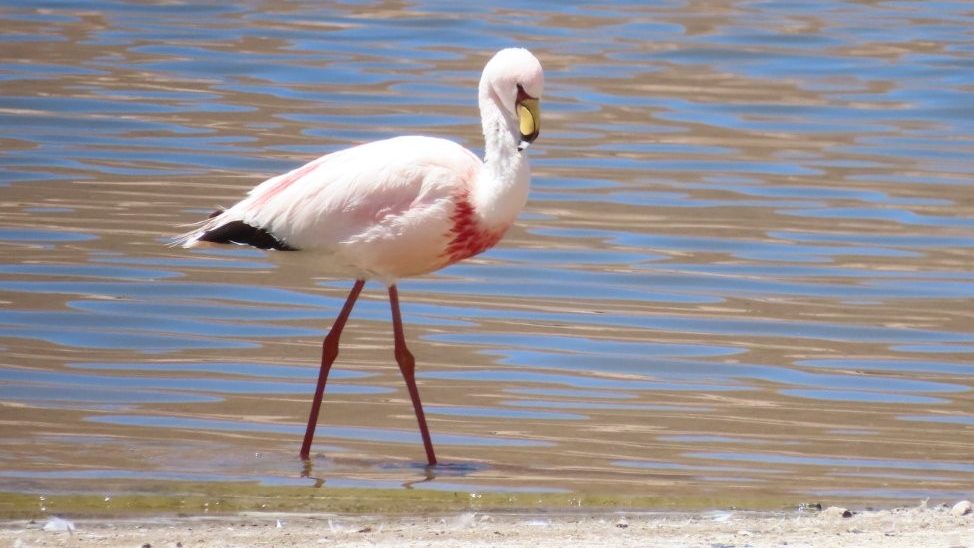
James’s Flamingo
- The smallest of the three.
- Very pale pink overall with little or no dark pink on the rump.
- Bright yellow bill with a distinct black tip.
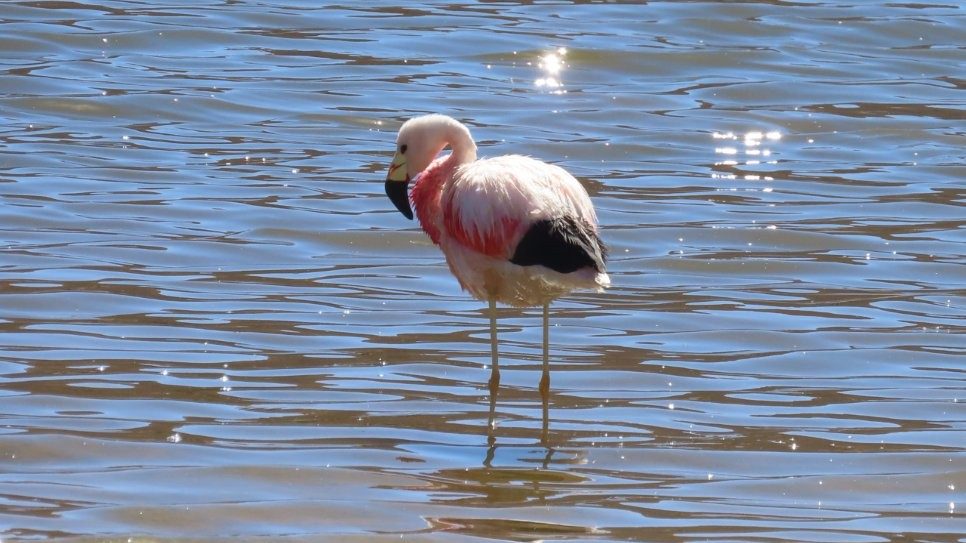
Andean Flamingo
- Richer pink on the neck than the others.
- Easy to recognize by the bold black triangle on the folded wing/rump.
- Yellow legs.
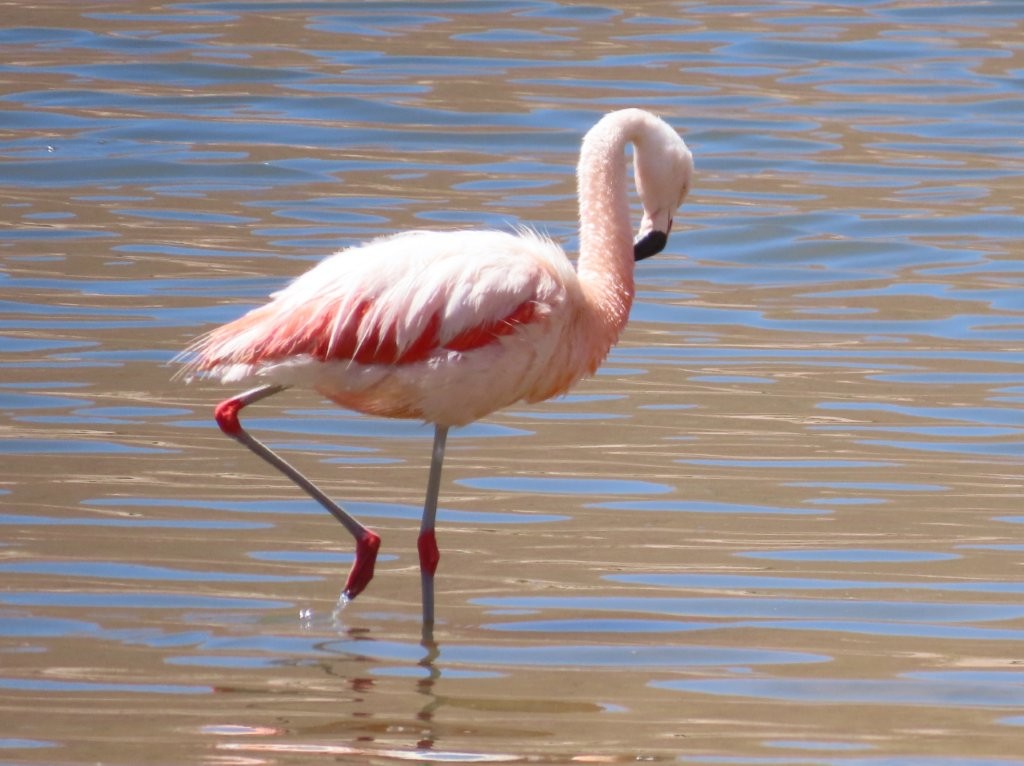
Chilean Flamingo
- The largest and most common species.
- Pale pink body with a deeper pink patch hidden beneath the wing feathers.
- Pink legs with noticeably darker pink “knees” and “ankles”.
- No black patch on the rump
Birds Beyond the Flamingos
The flamingos may steal the spotlight, but they’re far from the only birds you’ll see in the Atacama Desert. During our 17 days exploring the region, I identified more than 35 species, many of them from the roadside or short walks around wetlands and lagoons. Even if you don’t know one bird from another, the variety adds another layer to every drive.
Water Birds
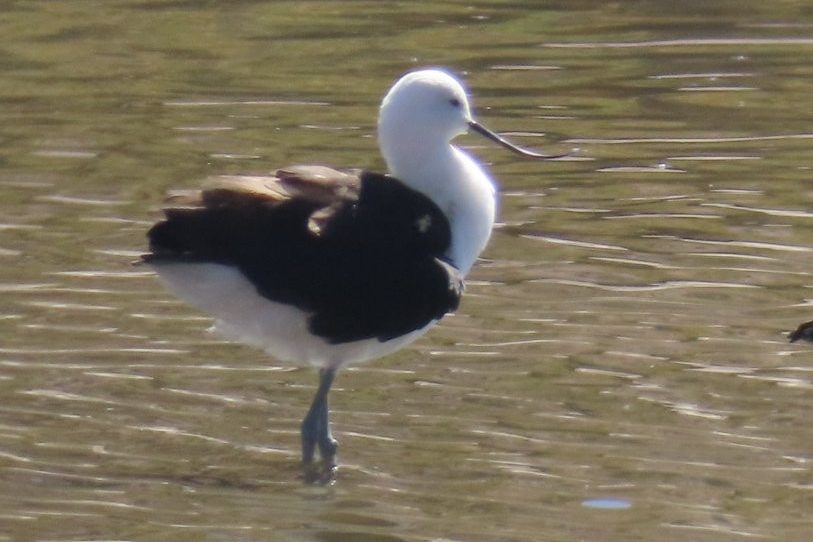
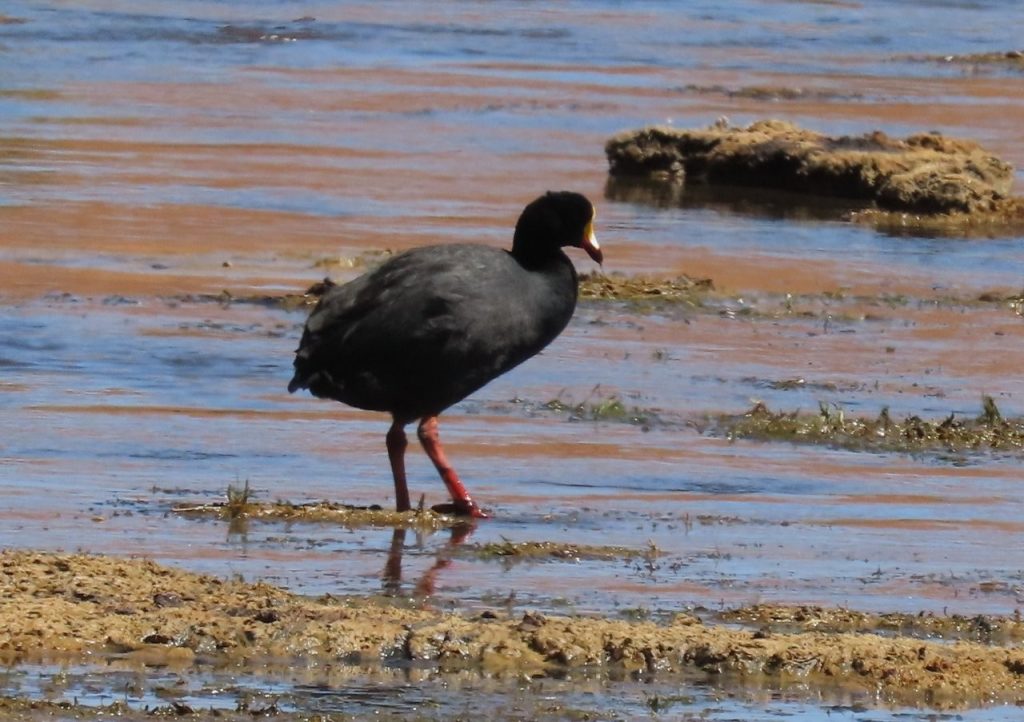
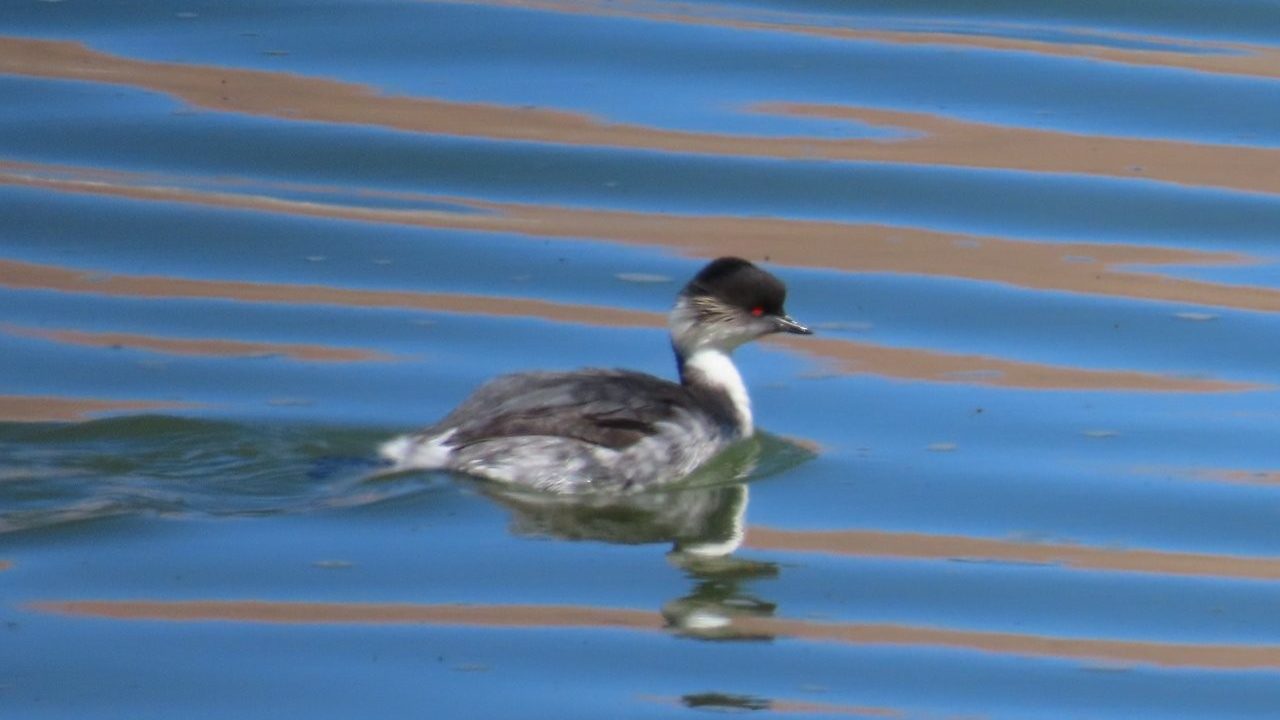
We regularly spotted Andean Avocets sweeping their long, curved bills through the shallow water, Giant and Horned Coots paddling among the reeds, Silvery Grebes diving for food, and graceful Andean Gulls soaring overhead.
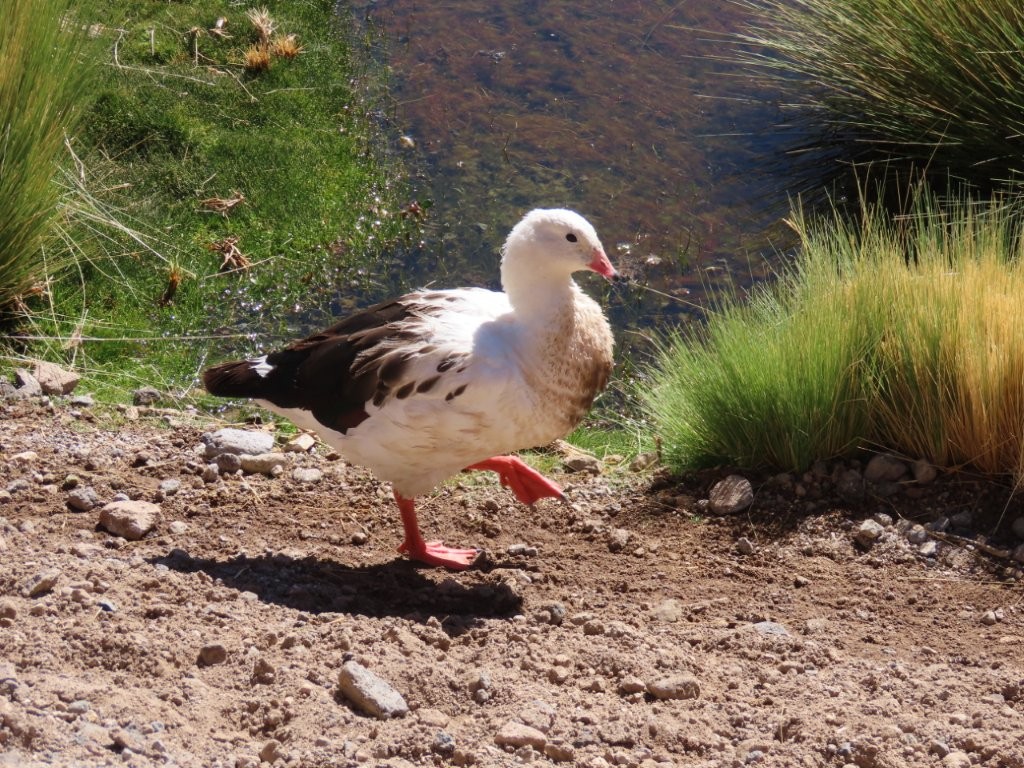
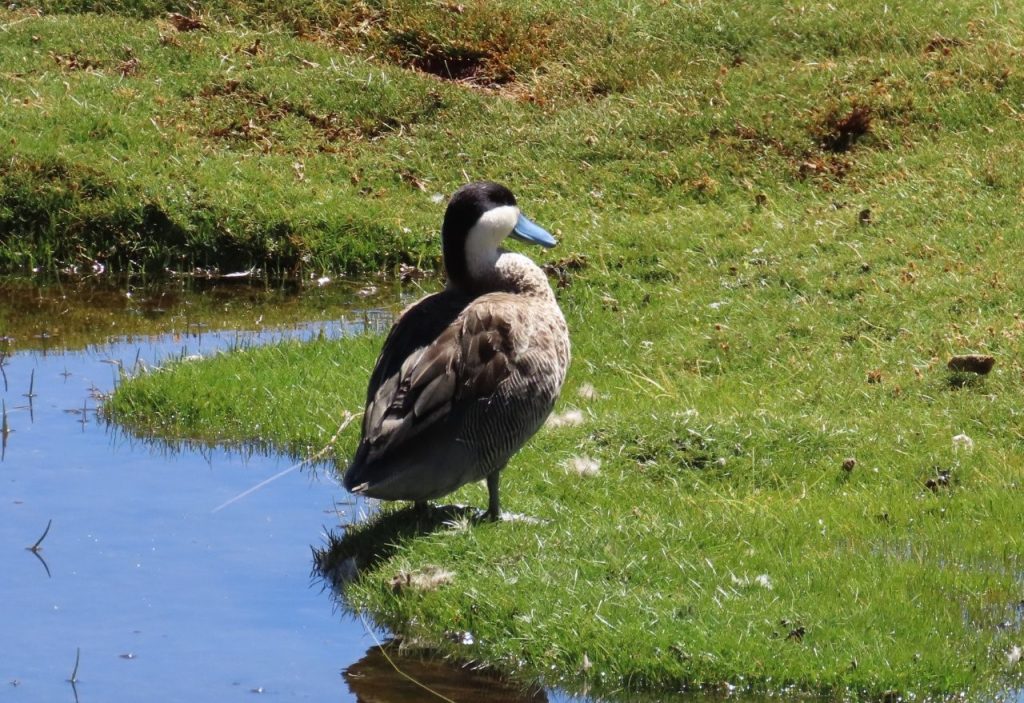
We also saw Puna Teals, Crested Ducks, Yellow-billed Teals, and beautiful Andean Geese throughout the high-altitude wetlands. Against a backdrop of volcanoes, even the ducks became part of the scenery.
Shorebirds
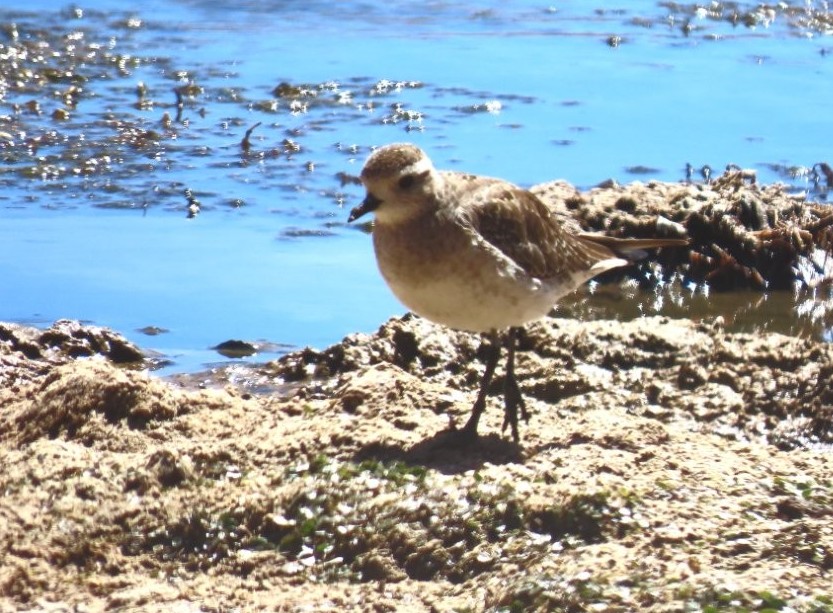
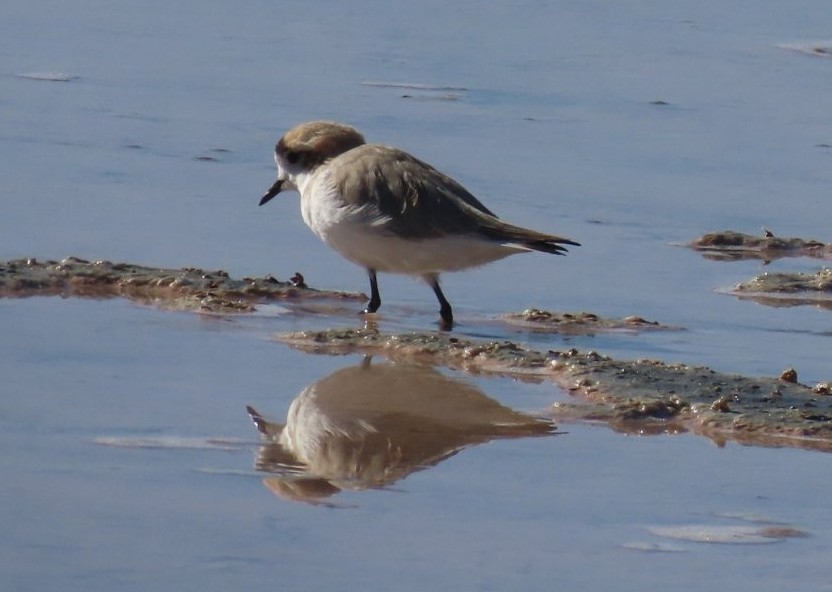
Keep an eye along the muddy edges of lagoons and ponds. We spotted Baird’s Sandpipers, Lesser Yellowlegs, American Golden-Plovers, and Puna Plovers quietly feeding along the shoreline. They’re easy to overlook until you stop for a few minutes and let your eyes adjust.
Small Desert Birds
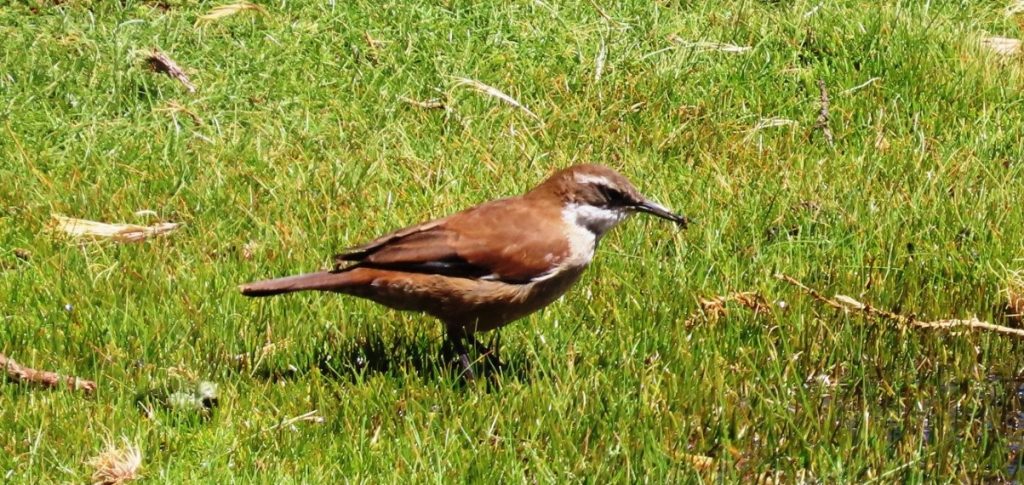
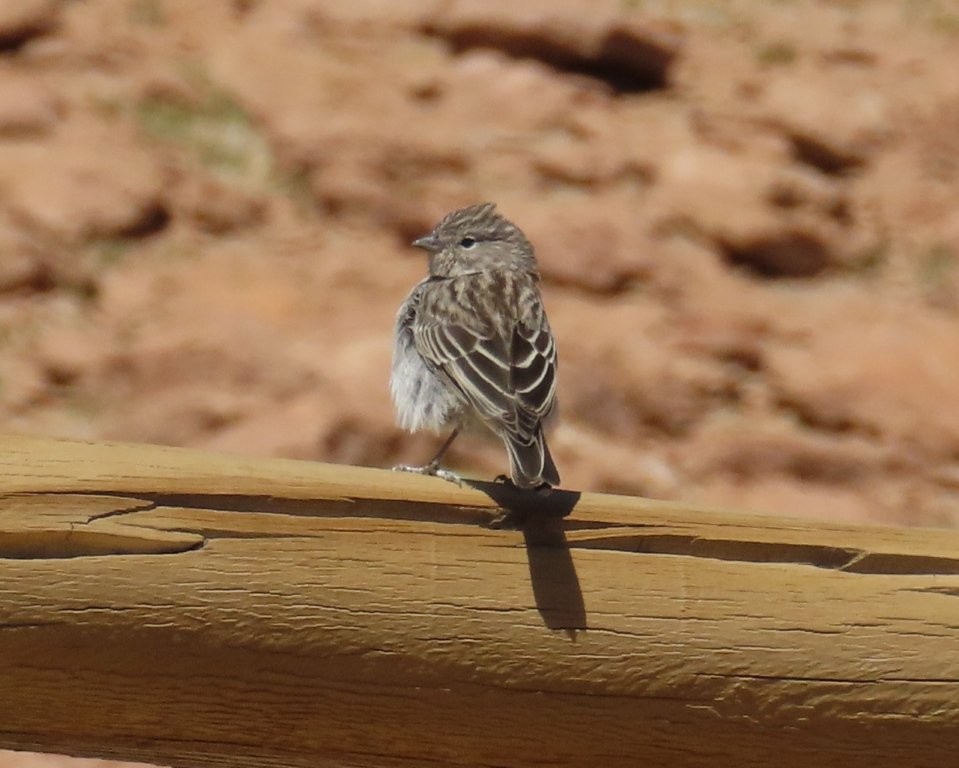
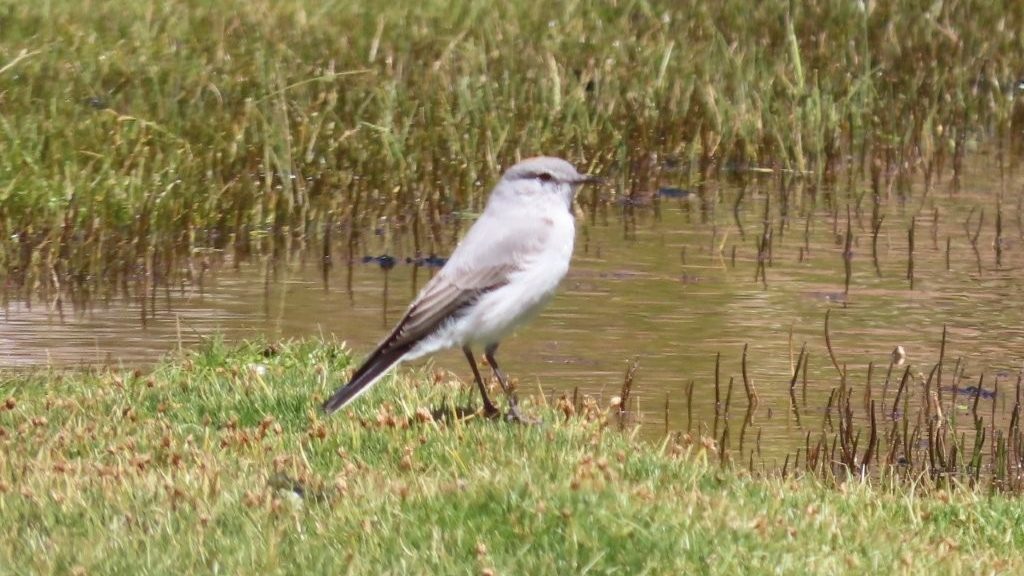
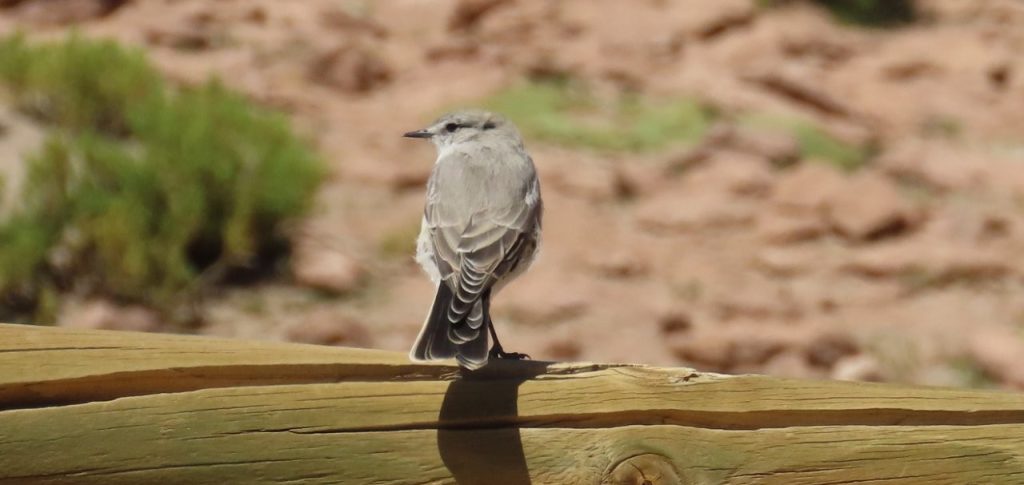
Some of my favorite discoveries were the little birds that most visitors probably drive right past. Ground-tyrants, cinclodes, sierra finches, miners, earthcreepers, thrushes, doves, and sparrows all seemed perfectly adapted to this harsh landscape. Many were perched on fence posts or darting through the low shrubs near wetlands and desert valleys.
Birds of Prey
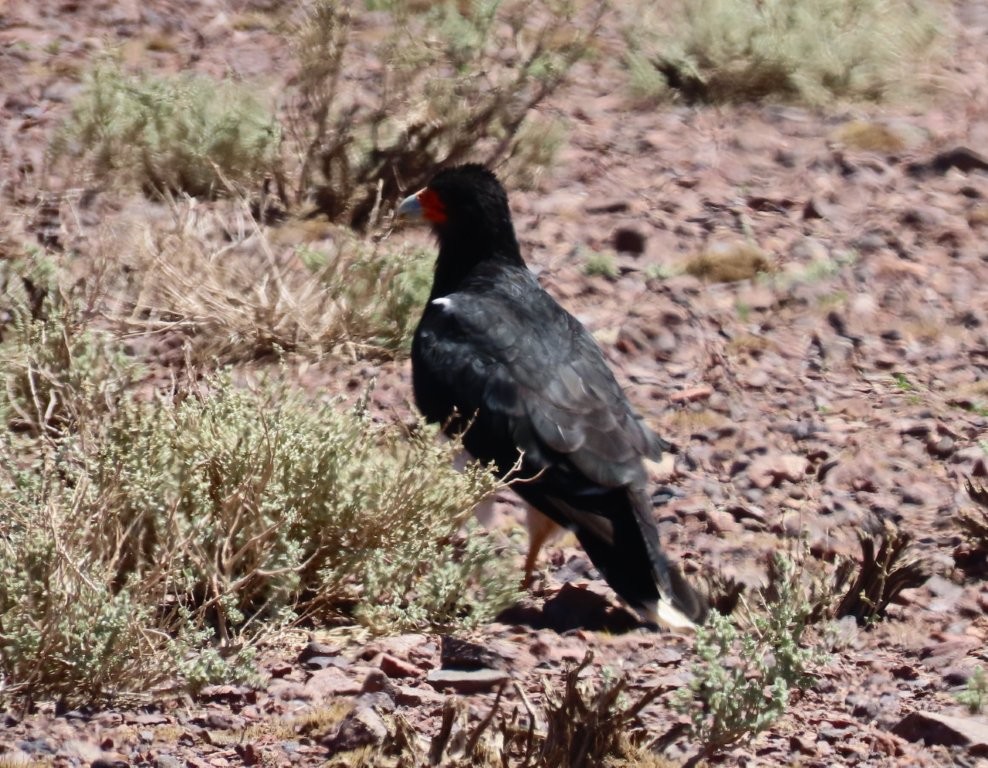
We only had one memorable raptor sighting, but it was a good one. A Mountain Caracara perched along Route B-207 long enough for me to grab a few photos before it flew off. Keep looking toward rocky hillsides and especially fence posts—you never know what might be watching.
Kari’s Wildlife Tip
You don’t need to know every species to enjoy the birds in the Atacama. I certainly didn’t. I simply kept my camera ready, took photos whenever something caught my eye, and identified many of them later using the Merlin App. It’s an easy way to appreciate the incredible diversity without feeling like you need to become a serious birder.

PLAN YOUR TRIP WITH OUR
FAVORITE TOOLS
– Best Lodging site: Booking.com
– Book Day Tours here: Viator.com
– Rent Cars here: DiscoverCars.com
Vicuñas and Other Mammals
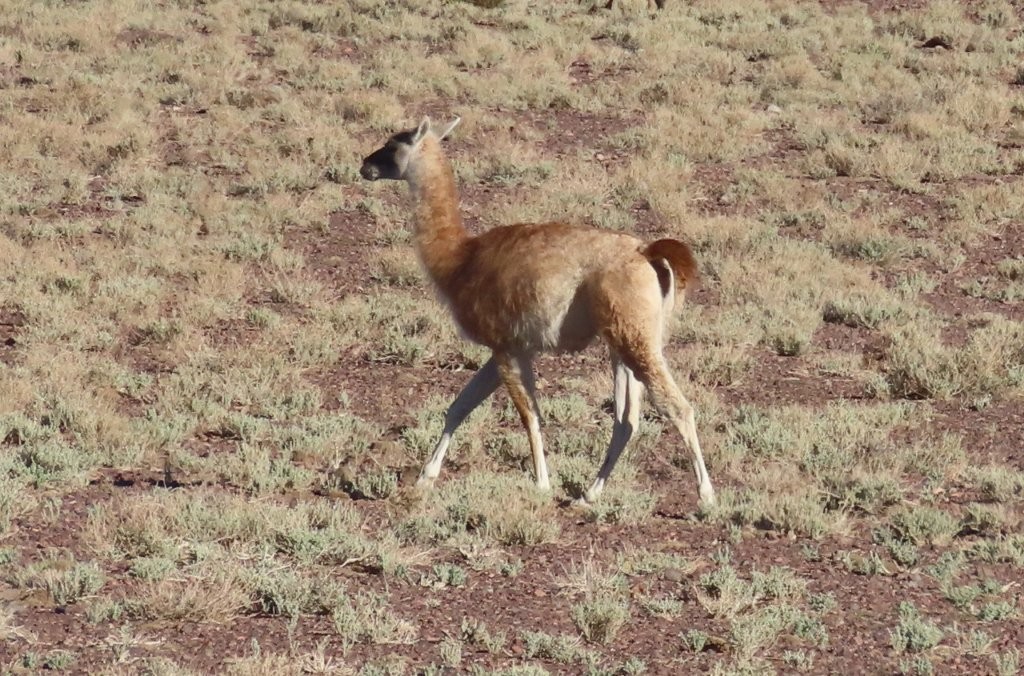
One of the biggest wildlife highlights of our time in the Atacama Desert was seeing wild camelids grazing across the high-altitude plains. At first glance, South America’s camelids all look remarkably similar, but a few simple differences make them much easier to identify.
Vicuña
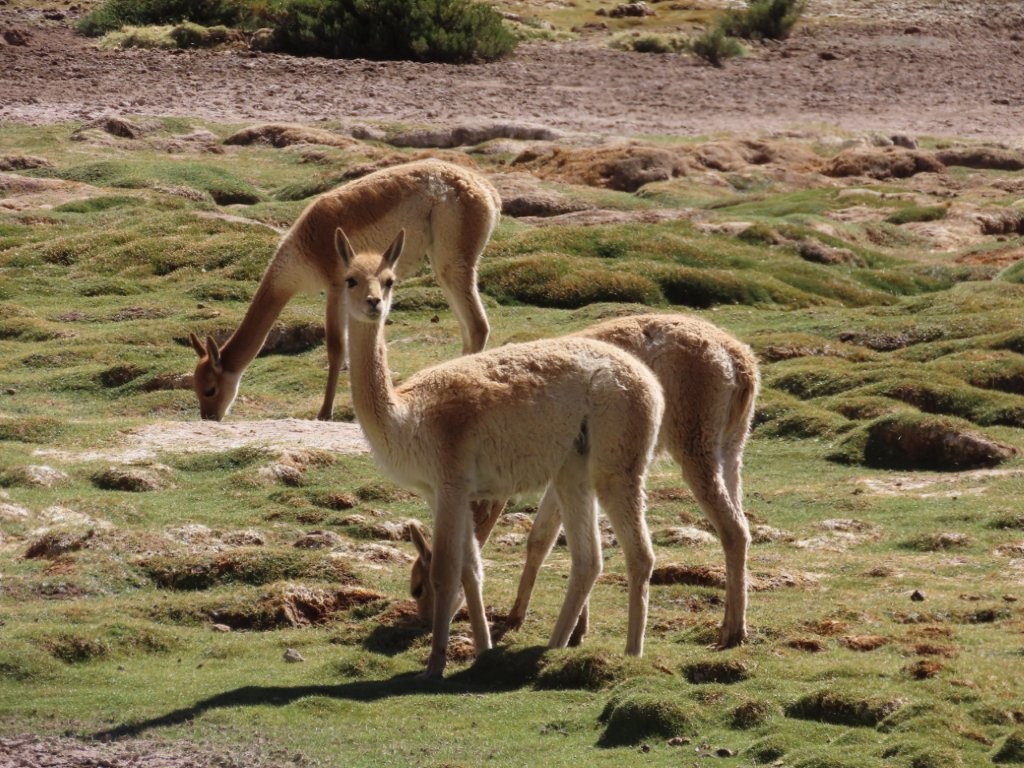
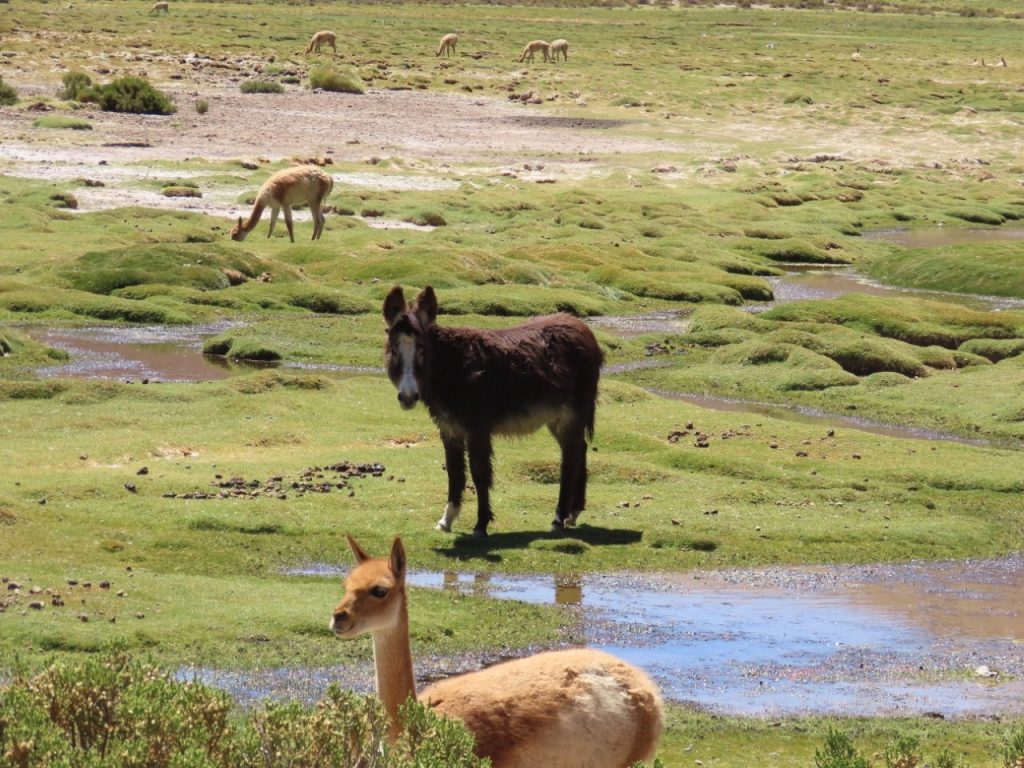
Vicuñas are the wild camelids you’re most likely to see in the high Andes. They’re the smallest of South America’s camel family, with a slender build, light tan back, white chest, and delicate face. We spotted them grazing in small groups near wetlands and grassy areas at higher elevations.
Guanaco
Guanacos are also wild, but they’re noticeably larger and stockier than vicuñas. Their coloring is generally a richer reddish-brown with a white underside. During our trip, we encountered them at somewhat lower elevations than the vicuñas, often in open desert landscapes. We also saw tons of them while down in Patagonia.
Llama
Unlike vicuñas and guanacos, llamas are domesticated. If you see one near a village, farm, or with people, it’s probably a llama. They also tend to have a heavier build, shorter legs, and much woollier coats than their wild cousins.
Kari’s Wildlife Tip
When in doubt, don’t worry about identifying them immediately. Just enjoy watching them. I found it much easier to tell the difference after seeing all three over several days.
Culpeo Fox
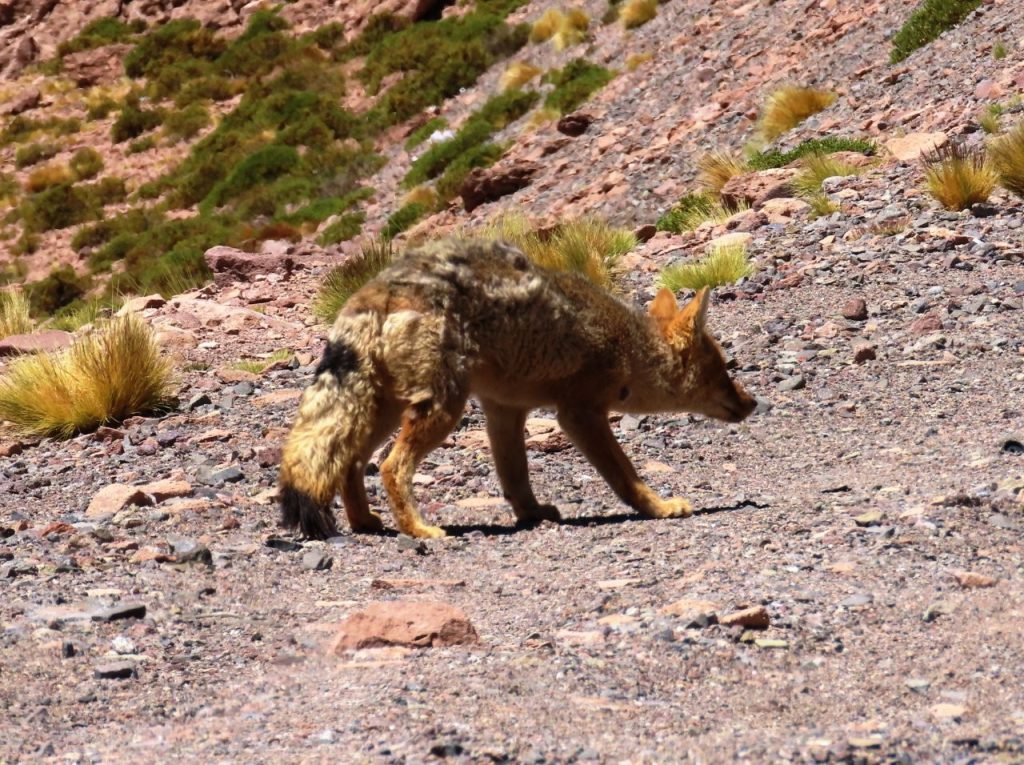
Our most unexpected mammal sighting was a Culpeo Fox walking along the roadside. Often called the Andean fox, it’s larger than many people expect, with a reddish-gray coat, pointed ears, and a bushy tail. We only saw one during our 17 days in the Atacama, making it one of our most memorable wildlife encounters.
Other Animals You May Encounter
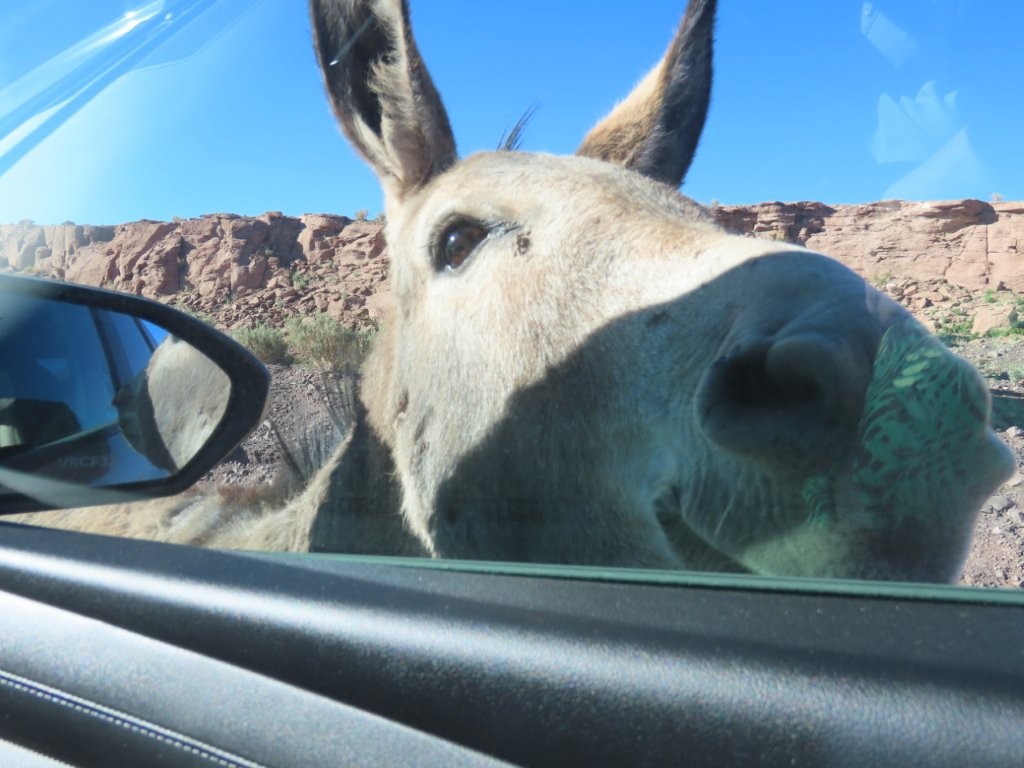
Depending on where you explore, you might also spot wild donkeys, especially in more remote areas. One curious donkey even wandered over to inspect our car, giving us one of the funniest photos from the trip. Lizards were another common sight, especially on warm, sunny days around rocky areas.

Where We Had Our Best Wildlife Sightings
Wildlife can appear almost anywhere in the Atacama Desert, but we had our best luck around wetlands, lagoons, and high-altitude marshes where fresh water attracts both mammals and birds. There’s never a guarantee of what you’ll see, but these were our most rewarding wildlife stops.
Laguna Chaxa
Laguna Chaxa is one of the best places to see flamingos in the Atacama Desert. We saw both Chilean and Andean Flamingos here, along with Andean Avocets, Puna Plovers, Baird’s Sandpipers, and several other water birds. If you’re taking a Piedras Rojas and Altiplanic Lagoons Tour, Laguna Chaxa is usually one of the featured stops.
Rainbow Valley and Route B-207
Rainbow Valley is better known for its colorful hills than its wildlife, but we still spotted several interesting desert birds along the drive, including finches, doves, and our only Mountain Caracara. This is also where we saw our only Guanaco in the Atacama, due to it being at a lower elevation. Keep an eye on fence posts, rocky outcrops, and low shrubs as you explore the area.
Flamingos Lagoon and Machuca Wetlands
This was one of my favorite wildlife stops of the entire trip. It’s the only place where we saw all three species of flamingos together—Chilean, Andean, and James’s Flamingos. We also photographed Vicuna, wild donkeys, ducks, geese, coots, grebes, shorebirds, and several small desert birds. If you’re taking a tour to the El Tatio Geysers, many will stop at the Machuca Wetlands on the return journey, making this an excellent opportunity to enjoy the wildlife.
Vado Río Putana
Located just beyond the Machuca Wetlands, Vado Río Putana turned out to be one of our most productive wildlife locations. We saw tons of vicuñas grazing nearby, along with Andean Geese, Giant Coots, Puna Teals, Lesser Yellowlegs, Cinclodes, Plovers, Finches, and several shorebirds. Most visitors don’t continue this far, so you’ll likely need a rental car to visit.
Laguna Diamante
During our visit, Laguna Diamante rewarded us with Slate-colored and Horned Coots, Silvery Grebes, Crested Ducks, Andean Gulls, Baird’s Sandpipers, and our only Culpeo Fox. If you’re taking a Ruta de los Salares Tour, this may be one of the wildlife stops along the route.
Mirador Quebrada Quepiaco
The wetlands below this scenic overlook gave us excellent views of vicuñas, Andean Flamingos, Andean Geese, Crested Ducks, and several other water birds. Like Laguna Diamante, this area is often included on Ruta de los Salares Tour itineraries, giving visitors another opportunity to enjoy the Atacama’s surprisingly rich wildlife.
We self-drove to all of these places, allowing us time to linger and take photos. But as mentioned, many of the paid tours also stop for wildlife viewing. Check out all our recommended tours here.
Wildlife Watching Tips
- Start early if you can. Wildlife is often more active during the cooler morning hours.
- Slow down and scan the landscape. Many Desert Atacama animals blend surprisingly well into the desert, and we spotted several simply because we weren’t in a hurry.
- Fence posts is where a lot of birds hang out – keep scanning those.
- Bring binoculars if you have them. They’re especially helpful for spotting birds across lagoons and wetlands.
- A camera with a zoom lens makes a huge difference. I use the Canon SX70 with 65x optical zoom. Many of my wildlife photos would have been impossible with just a phone.
- Pull over where it’s safe. Many of our best sightings were at designated viewpoints or wide roadside pullouts. Sometimes I watch through an open window in the car.
- Give wildlife plenty of space. Watching natural behavior from a respectful distance always makes for a better experience—and better photos.
- I use the free Merlin App to identify birds. I’m a “shoot first (with my camera), identify later” kind of birder. And if you don’t know what type of bird or animal it is, that’s fine – just enjoy watching them.
If you enjoy wildlife watching, keep your camera handy—you’ll almost certainly notice more than you expect.
Final Thoughts on Atacama Desert Animals
Wildlife wasn’t why Bill and I came to the Atacama Desert, but it soon became one of my favorite parts of the experience.
You don’t have to hike for miles or be an avid birder to enjoy the animals of the Atacama Desert. Slow down, keep your eyes open, and spend a little extra time around the wetlands and lagoons. You may be surprised by just how much life thrives in one of the driest places on Earth.
And don’t forget to keep your camera handy. Some of our favorite wildlife sightings happened between the major attractions, proving that in the Atacama Desert, the journey really is part of the adventure.
More Atacama Desert Travel Guides
Here are some more guides about visiting the Atacama Desert and Chile. If you’d like to receive emails when I’ve posted new content to the site, please complete the short form above.
Visit the Atacama Desert: A Self-Drive Guide
Atacama Desert Tours: How to Explore It Without Driving
Atacama Desert Map: Explore The Desert, One Road At A Time
Atacama Desert Altitude – How To Keep It From Ruining Your Trip
Atacama Desert Night Sky: How to Experience the Stars
Atacama Desert Animals: What You Can See & Where
Where to Stay in the Atacama Desert: My Top Hotel Picks for Every Budget
Day Trip #1 – West: Valle De La Luna Atacama + Magic Bus + Ckari Sunset
Day Trip #2 – South: Laguna Chaxa Flamingos + Valle de Jere
Day Trip #3 – Northwest: Rainbow Valley Atacama + Petroglifos Yerbas Buenas
Day Trip #4 – North: Machuca Wetlands + Vado Rio Putana
Day Trip #5 – East: Ruta de los Salares
