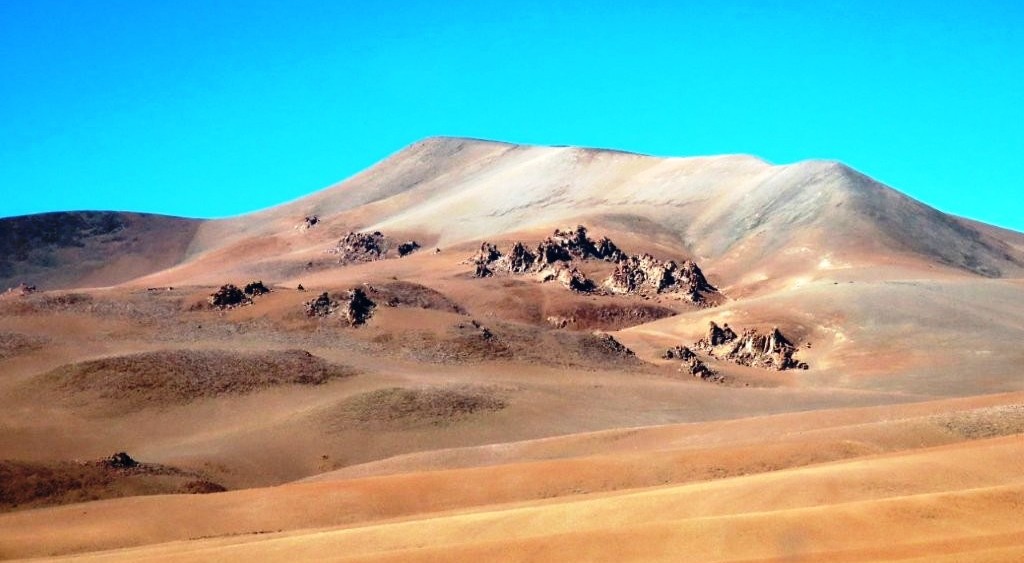
The Atacama Desert took my breath away almost every day—and after 17 days exploring volcanoes, flamingos, salt flats, and star-filled skies, I didn’t want to leave.
The Atacama Desert in northern Chile is one of the most spectacular places I’ve visited anywhere in the world, yet it often gets overlooked in favor of more well-known South American destinations like Patagonia and Machu Picchu. I promise, it’s the kind of destination that deserves a spot on your Bucket List.
But planning a trip here can feel intimidating. The Atacama Desert looks incredibly remote on a map, and many travelers wonder: How do I get there? Should I rent a car? How long should I stay? Bill and I spent 17 days thoroughly exploring the Atacama region with a rental SUV during our four-month South America adventure.
In this guide, I’ll show you exactly how to visit the Atacama Desert on your own, no matter how much time you have. The goal is simple: help you spend less time stressing over logistics and more time enjoying one of Chile’s most unforgettable destinations.
Quick Overview
If you’re short on time:
- The Atacama Desert is one of the most spectacular destinations in Chile.
- Most travelers base themselves in the town of San Pedro de Atacama.
- A rental car gives you the most flexibility, but tours work well too.
- I recommend spending at least 4-5 days here.
- If I only had time for a few highlights, I’d prioritize Valle de la Luna, Rainbow Valley, a scenic drive along Ruta 27, and a stargazing experience. If altitude doesn’t bother you, add either El Tatio Geysers or Piedras Rojas.

Why Visit the Atacama Desert?
The Atacama Desert is one of those rare places that took my breath away.
After visiting more than 24 countries across seven continents, it takes a lot to leave me speechless. Yet almost every day in the Atacama, I found myself staring across the horizon thinking, “I can’t believe I’m actually here.”
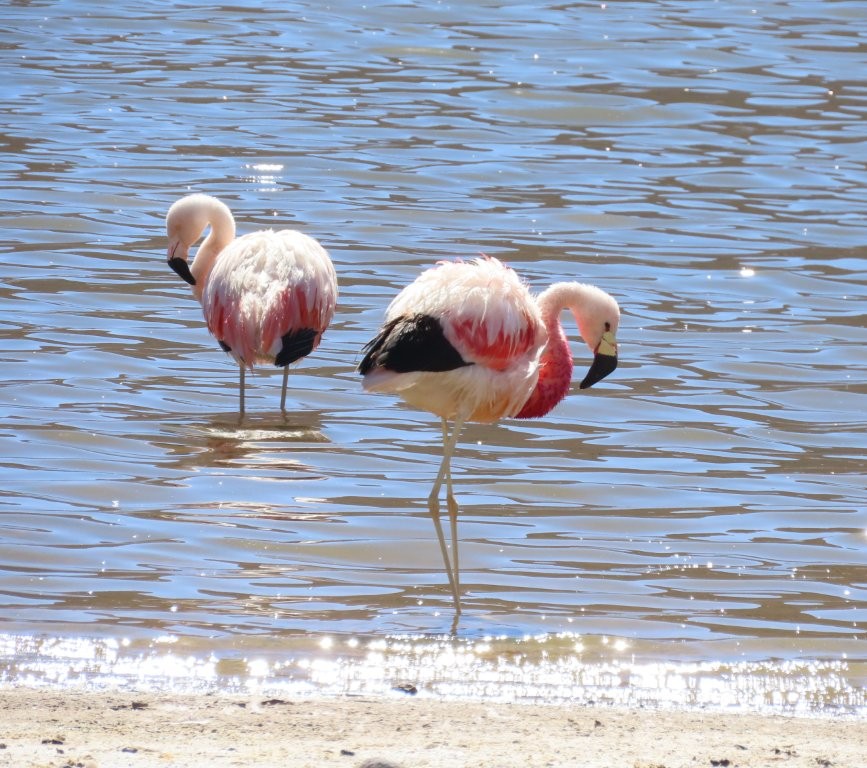
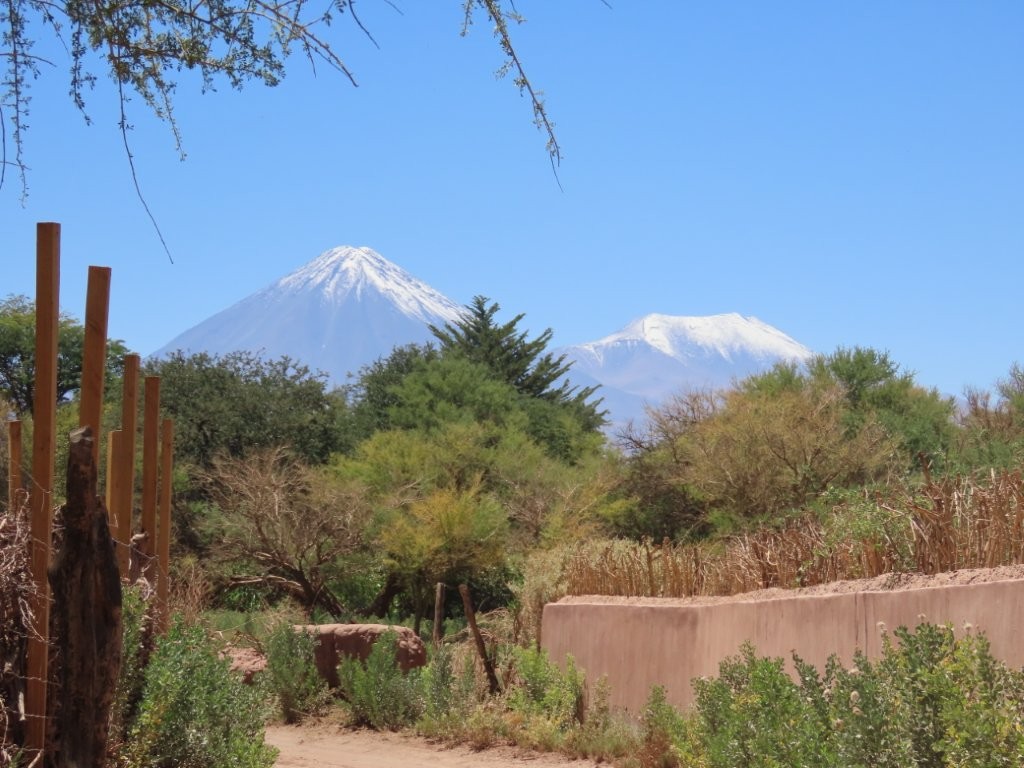
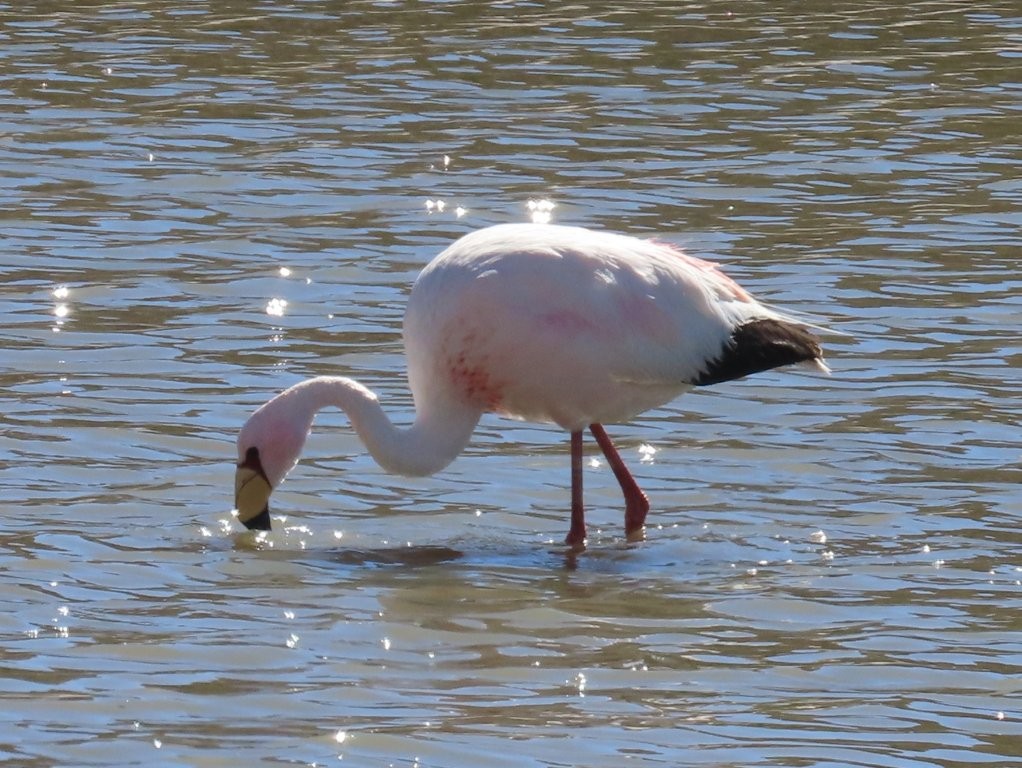
One day we watched three different species of flamingos feed in high-altitude lagoons beneath snow-capped volcanoes. The next, we drove through landscapes that looked like Mars. At night, the sky exploded with more stars than I thought possible.
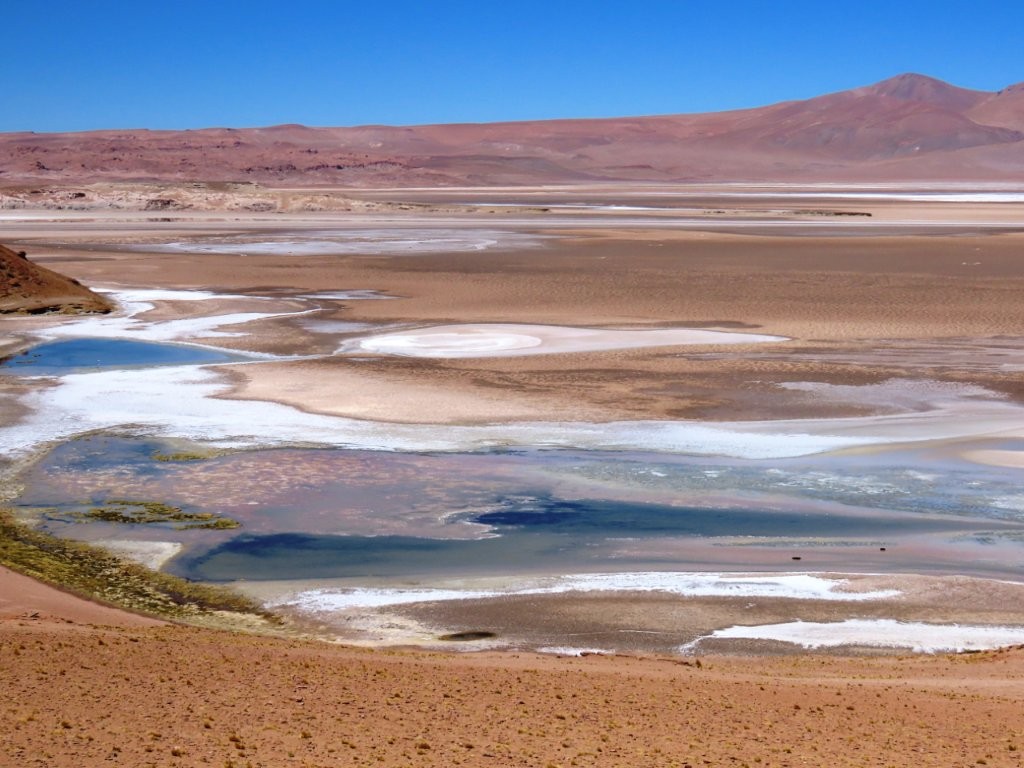
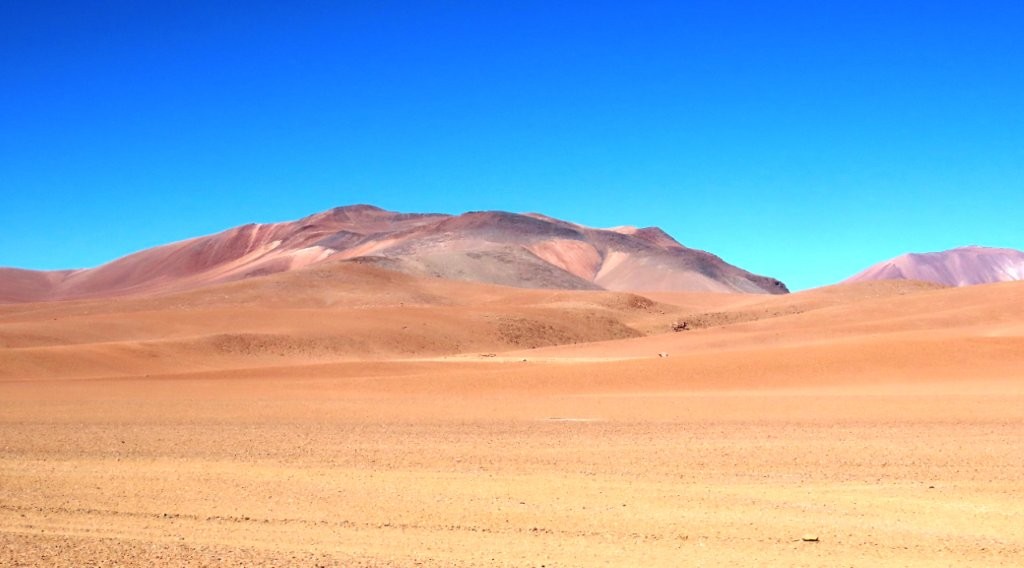
The Atacama Desert isn’t just sand and rocks. It’s colorful mountains, wildlife-filled wetlands, salt flats, volcanoes, ancient landscapes, and some of the clearest night skies on Earth.
If you’re looking for a destination that feels truly different from anywhere else you’ve been, the Atacama Desert delivers.
Where is the Atacama Desert?
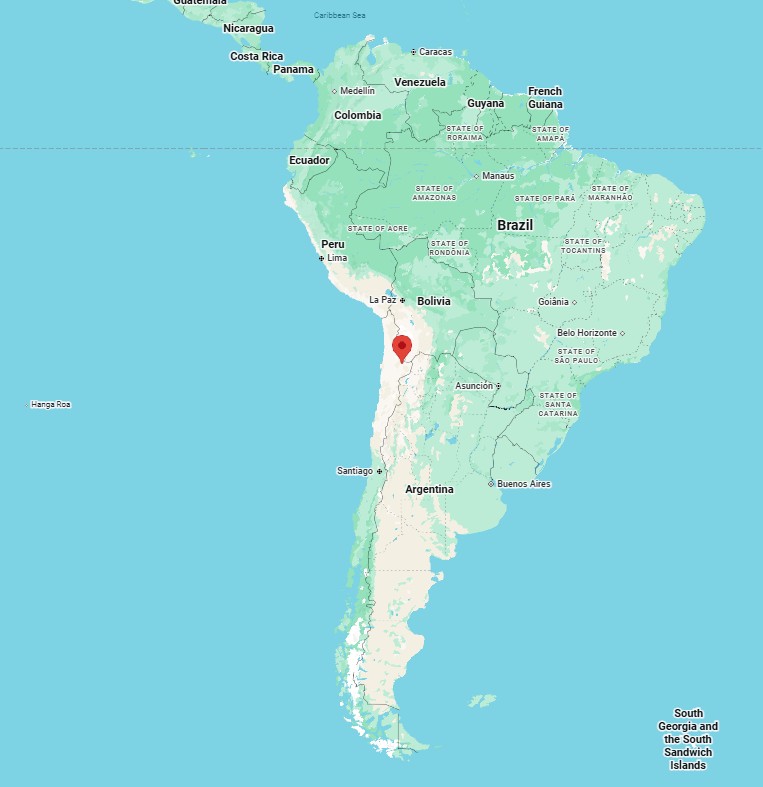
Many people wonder: Where IS the Atacama Desert located? And how do I find an Atacama Desert map? The Atacama is located in northern Chile, stretching between the Pacific Ocean and the Andes Mountains, right near the borders of Bolivia and Argentina.
At first glance, the Atacama Desert looks incredibly remote—and that’s a huge part of its appeal. Surrounded by volcanoes, salt flats, and some of the driest landscapes on Earth, it feels a world away from Chile’s major cities.
While it covers more than 40,000 square miles, most travelers base themselves in the small desert town of San Pedro de Atacama, which serves as the gateway to the region’s most popular attractions. One thing many first-time visitors don’t realize is that the Atacama is a high-altitude desert, with some scenic drives reaching well above 13,000 feet.
Despite its isolated appearance, the Atacama Desert is one of Chile’s most popular destinations and is surprisingly accessible for independent travelers.

How to Get to the Atacama Desert
The good news is that it’s much easier to reach than most people expect. We flew from Santiago (SCL) to Calama (CJC), then made the short drive — about 90 minutes — over to San Pedro de Atacama. By the time we arrived, we were surrounded by dramatic desert scenery and already planning our first excursion.
Most travelers will follow this same route: fly into Calama from a major South American city such as Santiago or Buenos Aires or Lima, then rent a car or take a transfer to San Pedro de Atacama.
Do You Need a Rental Car in the Atacama Desert?
You do not need a rental car to visit the Atacama Desert, but having one changes the experience.
For us, renting a car was absolutely the right decision because of the freedom it gave us. We could stop whenever we spotted wildlife, spend extra time photographing a landscape, adjust for altitude, or simply change plans if we weren’t feeling up for a long day. Some of our favorite memories came from unplanned stops that would have been impossible on a tour bus.
Unexpected wildlife encounters became one of my favorite parts of driving ourselves around the region. If you’re curious what we saw, my Atacama Desert Animals guide shares the best places to spot flamingos, vicuñas, foxes, and other wildlife.
A rental car also lets you explore on your own schedule instead of building every day around tour departure times. And it definitely helped that we had one person to drive, one person to navigate.
Why We Rented an SUV
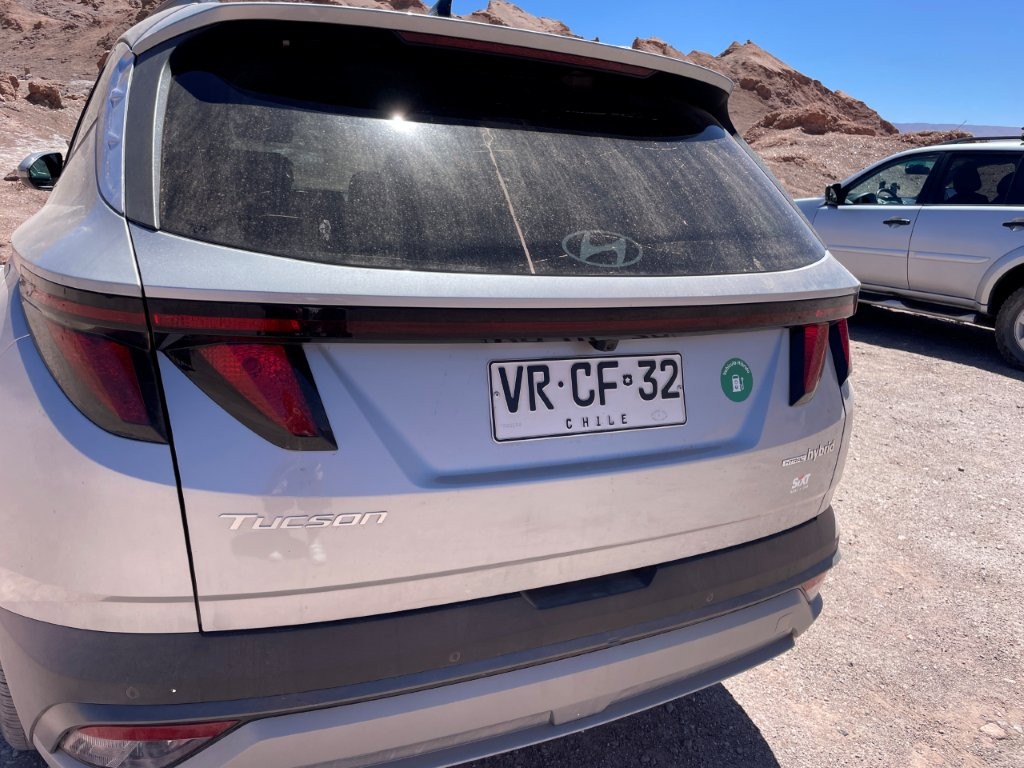
We rented a Hyundai Tucson with all-wheel drive (AWD) after several friends recommended getting a vehicle with a higher clearance. We did not do any wild off-roading, and most of the time we stuck to established roads. Still, I was glad we had an SUV when the road turned rocky, sandy, or uneven.
The high clearance probably mattered more than the all-wheel drive. Bill is a skilled driver, and we went slow through rough sections. Still, this is one of those places where I’d rather have a little more vehicle than I need.
We booked our car through DiscoverCars.com because it made it easy to compare prices across multiple rental companies. It ended up being one of the simplest parts of planning our Atacama trip.
Reasons to Book Tours Instead
If you do not want to drive remote roads, navigate without cell service, or worry about the altitude, taking an Atacama Desert tour removes a lot of stress. Someone else handles the route, timing, tickets, and logistics so you can just focus on the scenery.
I especially understand taking tours for long, high-altitude days or very early starts, like El Tatio Geysers or Piedro Roja. Here are some of the best tours to take from San Pedro de Atacama.
How Many Days Do You Need in the Atacama Desert?
The honest answer? More than you think you will.
Bill and I spent 17 days in the region, which is far longer than most travelers do. But it gave us a good sense of what can realistically fit into shorter itineraries. After seeing how much there is to do — and how much altitude might affect the pace of your trip — I would not try squeezing the Atacama Desert into a long weekend.
If You Have 3 Days
Three days is enough to see some of the highlights, but you’ll need to be selective.
I would spend your first day settling into San Pedro de Atacama and visiting a lower-elevation attraction like Valle de la Luna. On your second day, I’d consider Rainbow Valley or Laguna Chaxa. Then on your final day, choose one of the region’s iconic higher-altitude excursions, such as El Tatio Geysers or Piedras Rojas.
And no matter how short your visit, make time for a late-evening stargazing experience. Whether you book a guided astronomy tour or simply step outside your accommodation, don’t miss the Atacama Desert night sky. It’s easily one of the most unforgettable experiences in northern Chile.
If You Have 5 Days
Five days is what I would consider the sweet spot for most travelers.
That gives you enough time to ease into the altitude, enjoy several day trips, and avoid feeling like you’re constantly rushing from one attraction to the next. You can start with lower-elevation days like Valle de la Luna and Laguna Chaxa before moving on to moderate-altitude places like Rainbow Valley. For your final day, choose one of the higher-altitude destinations such as Piedras Rojas, or El Tatio.
Five days also gives you flexibility. If you’re tired after a long travel day or discover that altitude affects you more than expected, you still have room to adjust your plans.
If You Have 7 Days or More
Seven days or more allows you to experience all that the Atacama Desert offers at a much more relaxed pace.
Instead of racing between attractions, you can build in rest days, spend more time looking for wildlife, linger at scenic viewpoints, and take advantage of changing light for photography. You can also explore some of the less-visited areas that many travelers skip when they’re short on time.
That’s where the Atacama really started to shine for us. Some of our favorite memories weren’t the famous attractions at all, but the quiet drives, unexpected wildlife sightings, and moments when we had an incredible landscape almost entirely to ourselves.
In general, I recommend visiting lower-elevation attractions first and saving higher-altitude destinations like El Tatio, Machuca, Ruta 27, or Piedras Rojas for later in your trip after you’ve had time to acclimate. Learn more in my Atacama Desert Altitude Guide.

PLAN YOUR TRIP WITH OUR
FAVORITE TOOLS
– Best Lodging site: Booking.com
– Book Day Tours here: Viator.com
– Rent Cars here: DiscoverCars.com
My Favorite Atacama Desert Day Trips
One of the things I loved most about visiting the Atacama Desert was how different each day felt. Instead of spending all our time in San Pedro de Atacama, Bill and I took a series of self-drive day trips in different directions, each with its own landscapes, wildlife, and scenery.
Some days we explored Mars-like valleys and dramatic rock formations. Other days were spent looking for flamingos, vicuñas, and other wildlife. We crossed remote desert plains, climbed into the Andes, and stopped more times than I can count for photos.
If you’re planning to visit the Atacama Desert on your own, these are the day trips I would prioritize.
| Day Trip | Difficulty | Highest Elevation | Best For |
| Day Trip #1 – Valle de la Luna & Magic Bus | Easy | 8,000 ft (2,400 m) | First self-drive, lower altitude, confidence-building |
| Day Trip #2 – Laguna Chaxa & Valle de Jere | Easy | 7,500 ft (2,300 m) | Flamingos, birdwatching, relaxed lower-altitude day |
| Day Trip #3 – Rainbow Valley & Yerbas Buenas | Moderate | 11,500 ft (3,500 m) | Colorful landscapes, wildlife, remote roads |
| Day Trip #4 – Machuca Wetlands & Vado Río Putana | Challenging | 14,700 ft (4,500 m) | Wildlife, birding, experienced high-altitude drivers |
| Day Trip #5 – Ruta de los Salares & Ruta 27 | Challenging | 14,764 ft (4,500 m) | Dramatic scenery, salt flats, final high-altitude drive |
#1 – WEST: Valle de la Luna, Magic Bus Atacama & Sunset
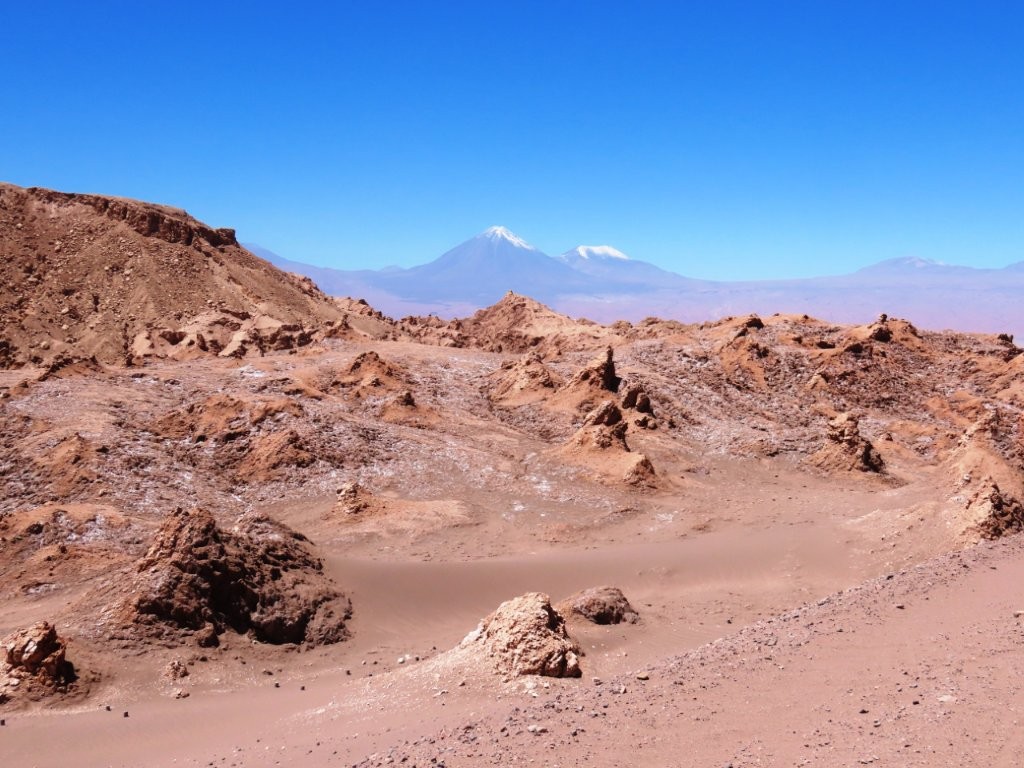
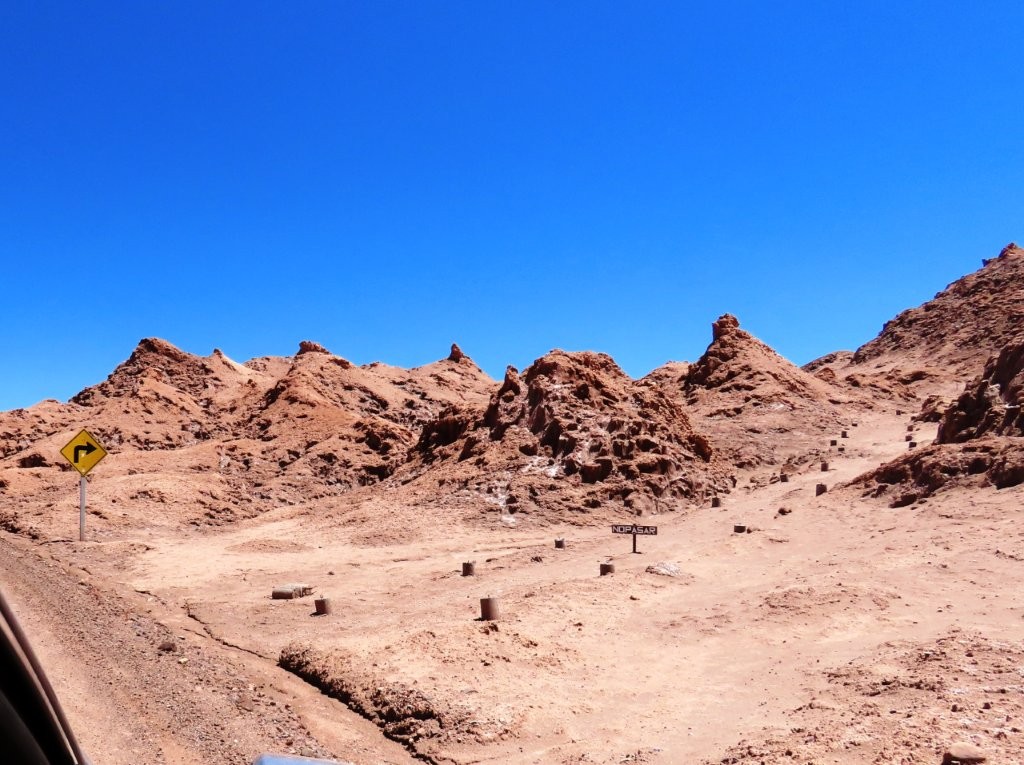
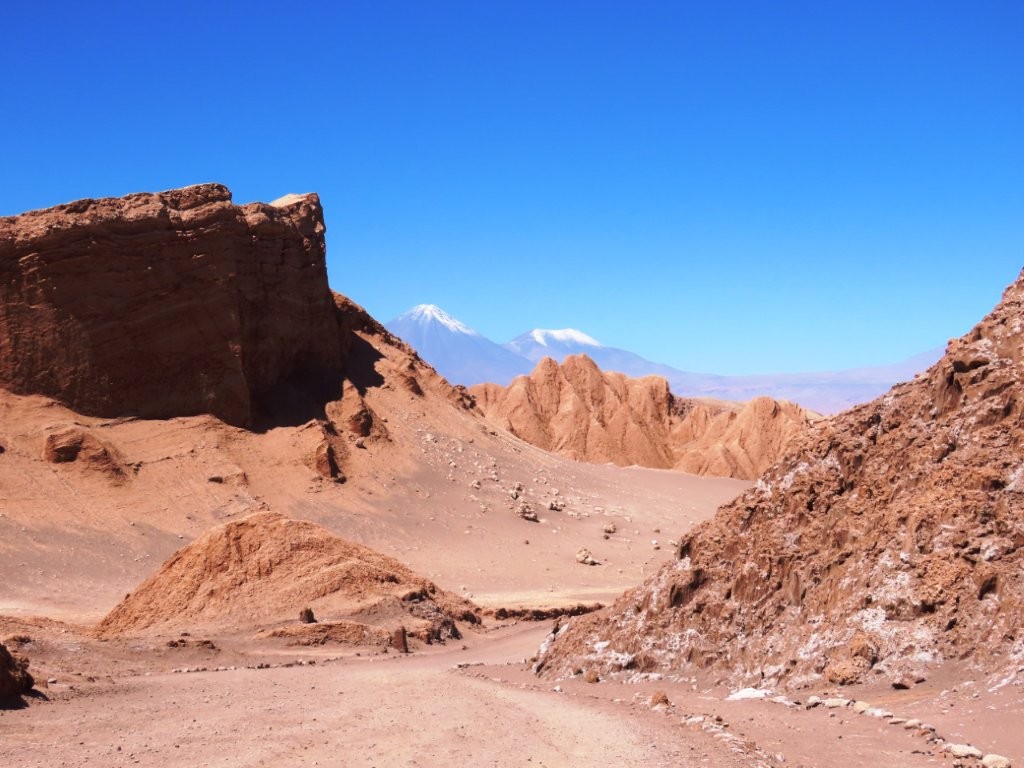
On your first day in the Atacama Desert, this is where I’d start. Valley of the Moon (Valle de la Luna) is just southwest of San Pedro de Atacama off Ruta 23, with dramatic rock formations, short hiking trails, and some of the most accessible “other planet” scenery near town.
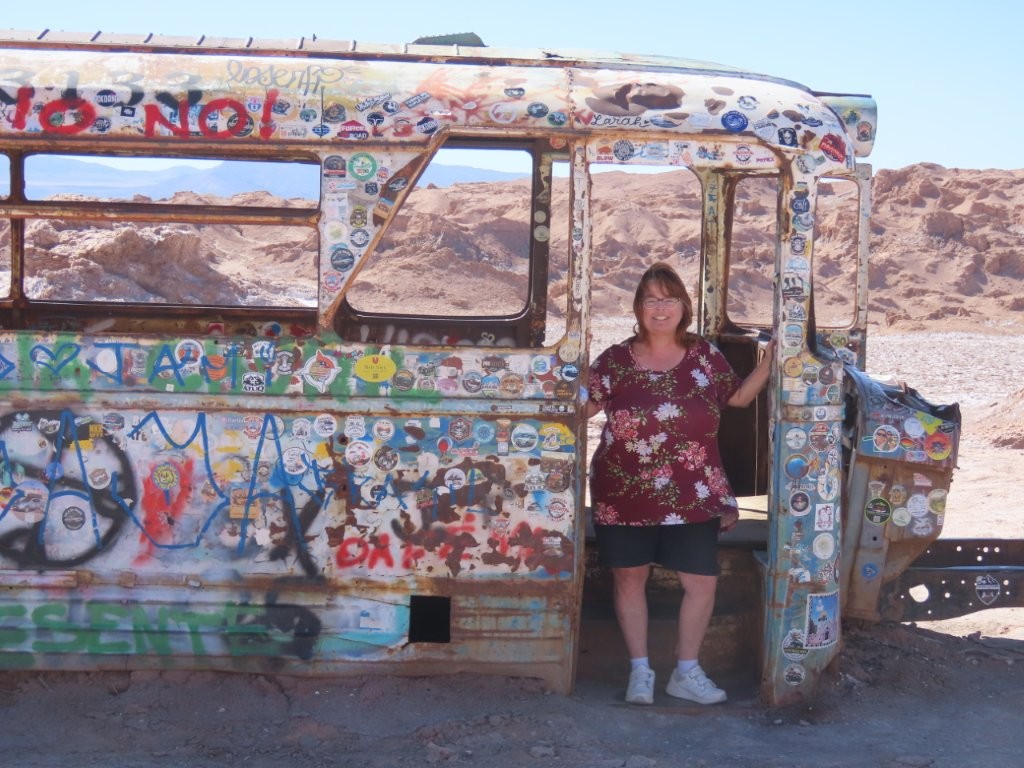
After exploring Valle de la Luna, you can add the quirky Magic Bus Atacama and finish with sunset from one of the nearby viewpoints. For maps, driving directions, ticket tips, parking notes, and the exact order I’d do it in, see my full Day Trip #1: West – Valle De La Luna Atacama + Magic Bus guide.
#2 – SOUTH: Laguna Chaxa & Valle de Jere
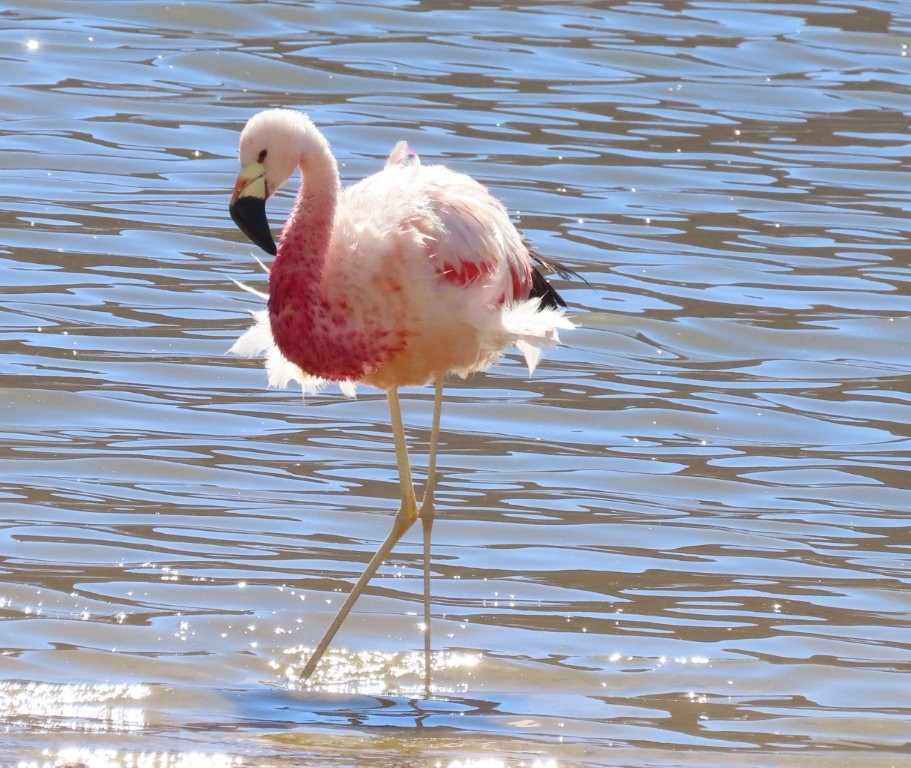
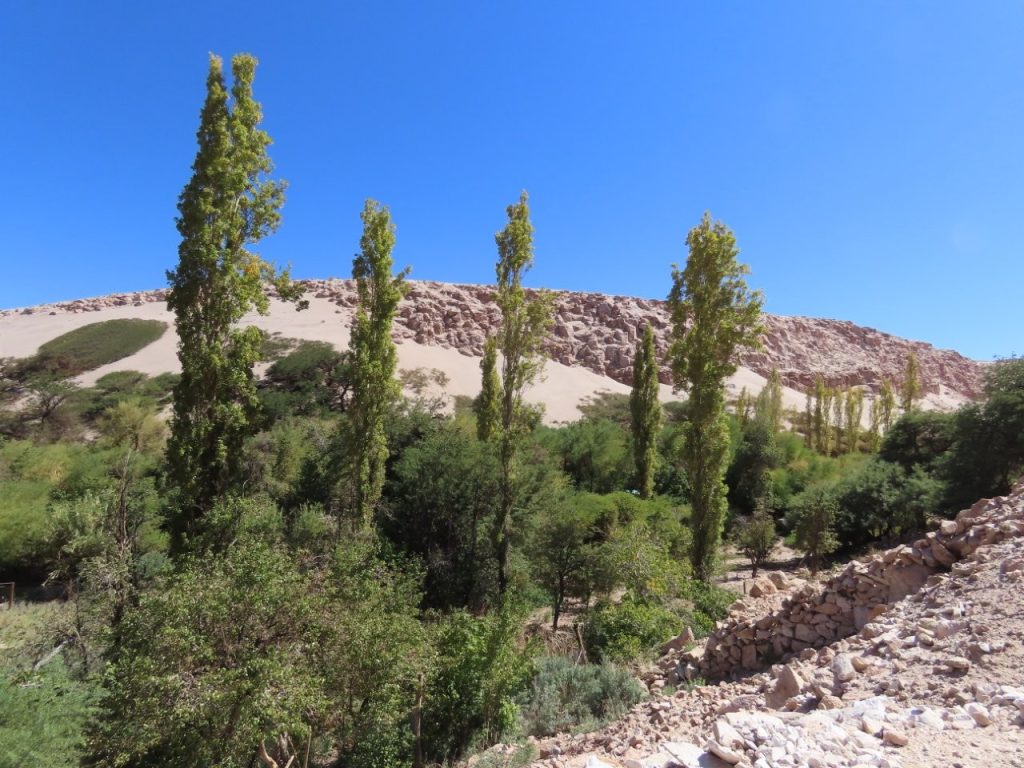
This easy day trip south of town on Ruta 23 combines Laguna Chaxa with Valle de Jere, a surprising green oasis near Toconao. It’s a great option for your first few days because the elevation is lower, the walking is manageable, and the flamingos make it feel completely different from the rocky desert landscapes closer to San Pedro.
This one does require you to buy your tickets online before arriving. For online ticket details, map pins, what to expect at each stop, and where the walking gets steep, see my full Day Trip #2: South – Laguna Chaxa Flamingos + Valle de Jere Guide.
#3 – NORTHWEST: Rainbow Valley & Yerbas Buenas
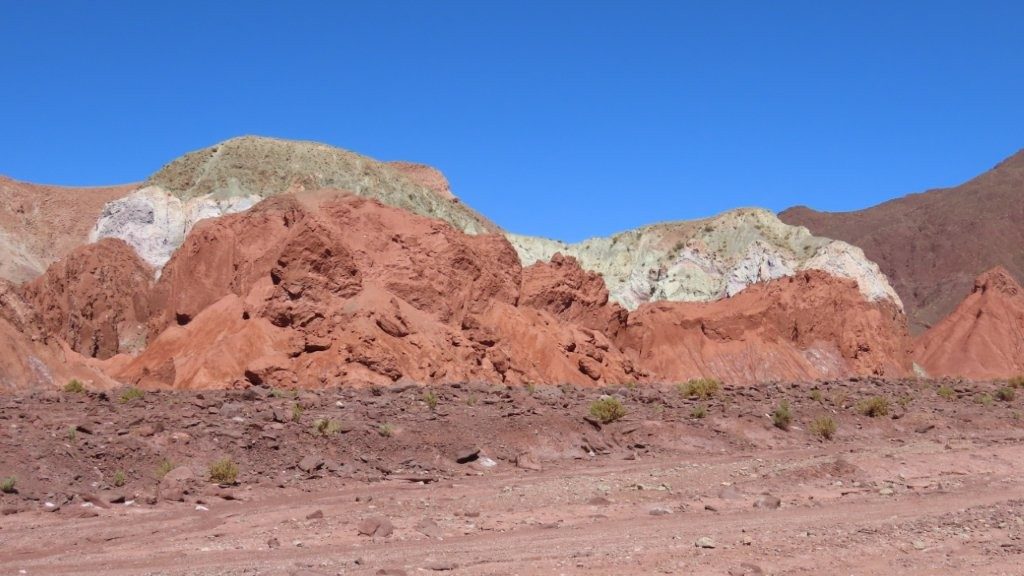
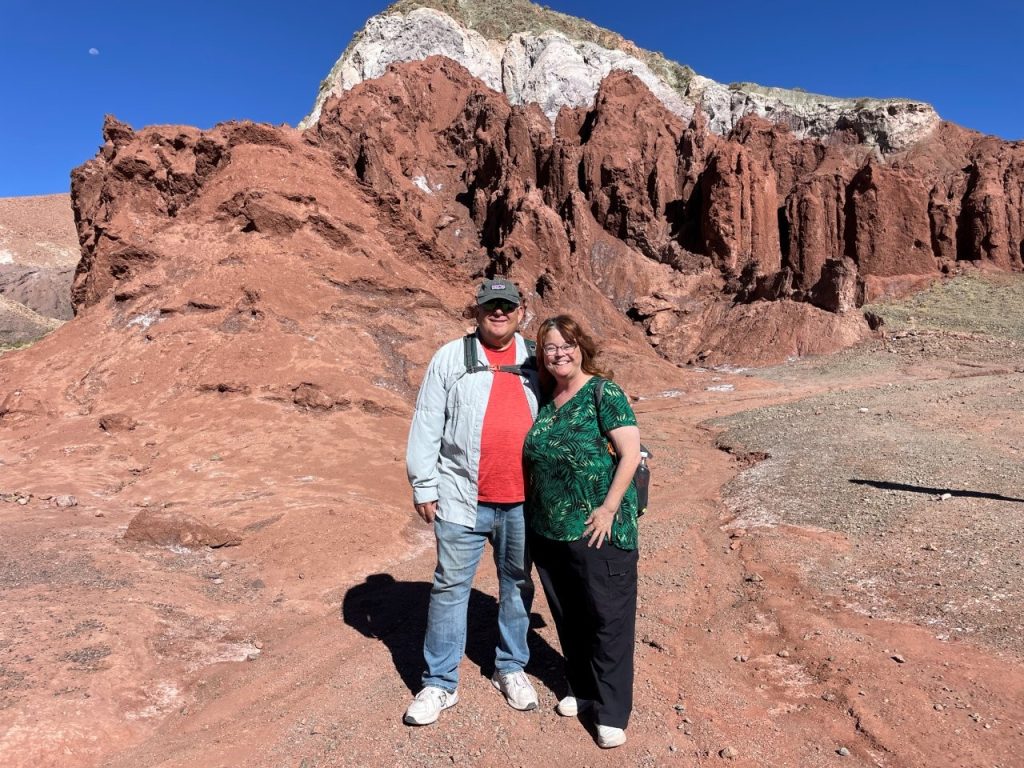
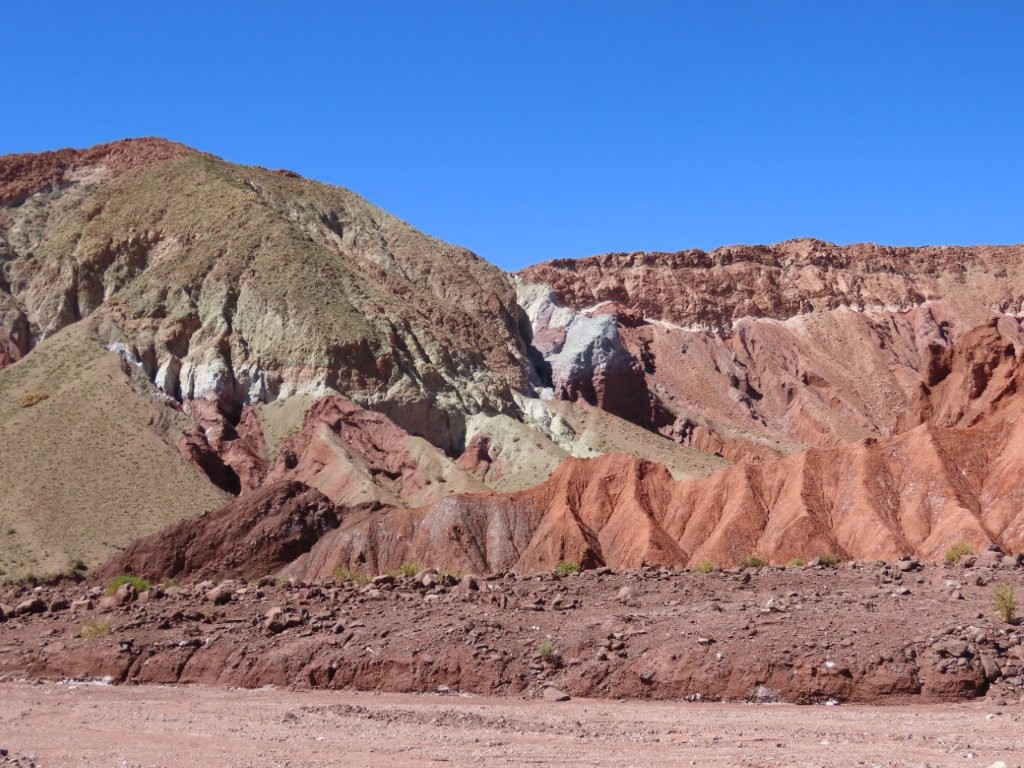
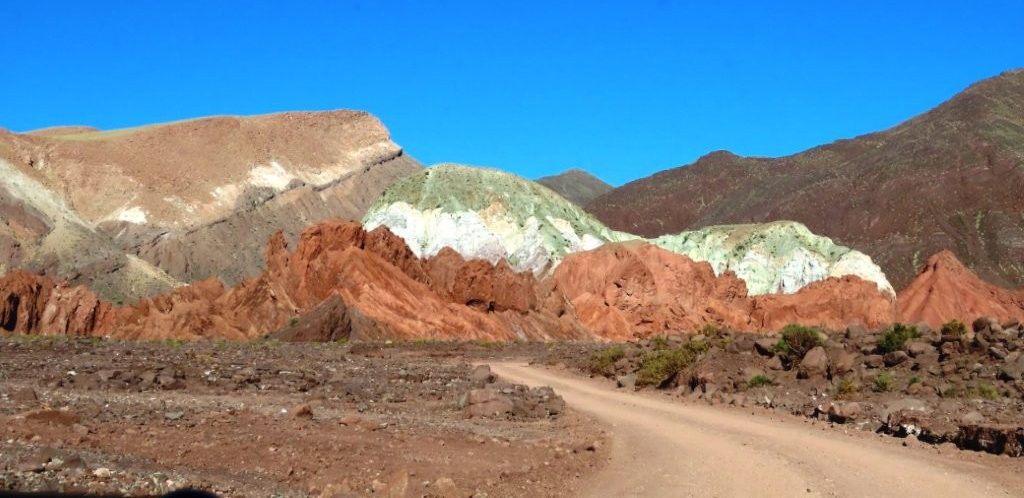
Northwest of San Pedro de Atacama, Rainbow Valley (Valle del Arcoíris) is famous for its colorful mineral-streaked mountains, but the drive along Ruta B-207 was part of the adventure. Along the way we spotted guanacos, wild donkeys, petroglyphs, and landscapes that seemed to change around every corner.
I’d especially recommend reading my full Northwest – Rainbow Valley and Yerbas Buenas Guide before you go because this is one place where maps, road notes, and whether to hire a guide really matter.
#4 – NORTH: Machuca & the High-Altitude Wetlands
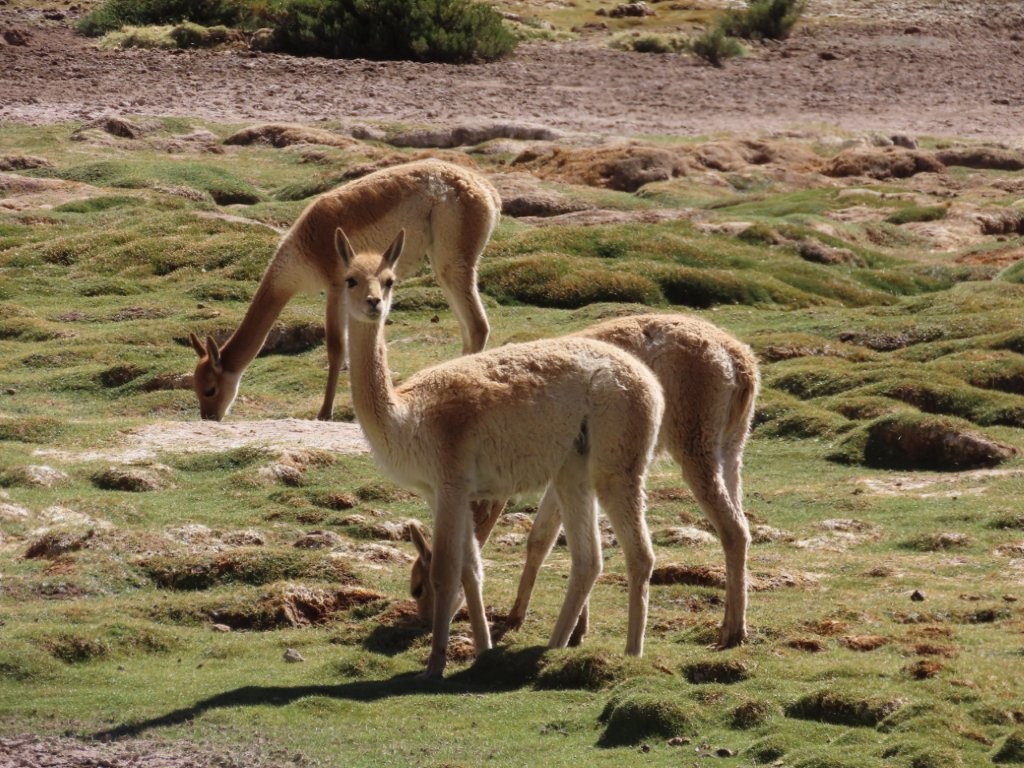
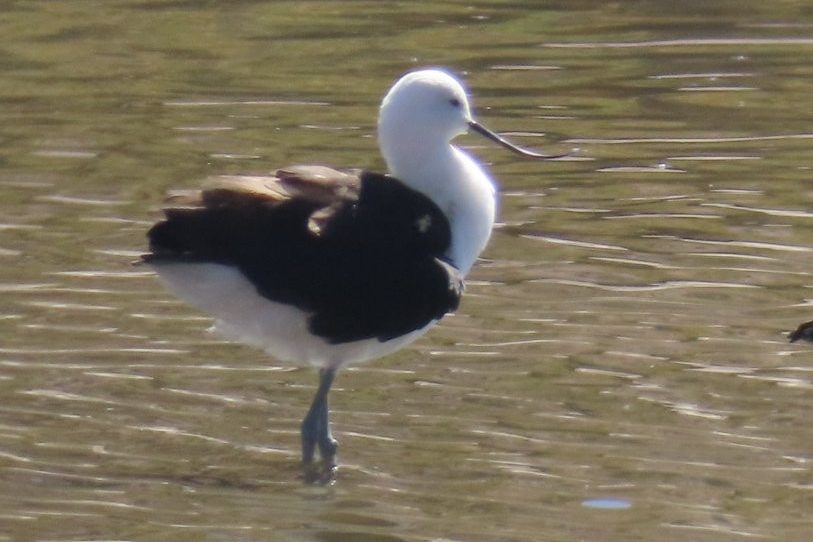
If wildlife and birds are high on your priority list, don’t miss the drive northeast from San Pedro de Atacama along Ruta B-245 toward Machuca, the Flamingo Lagoon, the Machuca Wetlands, and Vado Río Putana. We saw all 3 kinds of flamingos, vicuñas, high-altitude wetlands, and some of the most dramatic scenery of our entire trip.
This is a high-elevation day, so read my full North – Machuca and High-Altitude Wetlands Guide before you go for route notes, wildlife tips, bathroom information, altitude warnings, and where to stop safely.
#5 – EAST: Ruta 27 Toward the Argentina Border
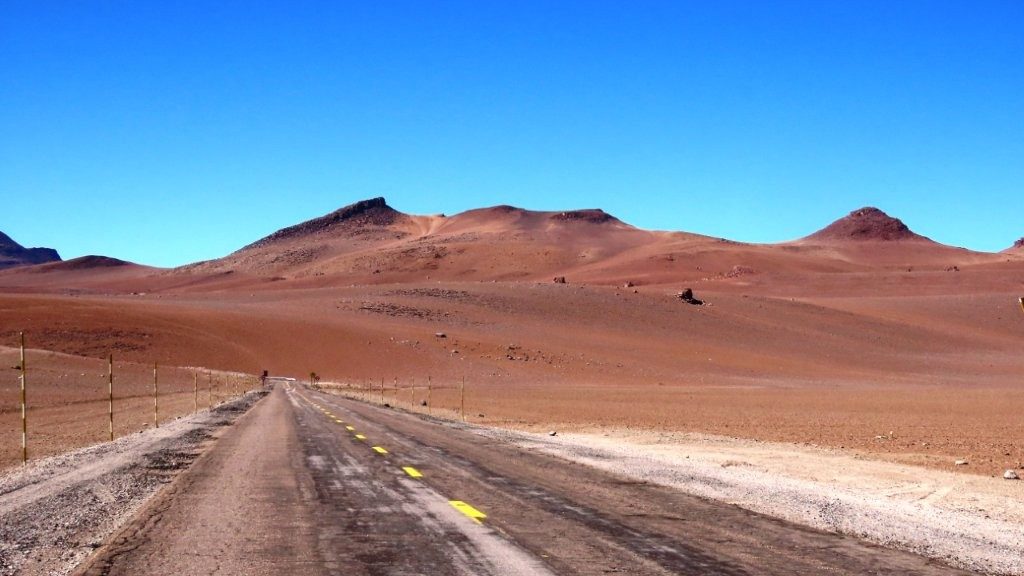
This was one of my favorite scenic drives in the Atacama Desert. Heading east from San Pedro de Atacama on Ruta 27, the volcanoes, lagoons, salt flats, vicuñas, flamingos, and constantly changing landscapes made it feel like several different day trips rolled into one.
This route climbs much higher than San Pedro de Atacama, so it’s best saved for later in your visit. My full East – Ruta de los Salares day trip guide includes the exact stops we made, map pins, elevation notes, bathroom reality check, and tips for pacing the day.
Other Things to do In the Atacama Desert
While the scenic drives were the highlight of our trip, they aren’t the only things to do in the Atacama Desert. In between those drives, here are a few other experiences to consider closer to town.
Experience the Night Sky
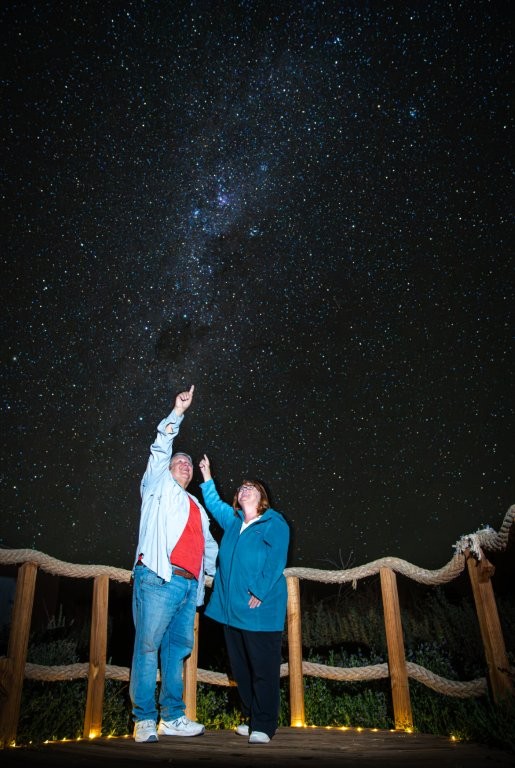
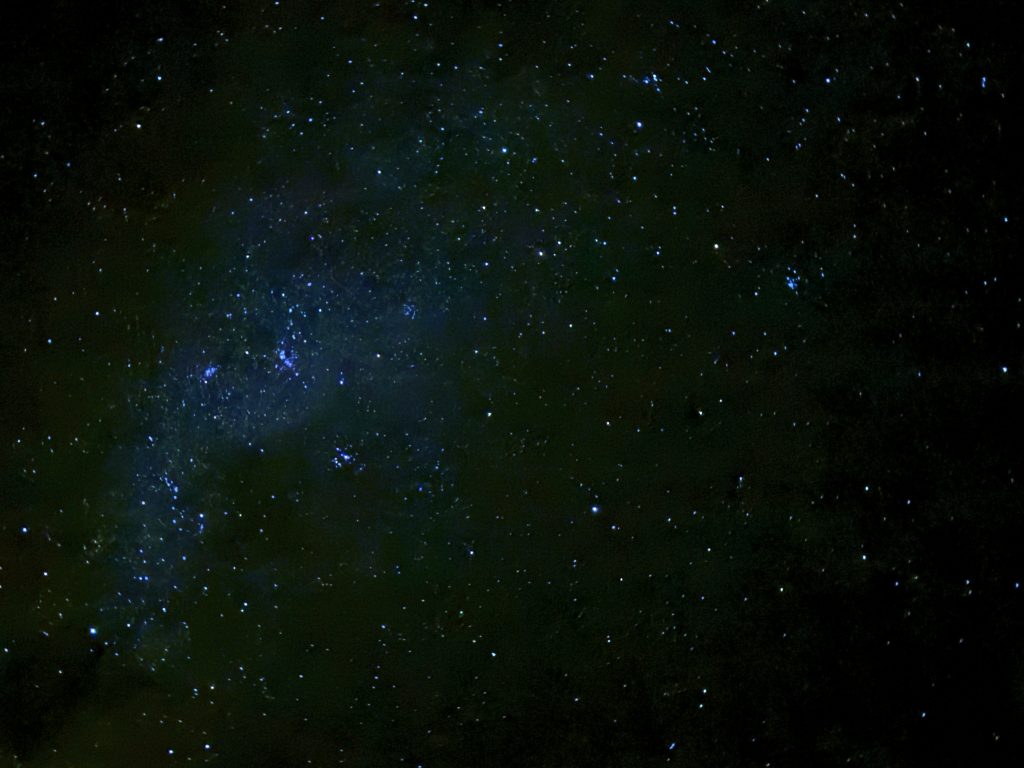
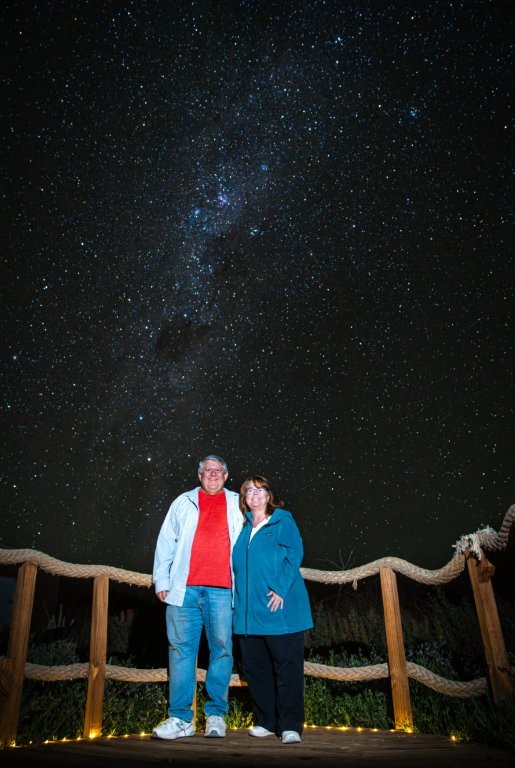
If I could recommend only one organized activity in the Atacama Desert, it would be a late evening stargazing experience.
The combination of high elevation, dry air, and minimal light pollution creates some of the best and darkest night-sky viewing conditions in the world. Even after spending nearly three weeks here, standing beneath thousands of stars and seeing the Milky Way stretch across the sky took my breath away.
We’ll share more details about our experience and recommended tours in our Stargazing in the Atacama Desert guide.
Visit the Salt Lagoons
There are lots of salt lagoons in the area south of San Pedro de Atacama that you can visit for a small fee.
Popular options include Laguna Piedra, Laguna Cejar, Laguna Tebinquinche, and the Baltinache lagoons. Some visitors consider these a highlight of their trip, especially if they enjoy unique natural experiences and photography.
Laguna Piedra is the only one that allows visitors to float in extremely salty water, similar to the Dead Sea.
Explore San Pedro de Atacama
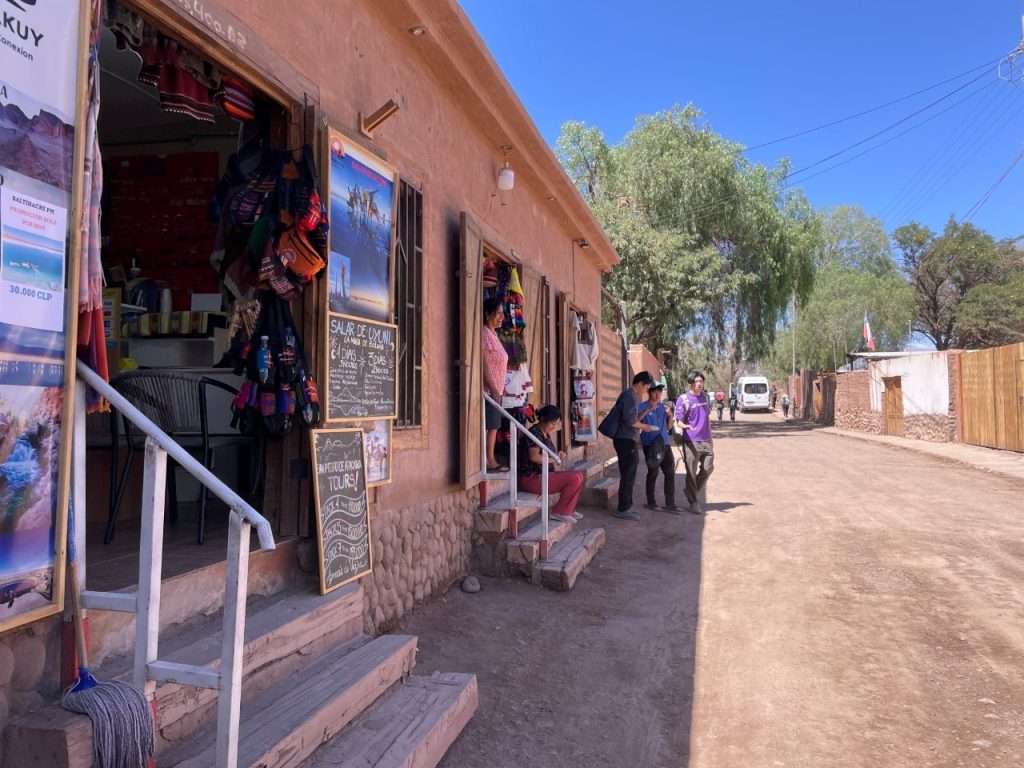
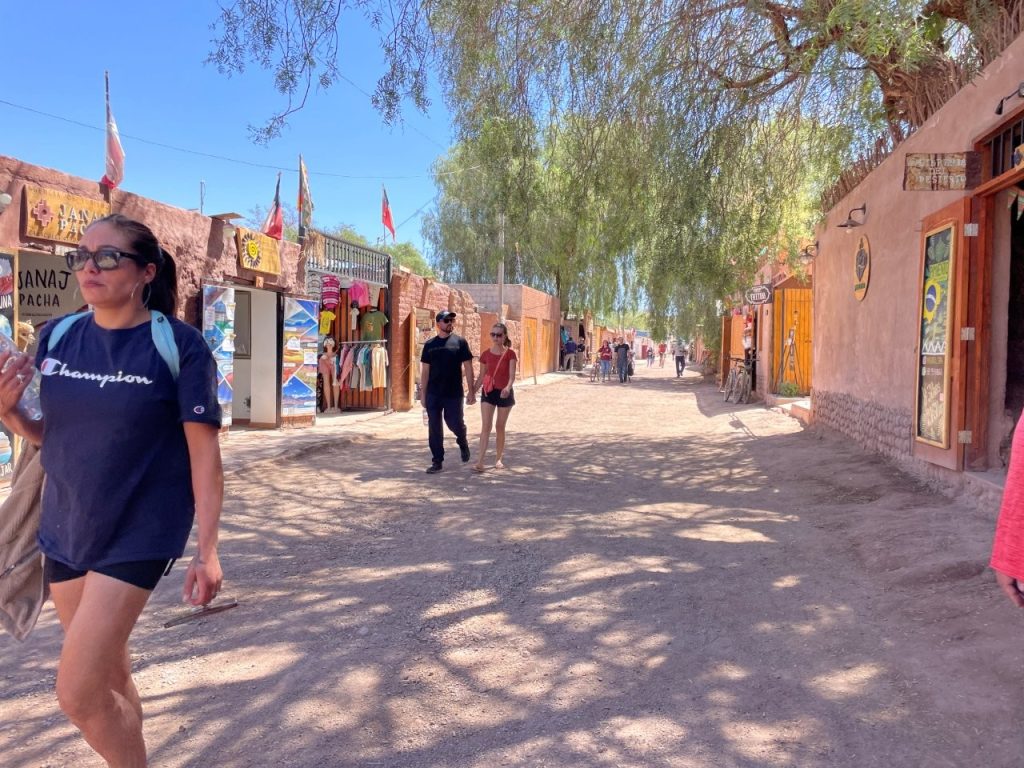
Most visitors spend surprisingly little time exploring San Pedro de Atacama itself.
While the town is small, it’s worth setting aside a few hours to wander the adobe streets, browse local shops, enjoy a leisurely meal, and soak up the atmosphere. We frequently found ourselves heading into town for lunch, groceries, and people-watching between excursions.
Consider One of the Iconic High-Altitude Excursions
Two of the region’s most famous attractions are El Tatio Geysers and Piedras Rojas (Red Rocks).
We did not visit either: Too high an altitude for Bill, too early of departure times for me. However, both consistently rank among the most popular experiences in the Atacama Desert and are worth considering if you’re comfortable with elevations above 13,000 feet. For these destinations, I would have booked a tour instead of driving them ourselves. The links above will take you to my recommended tours.
For many travelers, these iconic excursions are the perfect finale after spending several days acclimating around San Pedro de Atacama.
What About the Atacama Hand?
One attraction that surprises many visitors is the famous Atacama Hand sculpture.
Despite appearing in countless social media posts about the Atacama Desert, it is not located anywhere near San Pedro de Atacama. The sculpture sits near Antofagasta, about four hours to the west, making it impractical for most Atacama itineraries
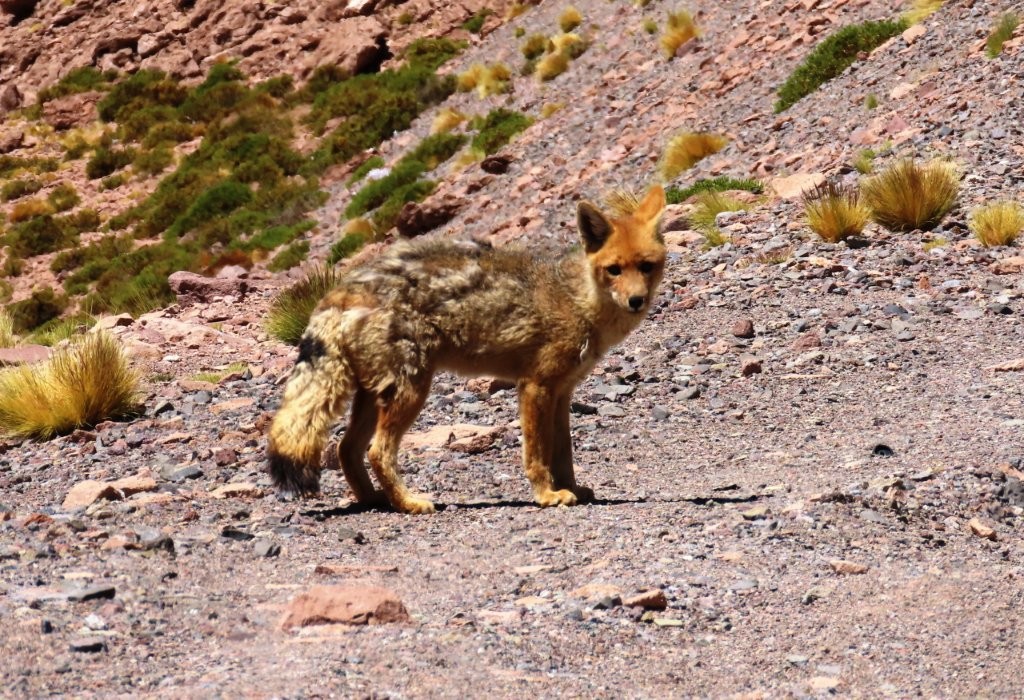
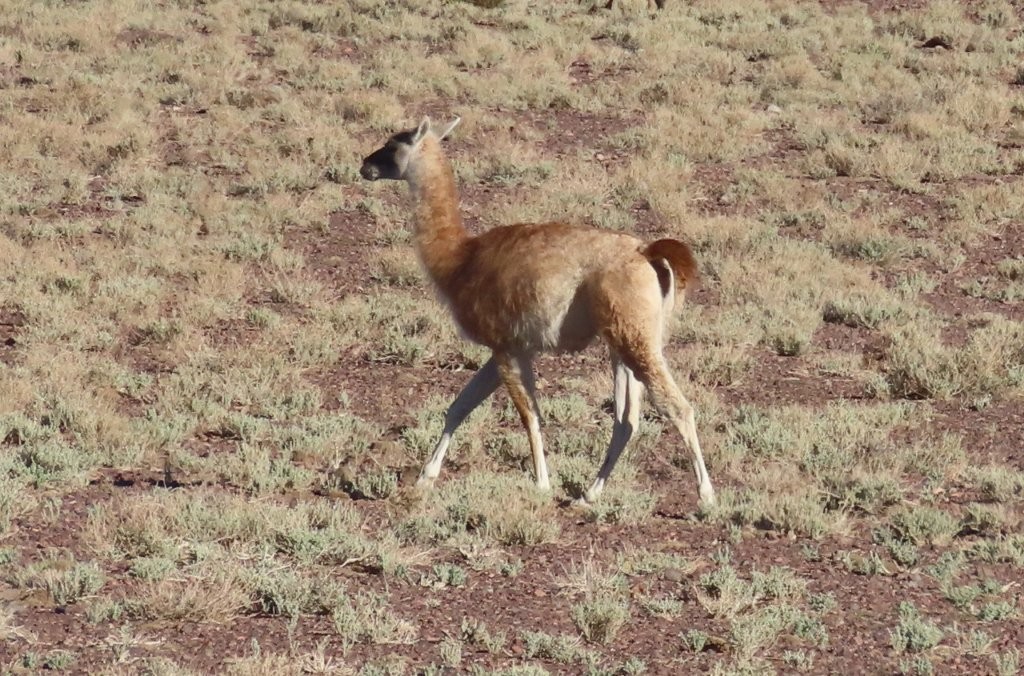
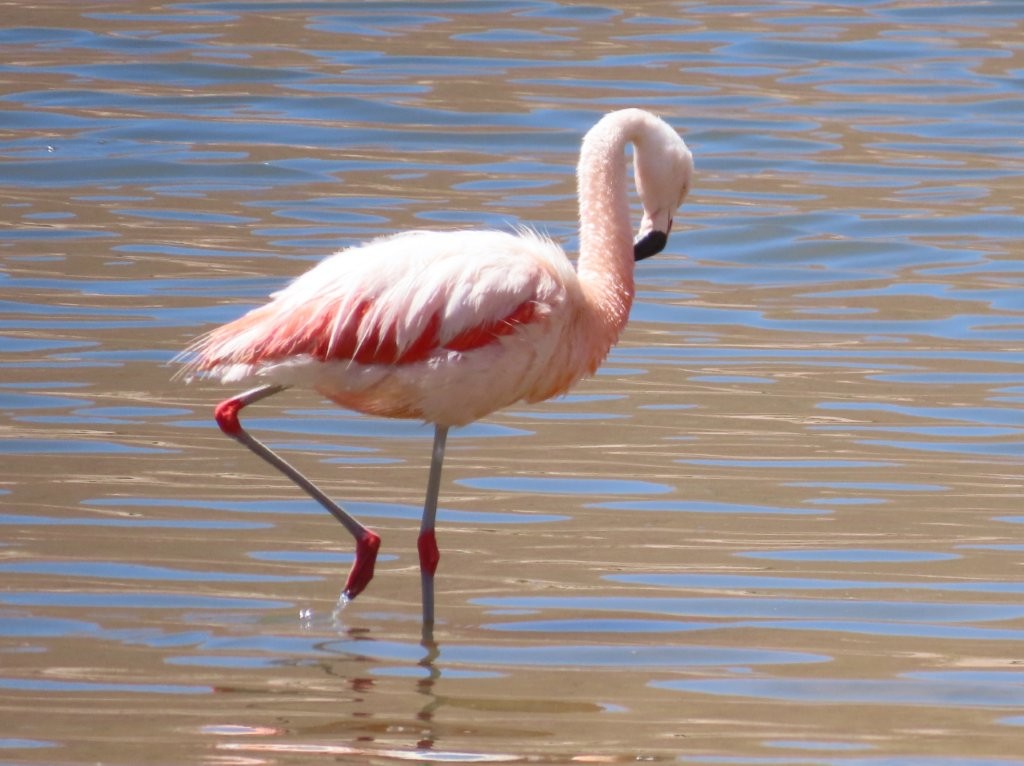
Go Wildlife Watching
Most people visit the Atacama Desert for the landscapes, but the wildlife was one of the biggest surprises of our trip.
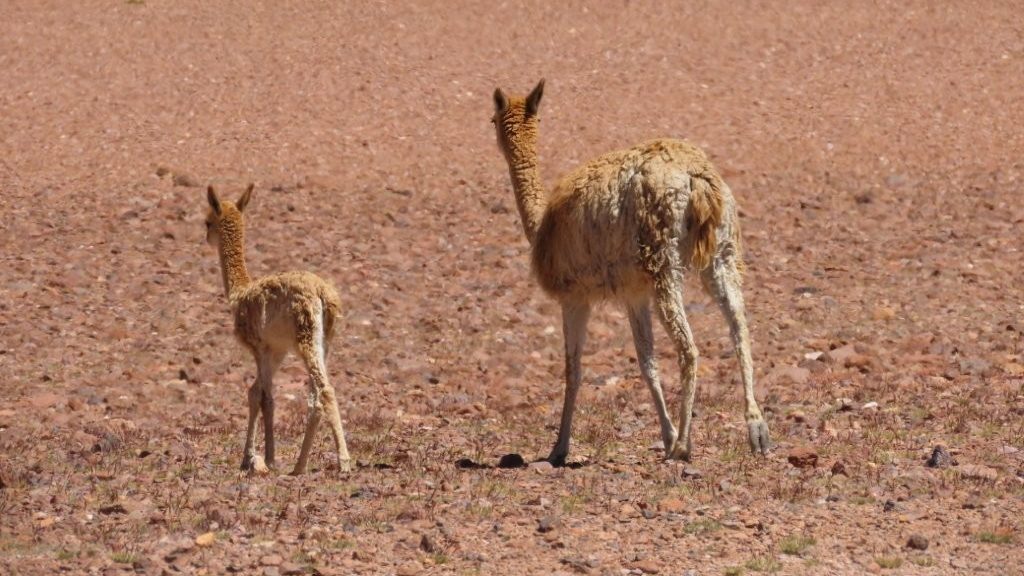
We saw flamingos, vicuñas, guanacos, foxes, donkeys, llamas, and dozens of bird species during our time in the region. If you enjoy wildlife photography, several of the lagoons and high-altitude wetlands are excellent places to spend a few hours. My Atacama Desert Animals guide tells you the best places to spot vicuñas, foxes, flamingos, and all kinds of bird life.
Visit the Museo de Meteorito
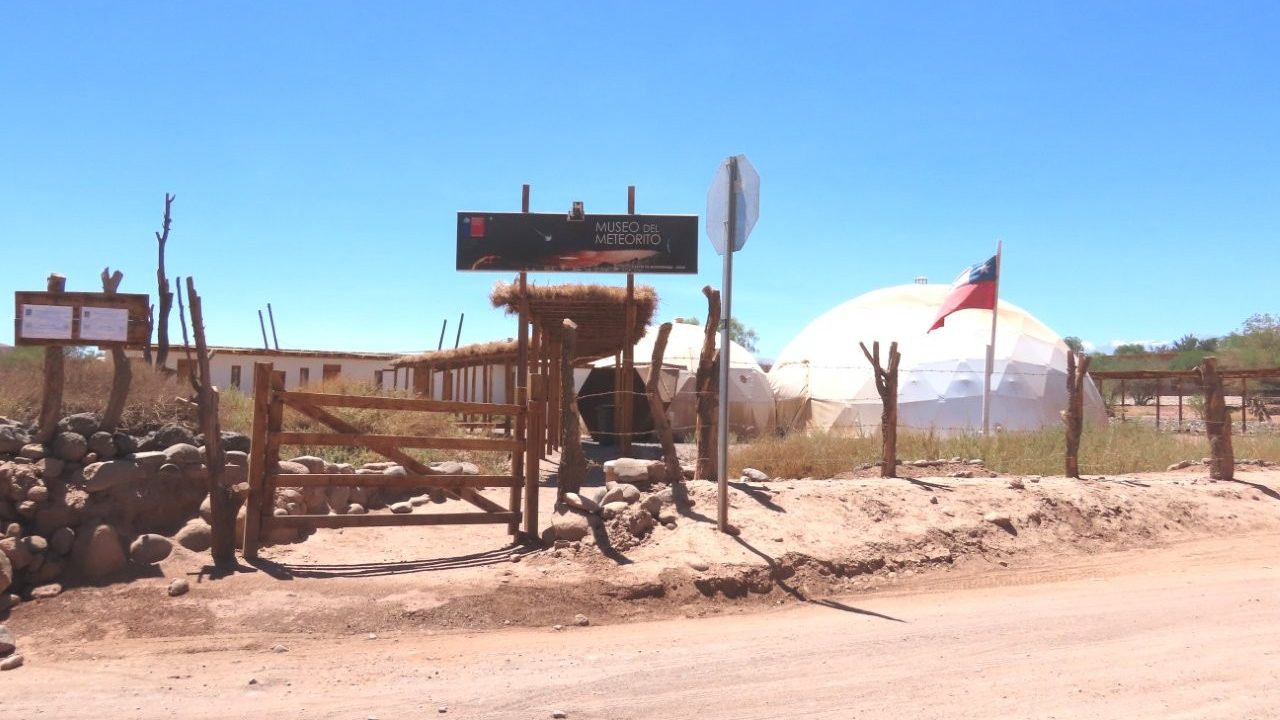
If you haven’t seen enough rocks yet, you can visit the Museo de Meteorito right in San Pedro de Atacama. It’s a small museum that you can see in about an hour. There is a small entrance fee to get in and they have audio guides in English, Spanish German, French and Portugese. Learn more at the museum’s website.
Practical Tips to Visit the Atacama Desert Independently
Learn the Main Roads Before You Start Driving
One thing that helped us tremendously was understanding the handful of major roads that connect most attractions in the Atacama Desert.
You don’t need to memorize them, but having a basic sense of direction makes planning much easier.
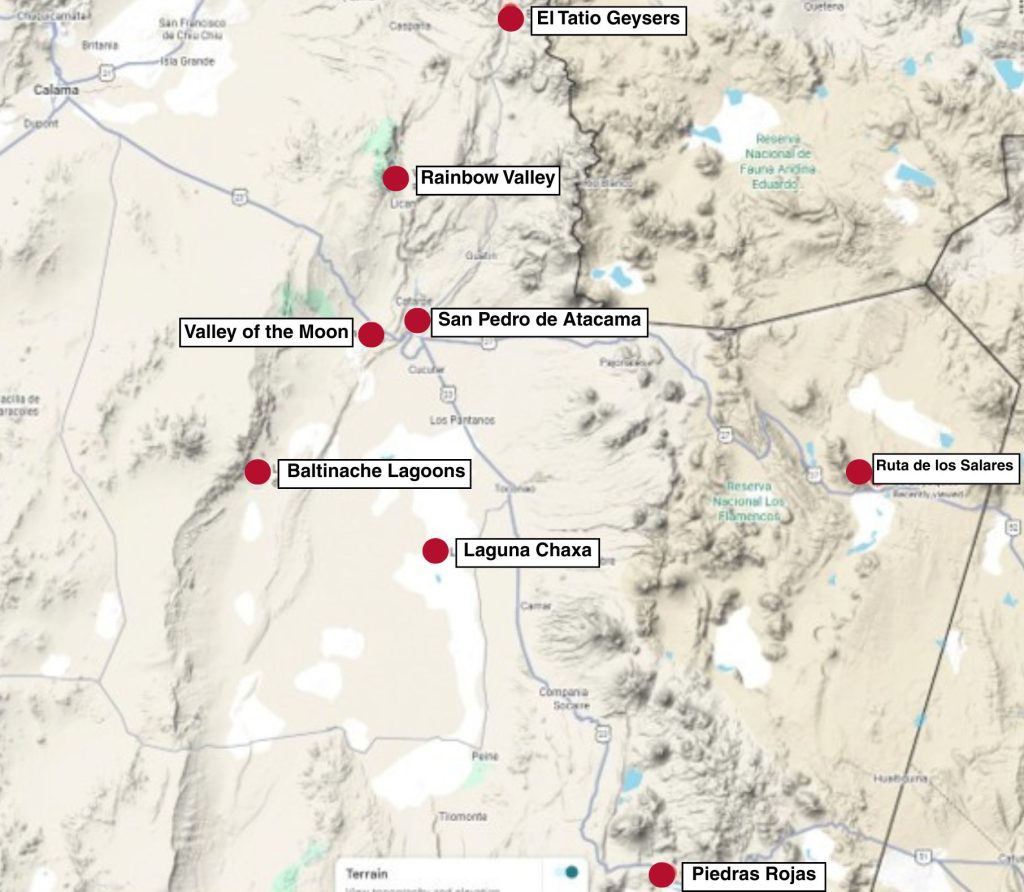
- CH Ruta 23 connects Calama to San Pedro de Atacama and continues south toward Laguna Chaxa and Piedras Rojas (Red Rocks). Valle de la Luna (Valley of the Moon) is located just off Ruta 23 southwest of town.
- B-241 partially overlaps Ruta 23 before running through town. West of San Pedro it leads south toward the Magic Bus Atacama and the Baltinache Lagoons.
- B-245 heads northeast from San Pedro toward Machuca, the Flamingo Lagoon, the Machuca Wetlands, Vado Río Putana, and eventually El Tatio Geysers.
- CH Ruta 27 climbs into the high Andes toward the Bolivia and Argentina borders. This was one of our favorite drives for scenery, wildlife, volcanoes, and photography.
- B-207 branches off Ruta 23 northwest of town and leads to Valle del Arcoíris (Rainbow Valley), Yerbas Buenas, and the remote village of Río Grande.
I’ll cover these roads, driving times, and how the region is laid out in more detail in my Atacama Desert Maps and Planning Guide.
Download Offline Maps Before You Go
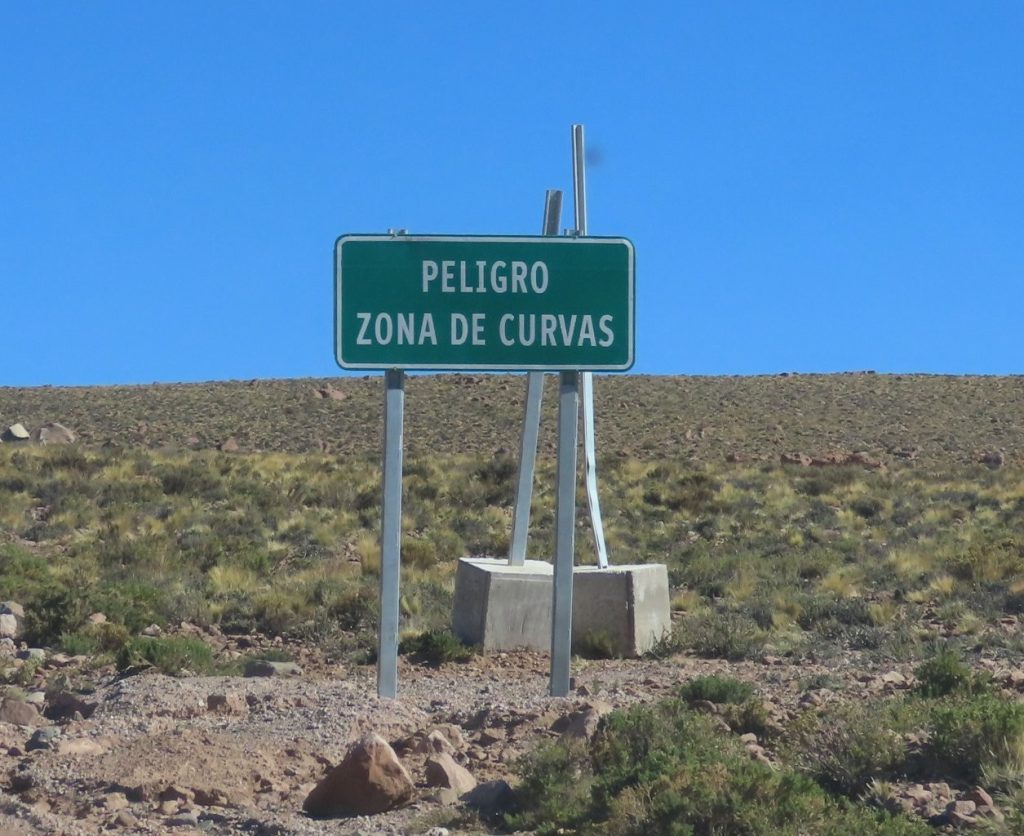
Cell service was surprisingly inconsistent once we left San Pedro de Atacama.
Several of our favorite day trips passed through areas with little or no signal, and there were many moments when we were very glad we had downloaded offline maps ahead of time. Before leaving each morning, save your route and any important stops in Google Maps.
In fact, I’d screen shot the maps and directions, saving them as photos on your phone.
Bring Cash and Small Bills
Many attractions in the Atacama Desert charge modest entrance fees, but they don’t always have much change available.
More than once I handed over a larger Chilean peso bill (because that’s what the ATM gave me), only to discover the attendant was struggling to make change. At one stop, I’ll be forever grateful to a local visitor waiting in line behind me who opened up his wallet and helped break my large bill into smaller notes.
Having a variety of smaller bills made things much easier throughout our stay.

Fuel Up Before Drives
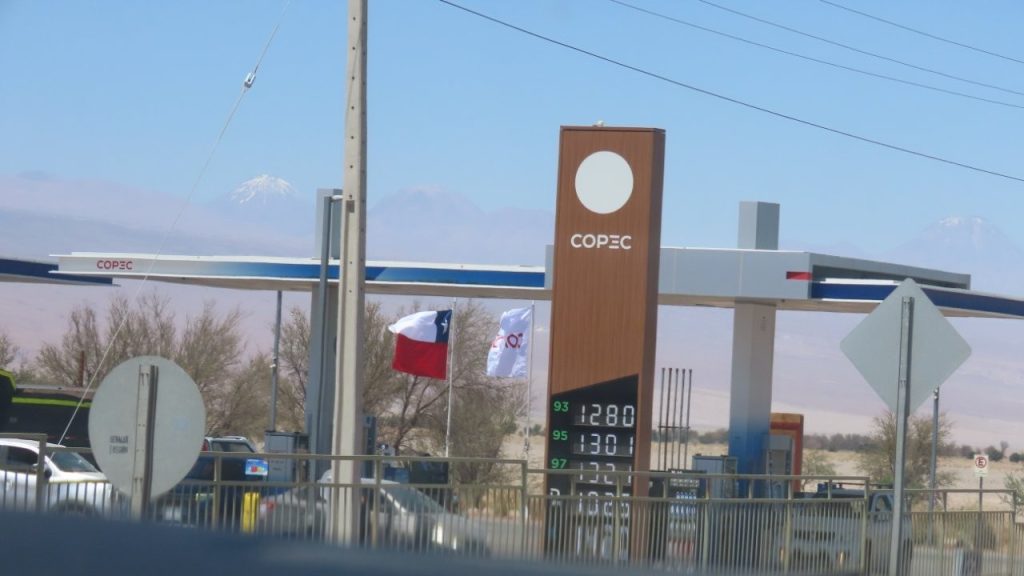
There is only one gas station serving the entire San Pedro de Atacama area. Next closest one is in Calama, 90 minutes away.
The COPEC station sits at the intersection of B-241 and Ruta 27 on the east side of town. Credit cards are accepted, and attendants fill your tank for you.
We got into the habit of topping off the tank before any drive away from the city, rather than waiting until fuel was low. It removed a lot of unnecessary stress when driving through remote areas.
Parking in San Pedro de Atacama
Driving through town can be more frustrating than driving through the desert.
San Pedro has a ton of one-way streets, pedestrian-only areas, and limited parking. During our first few days, we accidentally drove the wrong way down more than one street because the signage wasn’t always obvious.
Eventually we started parking in the free lot near where B-241 and B-245 split and simply walked into town. It made everything much easier. It is marked with an E on the map.
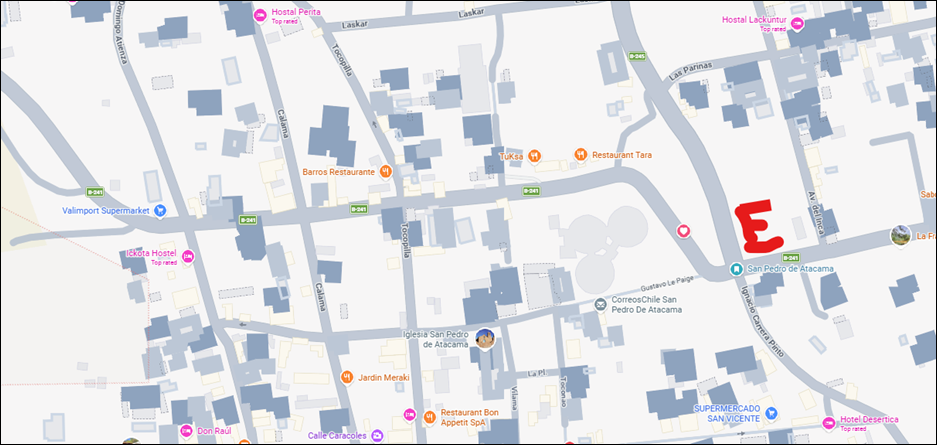
If you’re using Google Maps, search for “Antena de Telefonía Entel.” The parking lot is right there on the corner. You’ll also notice that parking areas are marked with a large “E” (for estacionamiento) rather than the “P” many visitors expect.
Grocery Stores and Water
If you’re staying in an apartment, Airbnb, or self-catering accommodation, you’ll find plenty of small markets around San Pedro de Atacama.
For the biggest selection, we liked Supermercado San Vicente at the end of Caracoles Street. It’s very convenient if you’re already walking around town, but there is very little parking nearby
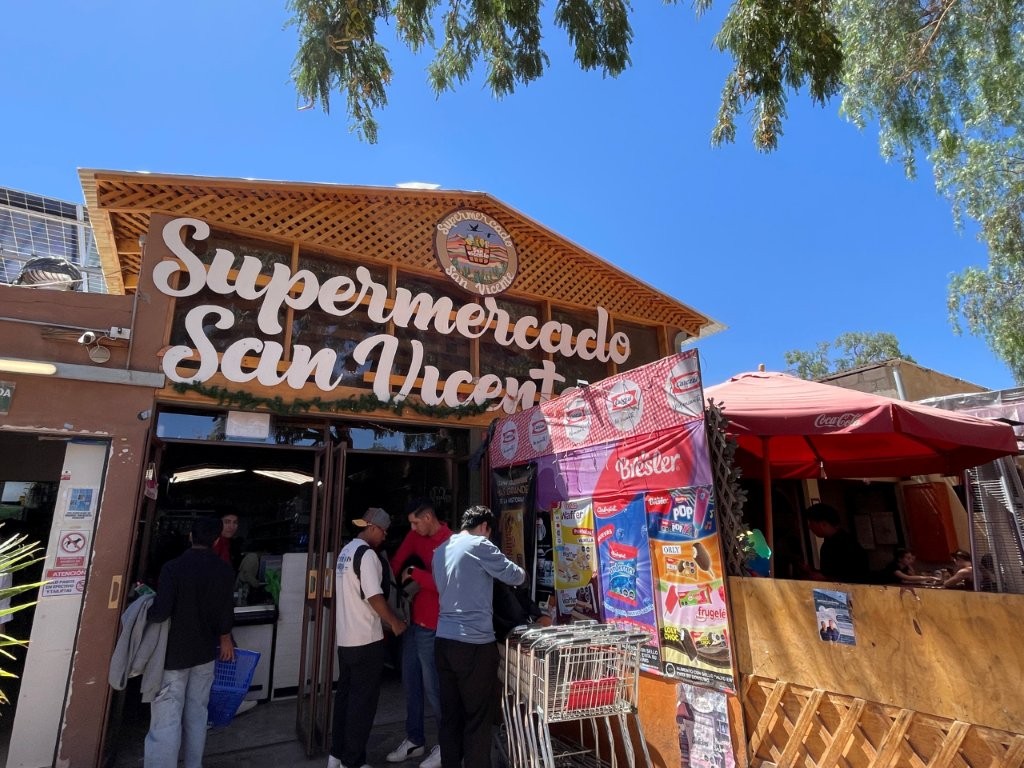
When we had the rental car, we usually shopped at Valimport Supermarket on the edge of town because they have a small parking lot and we could load groceries directly into the vehicle.
Mailing Postcards Home
If you’re like me and still enjoy sending postcards home, don’t wait until your last day to figure out where to mail them. It’s harder than you’d think in South America!
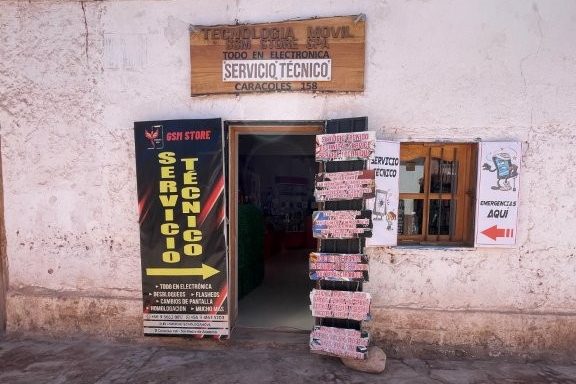
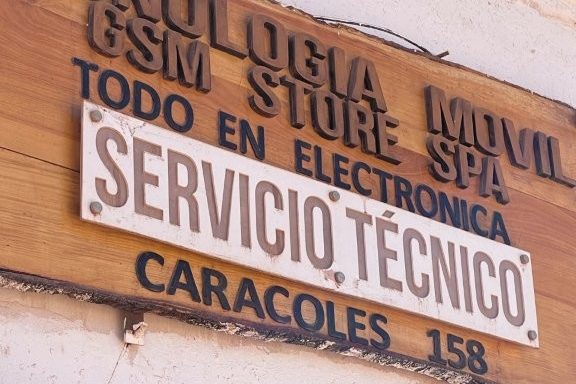
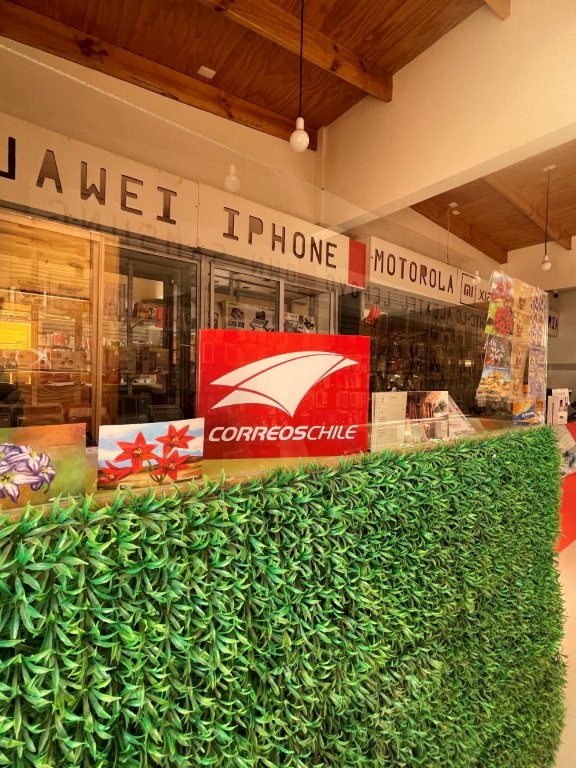
The postcards themselves are easy to find at souvenir shops throughout San Pedro de Atacama. But finding stamps and a place to mail them is another story. The solution is a postal counter located inside an electronics store at Caracoles 158.
Nothing outside the building indicates post office, but once you walk in, you’ll find the postal counter with a sign that says CorreosChile immediately on your left. The store was not open everyday we tried to go there, but eventually we found it open. You can buy stamps and drop off your postcards to be mailed home.
Kari’s Travel Tip: If you put CorreosChile into Google Maps, it will direct you to an old permanently closed location on Gustavo Le Paige Street. Instead, go to Caracoles 158.
Final Thoughts on Visiting the Atacama Desert
Visiting the Atacama Desert independently on your own is much easier than it first appears.
Before our trip, the maps made it look impossibly remote. In reality, we found it surprisingly accessible, with manageable roads, incredible scenery, and the freedom to explore at our own pace.
You certainly do not need 17 days like we had. Most travelers can experience the highlights in 4–7 days, especially if they pace themselves, pay attention to altitude, and focus on the experiences that interest them most.
Whether you go for the landscapes, wildlife, stargazing, or pure adventure, the Atacama Desert is absolutely worth the journey.
More Atacama Desert Travel Guides
Here are some more guides about visiting the Atacama Desert and Chile. If you’d like to receive emails when I’ve posted new content to the site, please complete the short form above.
Visit the Atacama Desert: A Self-Drive Guide
Atacama Desert Tours: How to Explore It Without Driving
Atacama Desert Map: Explore The Desert, One Road At A Time
Atacama Desert Altitude – How To Keep It From Ruining Your Trip
Atacama Desert Night Sky: How to Experience the Stars
Atacama Desert Animals: What You Can See & Where
Where to Stay in the Atacama Desert: My Top Hotel Picks for Every Budget
Day Trip #1 – West: Valle De La Luna Atacama + Magic Bus + Ckari Sunset
Day Trip #2 – South: Laguna Chaxa Flamingos + Valle de Jere
Day Trip #3 – Northwest: Rainbow Valley Atacama + Petroglifos Yerbas Buenas
Day Trip #4 – North: Machuca Wetlands + Vado Rio Putana
Day Trip #5 – East: Ruta de los Salares
