Are you trying to figure out what a Tanzania safari is really like? Here’s the honest, unvarnished truth, based on our personal experiences.
In this post, I’m sharing details about our 9-day Safari experience including the highlights and lowlights, where we stayed, the game drive experience in the Toyota Land Cruiser, the animals we saw and more. I’ll share why we chose this specific safari and what it cost.
Knowing what a Tanzania safari is really like will help you decide if it’s right for you. There’s a whole lot of “pinch me, I must be dreaming” thrilling moments, as well as a fair amount of “will this bumpy, bouncy road EVER end?” moments.
We are experienced world travelers, but this was my first safari experience. Lucky Bill had already been on safaris to South Africa, Botswana and the Okavango Delta.
Use the Table of Contents below to read the sections that interest you, or read the whole post to get the complete experience.
Our tour was a guided game-drive safari in a Toyota Land Cruiser with mid-range accommodations. We had the same guide for all 9 days and we went to Northern Tanzania during the dry season (end of July – early August).
Getting to Tanzania
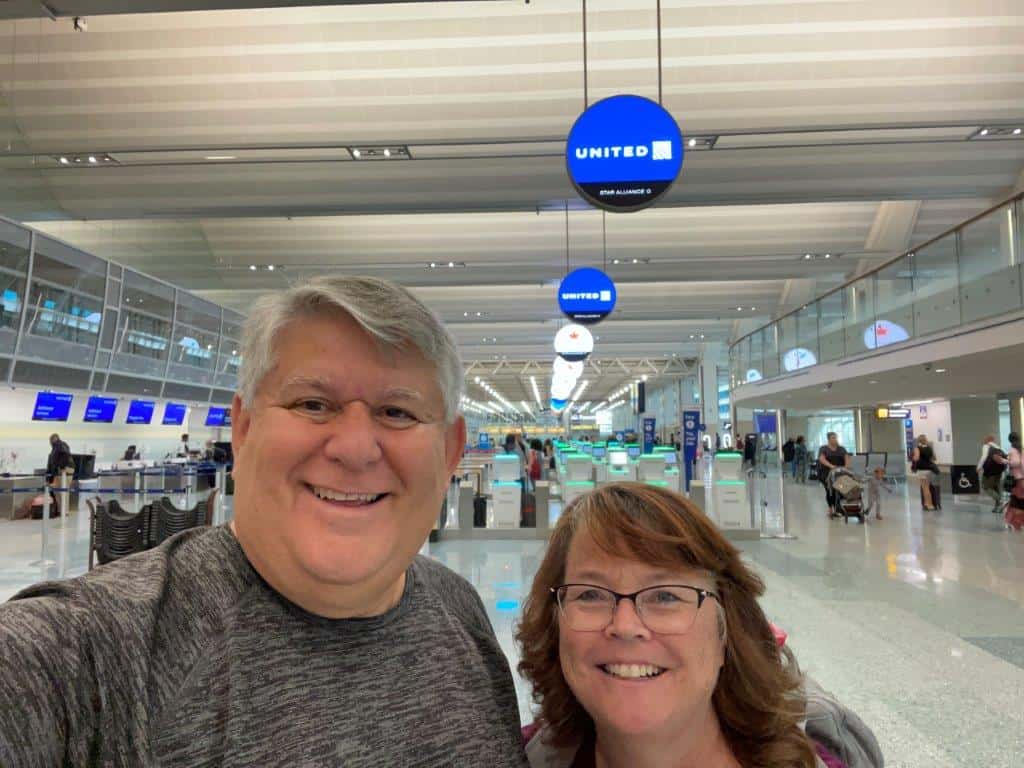
We left Minneapolis on Friday morning, stopped in Chicago and Zurich, then arrived in Kilimanjaro on Saturday evening at 7:30. Our total travel time was 24 hours with an 8-hour time change. I booked through Lufthansa, but for those 3 legs, we flew United, SWISS Air & Edelweiss Air.
Before the Safari
We arrived in Tanzania on Saturday night, but our safari didn’t start until Tuesday morning. So we had a couple of days to hang out in Arusha and get over our 8-hour jet lag. We napped, explored the neighborhood and bought some supplies.
The smart thing about arriving early: if there had been any delays with our flights, we still had time to get there before the Tuesday morning departure.
Day 1 – Arusha National Park
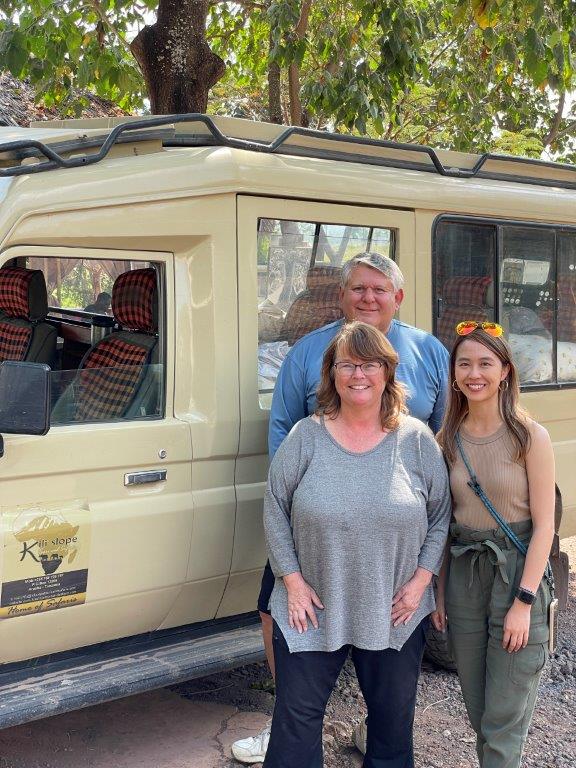
Finally – we are ready to go on Safari! Our guide and driver Stewart picked us up at 8:30 in the Toyota Safari Land Cruiser that would be our home for the next 9 days.
Bill and I also got to meet our fellow Safari-goer who was a lovely young woman from Hong Kong named Charis (rhymes with Paris). The four of us were together pretty much non-stop for 9 whole days.

Our first adventure was Arusha National Park, just 40 minutes away from Arusha.
At each National Park, Stewart had to check-in at Reception and pay the fees. It’s a good opportunity to use the restroom one last time before heading into the park.
We only stopped every 2-3 hours for a bathroom break. Otherwise, we were sitting in the Land Cruiser for 8-10 hours every day. It can get a little cramped after awhile.
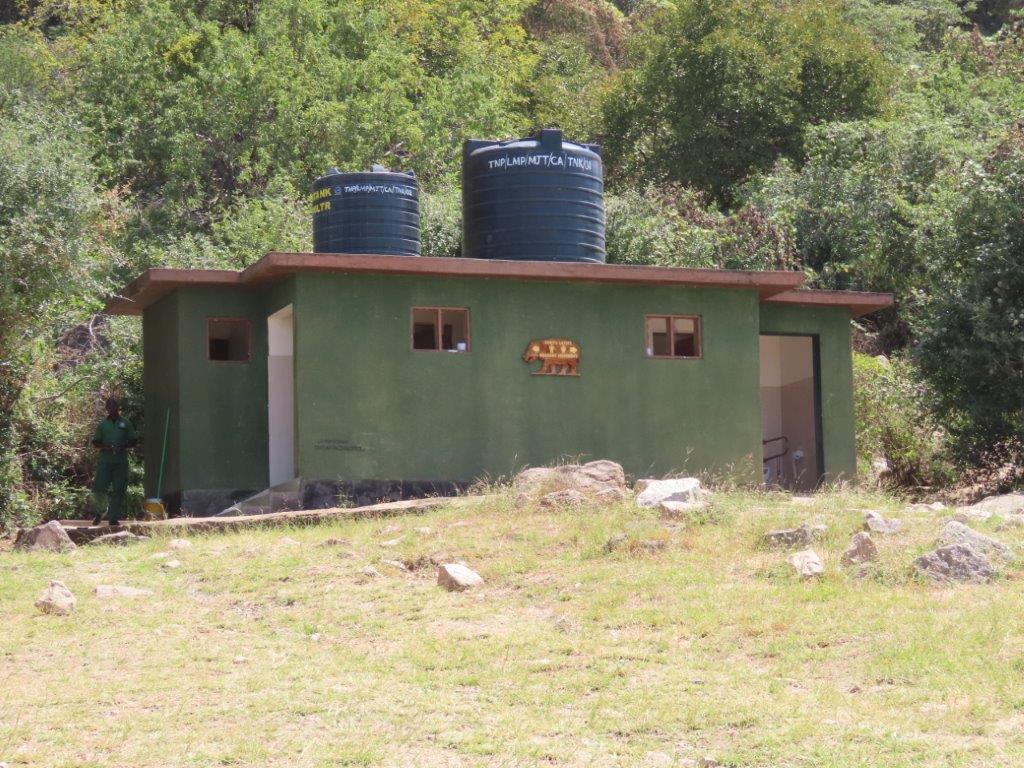
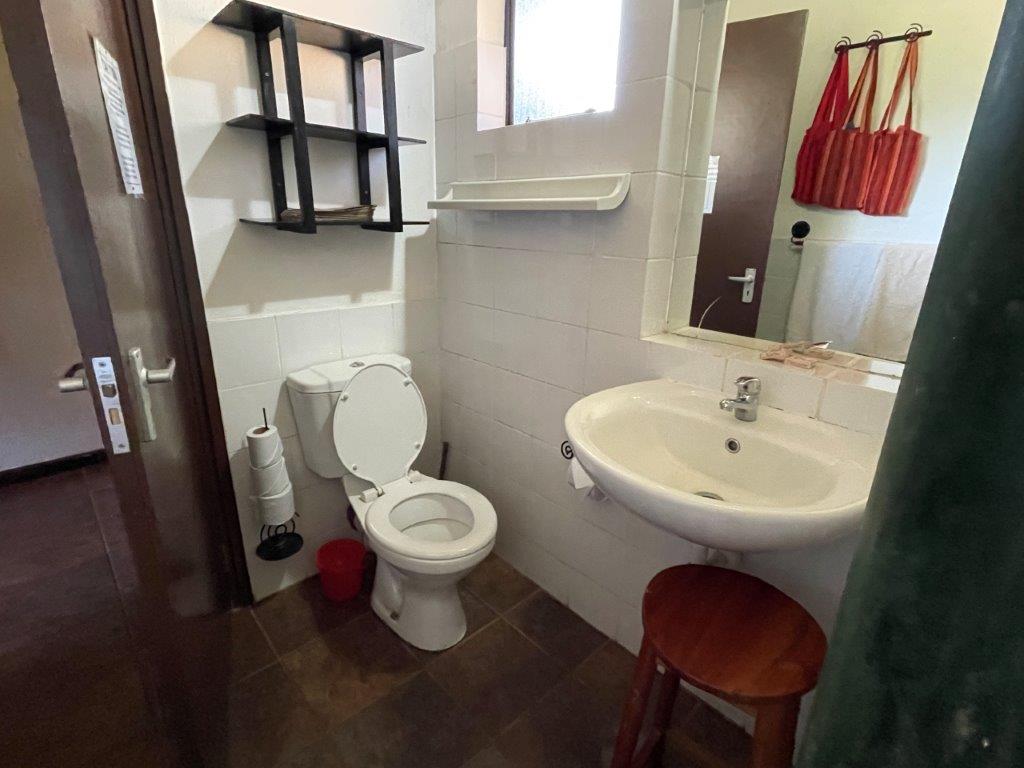
The restrooms in the national parks were generally quite clean. BUT the availability of toilet paper was really hit or miss. I put some in my pocket every morning.
Our Safari Land Cruiser
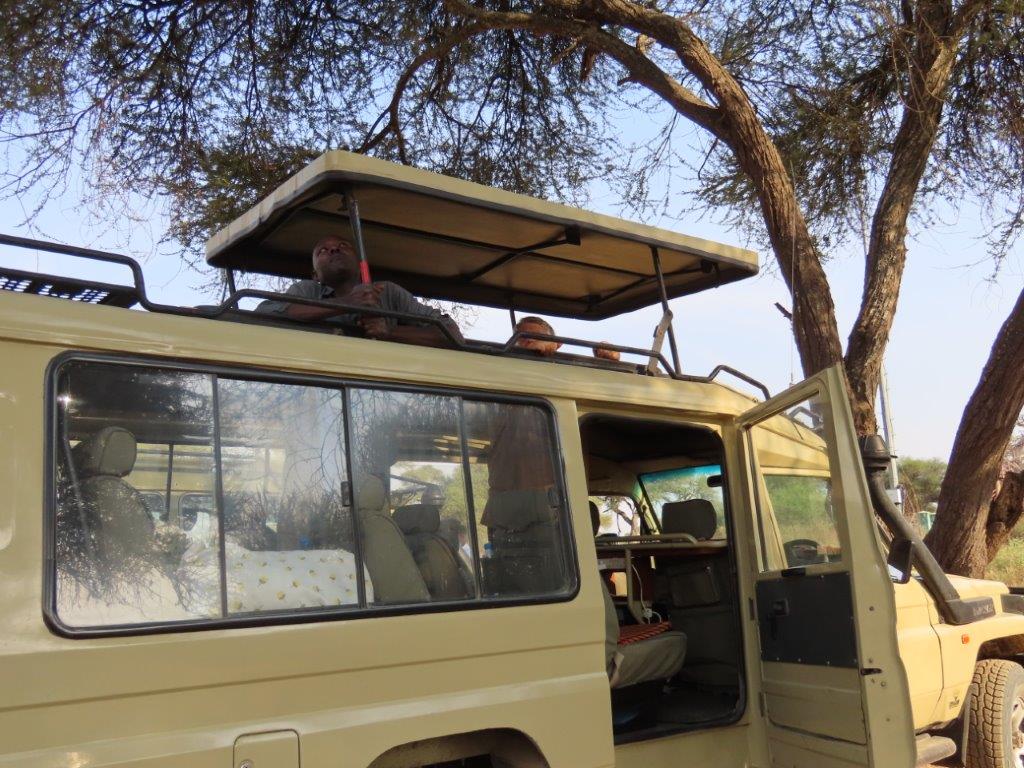
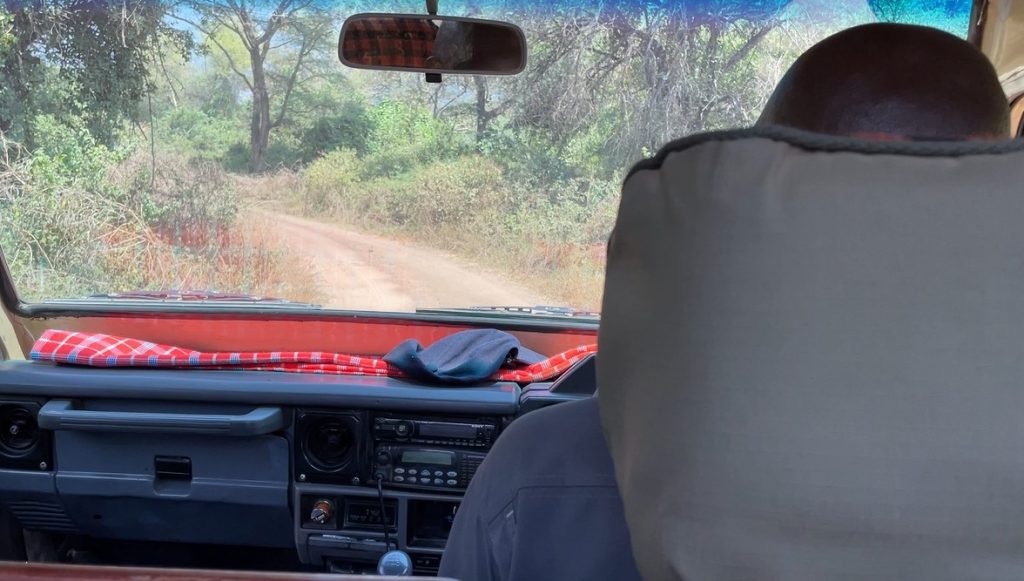
While we waited for Stewart to check us in, we looked over our Land Cruiser. Bill discovered that it was built in 1998 so we were a little concerned about its condition and how comfortable we were going to be for 9 days.
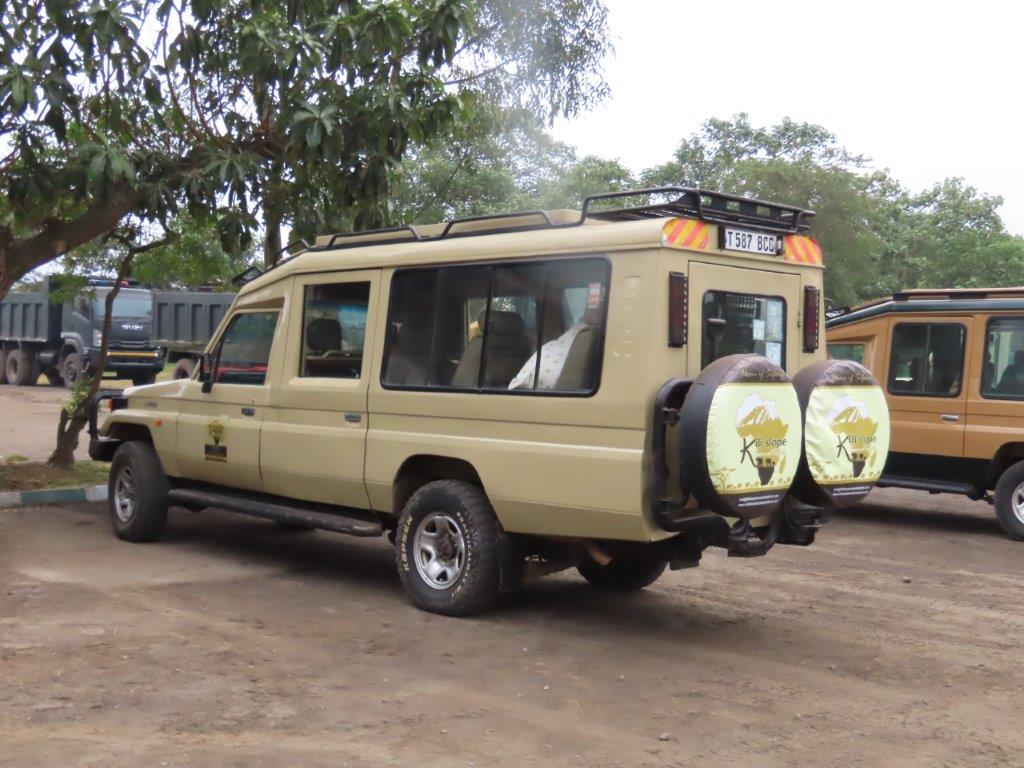
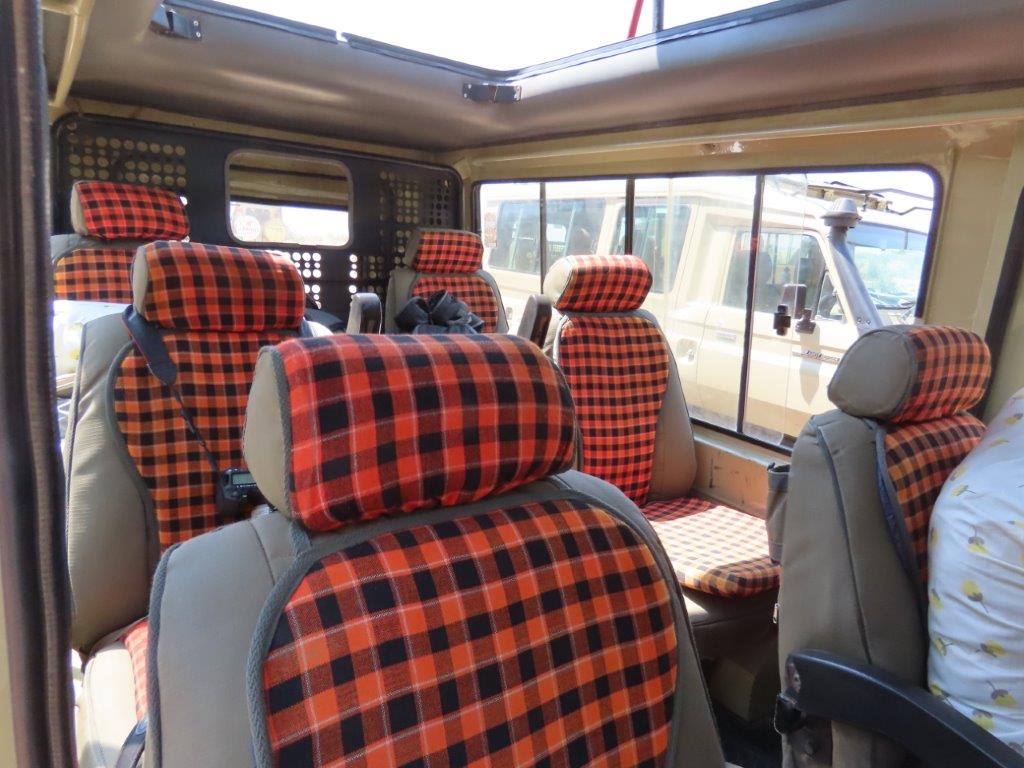
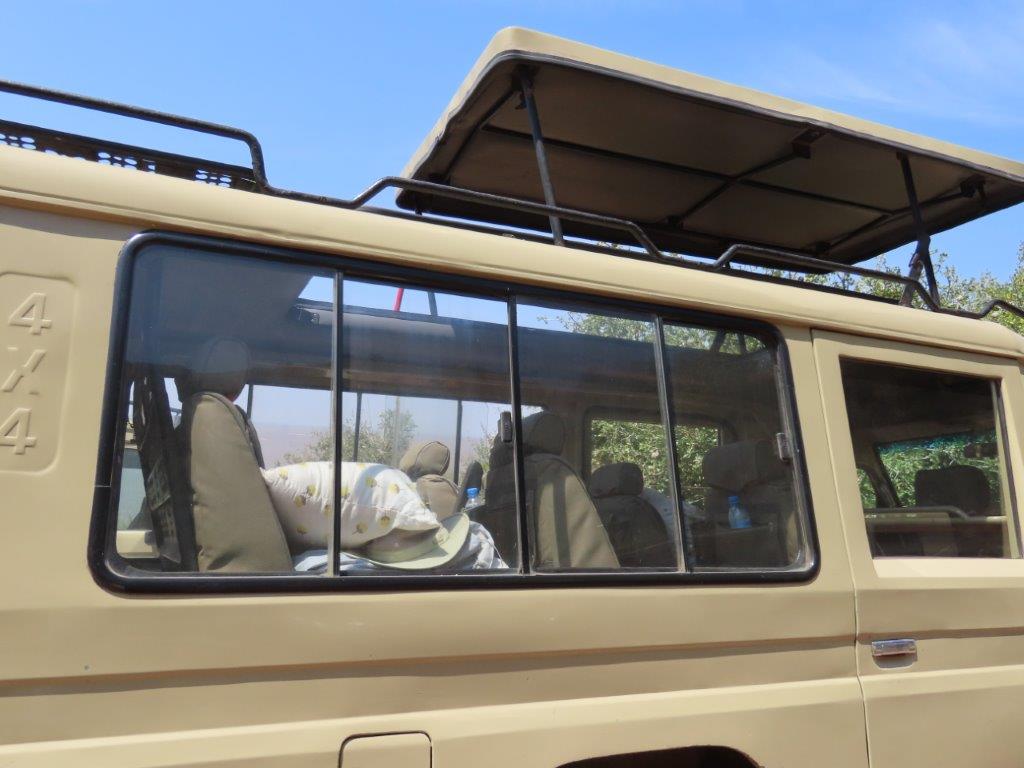
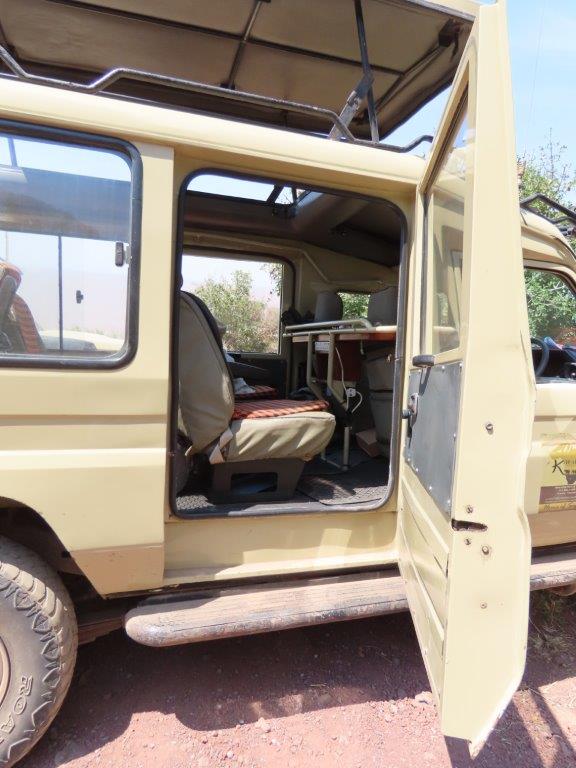
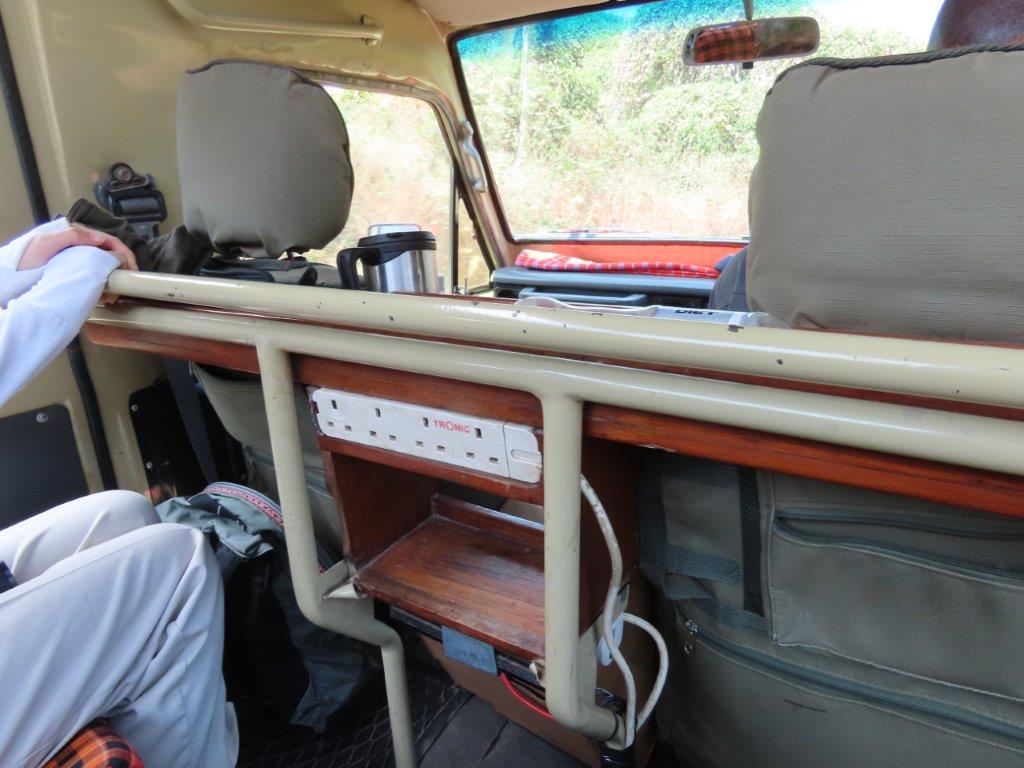
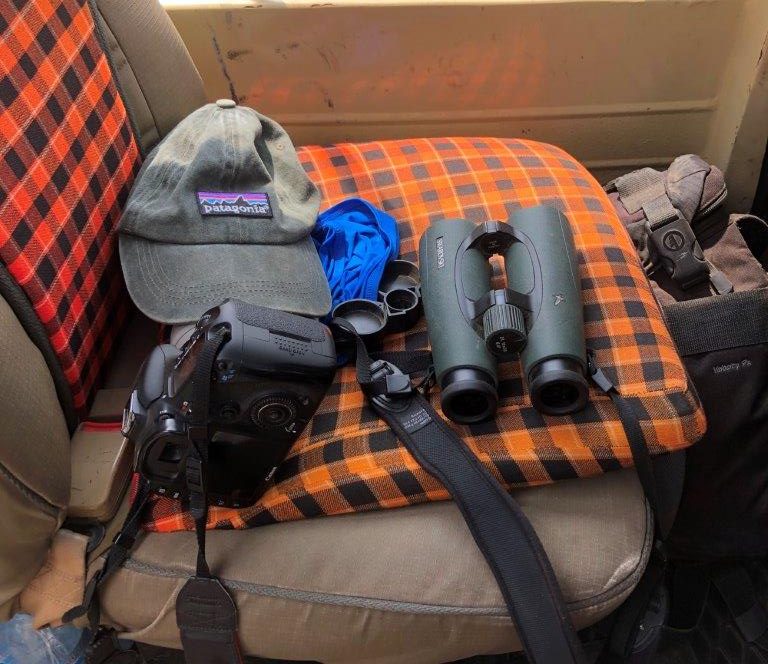
In the end, it all worked out fine. We had handrails to hang on to, pillows to sit on, a cooler to keep my Diet Pepsi and water bottles cold. In this particular vehicle, the electric outlets weren’t working for charging our phones. So we used Bill’s power bank instead.
With only 3 of us in the passenger section, we had room to keep our backpacks and cameras out on the seats. And the flexibility to move around to different sides of the vehicle to take photos. Nice!
A smaller park, Arusha was a good “warm-up” for what was to come. Because of its proximity to the city, it doesn’t have as many of the big animals that we saw later.
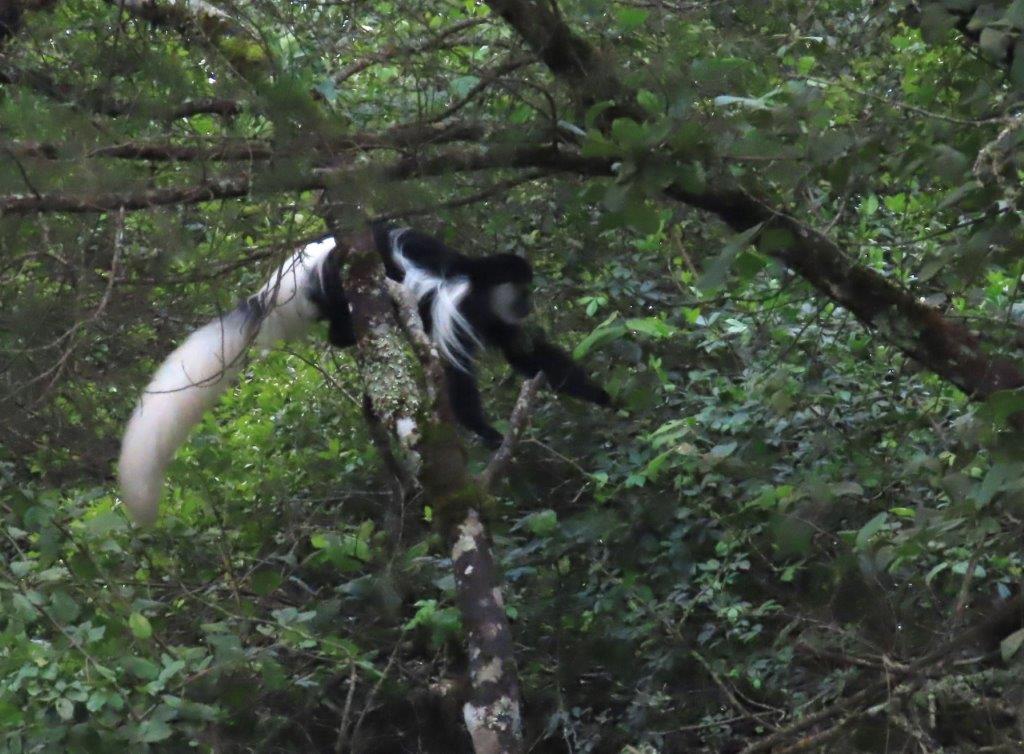
But it does have the Colobus Monkey – a fluffy black and white primate who swings from the trees like a gymnast, rarely coming down to the ground.
Walking Safari – Giraffes, Warthogs and Cape Buffalo (#1)
One of the options at Arusha National Park is a 90-minute guided walking safari with a Ranger. With no large predators in the park, it’s safer to walk around.
This walking safari allowed us to get much closer to the animals, especially the giraffes and the warthogs. Made for great photos! And we saw a herd of Cape Buffalo (our first of the Big Five).
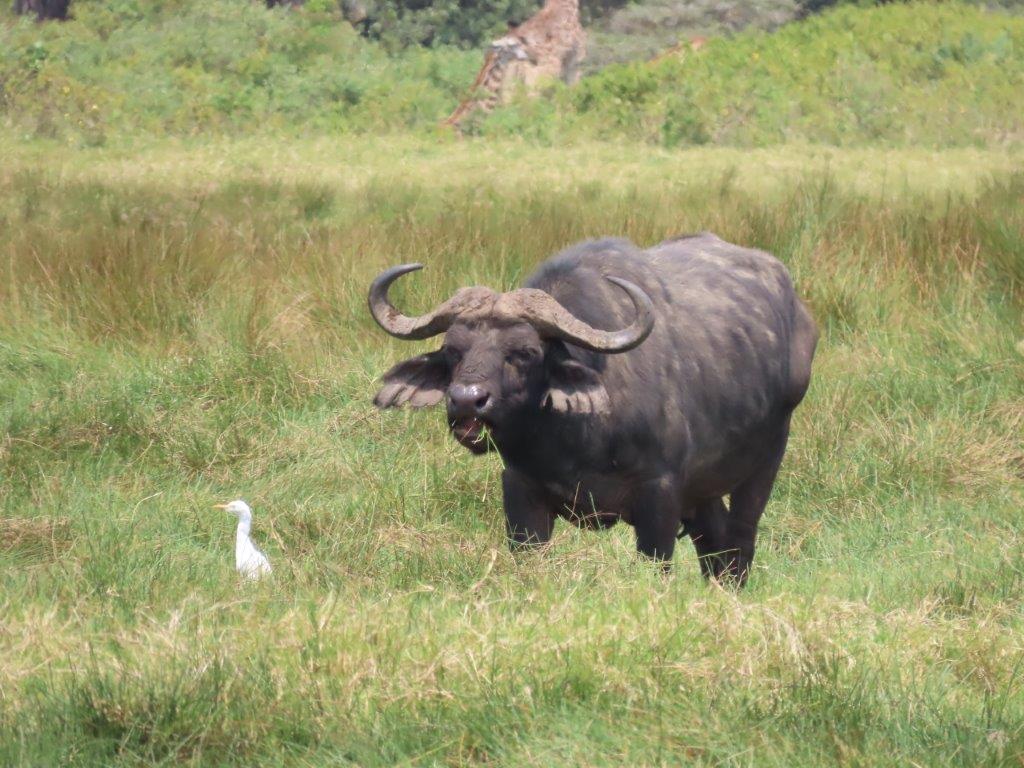
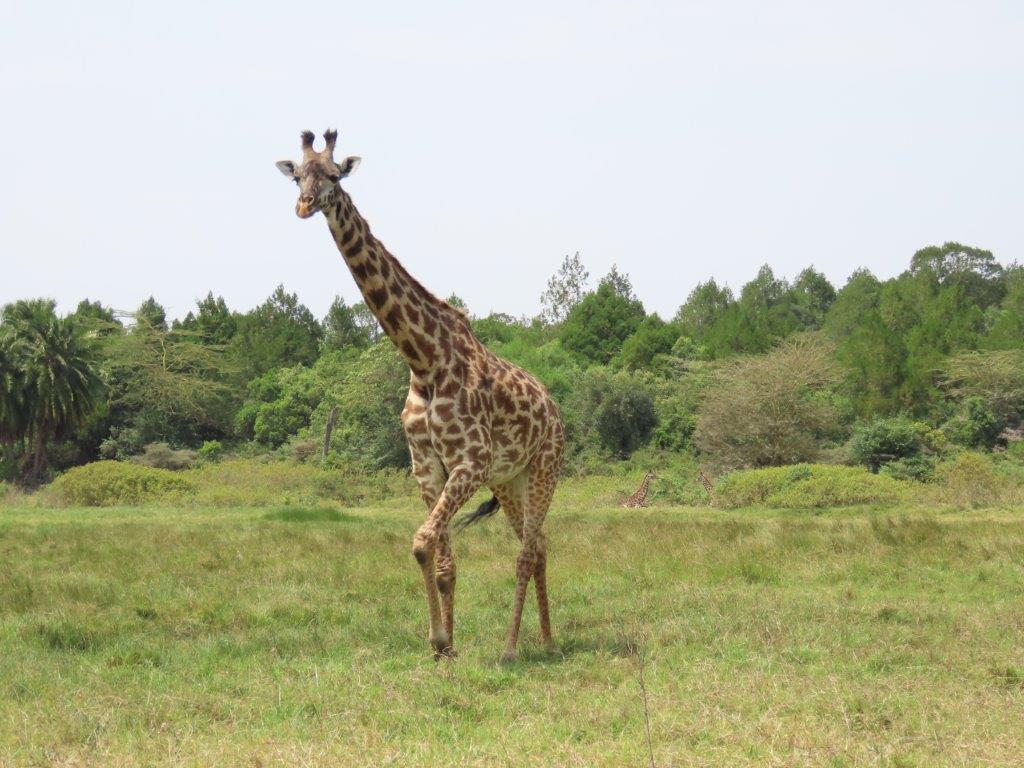
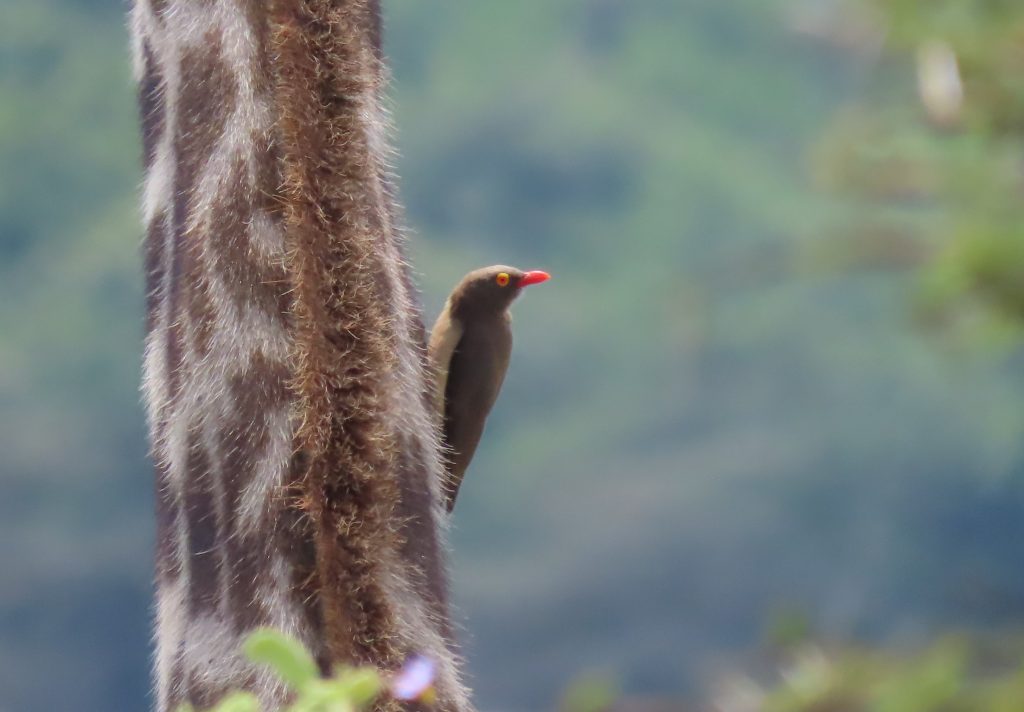
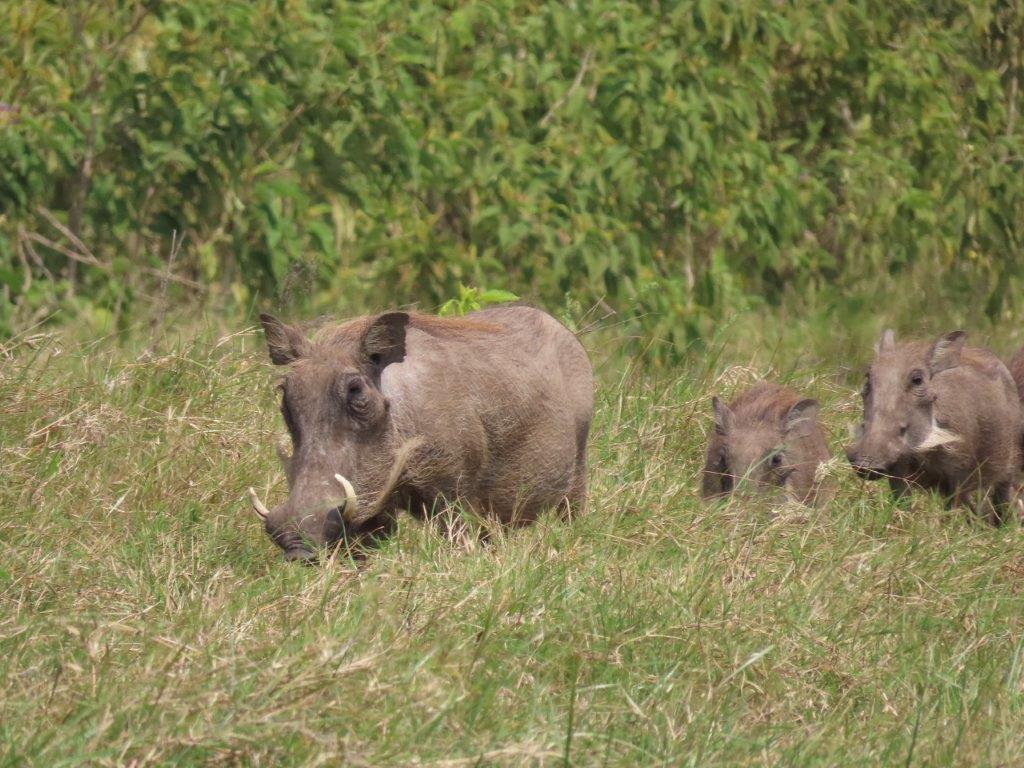
After the walking safari, we had our first box lunch at a picnic area by a lake. Here, we were able to get out of the Land Cruiser and sit at a picnic table.
Box lunch had a piece of chicken, half sandwich, apple, hard-boiled egg, banana, juice box and a chocolate bar. Then, we continued with the game drive.

The roads in the National Parks are pretty rutted and uneven so there’s a lot of bouncing and sliding. Stewart was a good driver and did his best to choose the smoothest route. But still, it often feels like you are part of a tossed salad.
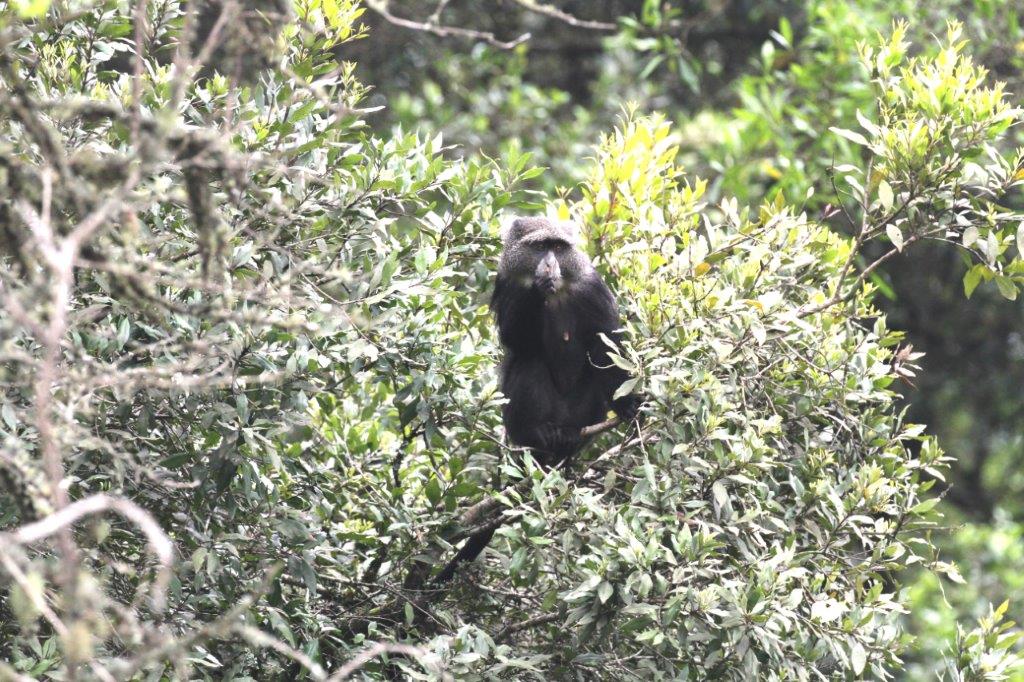

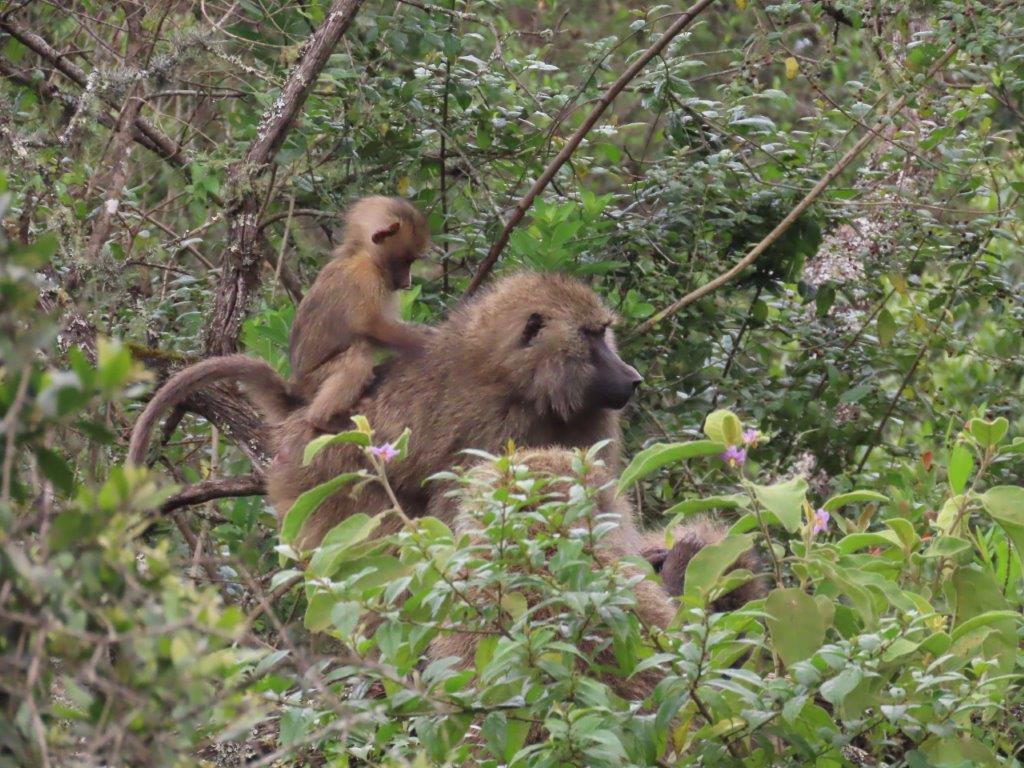
We got back to Arusha about 5:00 and stayed one more night at the Didas Villa Hotel. All in all, it was an okay first day. But I really hope we get to see more animals tomorrow.
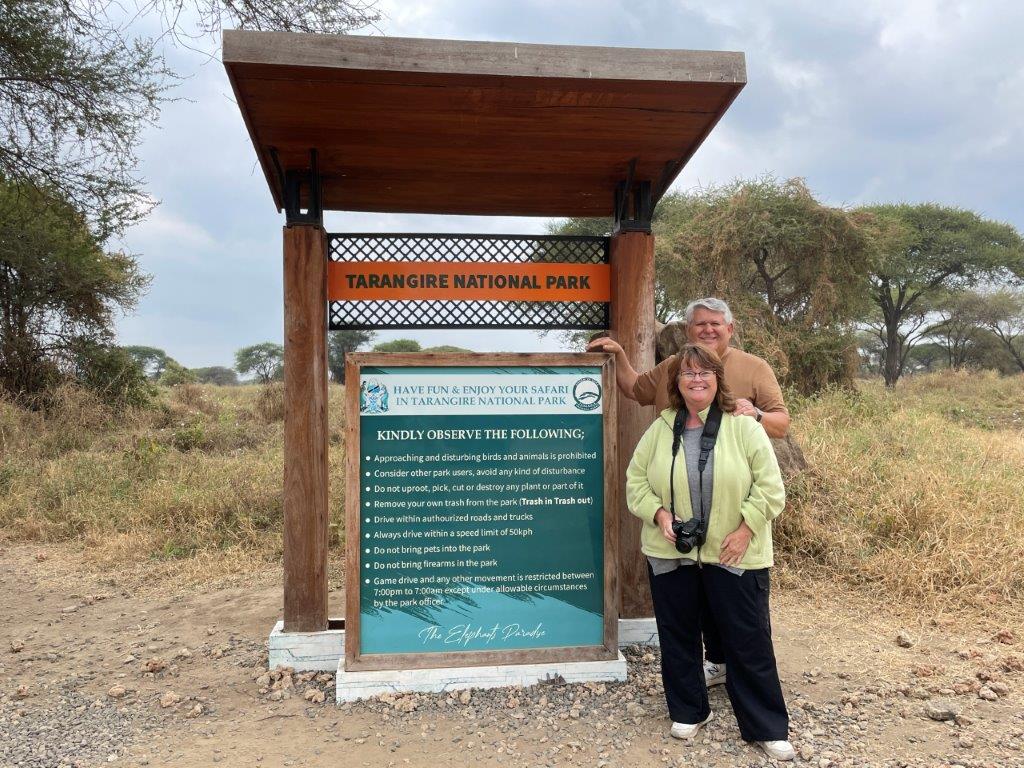
Day 2 – Tarangire National Park and our 1st tented camp
Stewart picked us up in Arusha at 7:30 and we drove 2 hours to Tarangire National Park. The first half was on paved roads, but the rest of it wasn’t. And so the bouncing began.
Today was SPECTACULAR in terms of animals and birds both.
Elephants (#2)
Tarangire is well known for its large elephant population who come to drink from the Tarangire River during the dry season. Our second of the Big Five. There were times when they were passing right next to us, walking right alongside our vehicle or crossing the road right in front of us.

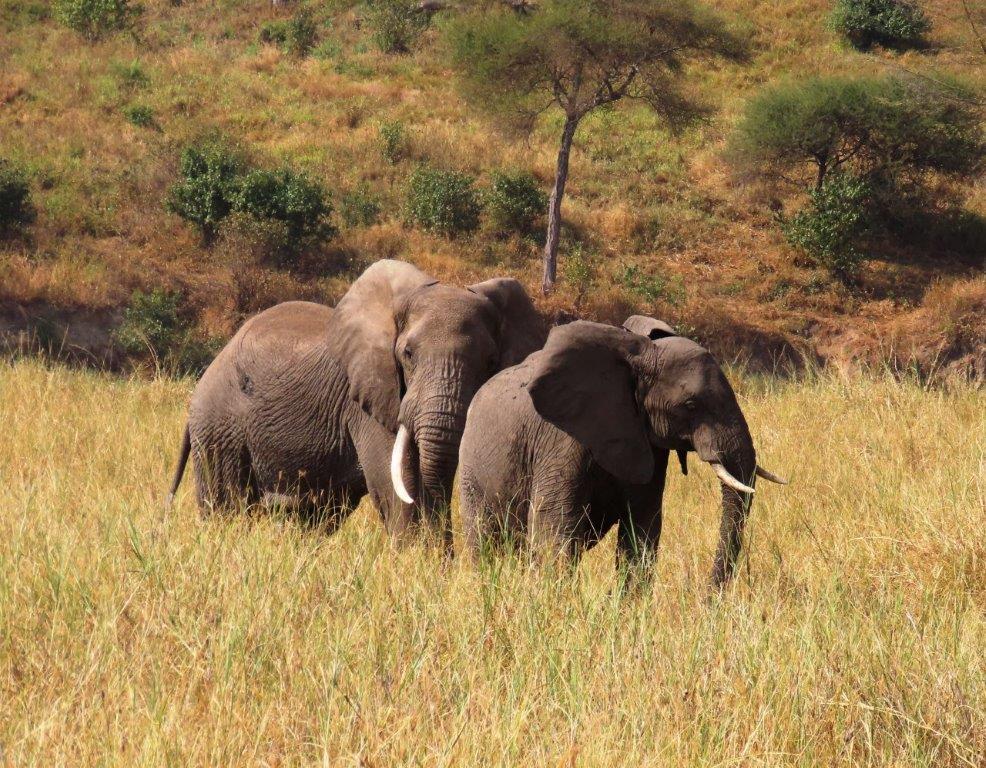
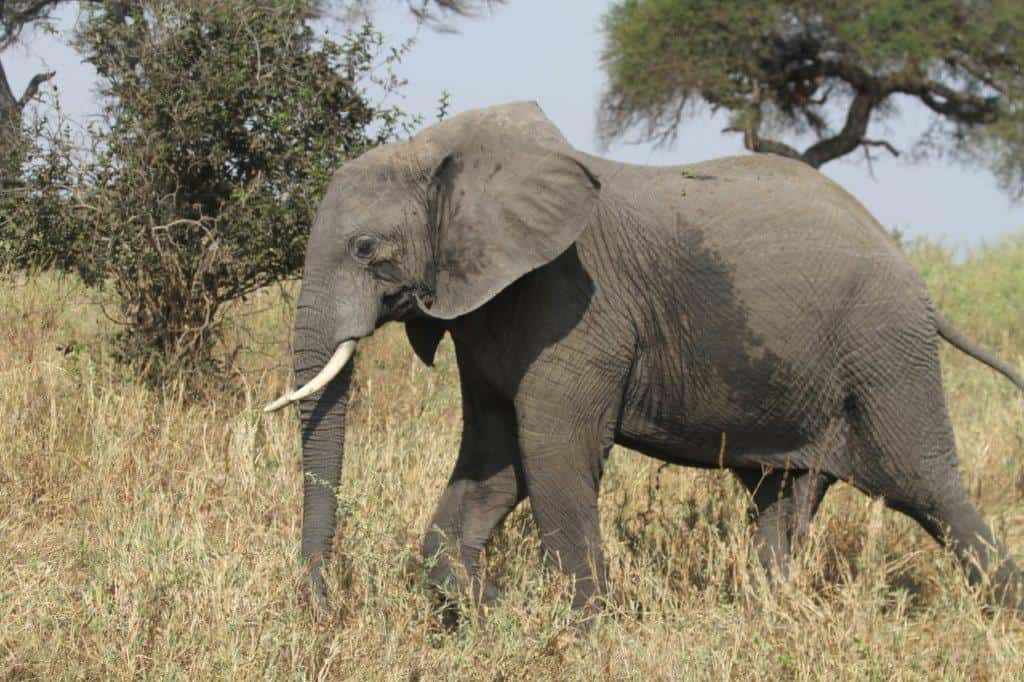
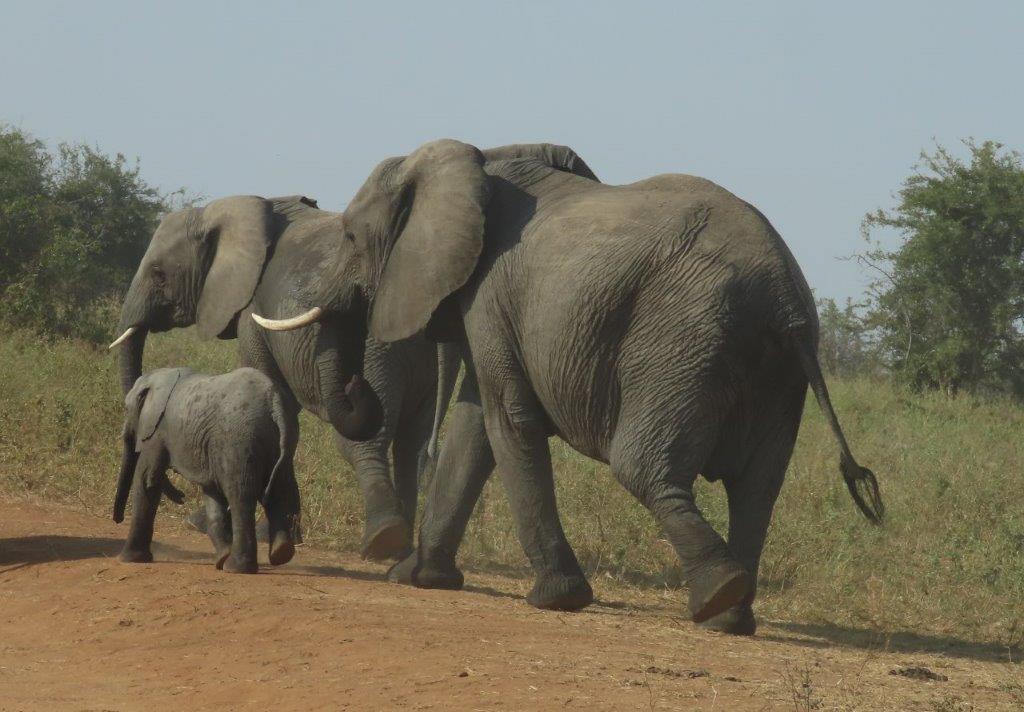
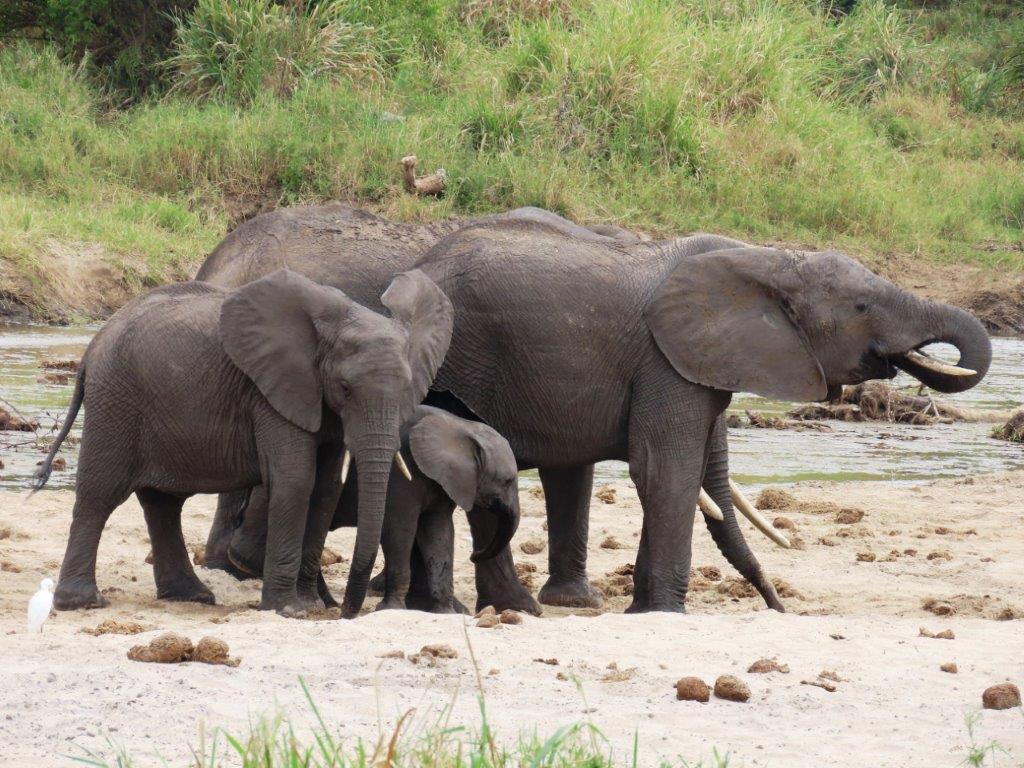
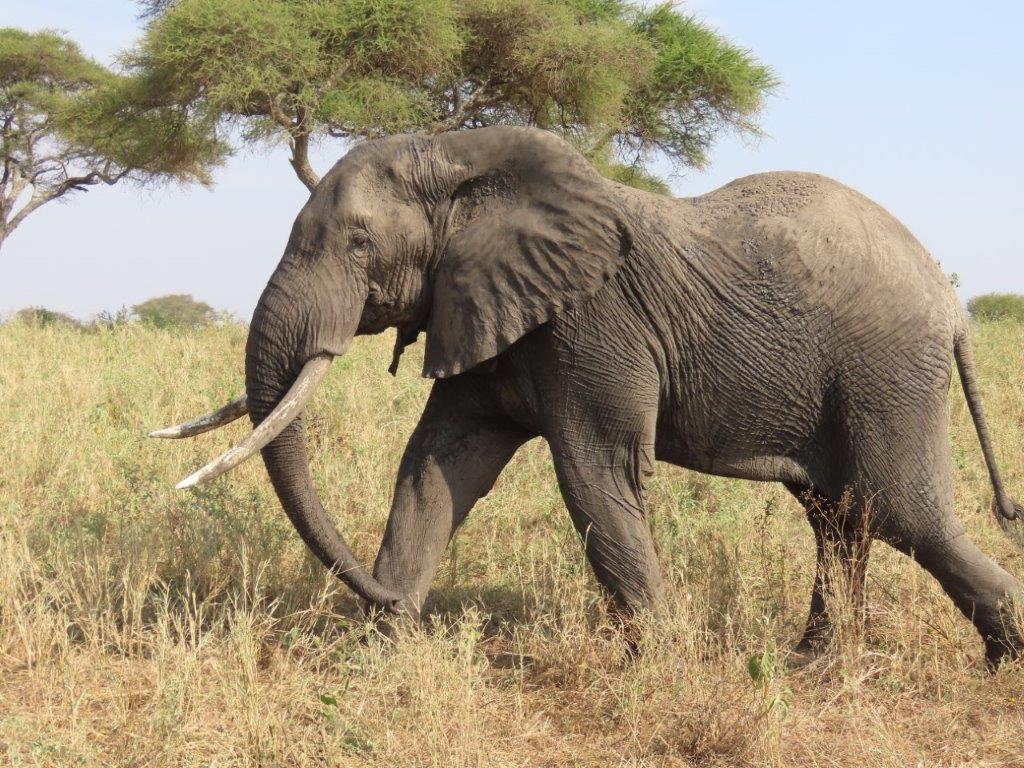
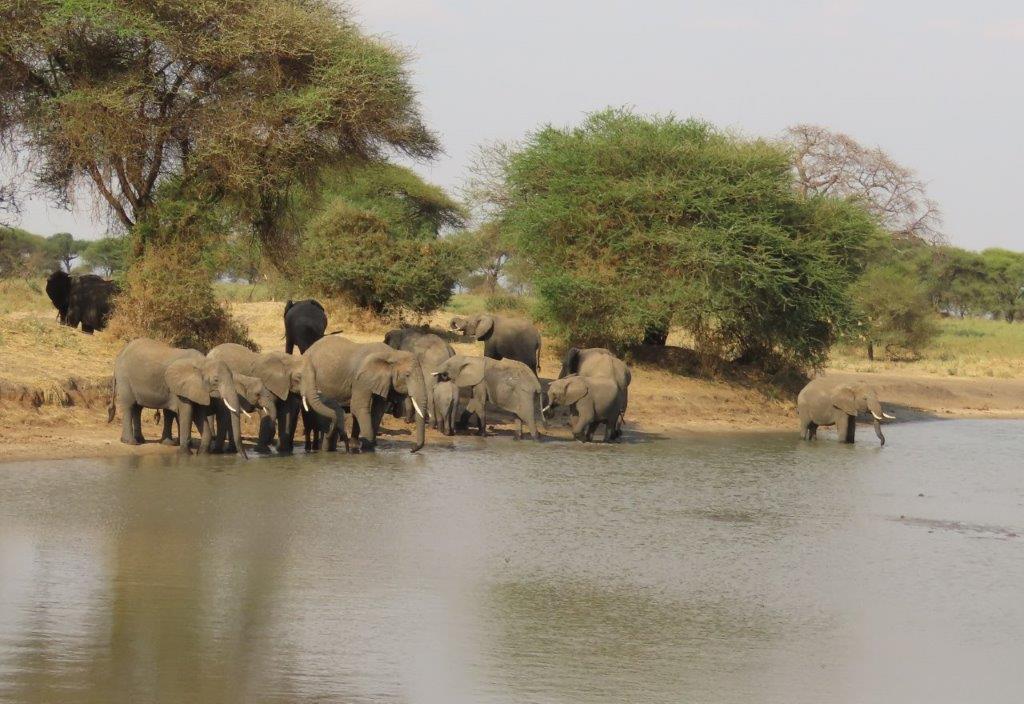
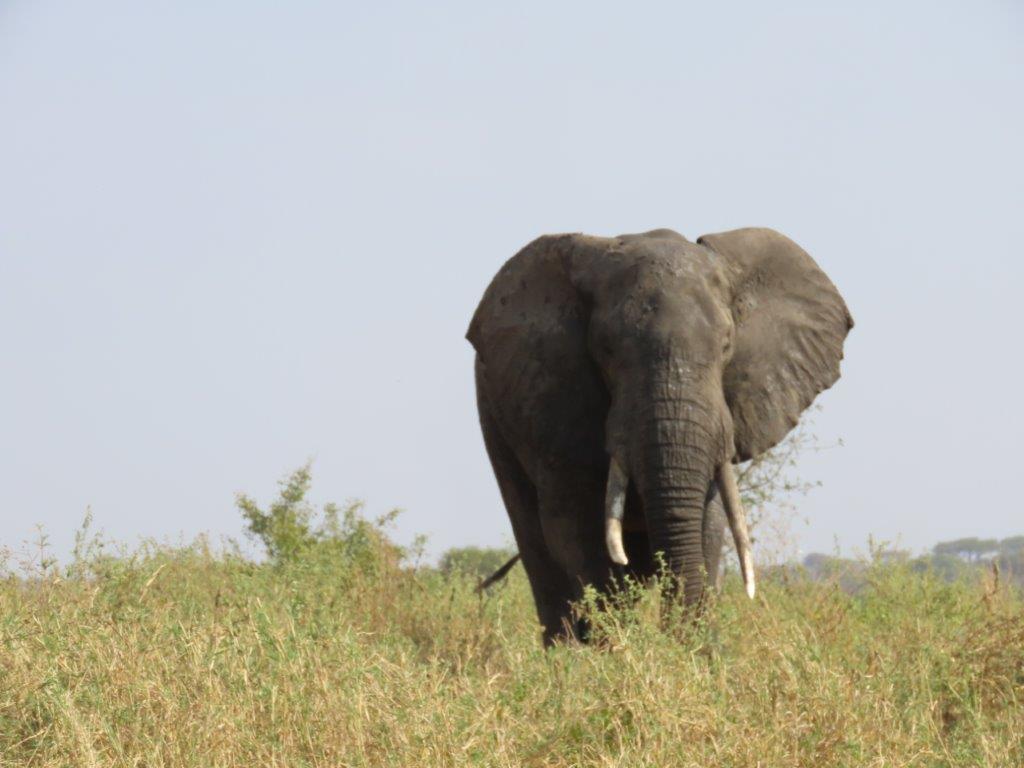


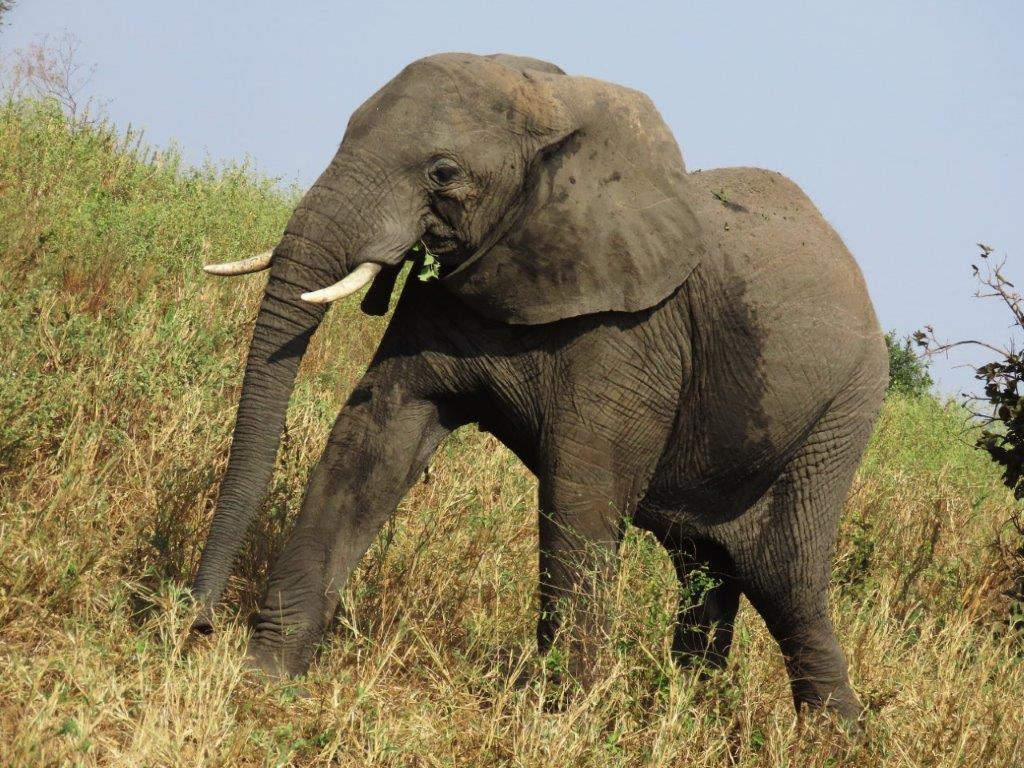
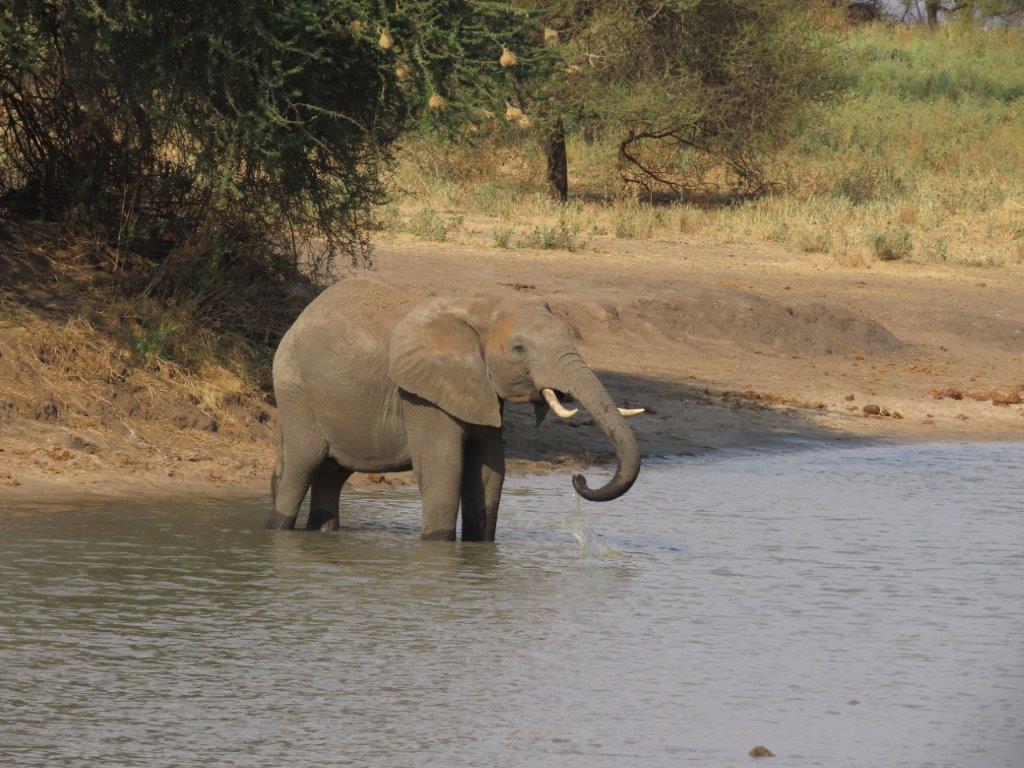
It was both exhilarating and scary at the same time. I could have reached out and touched one, he was so close to me (but I didn’t!)
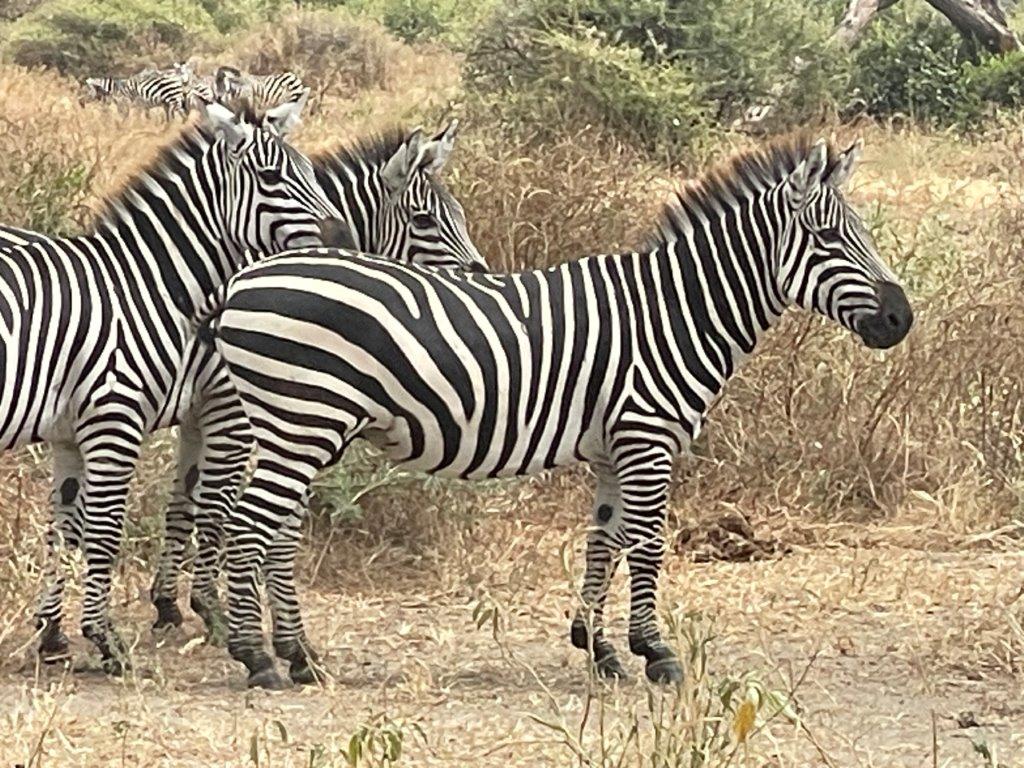
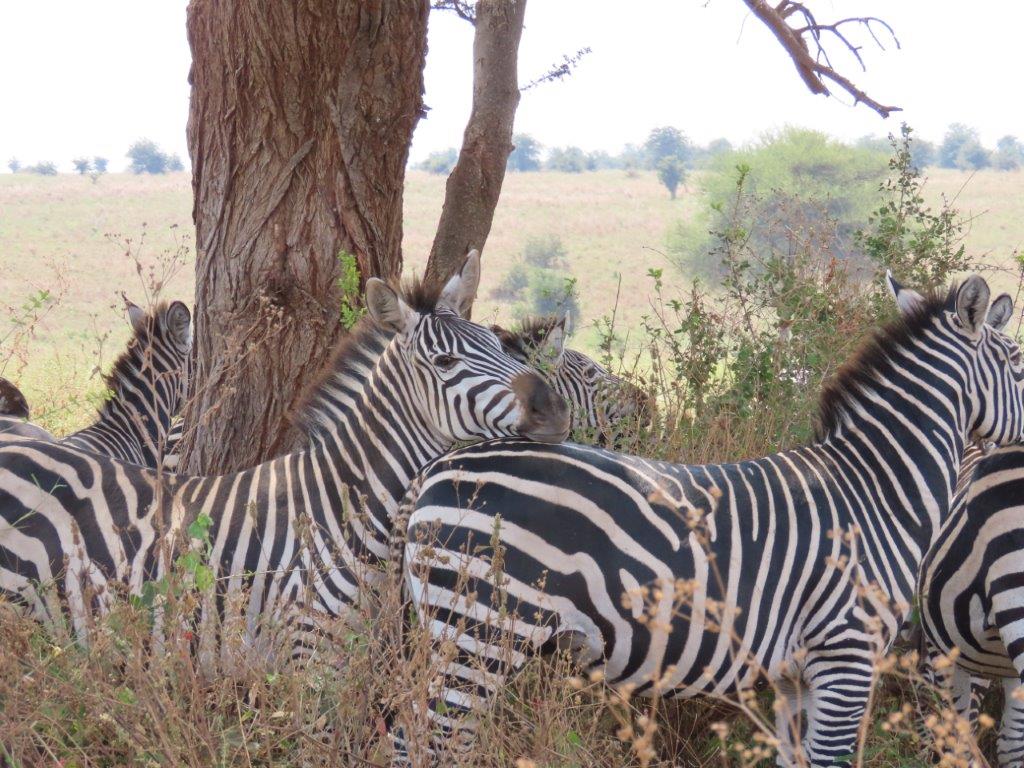
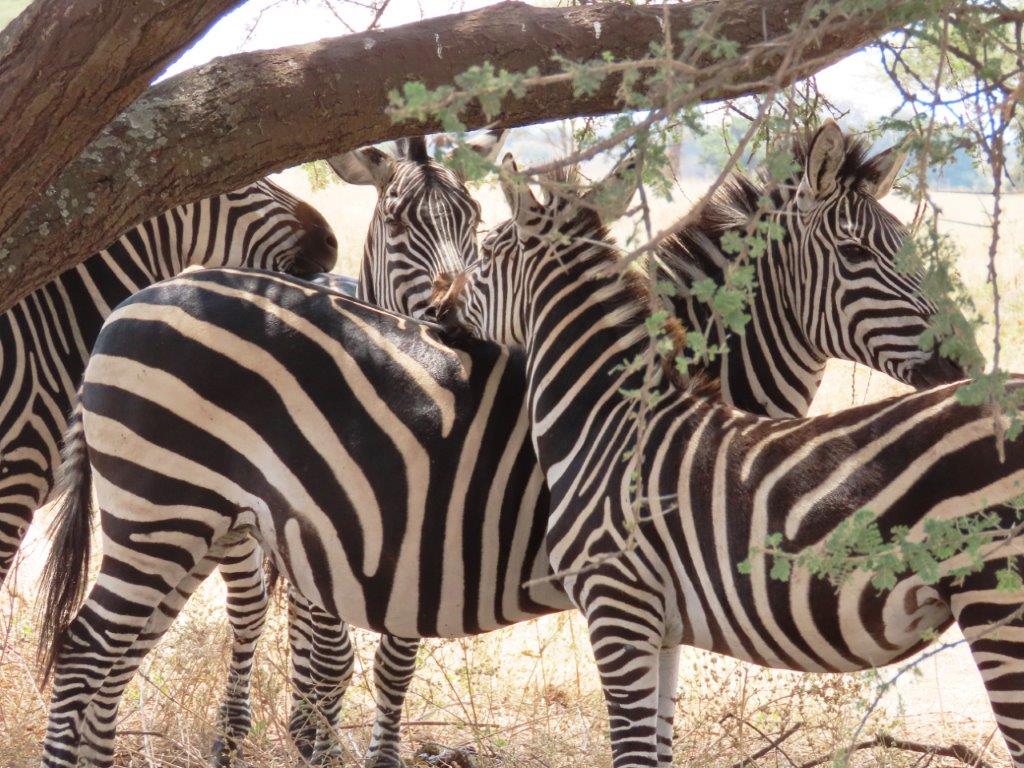
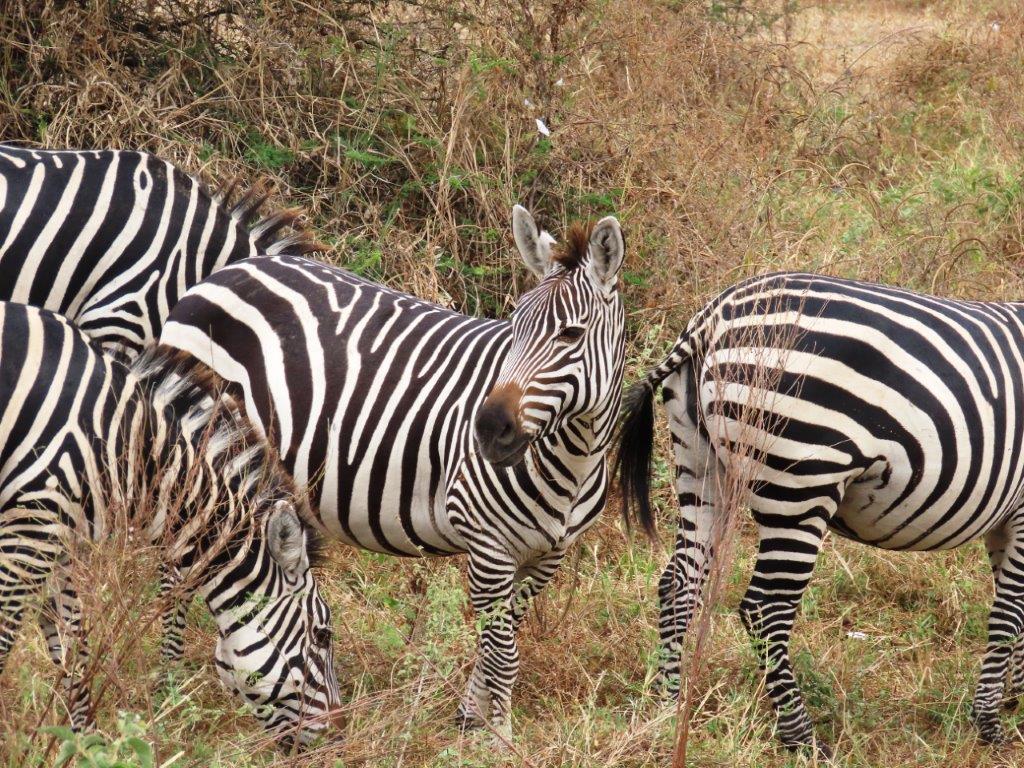
Zebras
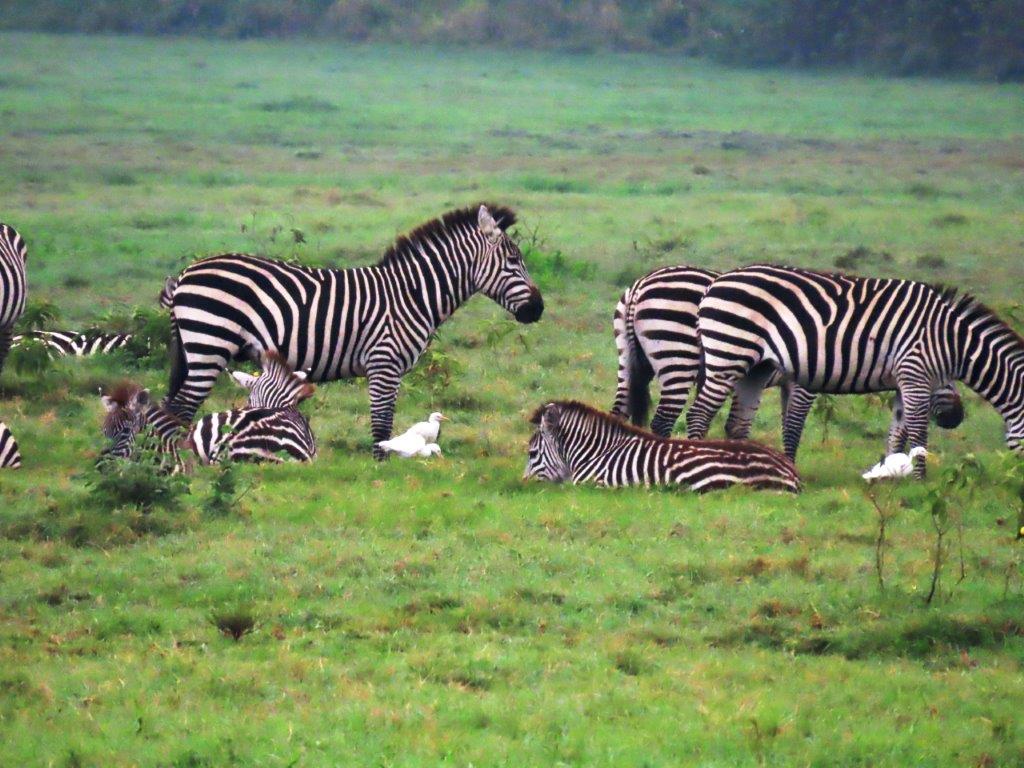
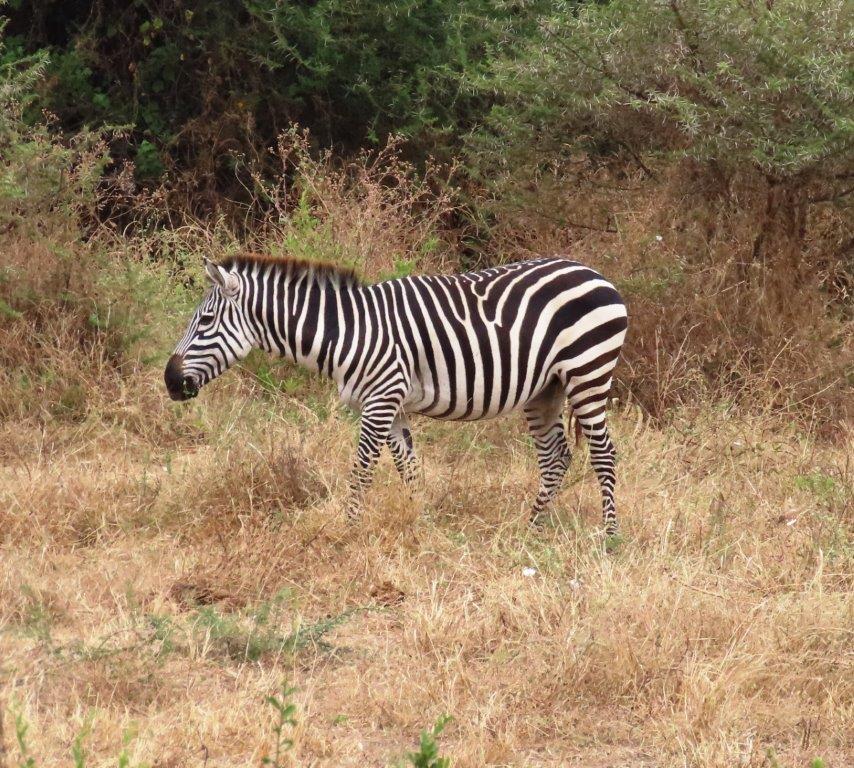
We were able to get up close and personal with the Zebras too. They are my favorite animal to photograph because I love the way their stripes bend and change shape as they move.
They have an interesting habit of resting their heads on each other’s backs, facing in opposite directions so they can watch out for predators.

Cheetahs
We also were lucky enough to see a pair of cheetahs which are often hard to spot. Stewart said cheetahs are usually solo so perhaps these two were siblings?

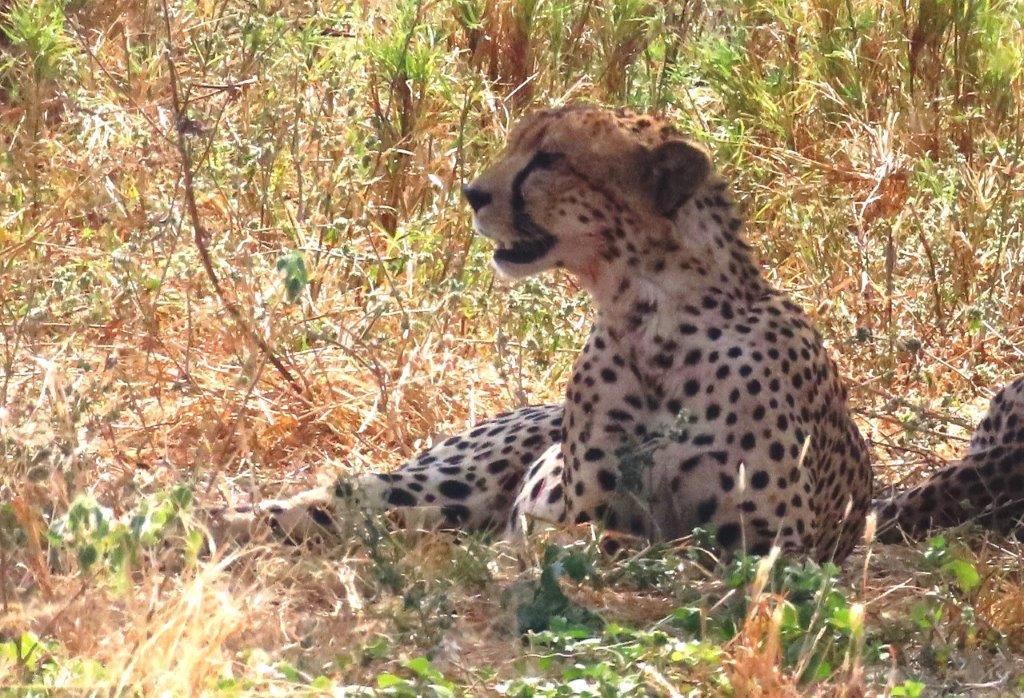
The great thing about having Stewart as a guide is he would patiently wait until either the animals had moved on, or until we said we were ready to go. It was always up to us to decide.
We had another box lunch, alongside the river. Here, it wasn’t safe to get out of the vehicle so we had to eat our lunch inside the Land Cruiser.
This lunch was pretty much the same as yesterday’s except it had a salad instead of a sandwich, a piece of chicken, apple, banana, juice box, hard boiled egg, and a chocolate bar.
Hopefully tomorrow’s will taste better?

And it was super fun to see giant Ostriches in the park. We saw lots of other colorful birds at Tarangire as well.

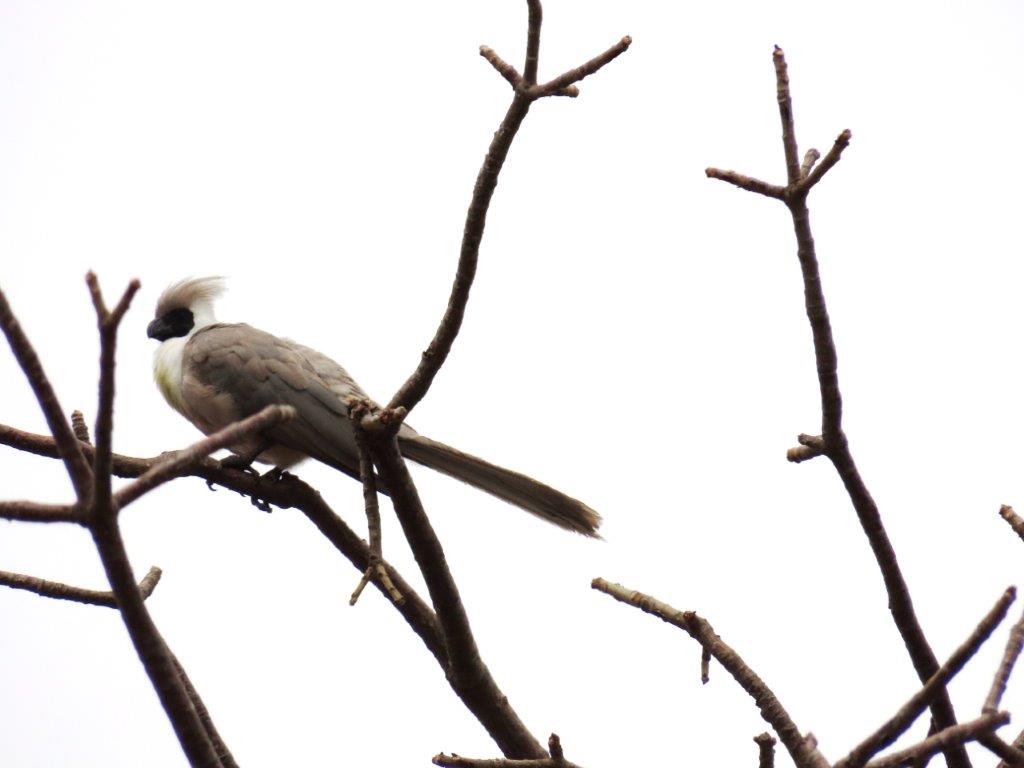
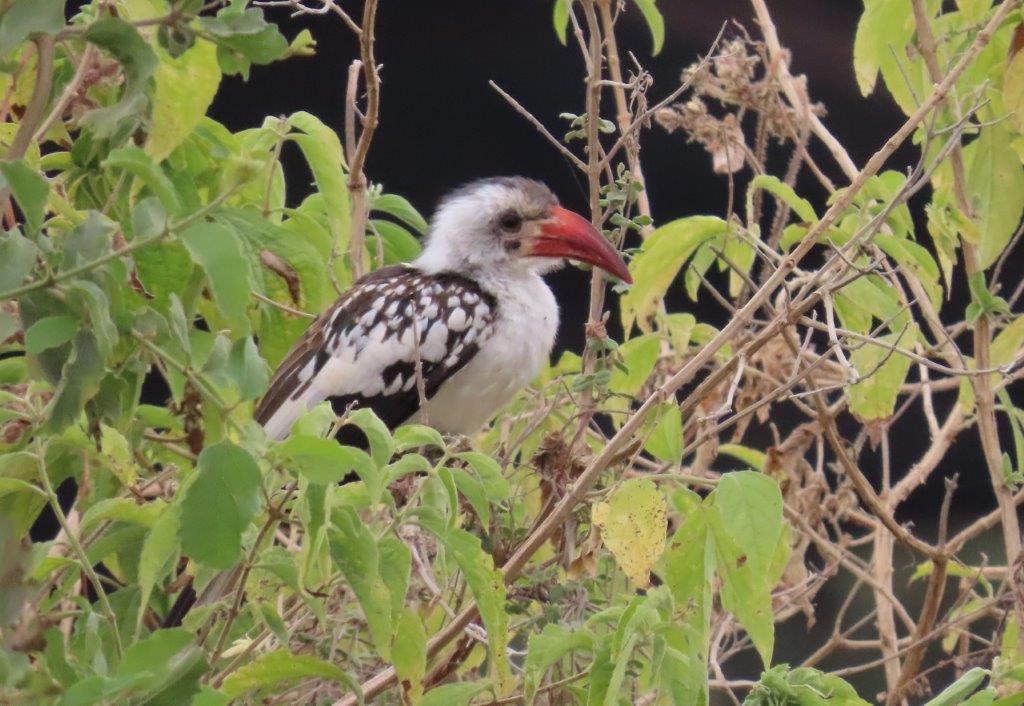

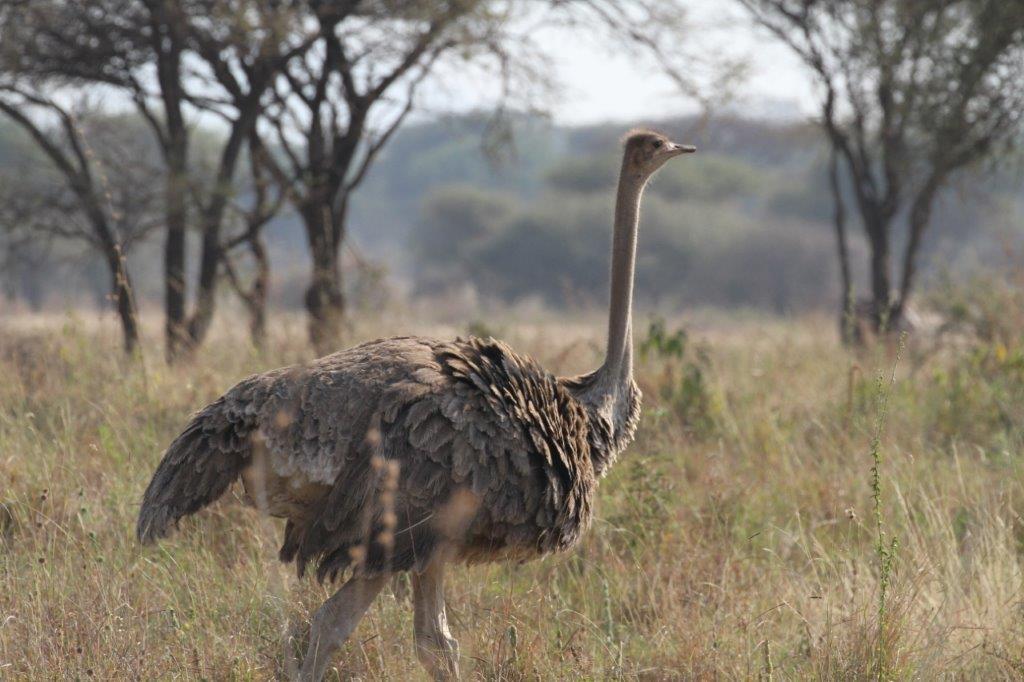
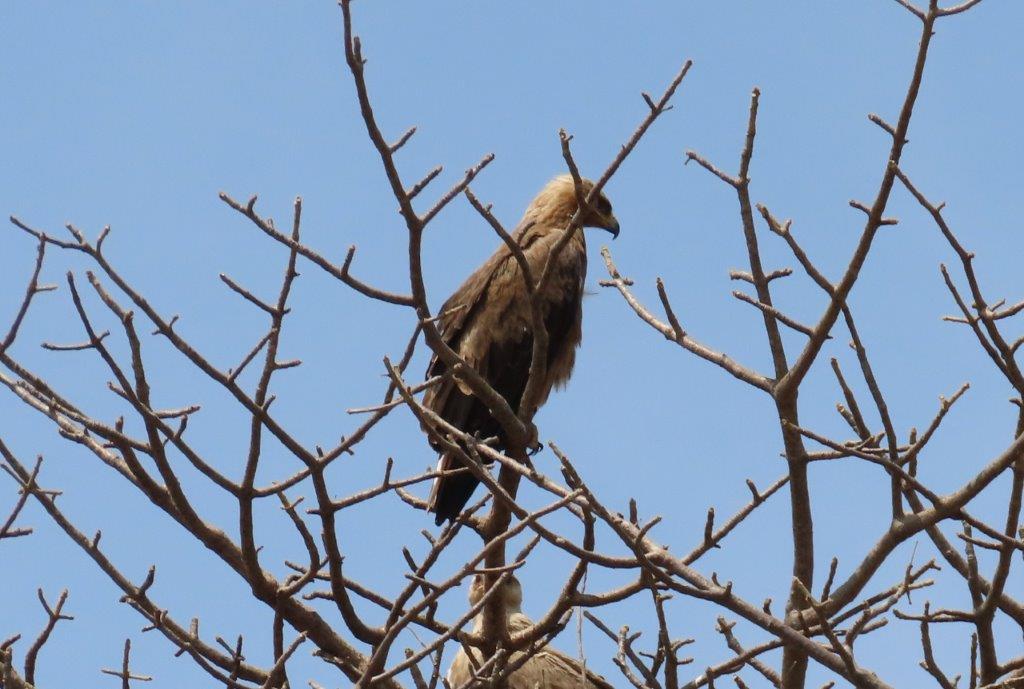
To see more photos and video of the animals we saw in Tanzania, visit our Photo Album.
Are you starting to see what’s a Tanzania safari really like? Keep reading – it gets even better!
Lake Manyara Safari Lodge
Not only did we have a spectacular day of game viewing, we also arrived at our first tented safari camp for two nights. The Lake Manyara Safari Lodge is about an hour and a half drive from Tarangire. At this property, there were baboons and velvet monkeys everywhere in the trees.
The tents have heavy canvas tarps that roll-up and roll down. The windows are screens. We kept three of ours open the whole time to let the breeze blow through. None of the places we stayed in Africa had AC, but this room had a fan which we used to cool down.


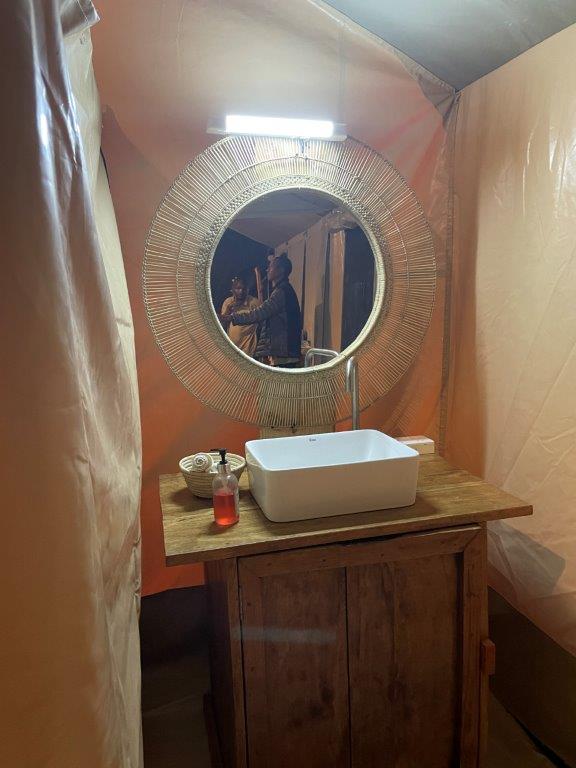
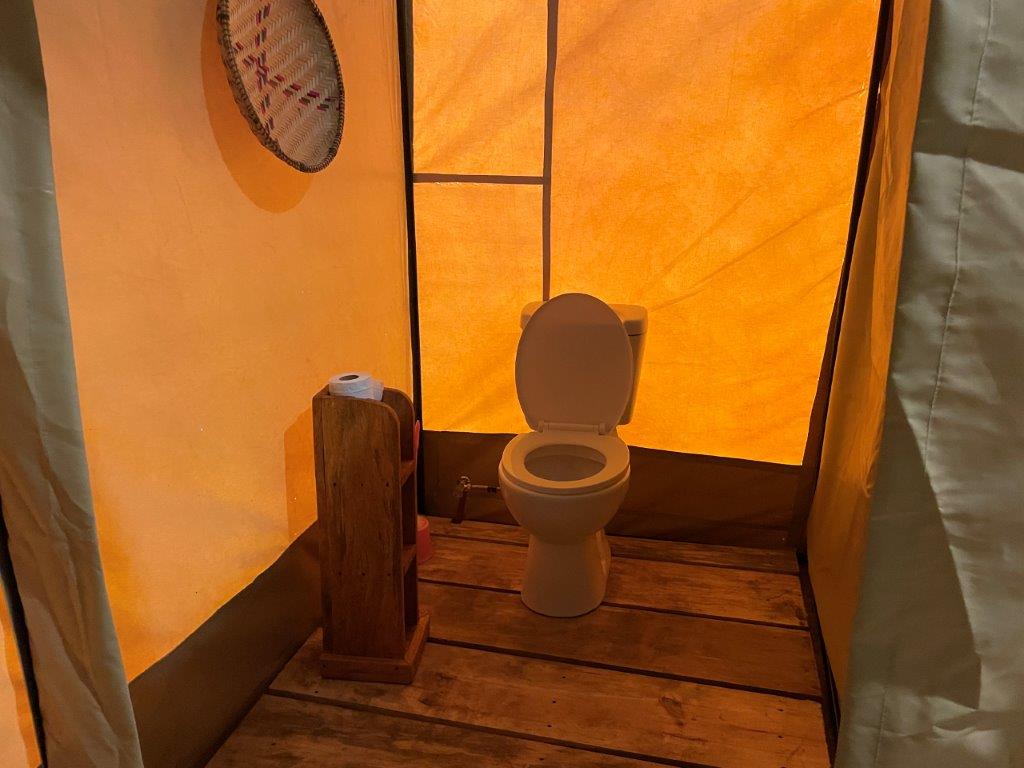
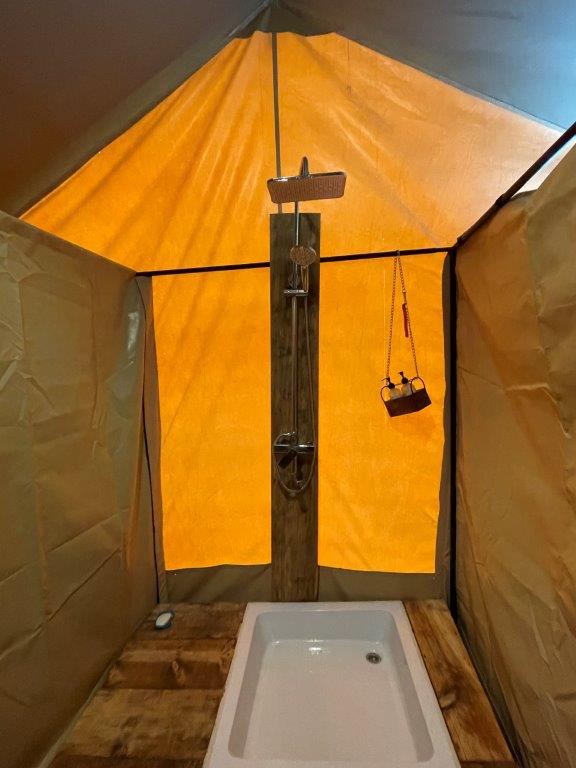
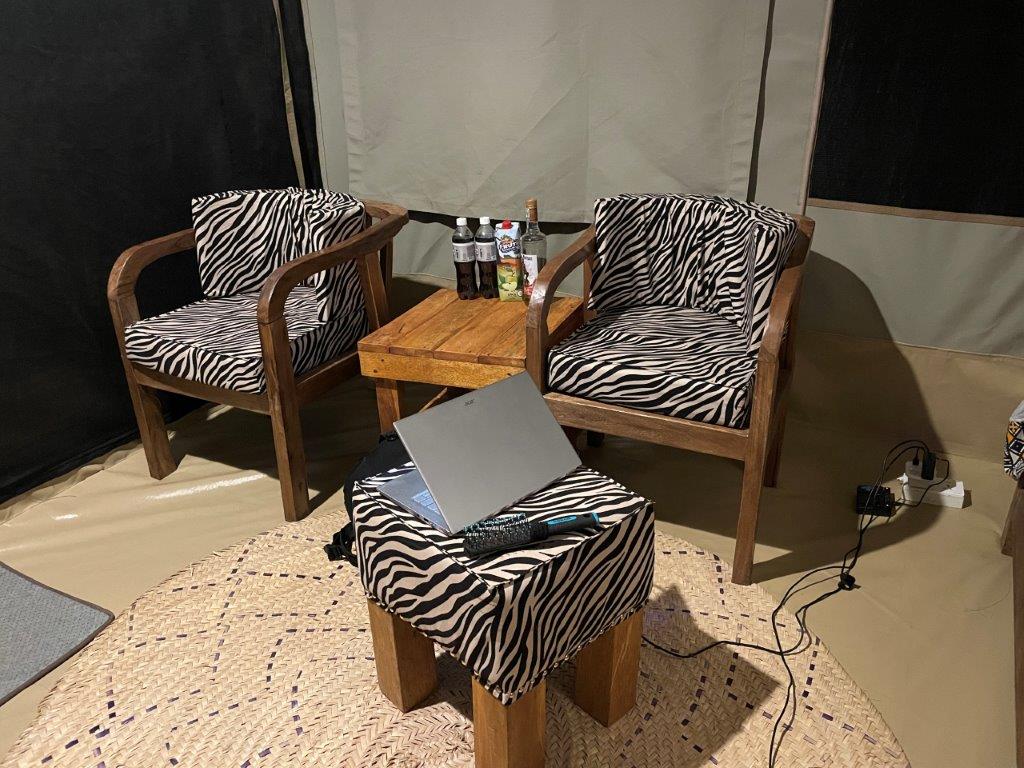
We were told to lock the zippers shut on the door when we left the room so the baboons don’t break in!! The staff also walked us back and forth between the dining hall and our tent, I think to prevent the baboons from bothering us?
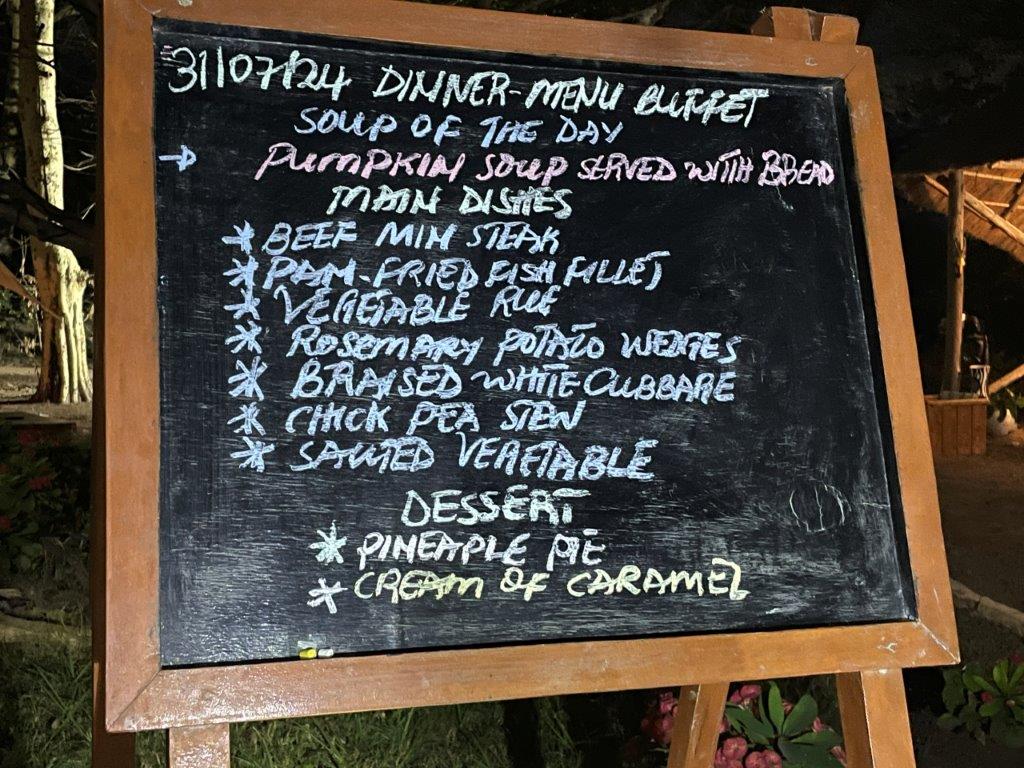
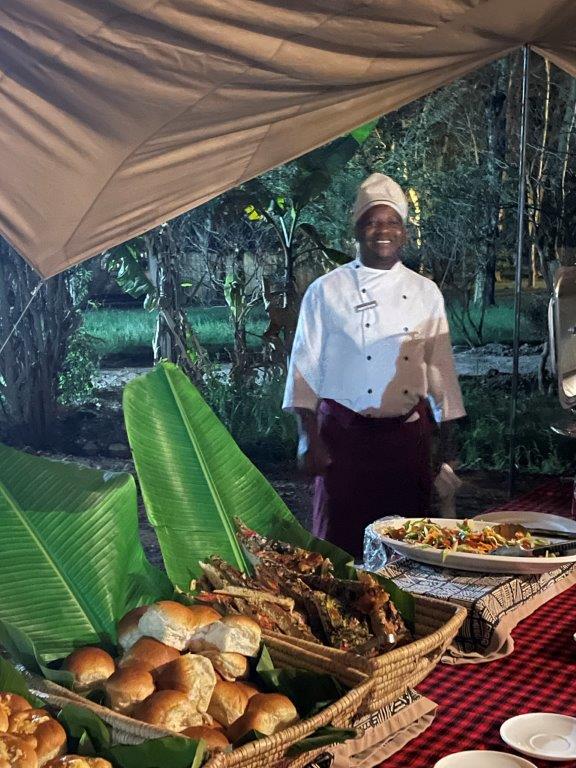
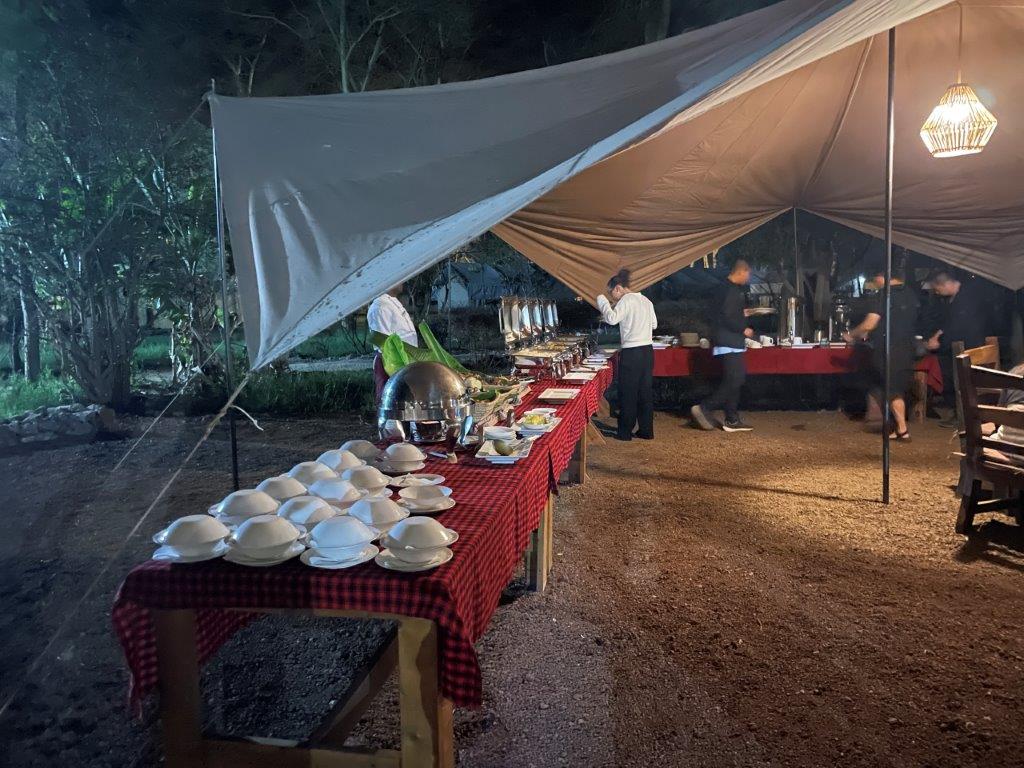
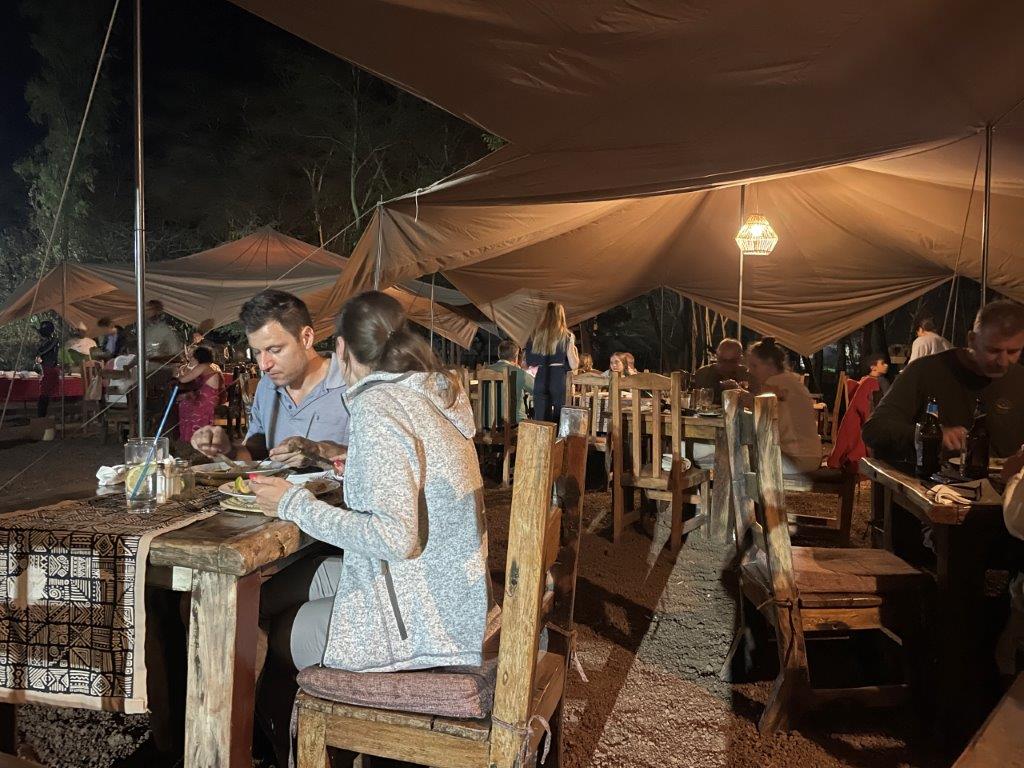
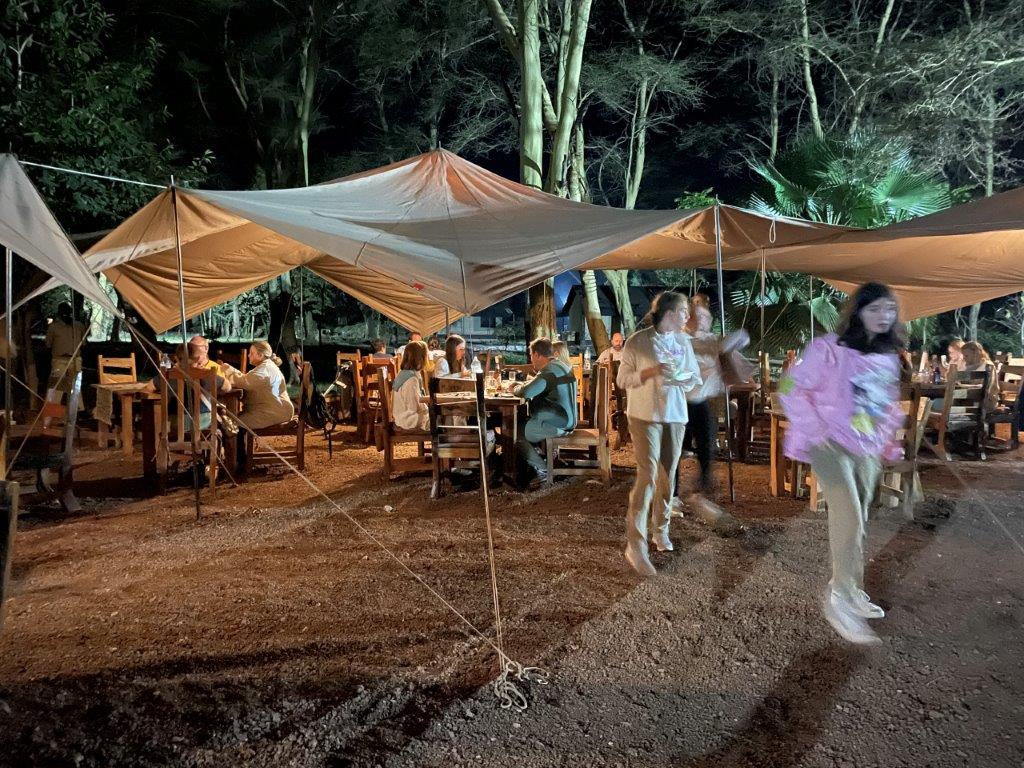
We had dinner at the open air dining hall with Charis. They have a buffet with soup, a couple of main entrees, vegetables, potatoes, and a choice of desserts. It was the best food we’ve had since we left home 6 days ago!

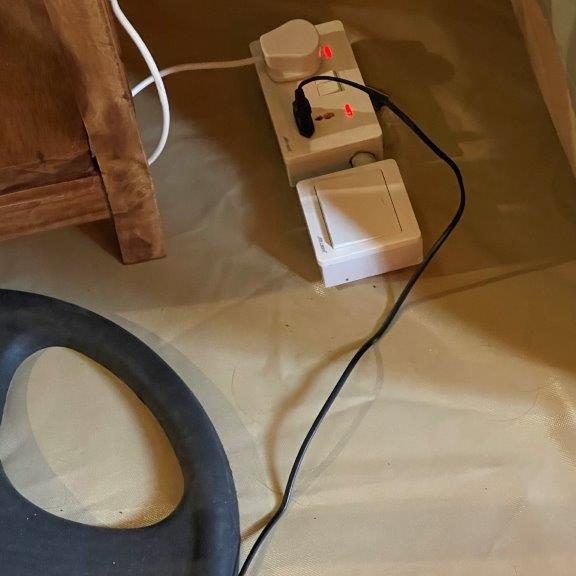
We were told that the electricity would turn off at 10:00 PM so we plugged everything in to charge as soon as we arrived.
As we crawled into bed after a really long, but exciting day, I heard lots of animal sounds from outside. Grunting, snorting, screeching, even screaming. Perhaps the Baboons were responding to some real or perceived threat? Life in the wilderness is certainly exciting!

Day 3 – Lake Manyara National Park
The breakfasts at all of the places we stayed consisted of made-to-order eggs (omelet, scrambled, sunny-side up, over-easy, etc.), sausage or bacon, fresh cut fruit, lots of breads and pastries, coffee, tea, orange juice.


After breakfast at the lodge, we set out for Lake Manyara National Park, about 30 minutes away.
Lake Manyara was probably my least favorite of the National Parks we visited. A smaller park, it didn’t have as many animals, although it did have some colorful new birds to add to my Life List. We got to watch Baboons, up close and personal, with mamas carrying their babies on their backs. And the elephants were not shy at all about walking right past our Land Cruiser.

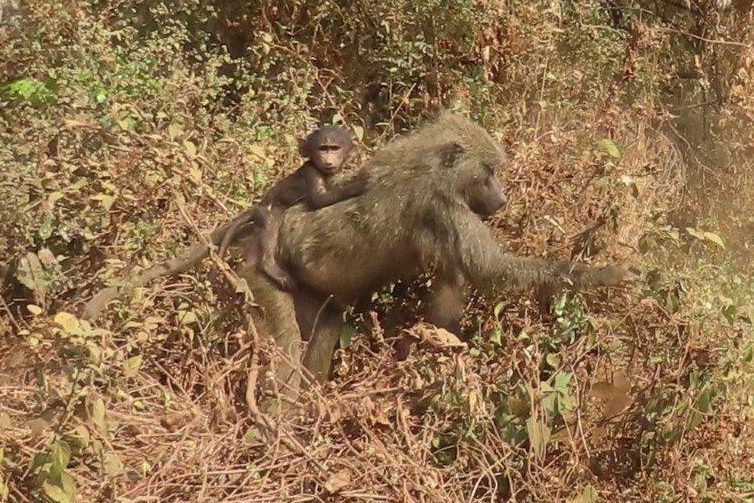

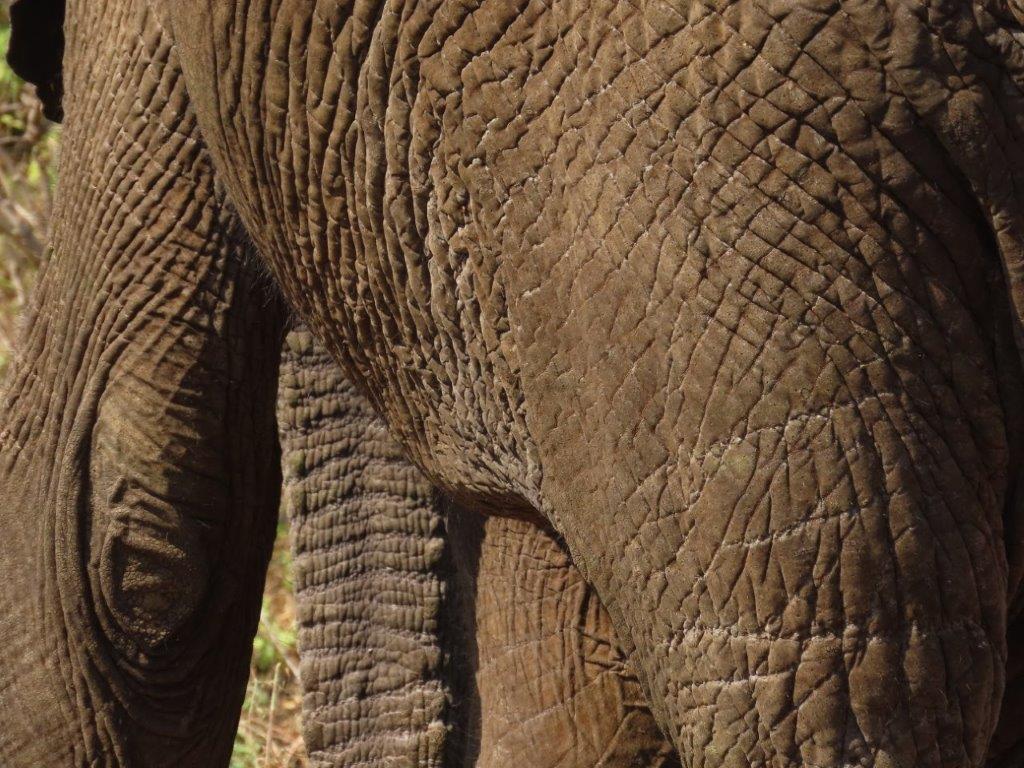
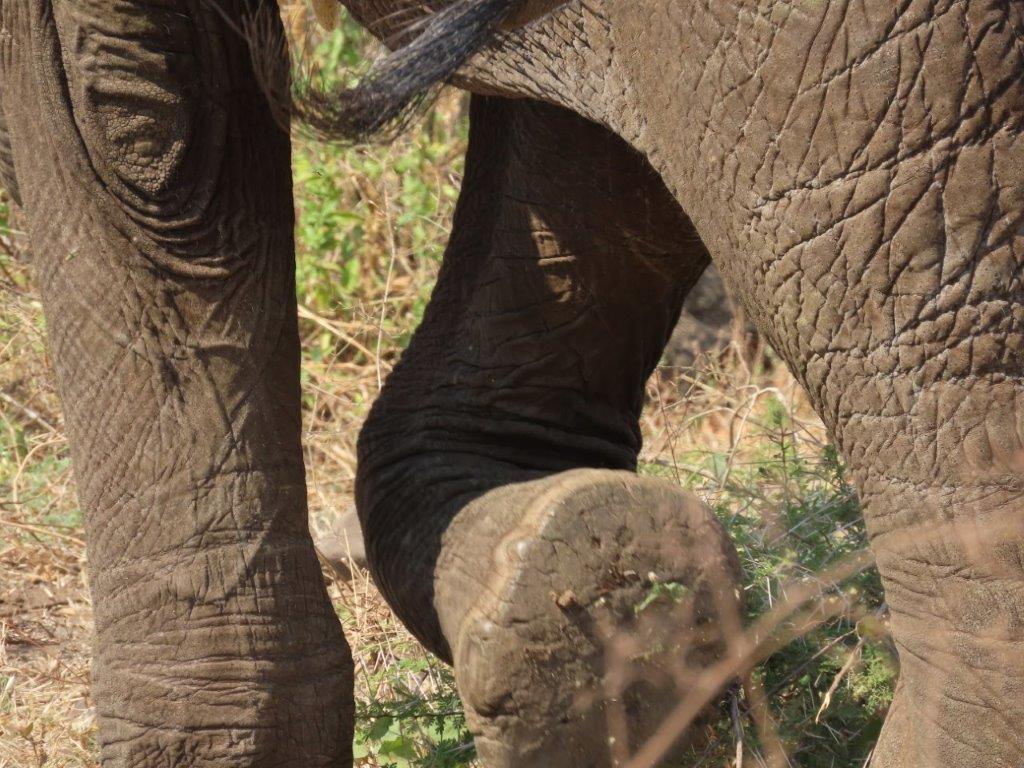
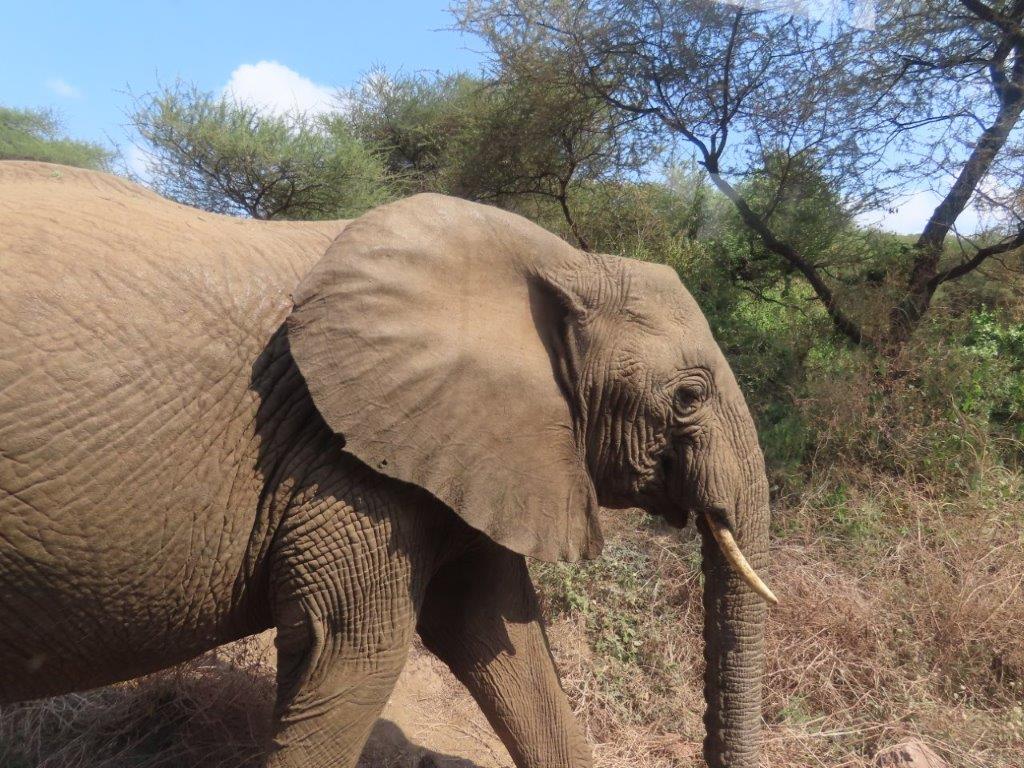
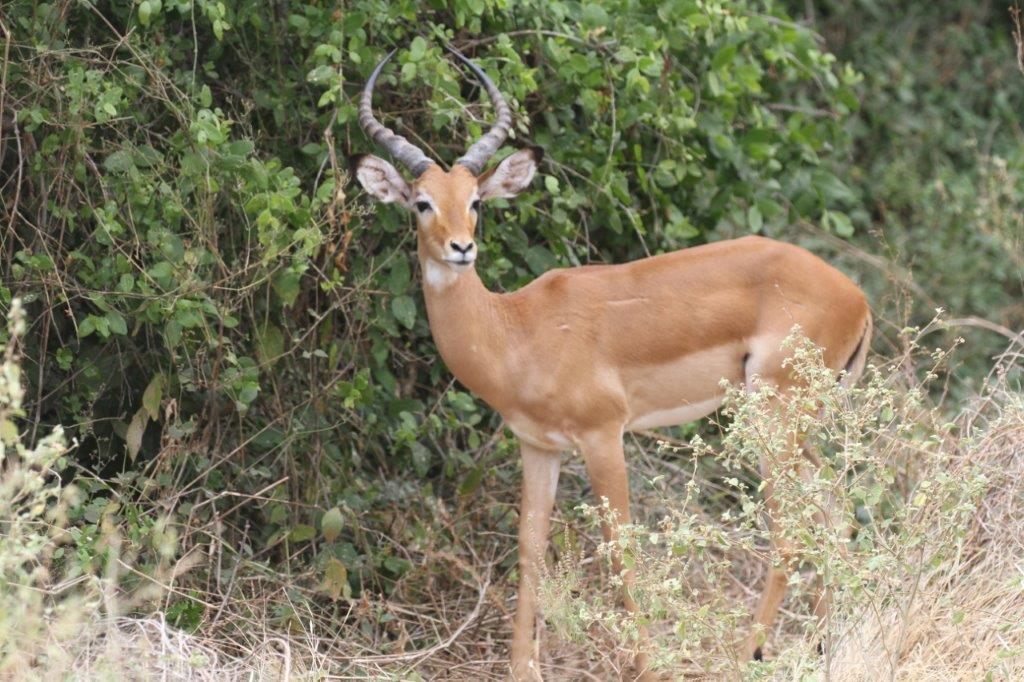
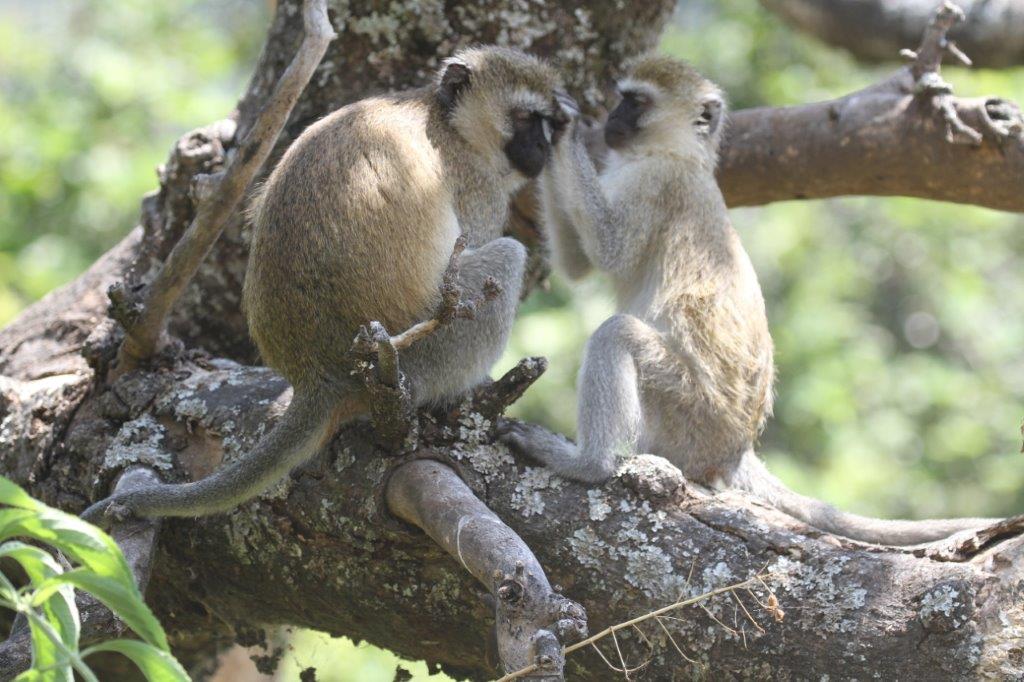
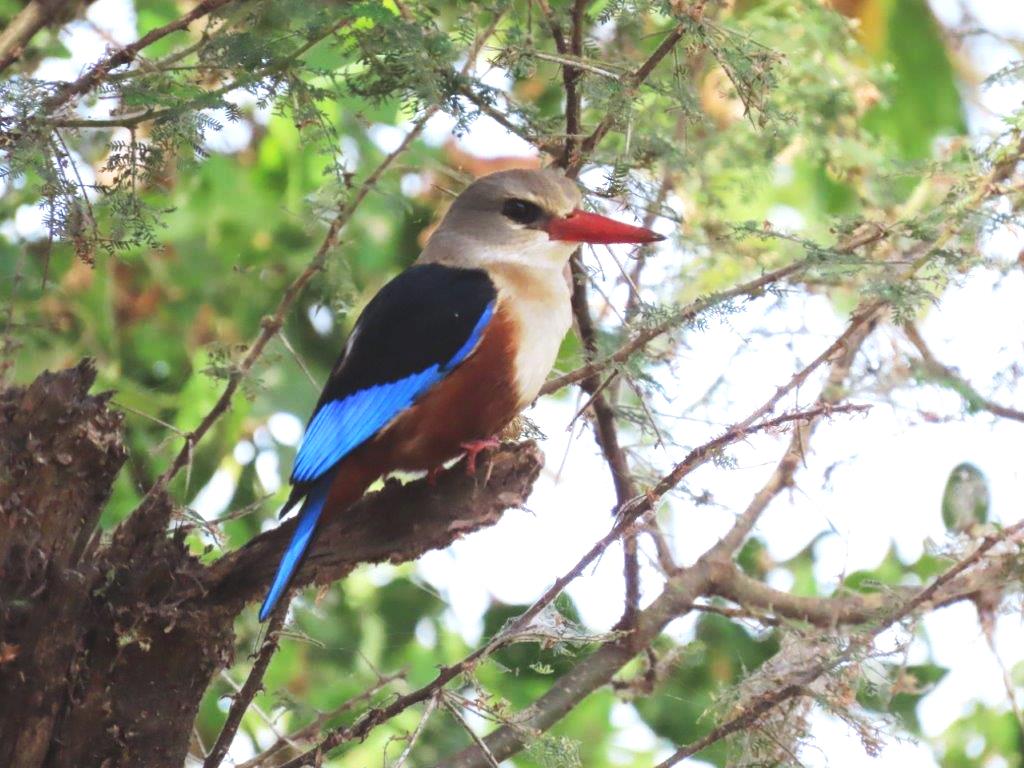
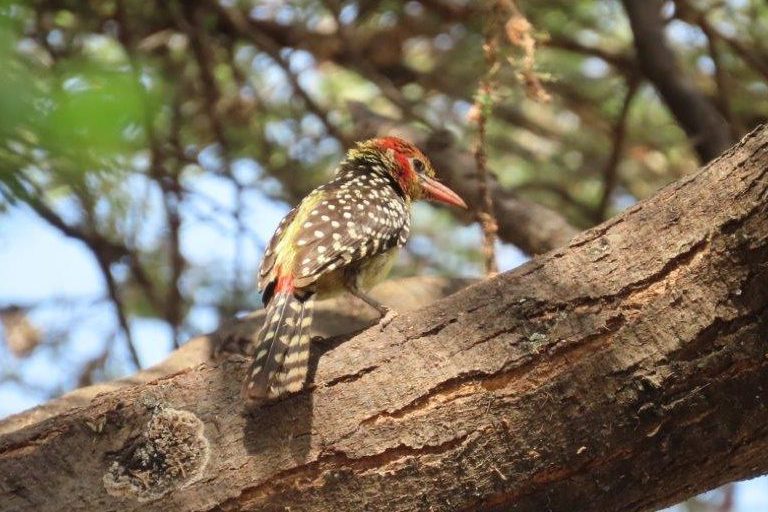
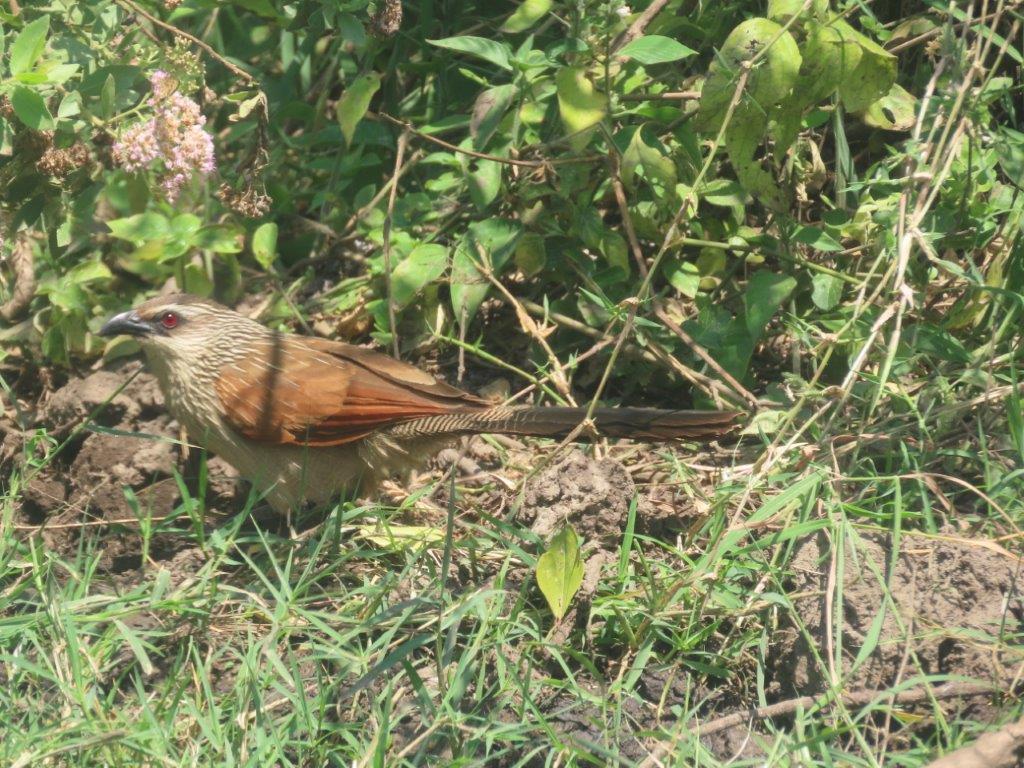
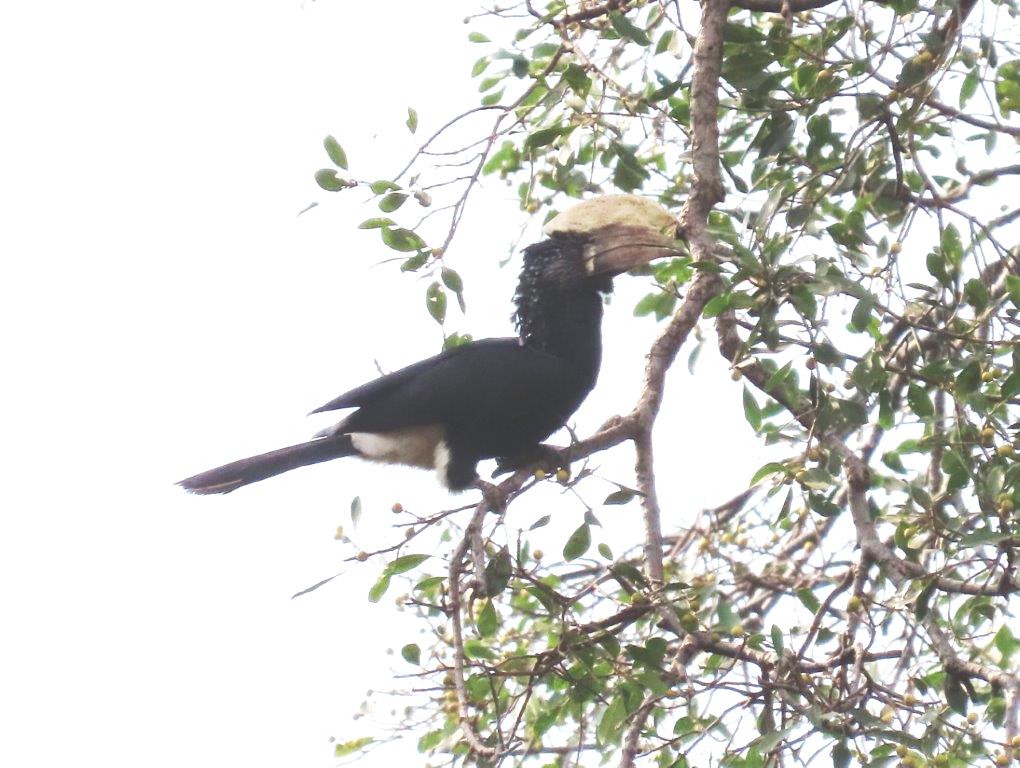
To see more photos and video of the animals we saw in Tanzania, visit our Photo Album.
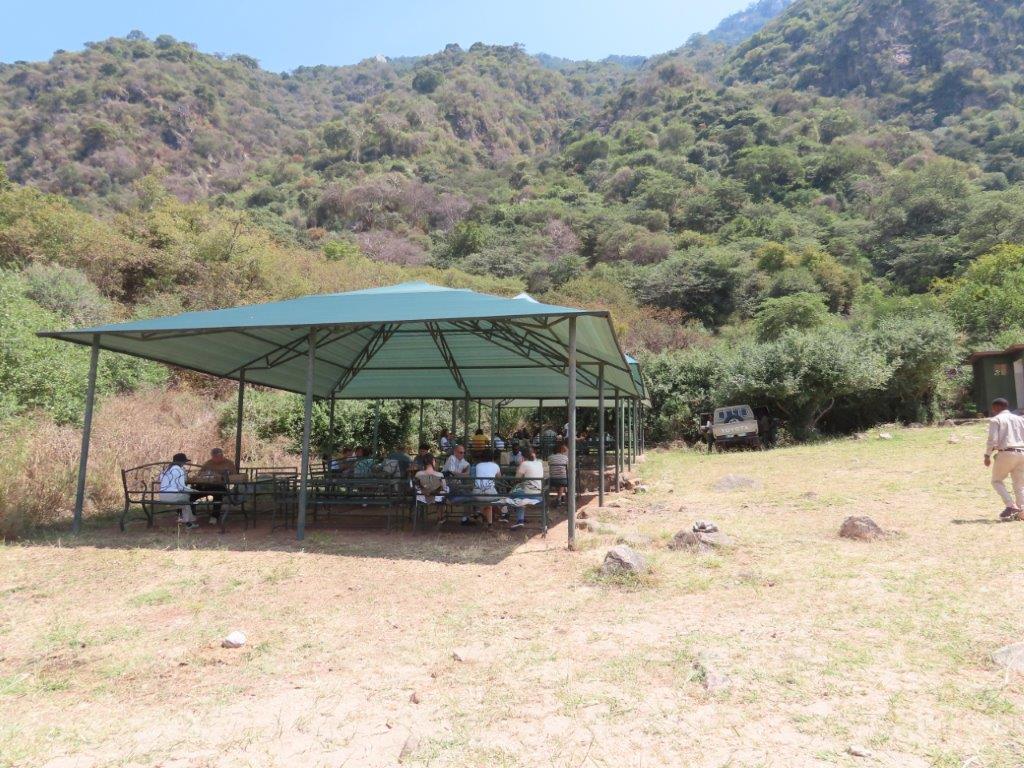
We had our lunch at a picnic area where we could safely get out of the vehicle and use the bathroom. This box lunch was better than the ones we had the first couple of days.

Park Road Examples
The roads in this park alternate between smoother (relatively speaking) and very bumpy – here’s a video of each:

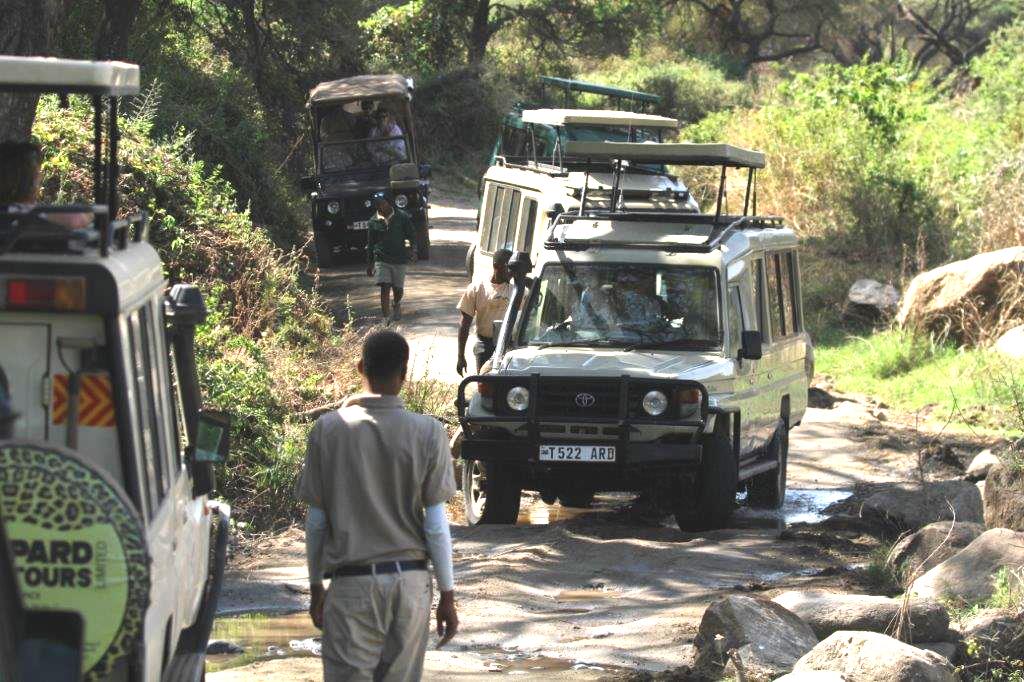
On the way out of the park, we came across a Safari Land Cruiser that was stuck in the mud at a low spot in the road. All the guides got out to help push the vehicle out of the mud.
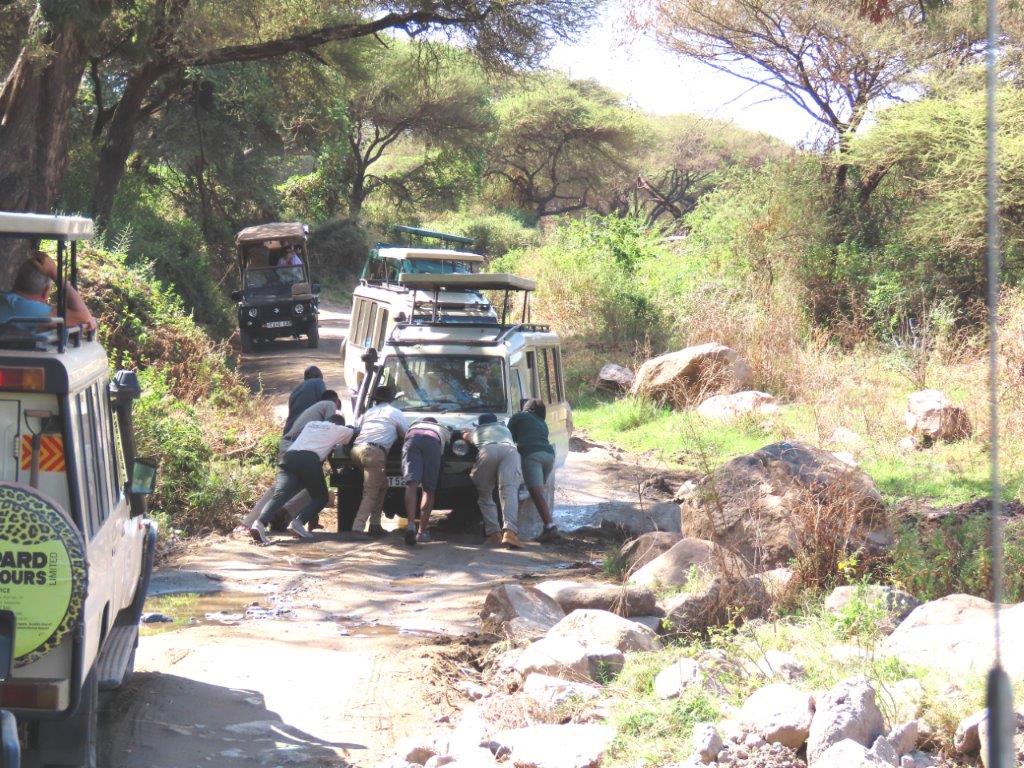
Over our 9 day safari itinerary, we saw lots of vehicles getting stuck or breaking down. The other guides always stopped to help them out.
When we got back to the Lake Manyara Safari Lodge, we had time for a nap and a shower before dinner.
Day 4 – Serengeti and our 2nd tented camp
At 8:30 AM, we left to head north towards Serengeti National Park. We made lots of stops along the way – a view point over Lake Manyara, a Tanzanite souvenir shop, buy water, get gas, the entrance to the Ngorongoro Conservation Area and a view point over the Ngorongoro Crater. I think some of these stops were really an opportunity for Stewart to sneak away and have a smoke!
For about an hour, we drove along the rim of the Ngorongoro Crater, but couldn’t see down in to it. It was very, very bumpy and dusty. After three solid days of bouncing the Land Cruiser, my hips and knees are starting to ache. The locals call it the “African Massage”!
The Serengeti
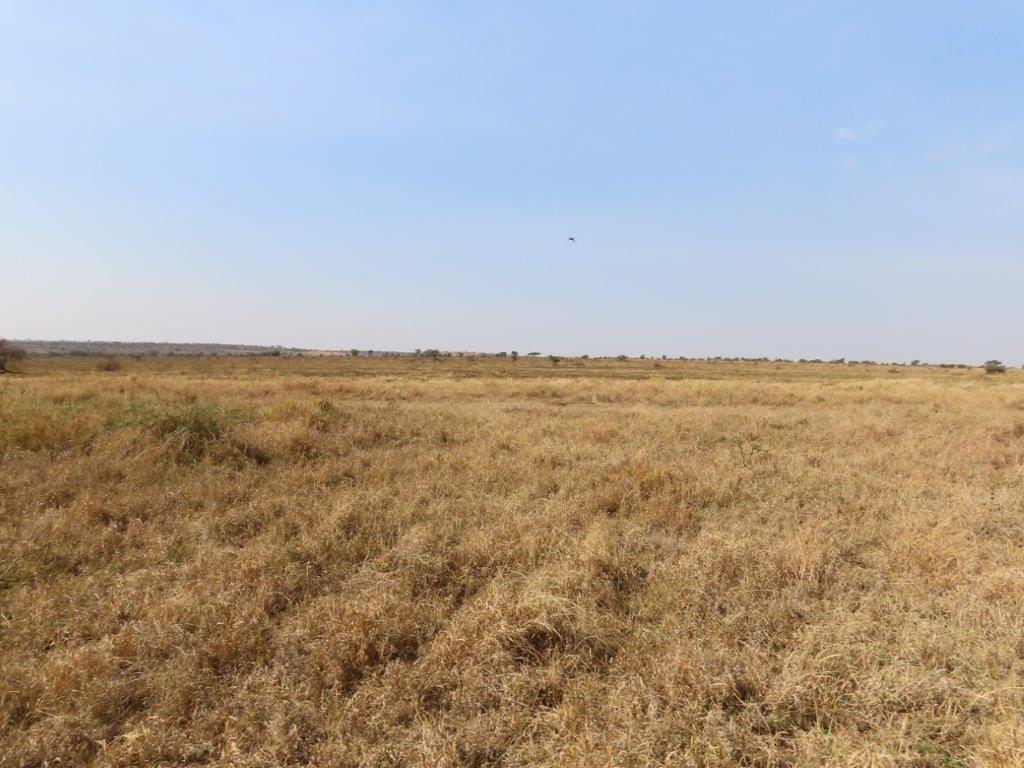
Once we got into the Serengeti (a UNESCO World Heritage site), , the animals started to appear, sometimes in the distance, sometimes along the road. The vegetation is very different than what we saw at the first few parks – Serengeti has wide open plains, dry brush and few trees.
Lions (#3)
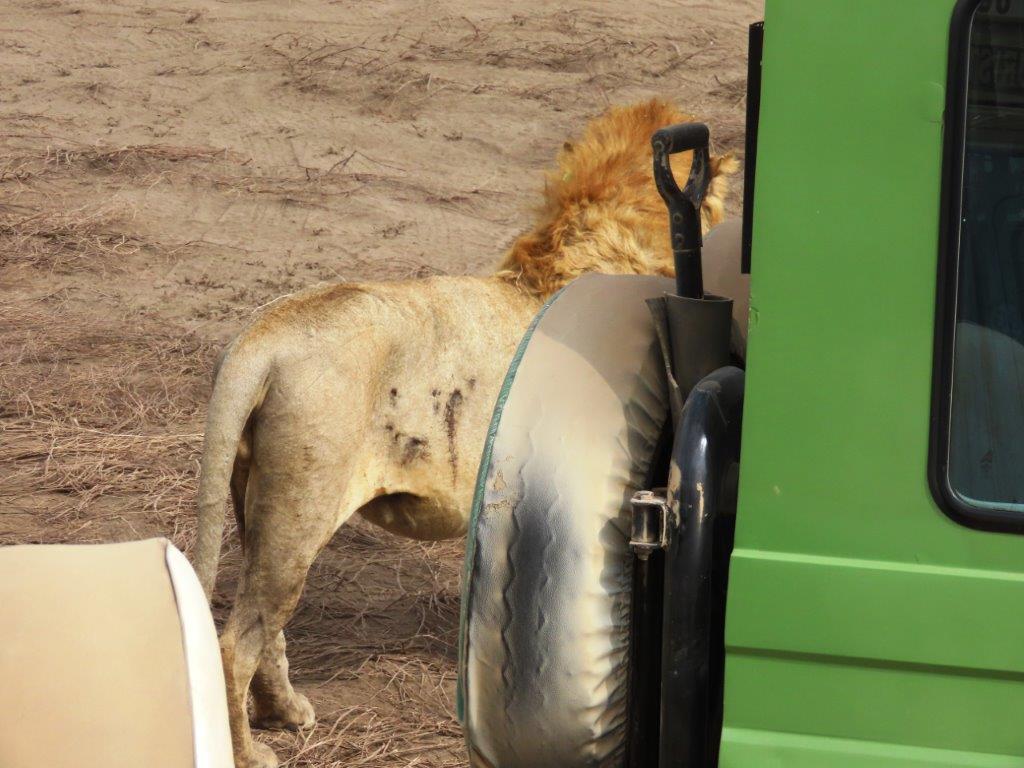
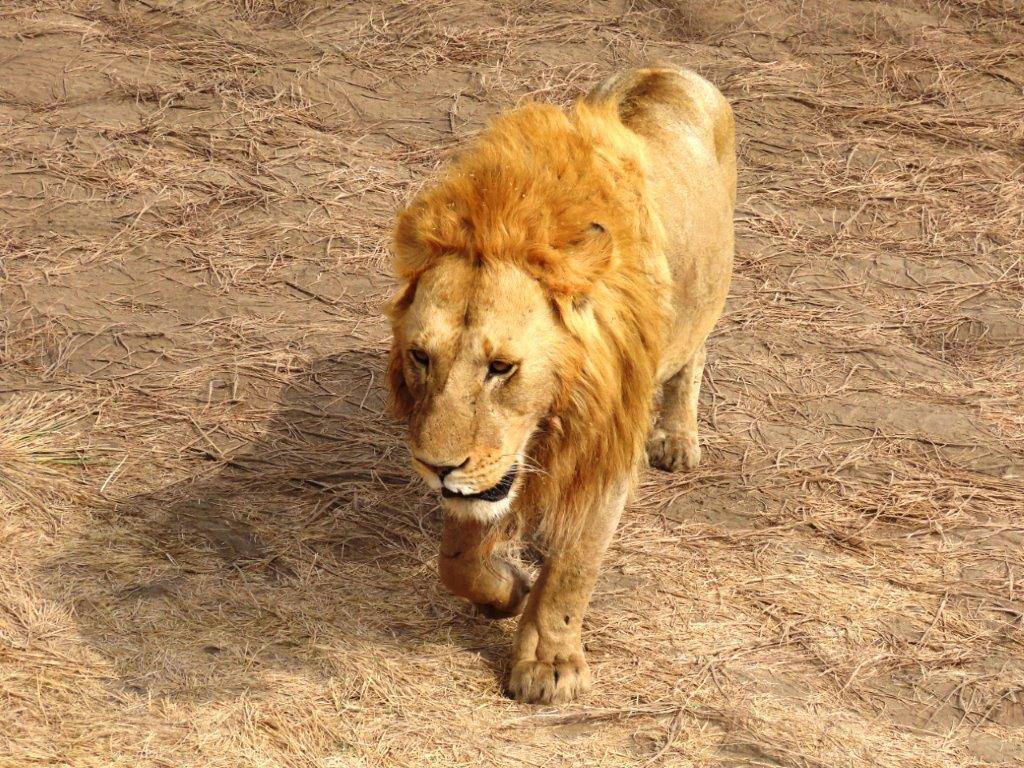
The first significant animal we saw was lions – a couple of big ones lying under a tree. This is our third of the Big Five. One got up and walked around for awhile, including right next to our vehicle.
But there were a dozen safari vehicles crowded around so it didn’t exactly feel like seeing them in the wild. Stewart reminded us that they are 100% wild and unpredictable.
Giraffe
Later, we found a beautiful giraffe solo, eating leaves off a tree, with no other vehicles around. Now I feel like a National Geographic Photographer!

Hippos
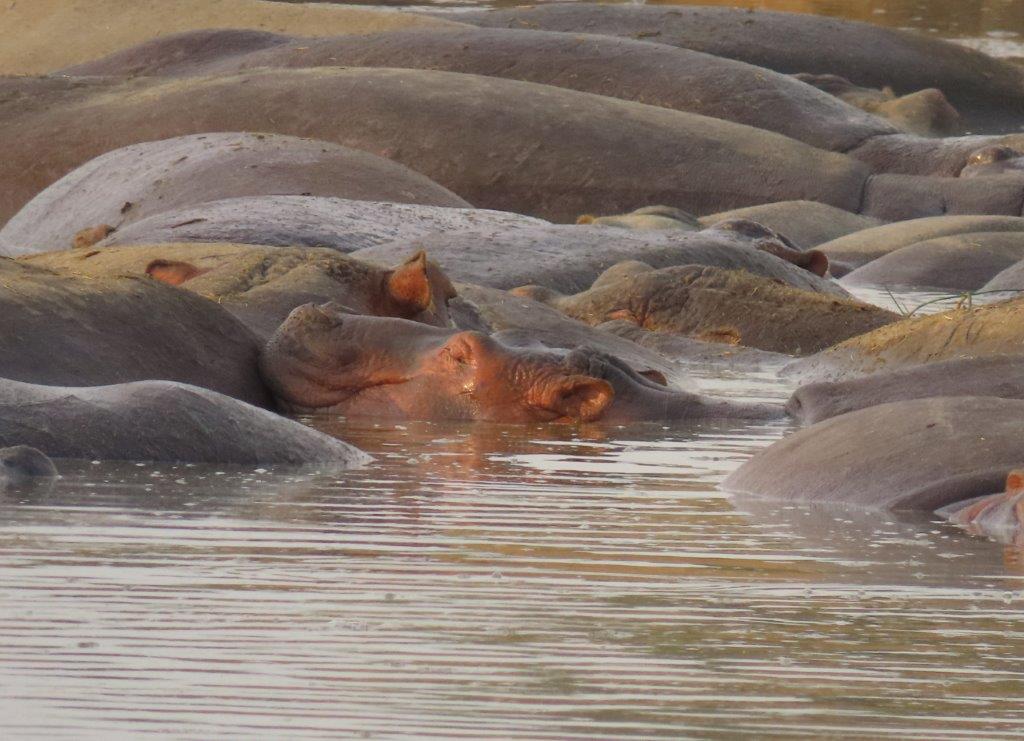
And we found dozens of hippos in the Seronera River. They are not one of the Big Five, but they are still one of my favorite animals after the zebra.

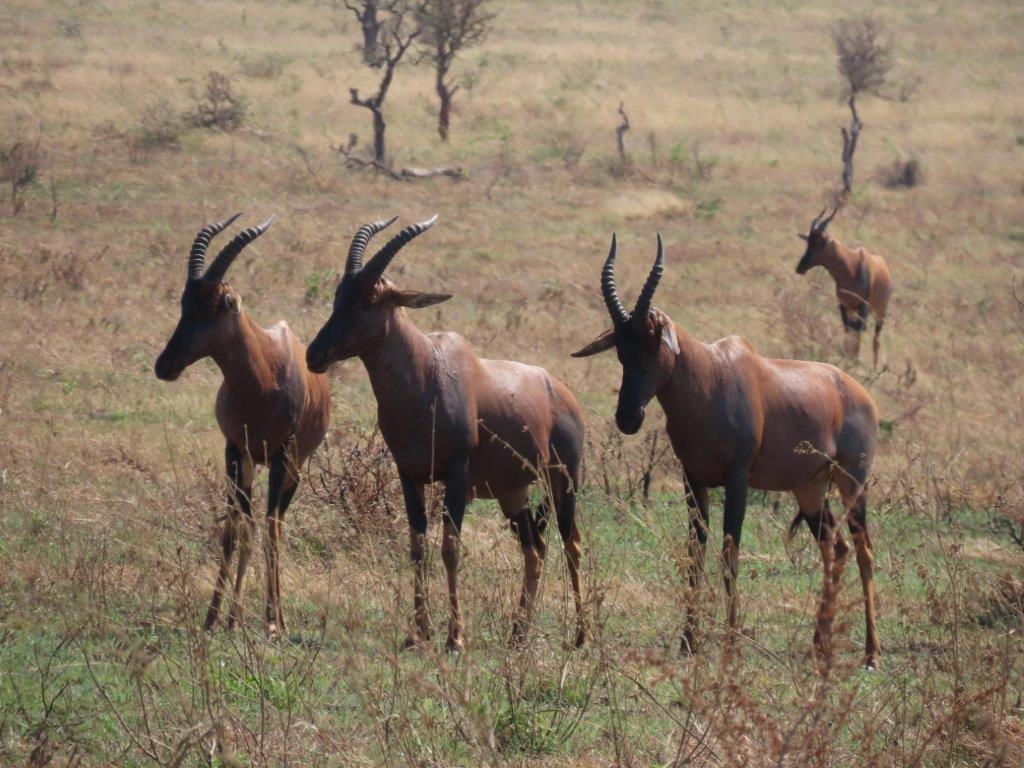
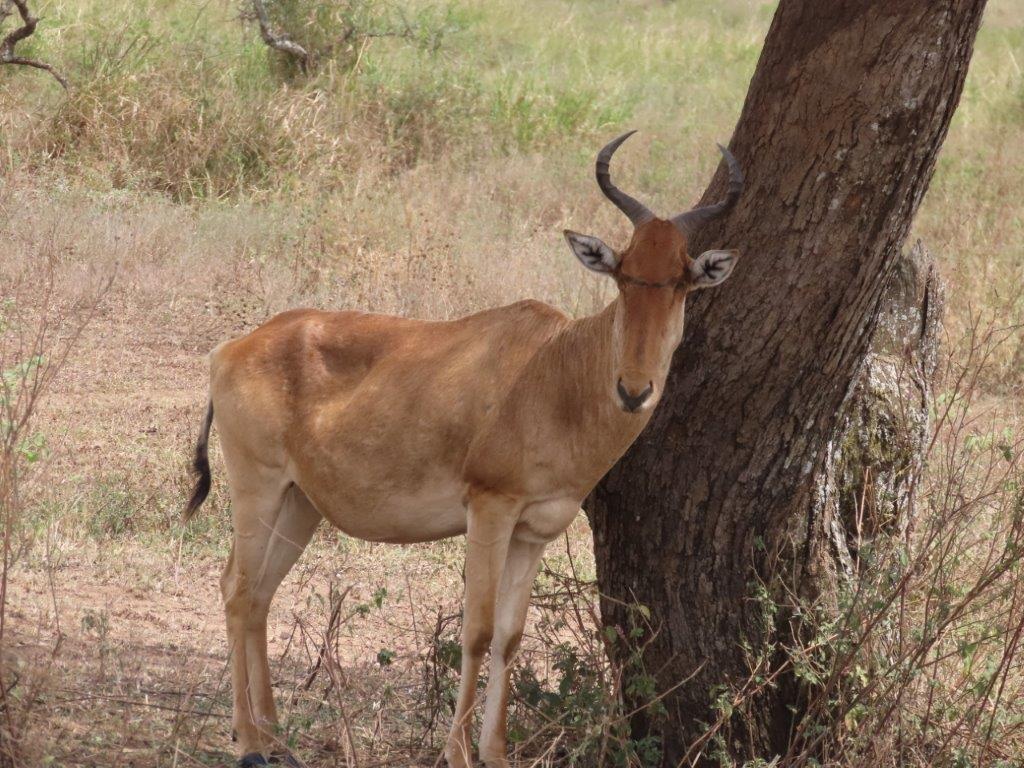
We also are seeing more and more of “hoofed” animals such as the Giraffe, Topi Antelope, Thomsen’s Gazelles, Impalas, Wildebeests, Waterbucks, Coke’s Hartebeest, Common Eland and more.
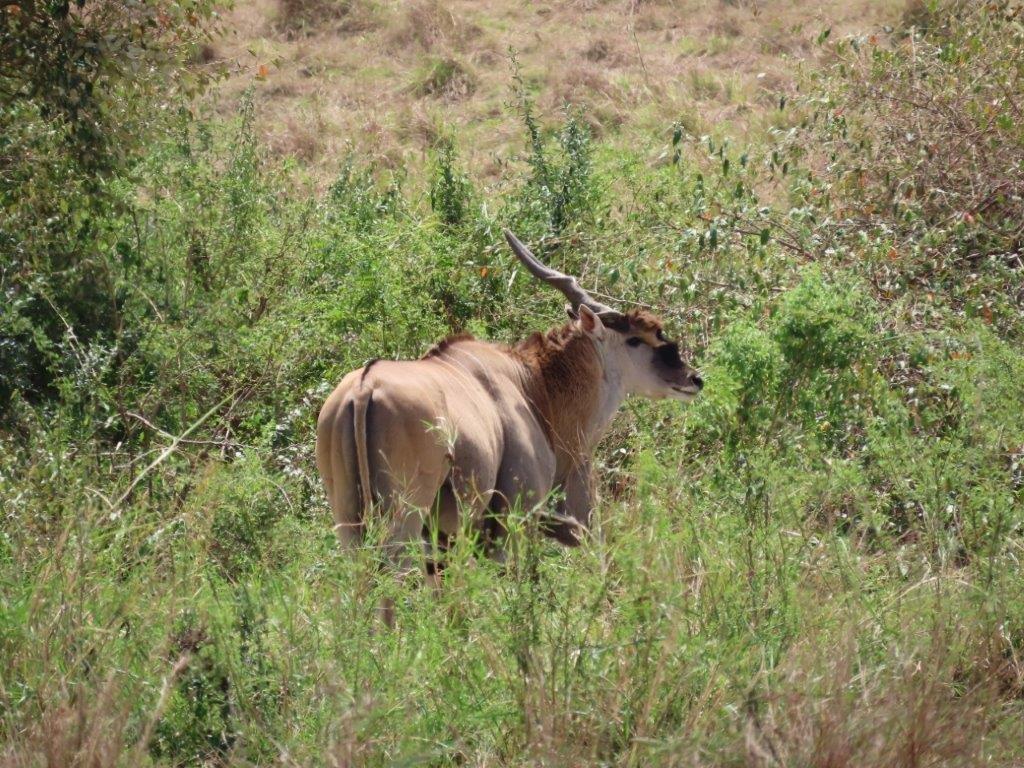


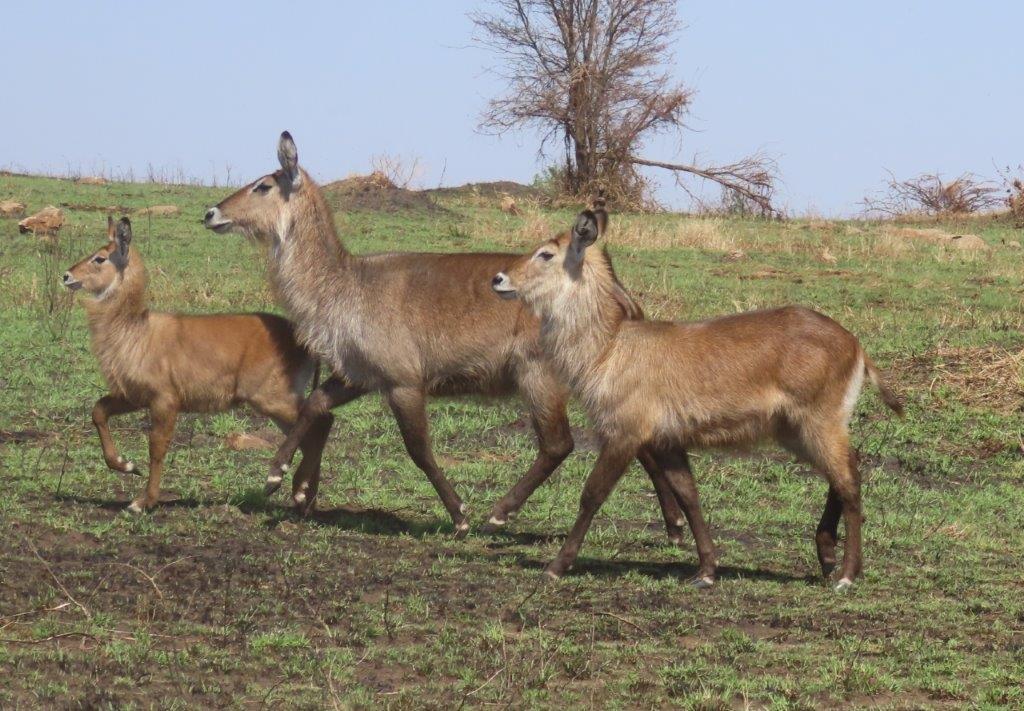
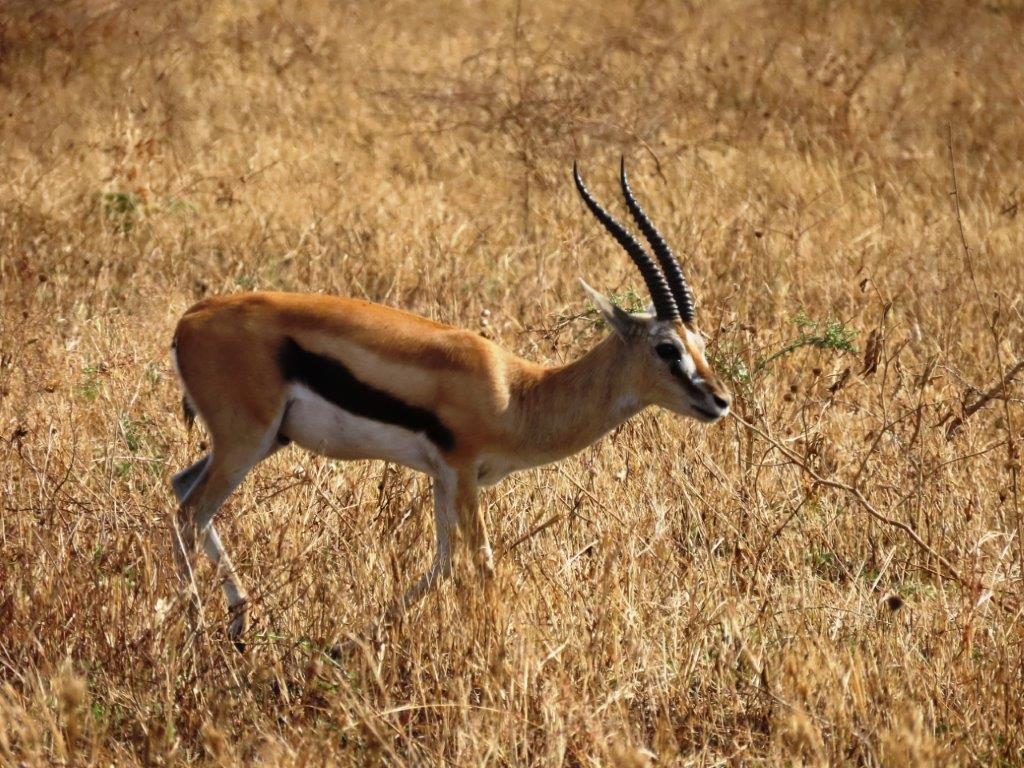
To see more photos and video of the animals we saw in Tanzania, visit our Photo Album.
Intimate Camp – Seronera
Hot, tired and dusty, we finally arrived our camp for the next two nights. Intimate Camp – Seronera consists of 12 large platform tents, a lounge tent with couches and a bar, a dining hall tent, and a campfire pit.
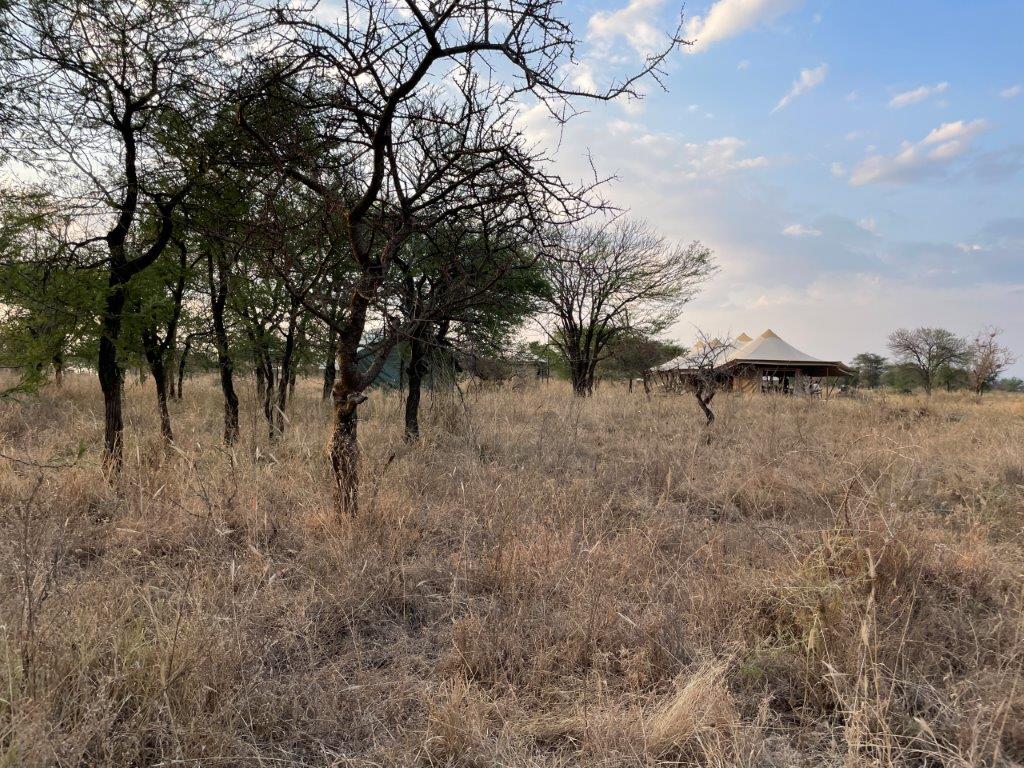


With damp rags to wipe the dust off and a glass of cold juice, we sat and relaxed for a bit. This is the only camp that asked us to sign a waiver, saying we understand we are in an area with unpredictable wild animals.
Our tents are really beautiful. They look out over the plains with wide open windows and in the morning, there are often giraffes and lions visible.


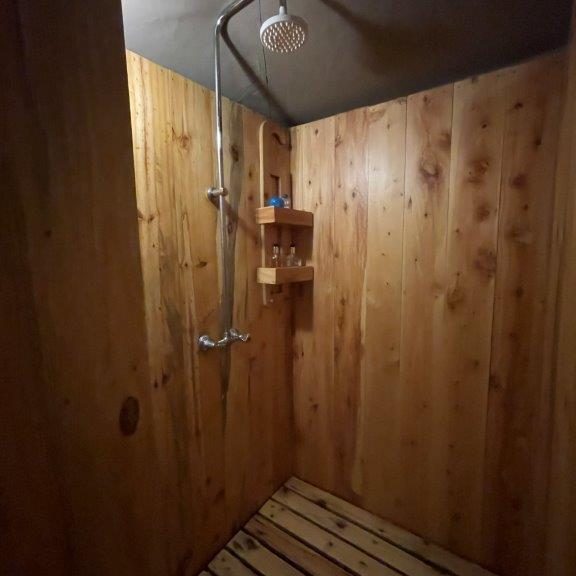
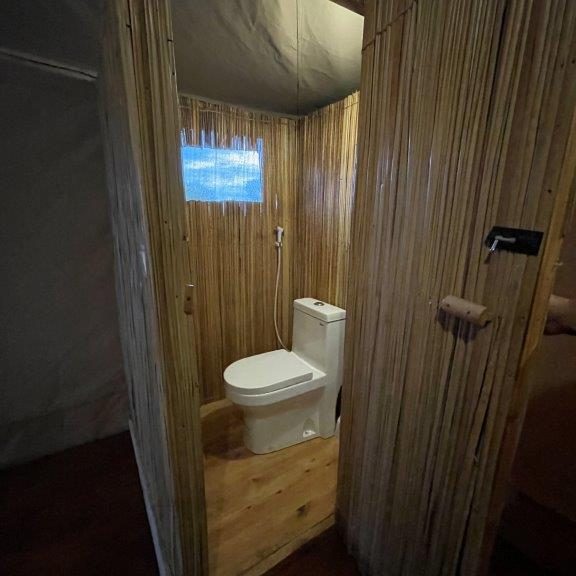
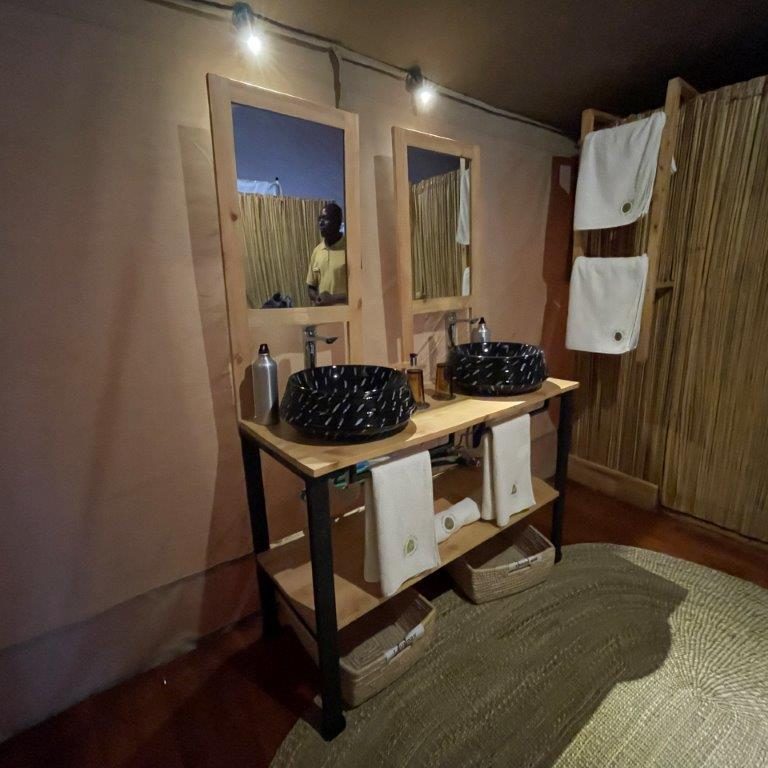
We are not allowed to be outside in the dark alone. When you want to come to the common area, you signal with your flashlight and wait for the staff to come escort you. During the daylight is okay, but good to always be alert and looking around.
Before dinner, we joined other visitors around the campfire. They shared exciting stories about where they had been and what they had seen, including the places we were heading to next. Now I’m super excited for the rest of our trip!
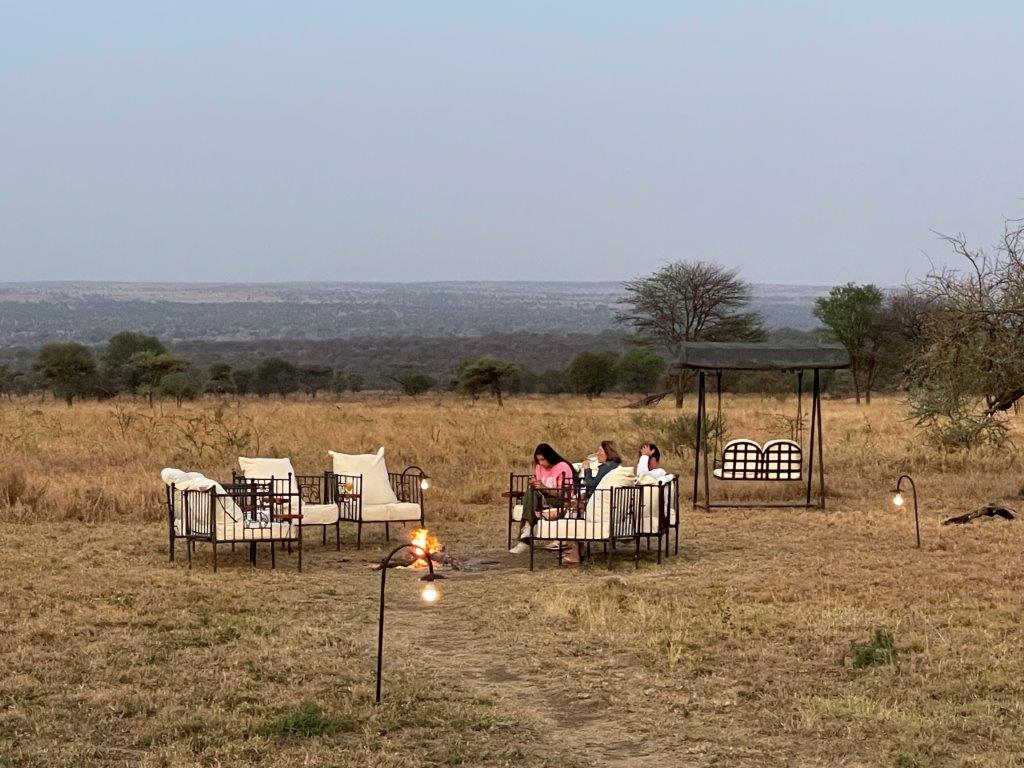

Dinner was awesome, served in a nice dining room.
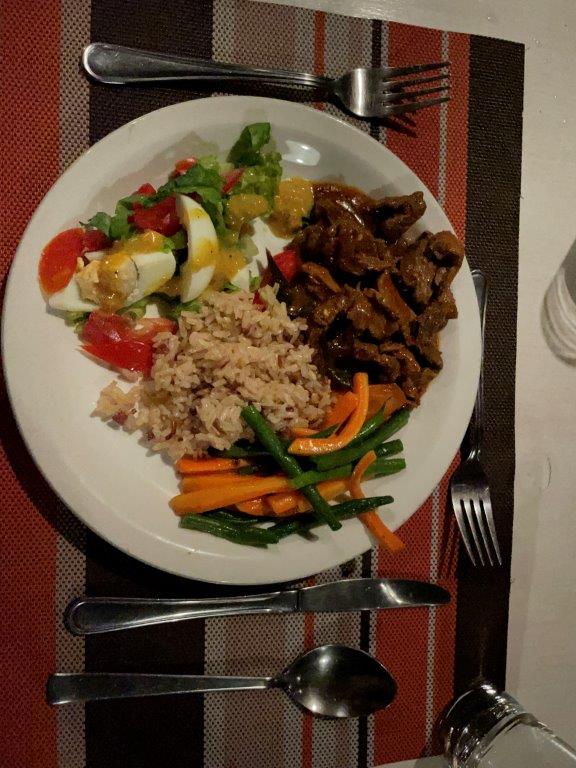
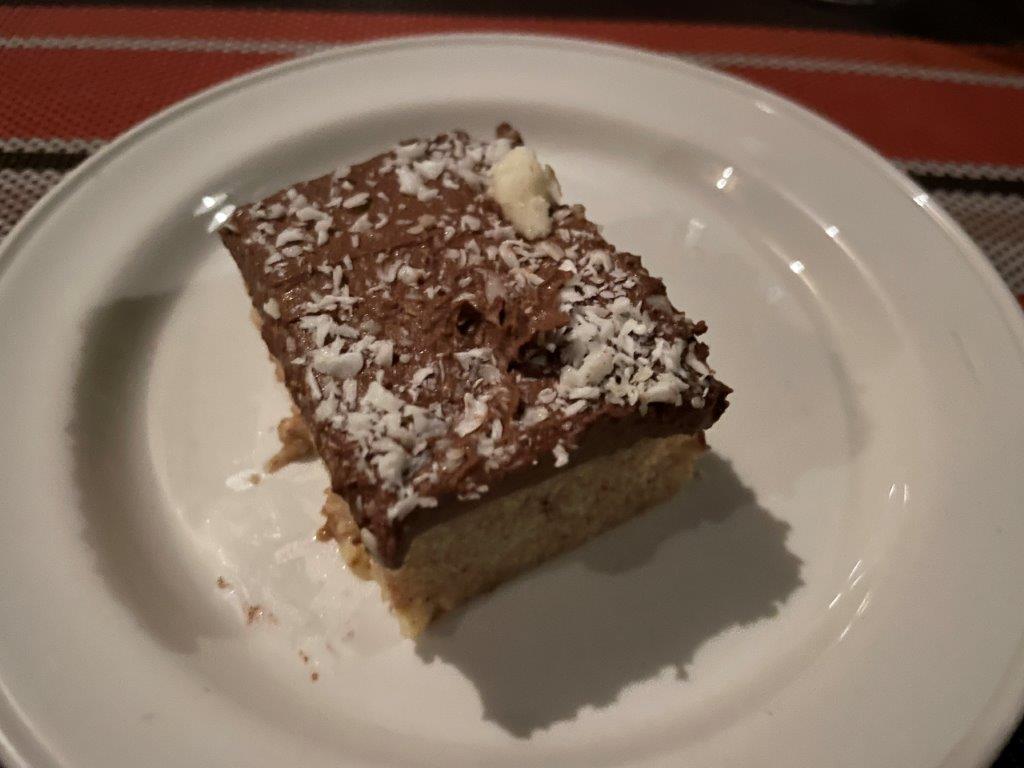
While we were at dinner, the staff came into our tent and turned down the bed, untied the netting surrounding the bed, and lowered the dark blinds on 2 of the 3 front screens.
After dinner, some of the guests gathered in the lounge to play games, read or have a drink. We went outside to view the stars in the dark sky. I love seeing the dark sky lit up with stars!


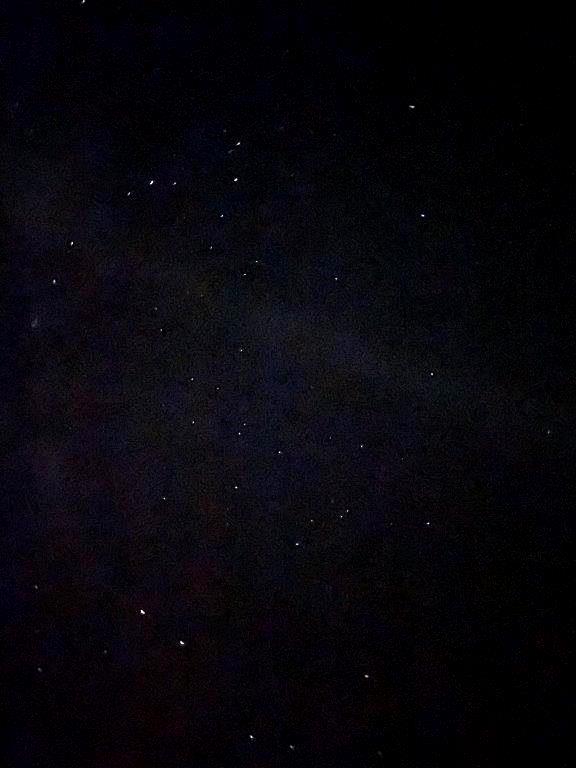
Hopefully you are getting a feel for what’s a Tanzania safari really like? Keep reading – it gets even better!
Day 5 – Serengeti and our “Close Encounter”!
Early in the morning, we were a bit surprised when the staff came by at 6:30 AM to roll-up the heavy screens so we could enjoy the sunrise, right from our bed! We also saw hot air balloons out over the Serengeti. Those excursions cost $600 per person so we decided not to do it.
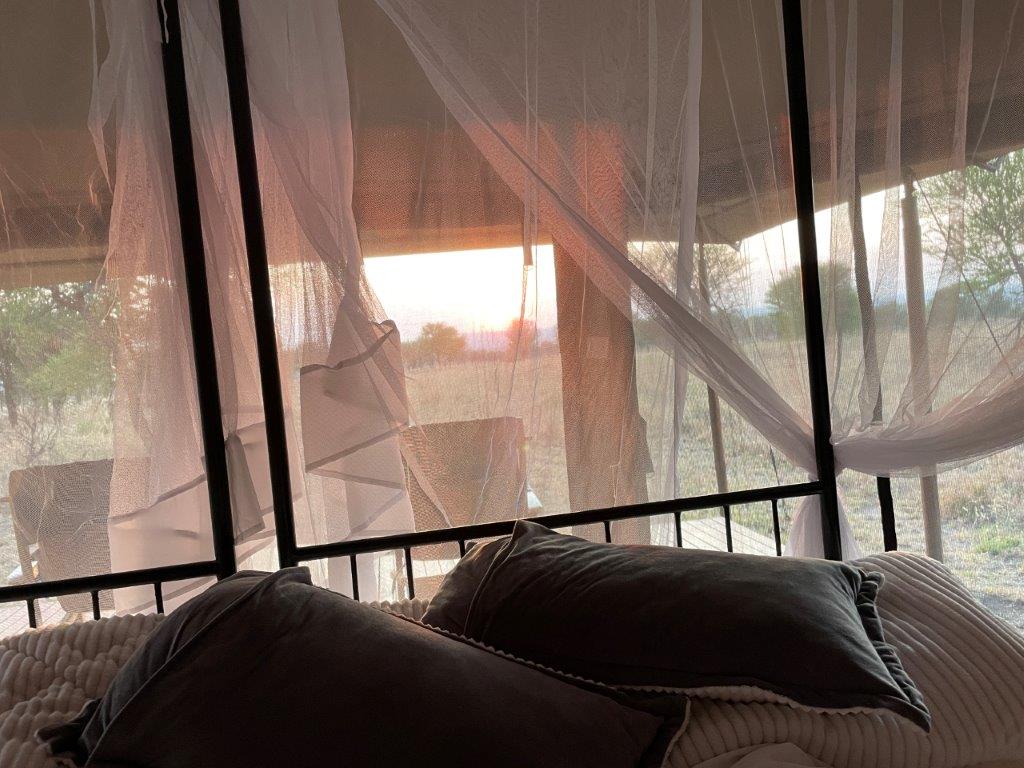
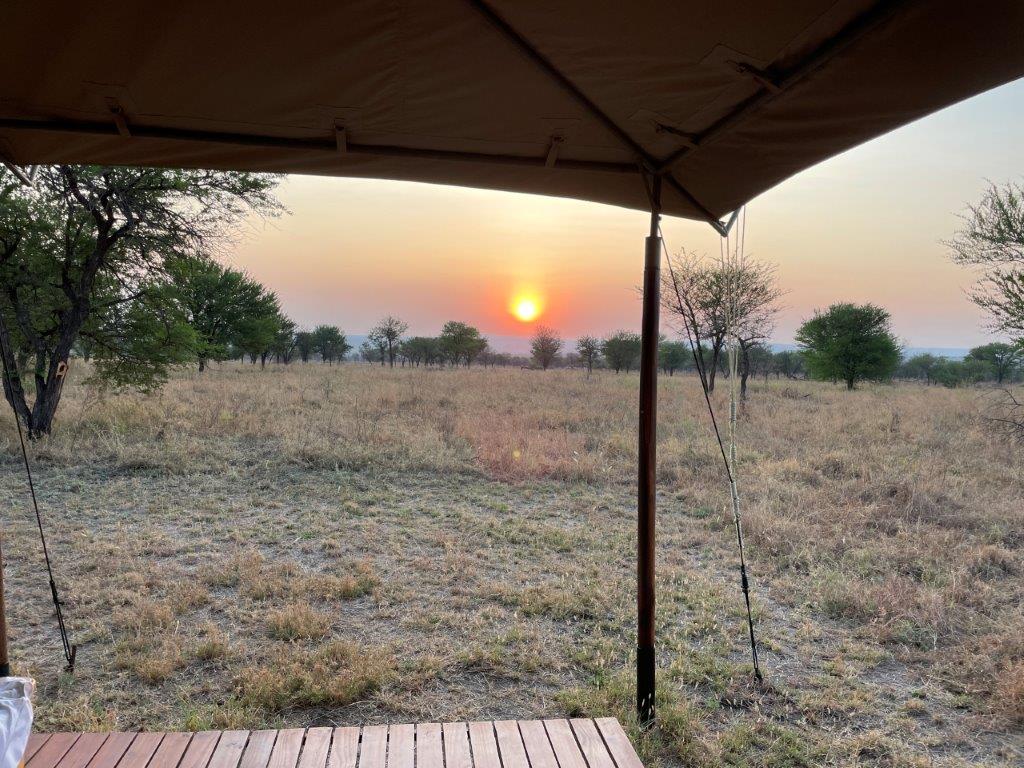
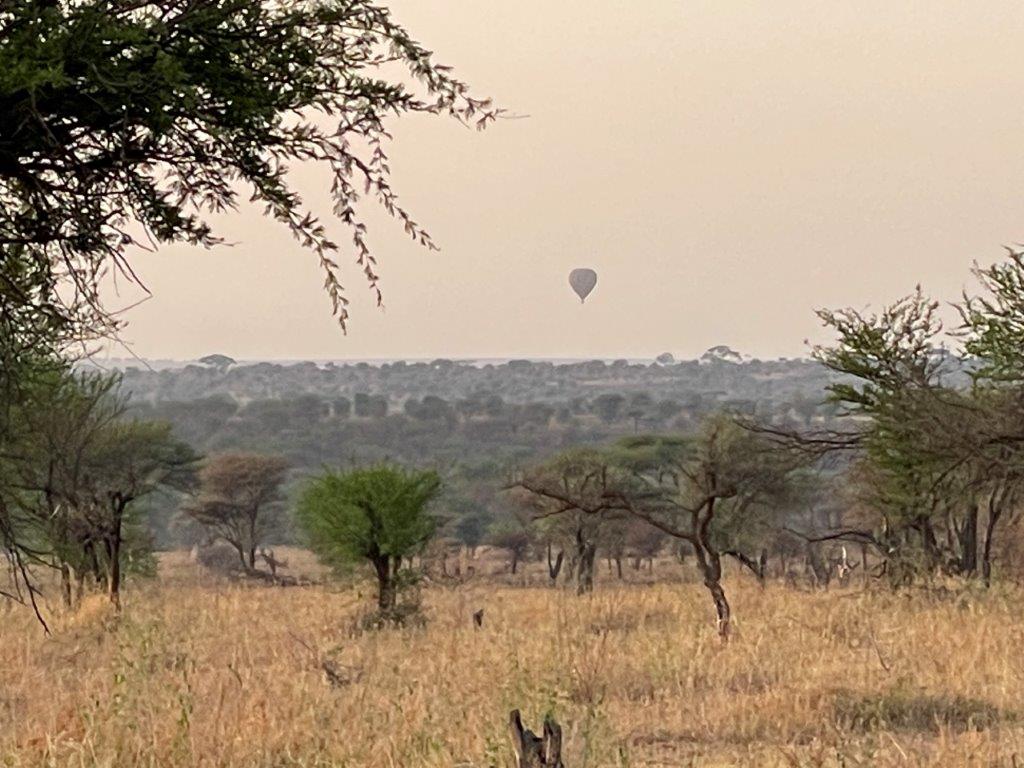
After enjoying some relaxing time on our deck, followed by a delicious breakfast, we headed out.


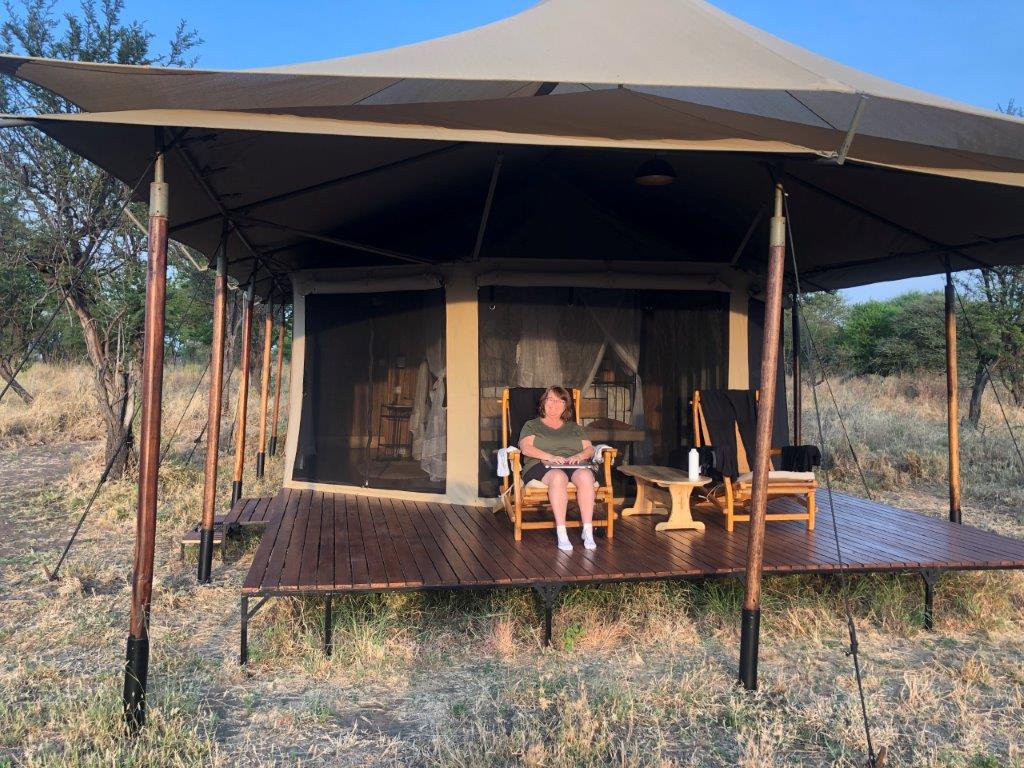
Today was freaking FANTASTIC! Each day just keeps getting better and better. Stewart is an excellent guide, both at spotting the animals, and at pulling our Land Cruiser right up next to the animals for great photos.
In the first hour this morning, we saw Giraffe, Antelope (Topi), Gazelle, Elephant, Impala and a pride of Lioness. Plus some new birds. Pretty productive first hour, right?
We continued to spot tons of animals throughout the day. And had another exciting (?) box lunch. The breakfasts and the dinners are usually pretty good, but the lunches tend to be less so.

Our Close Encounter with the Elephant and the Lions
Our more exciting events occurred later in the afternoon. Stewart spotted two male lions under a tree so he pulled right up beside them with the Land Cruiser. One lion was awake (about 10 feet away), the other was sleeping about 20 feet away.

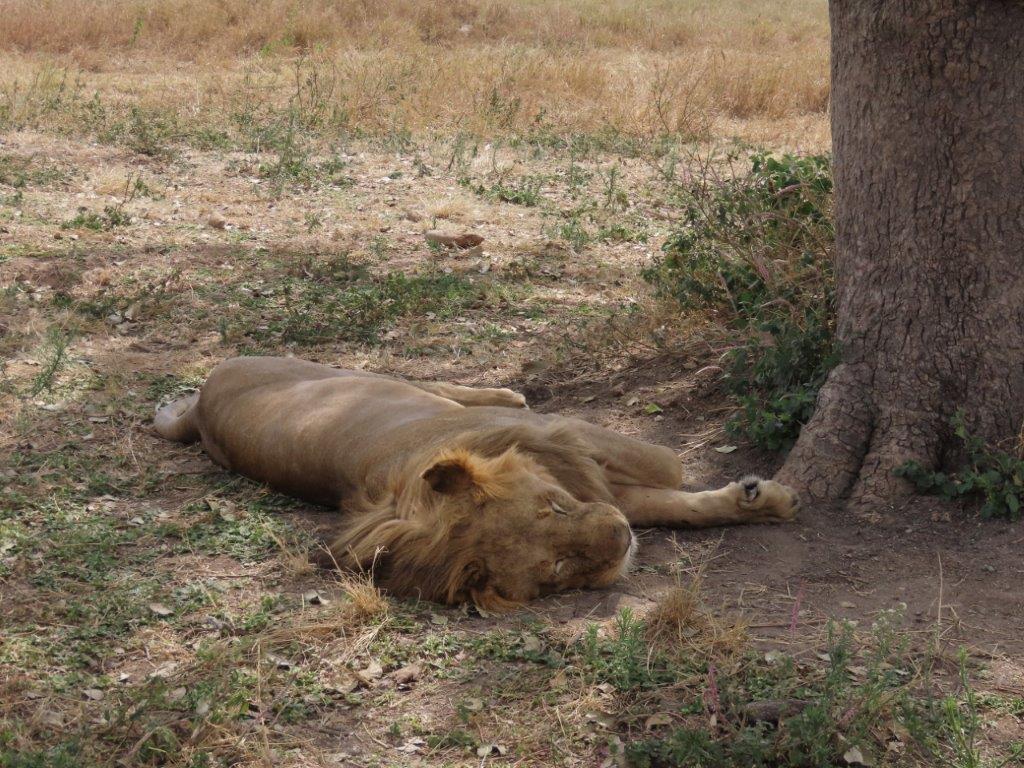
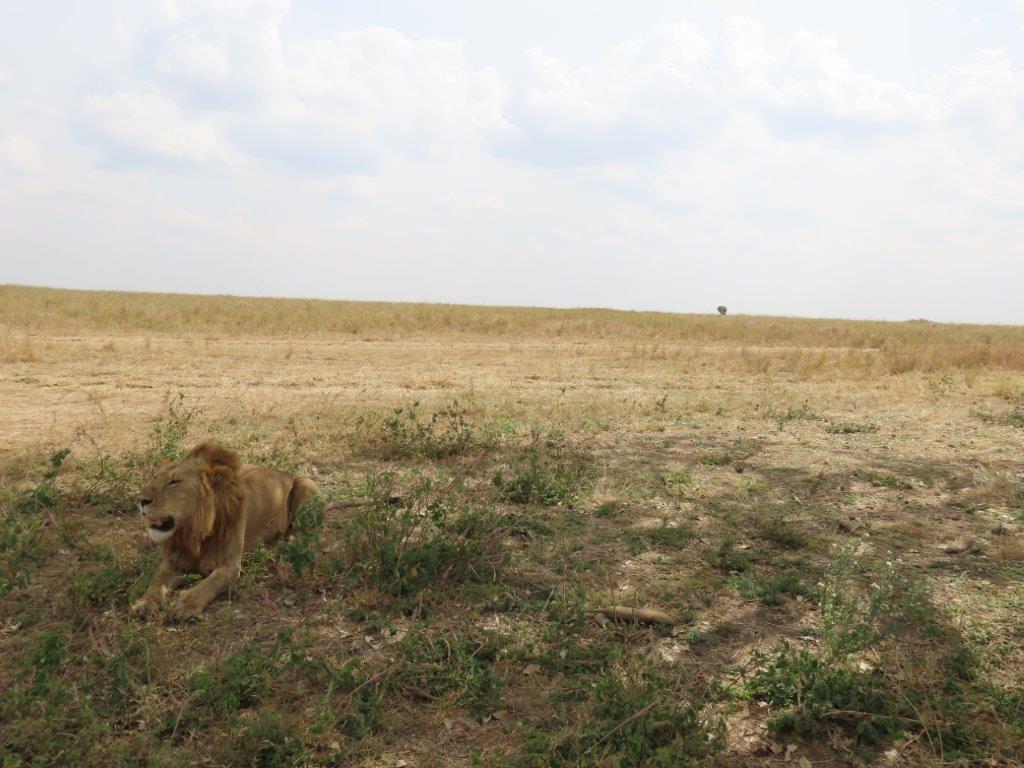
Way off in the distance, we could see a huge elephant (see the tiny black dot on the horizon in photo above?) and it looked like he was coming towards us. He got closer and closer, moving at a pretty good clip.
It looked like maybe he wanted some space under the tree? I thought Stewart would start the vehicle and move us out of the way, but he didn’t.
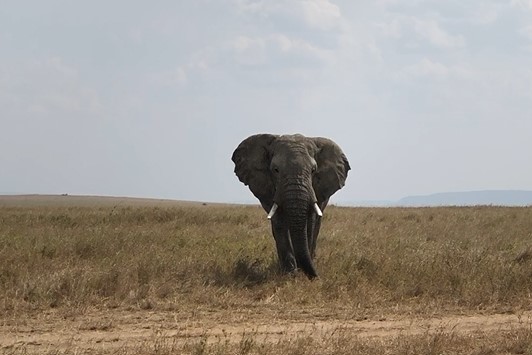
When the elephant almost reached us, he trumpeted and the big male lions both scurried away. He was only about 20 feet from us. I was afraid he would turn aggressive on us, but Stewart remained calm and we just sat there watching.


The elephant rubbed his skin against the big tree for a few seconds and then started to move in our direction. Uh Oh! Now Stewart finally starts the vehicle!
My heart was pounding hard because I was so scared! And Bill was thinking about a video he had just watched of an elephant charging a Safari Land Cruiser, killing one of the occupants.
But instead, the huge elephant turned and wandered off down the road. Whew!
Leopard (#4)
Our last excitement of the day was finding a Leopard, one of the famous Big Five of Africa. The other 4 are the Lion, Cape Buffalo, Elephant and Rhino. So we’ve seen 4 of the 5 already.
The leopard was sitting under a tree, apparently preparing to hunt some small deer that were about 50-60 feet away. Stewart pulled the truck up close so we could get some good pics, but in doing so, he blocked the leopard’s path to the deer.
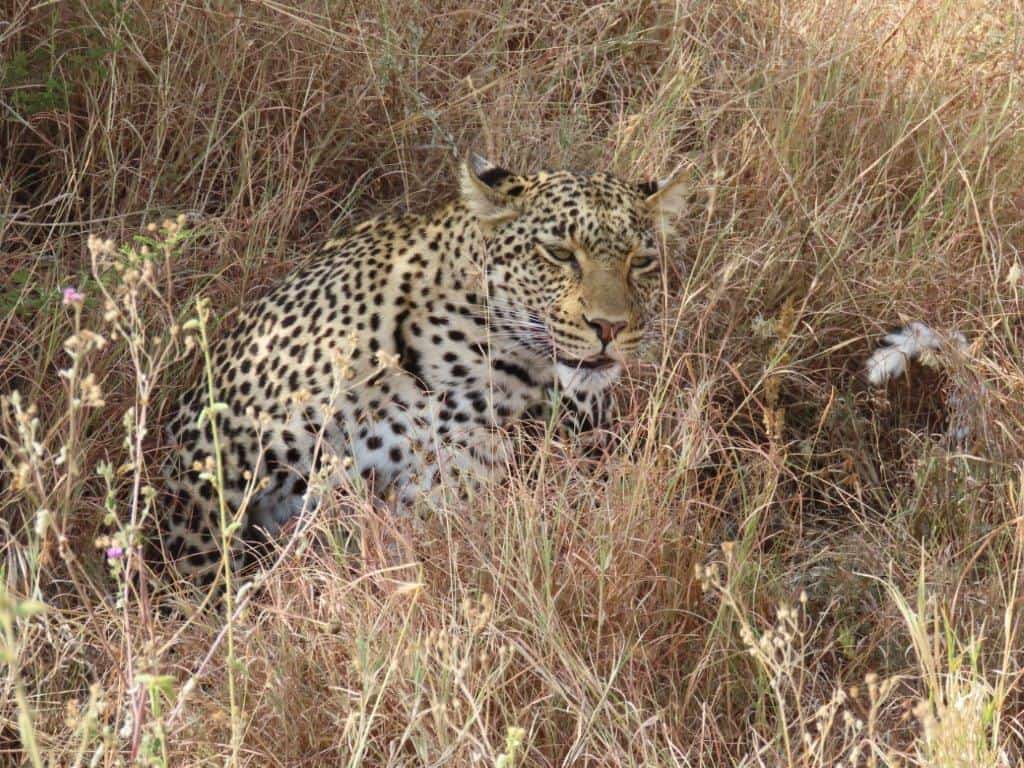
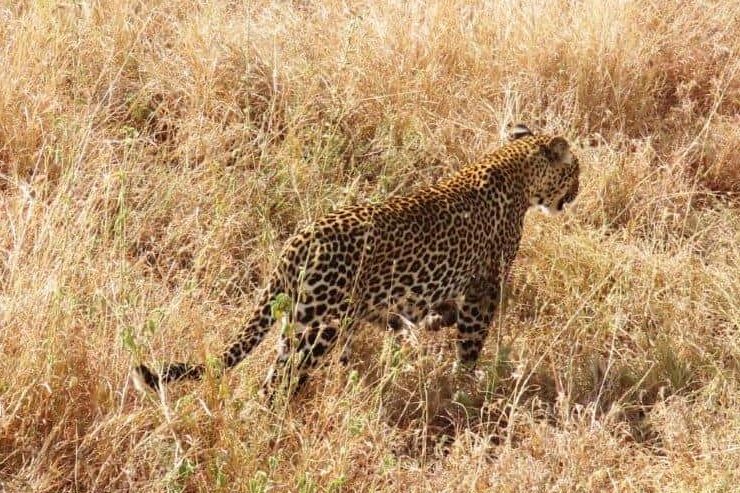

So after a few minutes, the leopard got up and headed the other direction, disappearing behind a big rock.
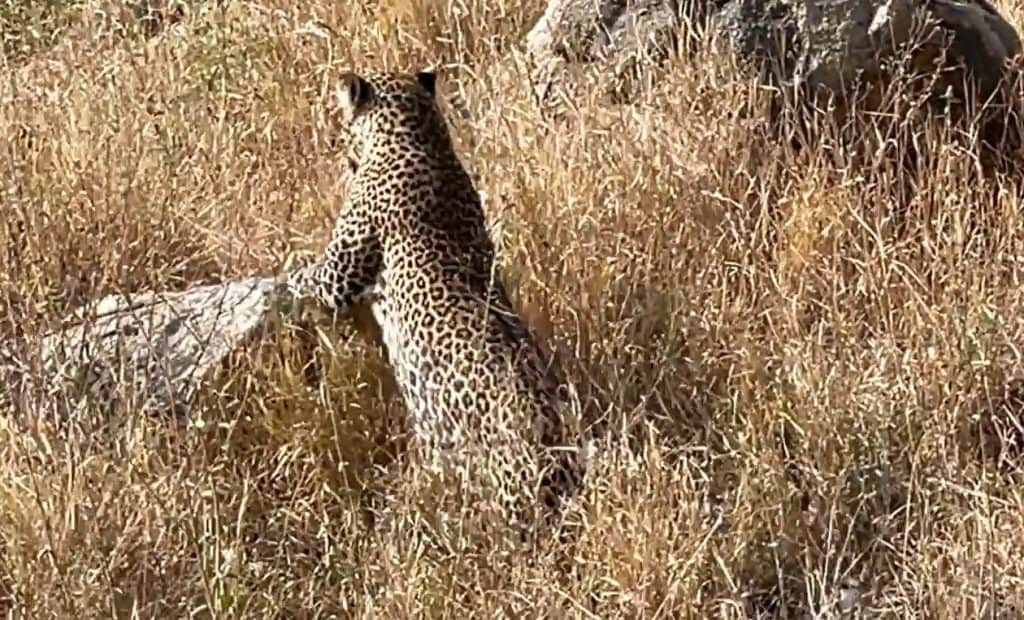
To see more photos and video of the animals we saw in Tanzania, visit our Photo Album.
So very COOL to see these animals in the wild. Stewart does an excellent job of finding them, and then getting us in good position to view and photograph them. Today also was far less dusty due to more slower driving and less bumpy than the other days we’ve been doing game drives. My hips were relieved!
After an exciting day, we returned to the Intimate Camp – Seronera, had dinner and turned in early. No campfire or stars for us tonight – we were beat.
Connectivity
Wifi and connectivity at this camp is mediocre at best, practically non-existent, even at the common areas like the lounge.
But surprisingly, I’ve been able to get data using my Airalo eSim pretty readily while out in the park. Although sometimes it looks like I have full bars, yet I can’t connect to any of my apps.
Day 6 – Serengeti and our 3rd tented camp
This morning, we left the beautiful Intimate Camp of Seronera and headed north today to the Northern Serengeti where we can hopefully see the migration. Other guests at the Intimate Camp in Seronera said it was amazing and awesome. They saw crossings, matings and crocodile killings.
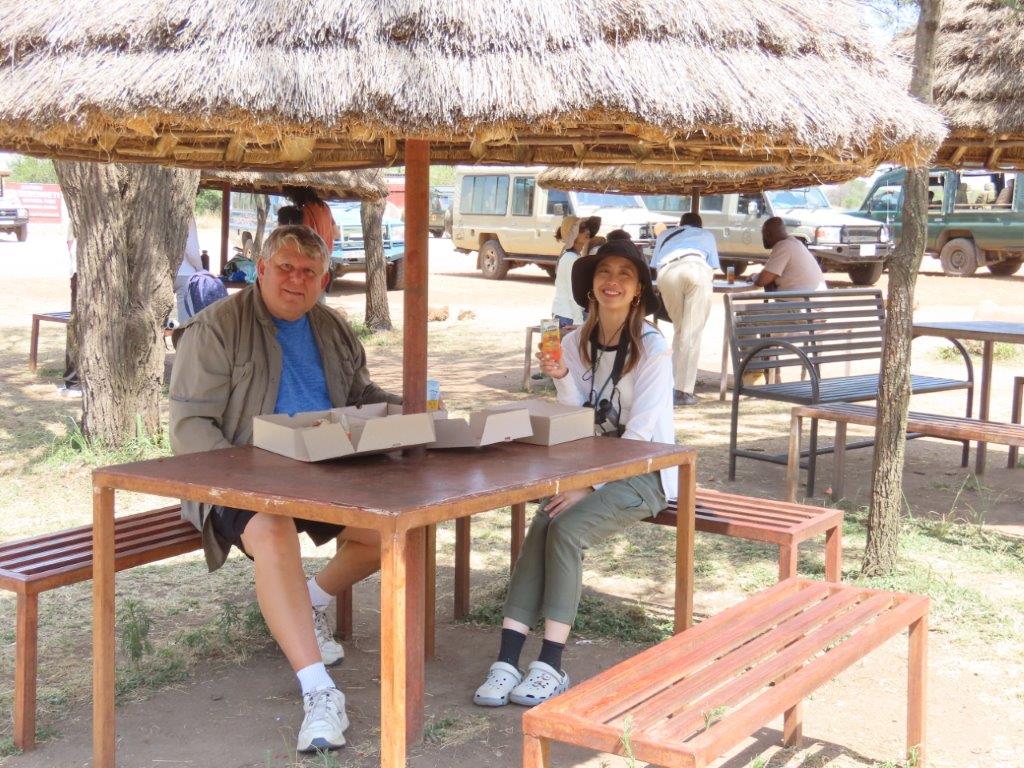
We stopped at two airstrips today for toilet breaks and lunch. Clean bathrooms, but no TP available in either one. This is the Kogatende Airstrip. It had picnic tables so we could eat outside of the Land Cruiser – hurray!
After lunch, we headed towards the Mara River to see if any animals were preparing to cross the river. We saw more and more wildebeest and zebras gathering in increasingly larger groups. But Stewart said it was getting too close to sunset for them to cross today so they will likely cross in the morning.
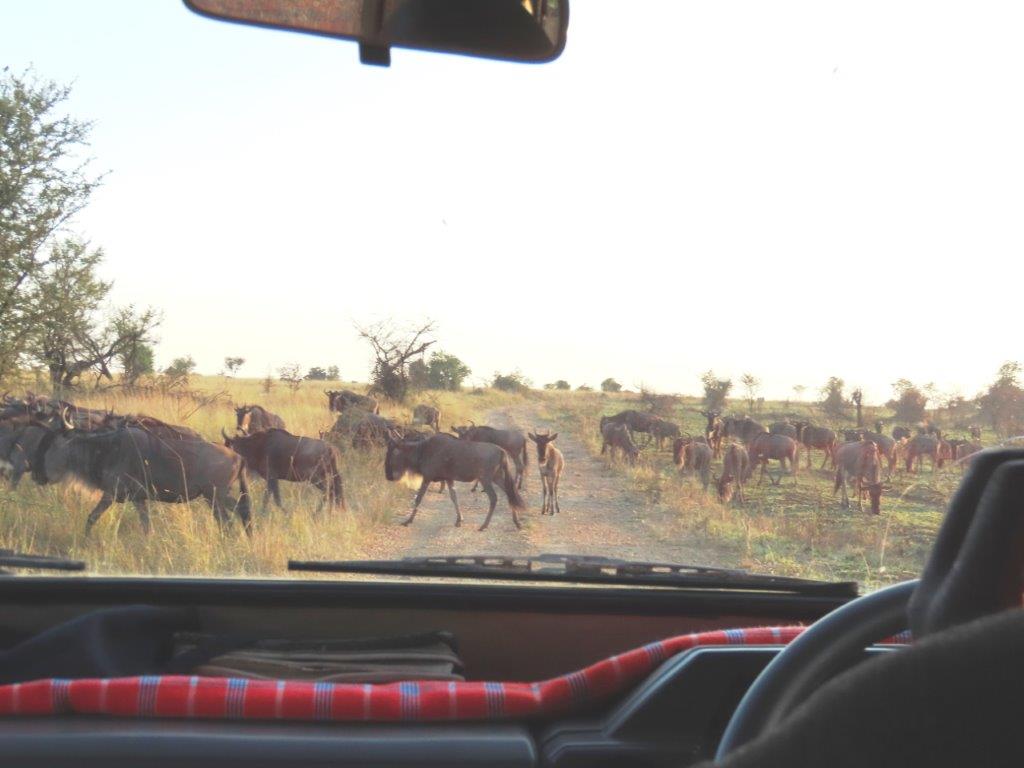
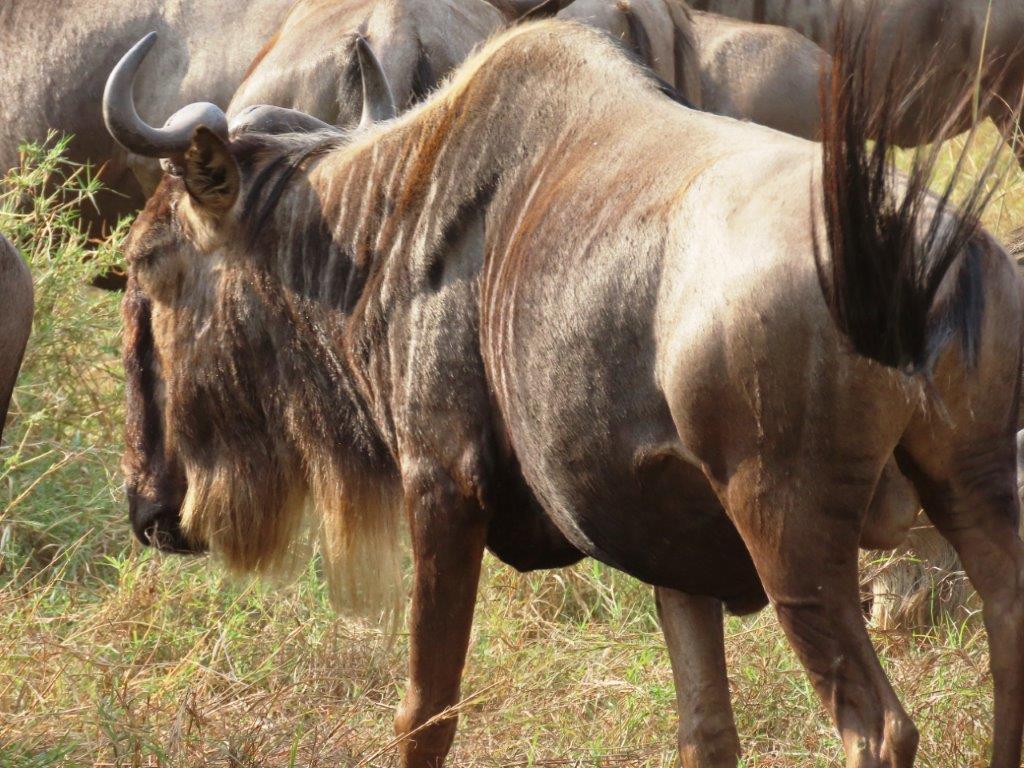
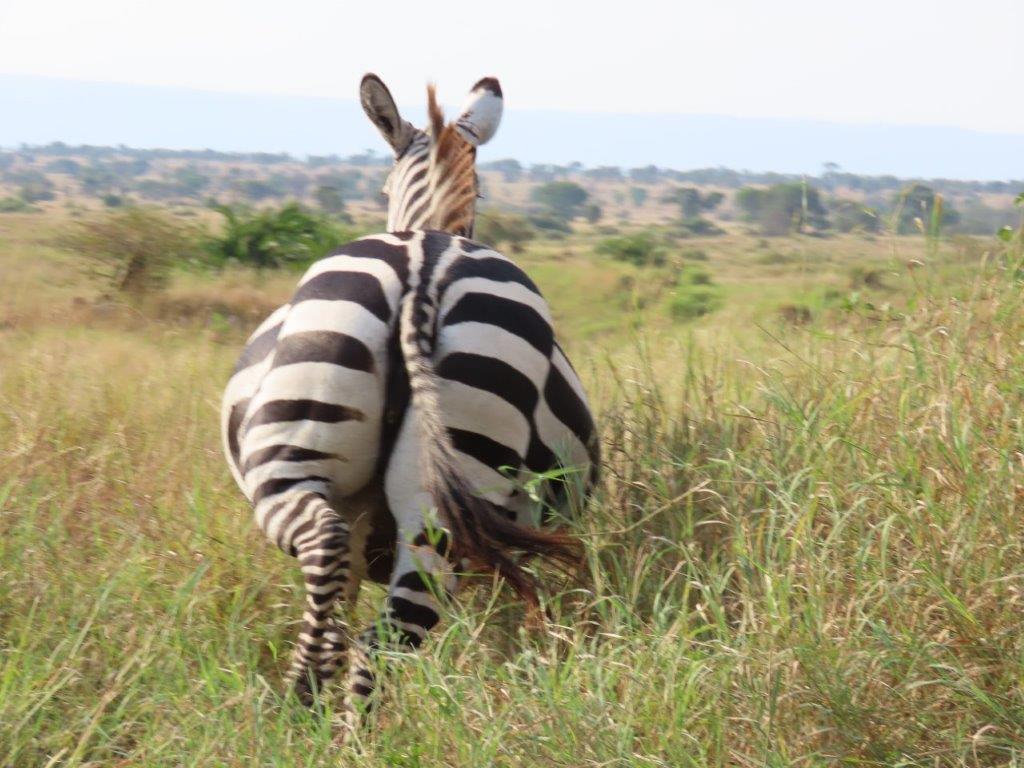
We also noticed several (what we think are) pregnant zebras with huge bellies. Or maybe I just caught them at an unflattering angle? LOL
Kenzan Tented Camp
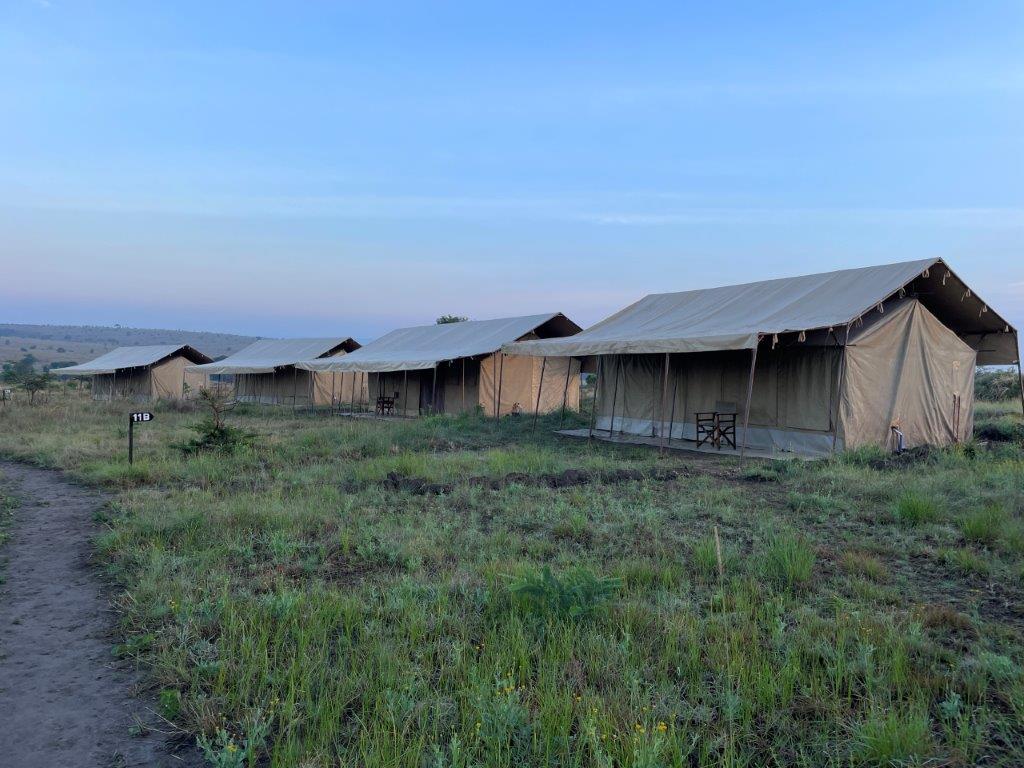
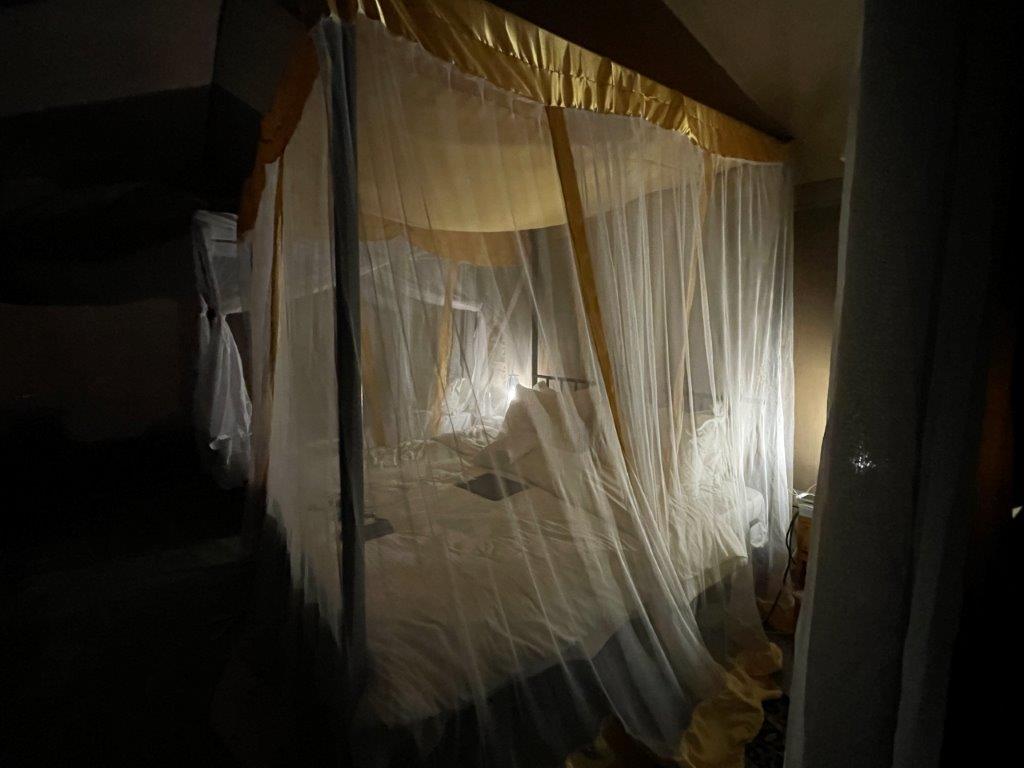
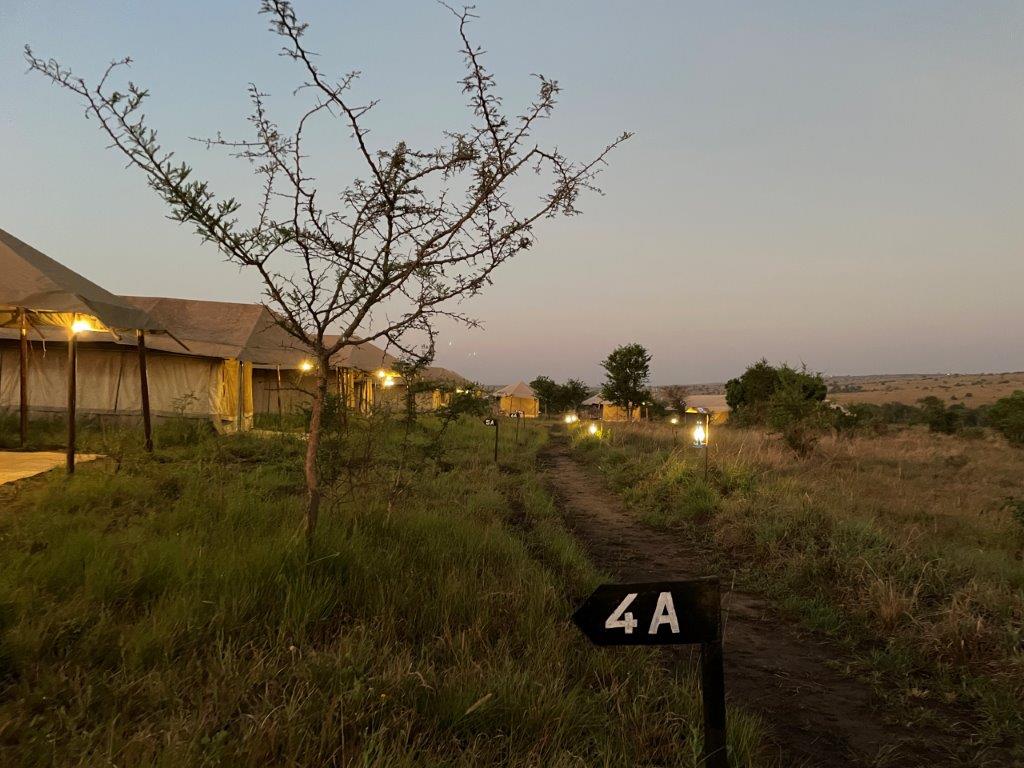
We checked into our new camp for the next two nights – the Kenzan Tented Camp. It is a mobile camp of 28 tents that follow the migration patterns.
It’s not quite as nice as the Intimate Camp was. But the Wi-Fi is great and the food is good! Count that as a win!
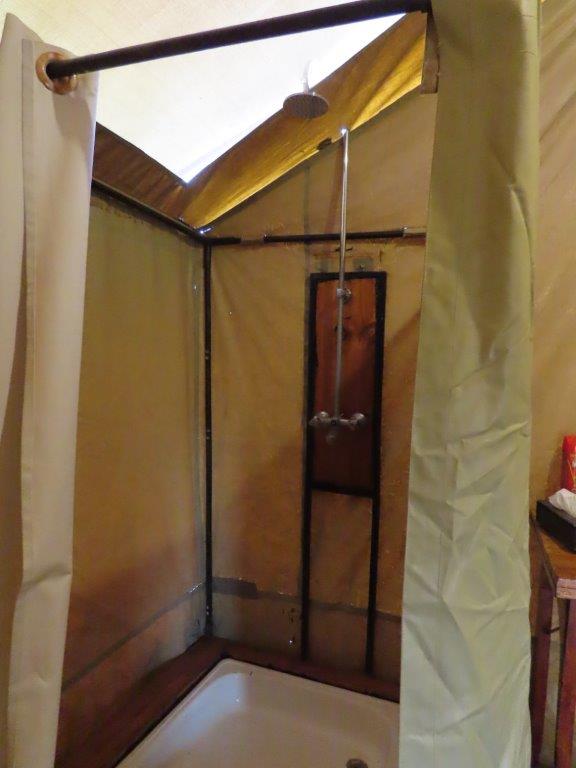
At this camp, we had to tell the staff exactly what time we wanted to take a shower so they can pump the hot water to our tent at that exact time. This camp also had several large groups of 20 or more people staying there which it made it quite loud in the dining tents.

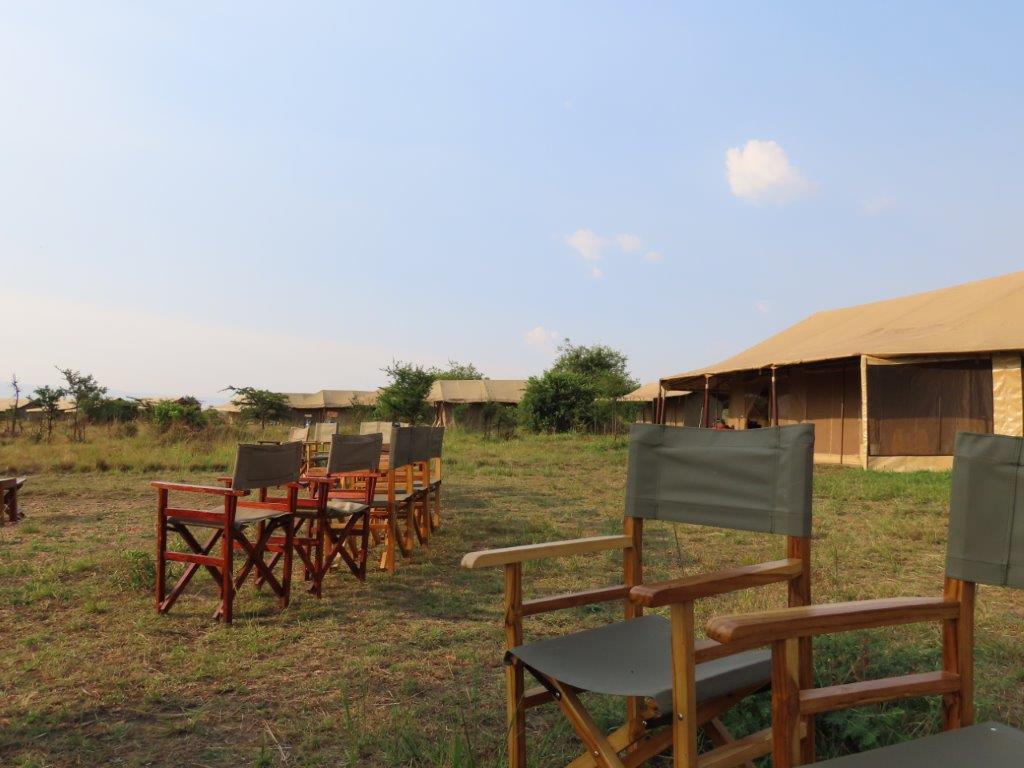

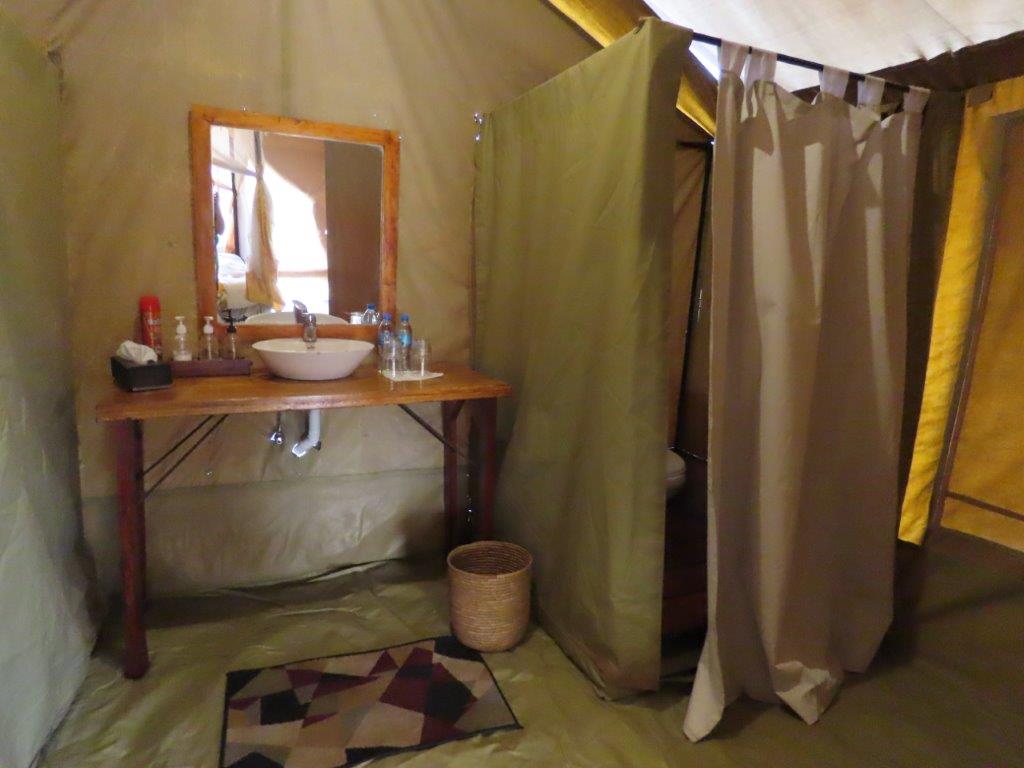
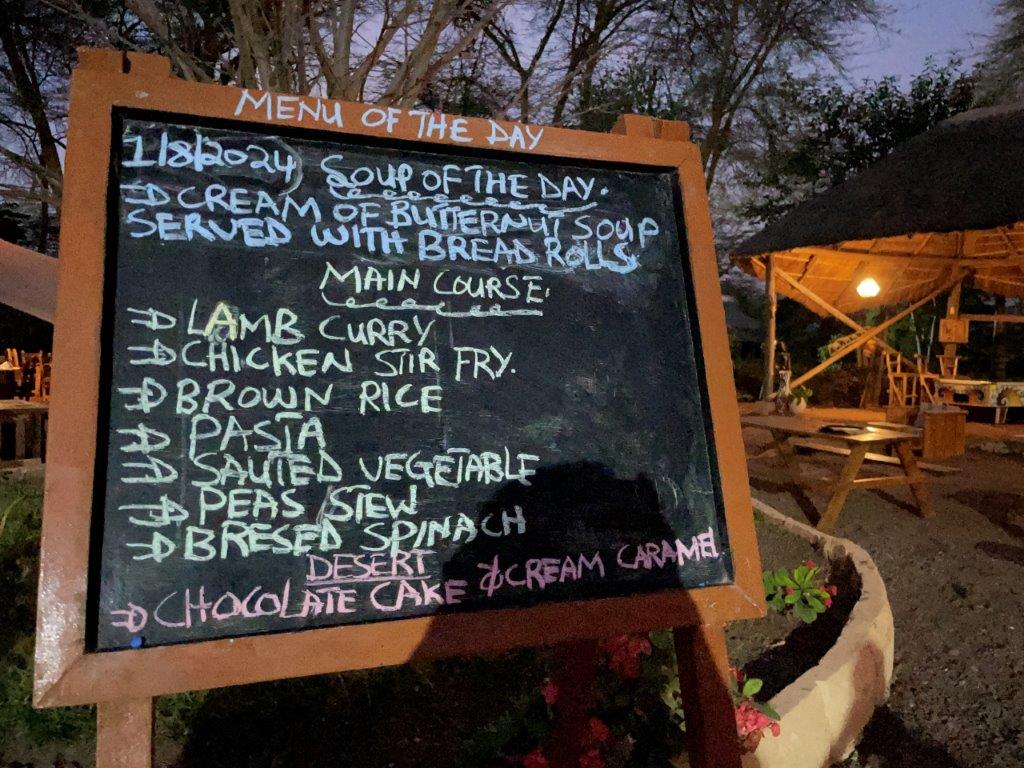
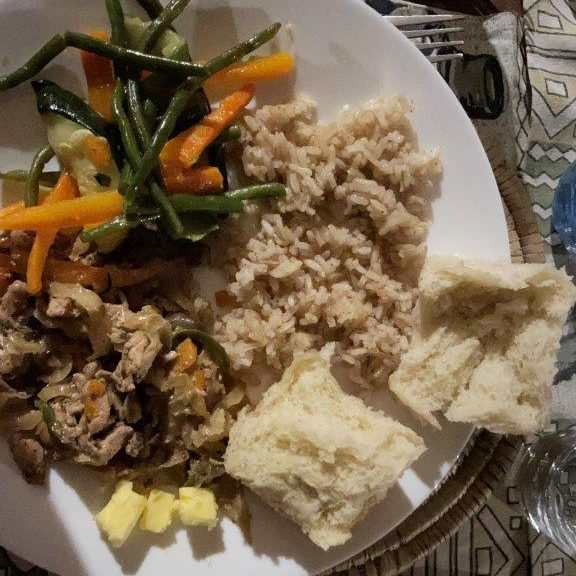
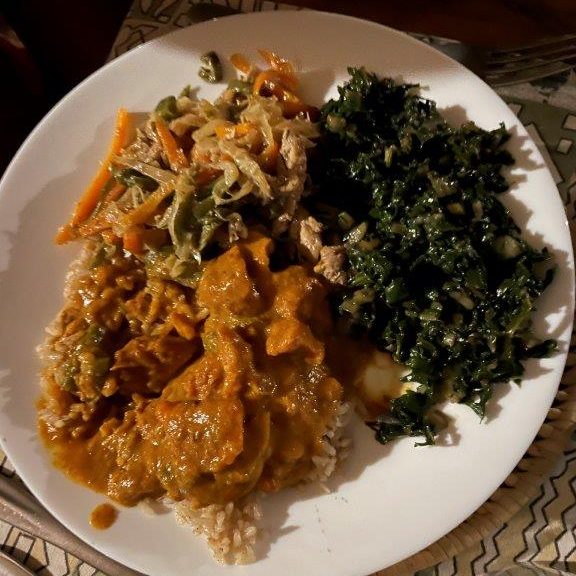
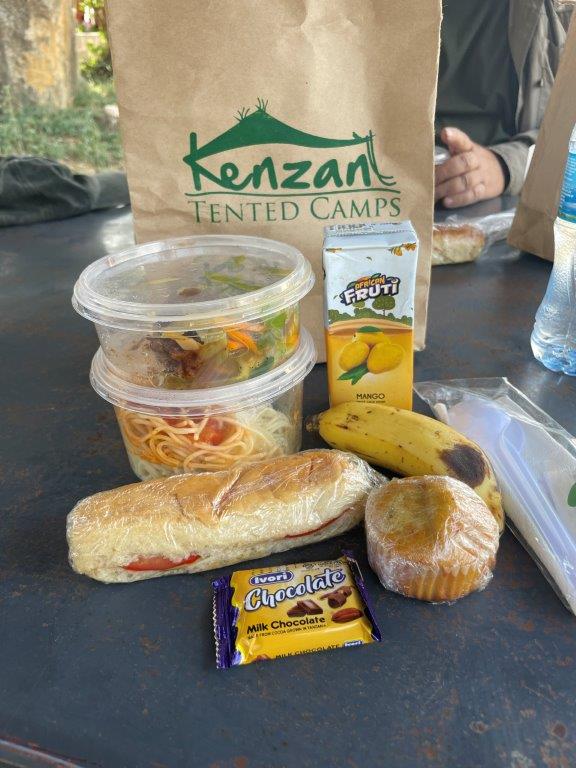
The food at this camp was pretty good – very similar to what we ate at other camps. Here’s what we ate over our two days here.
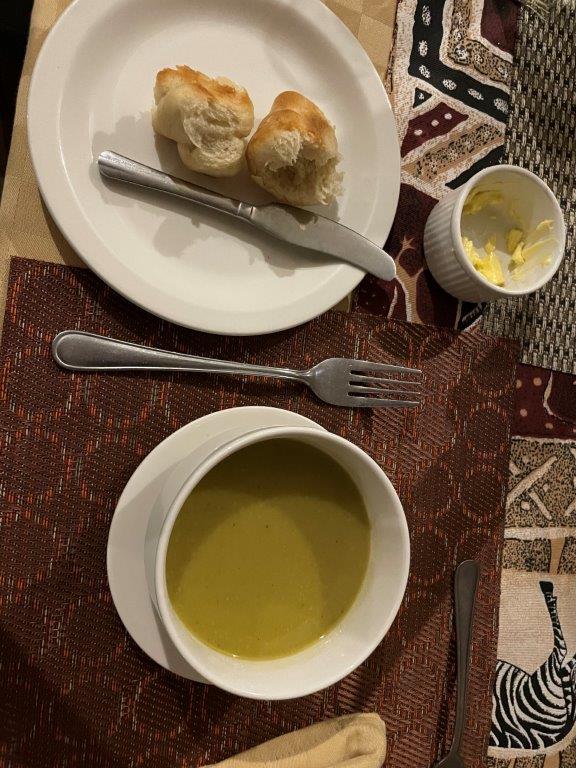
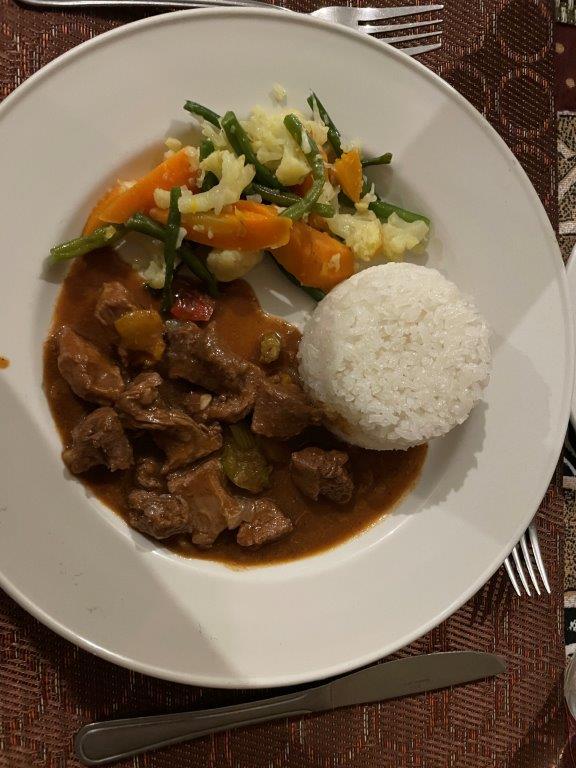
The other thing that was different at this camp is that Stewart ate with us at our table. At the previous camps, he was off staying with and eating with the other guides, but here (and at the Rhino Lodge), he ate his meals with us.
If you’re interested in reading about what to expect on a safari, check out this post.

Day 7 – Serengeti – Seeing the Great Migration!
Today, we hope to see the Great Migration! We left early (7:00) to go look for wildebeest and zebra crossing the river. We knew they had been gathering yesterday. So now we wanted to find them when they were ready to cross the Mara River.
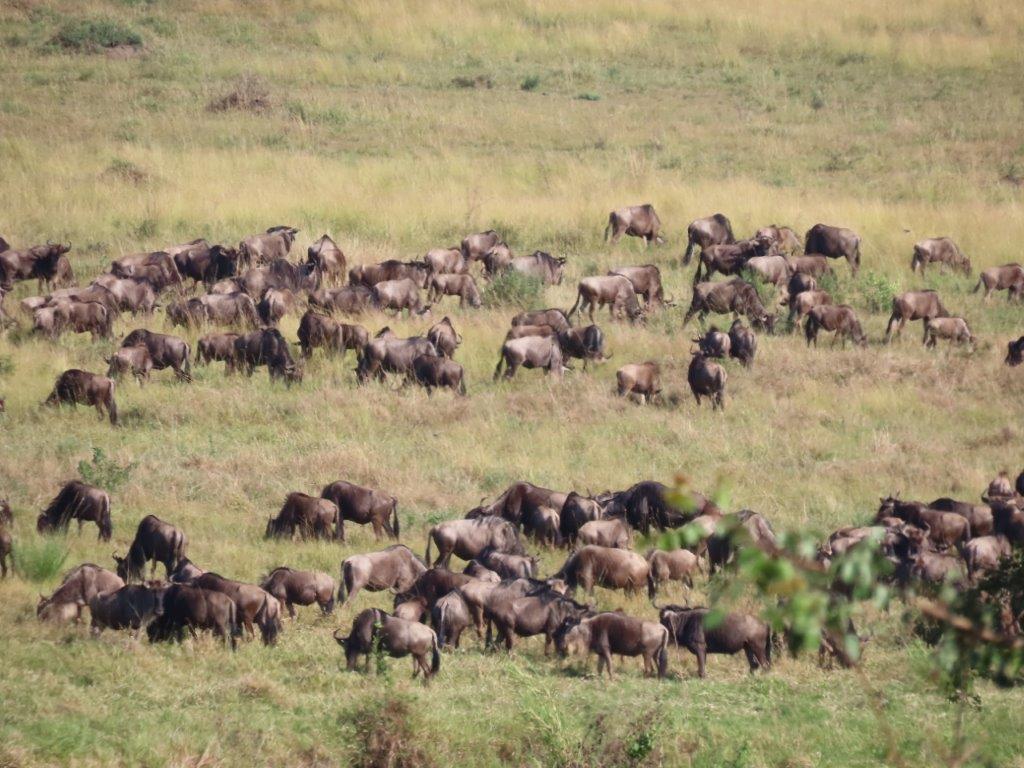
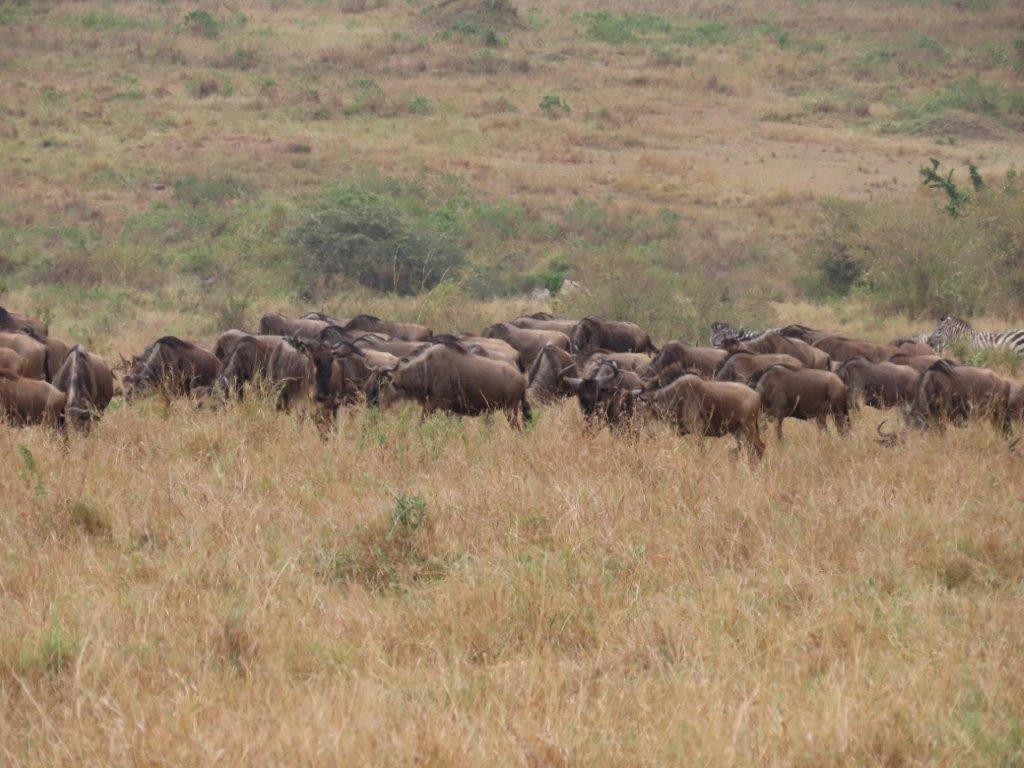
Watching & Waiting
There are several known places where they frequently cross. The first place we went, had hundreds of wildebeest wandering around. They started moving towards the water, but then suddenly turned back the other direction, away from the water. Seems they weren’t quite ready. So we went and looked some other places.
Lots of watching and waiting. It got boring after awhile. But the animals have a mind of their own for sure and they will only go when they are ready, and once someone starts the process – then the rest will follow.
The Mara River Crossing!
We were sitting on the edge of a wildebeest herd, quite aways back from the river. All of a sudden, Stewart peels out with the Land Cruiser and races to the edge of the river. Wildebeests were pouring down the opposite bank and coming across the river towards us! (Technically, the wrong direction from what they were supposed to be crossing, but who cares, it was all very thrilling!)
They had to jump and leap through the deep water and the strong current, and then race up the steep embankment. I caught it all on video with my camera.

A second group did the same thing, although the strong current swept them farther down the river so they had to work harder to get back to the shore.

The third group turned back without crossing. But then another group crossed in the opposite direction (technically the correct one) and we watched them climb up the embankment on the other side.
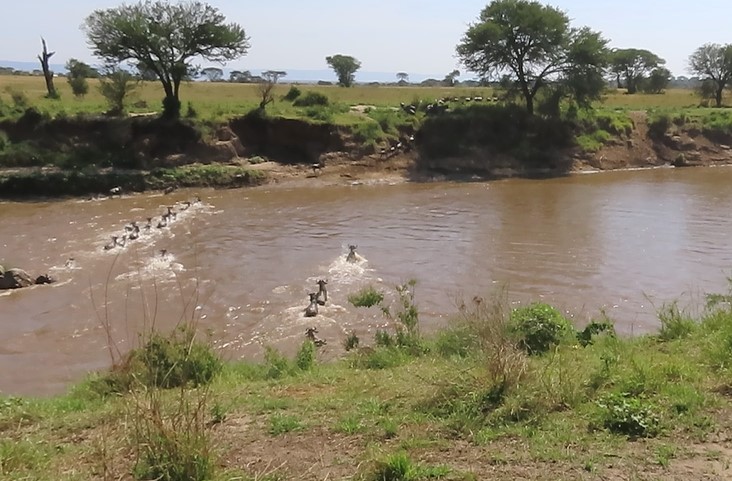
So we were lucky enough to see them crossing in both directions! And we caught it all on video. No crocodiles in the water this time, but the current was strong enough to make them struggle.
For me, it was a thrilling experience to see them crashing through the water. Bucket List item checked!
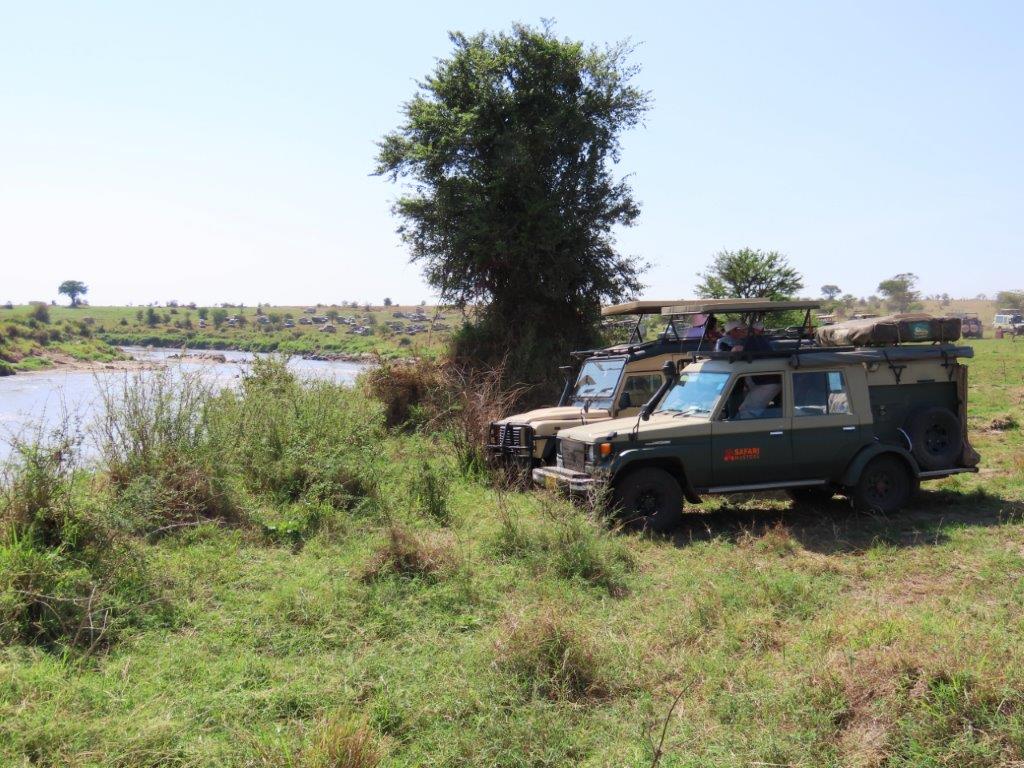
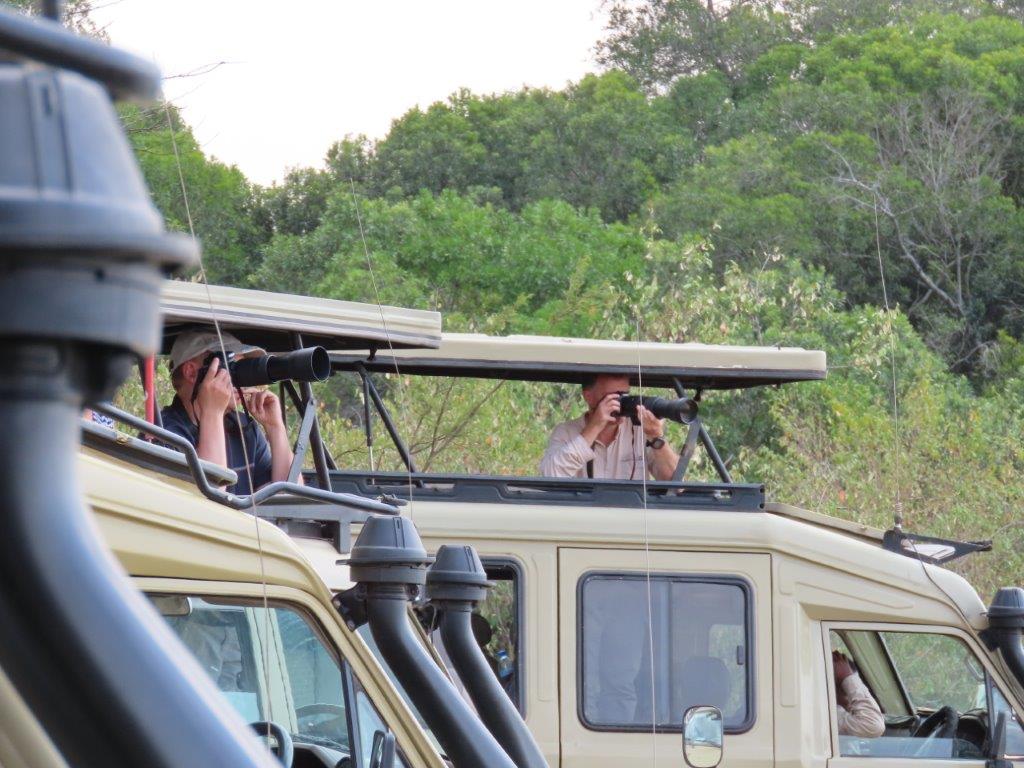
There were probably 100 other vehicles there watching too, scattered across the hills. But Stewart got us into the perfect position for an unobstructed view, right above the river bank.
Lions Again
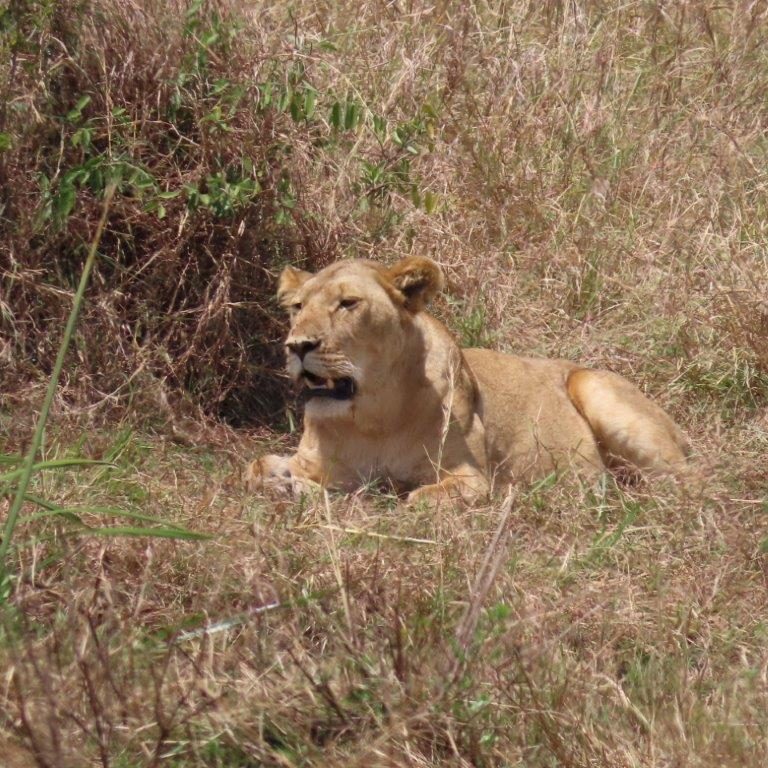
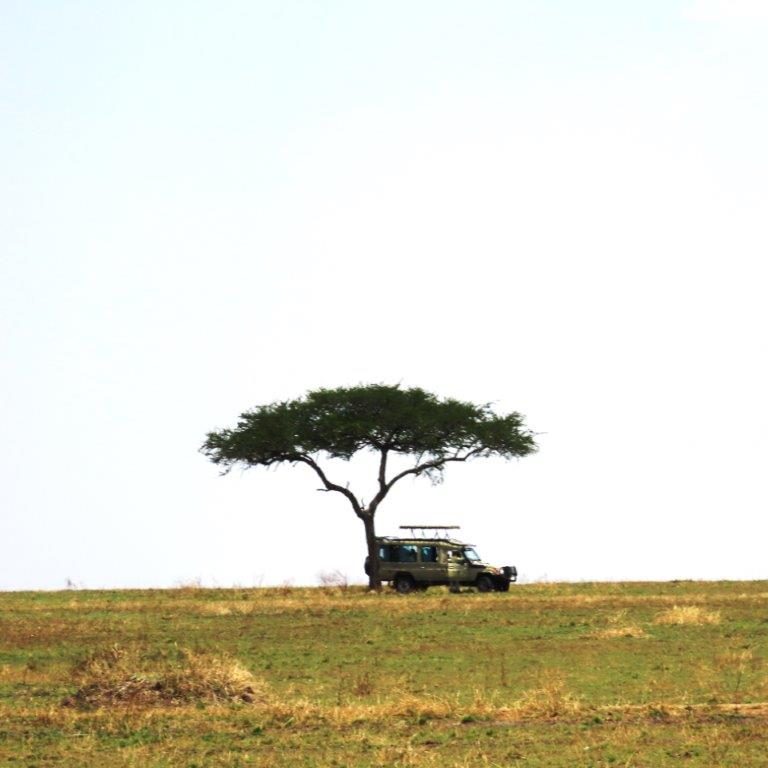
We had lunch with a lazy sleeping lioness – she picked her head up a few times, but never got up to move around. And again, we ate in the Land Cruiser, parked under a tree for shade. It was too dangerous to go outside with so many lions around.
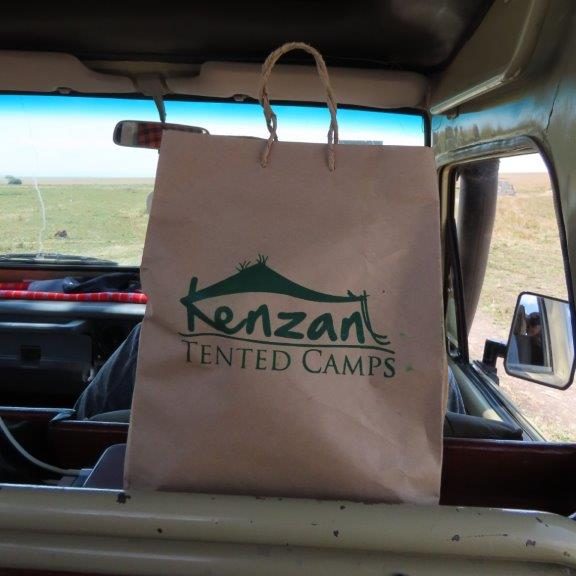
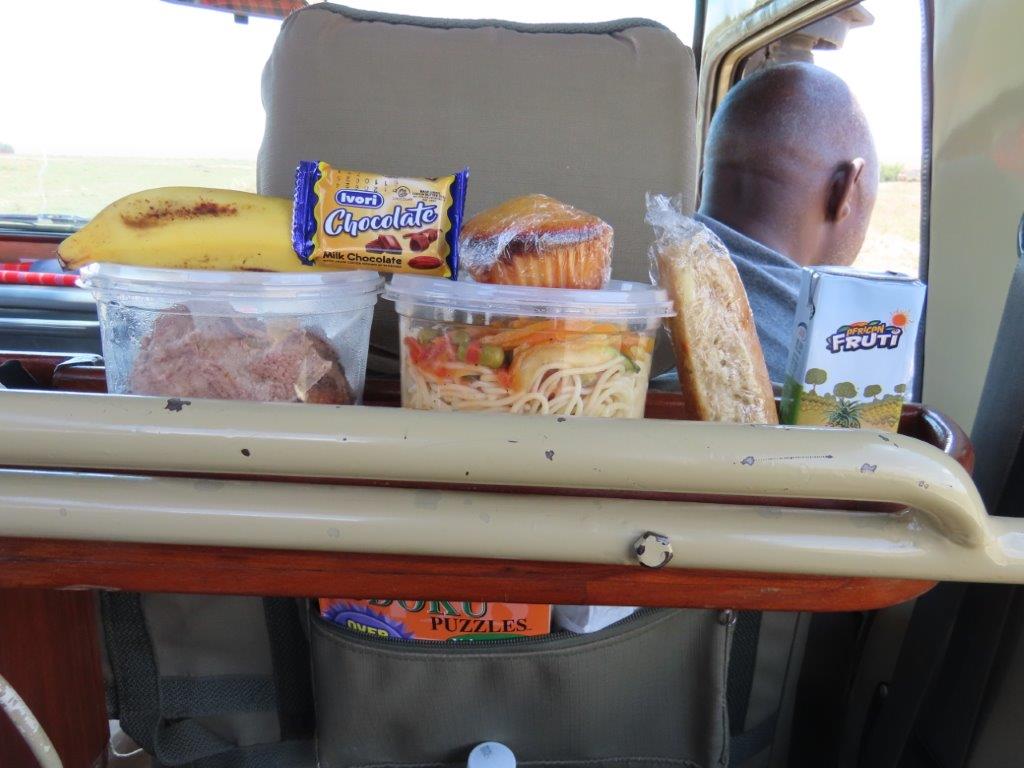
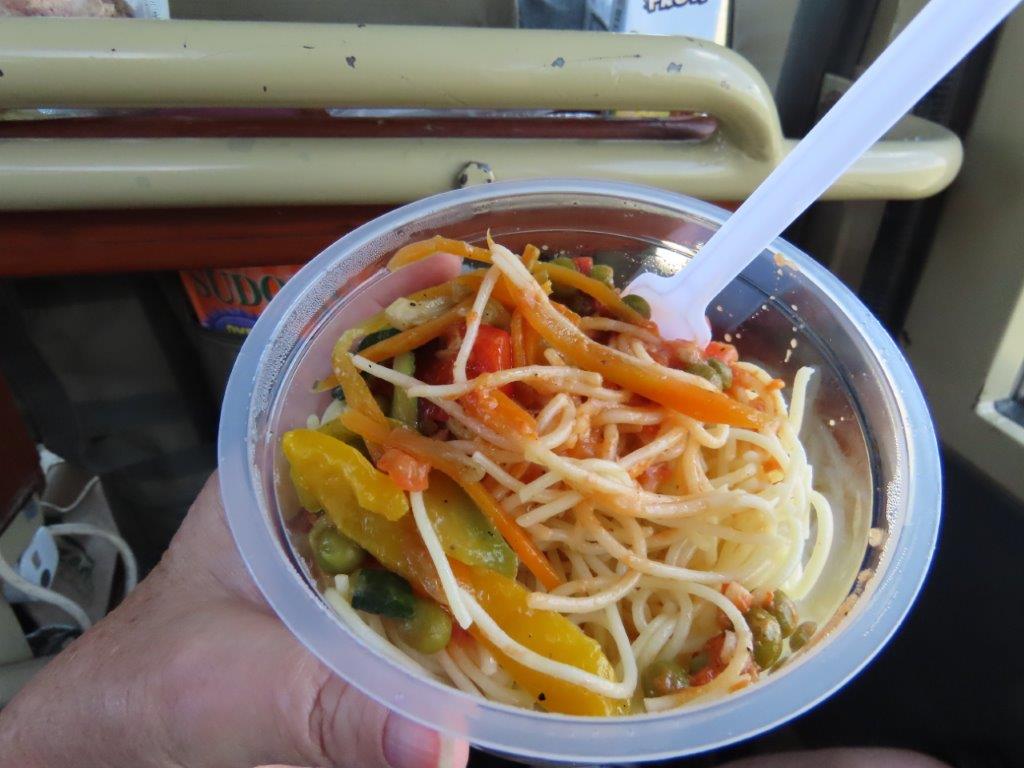
I will say, the Kenzan Tented Camp provided our best lunches – heads and shoulders above the other camps.
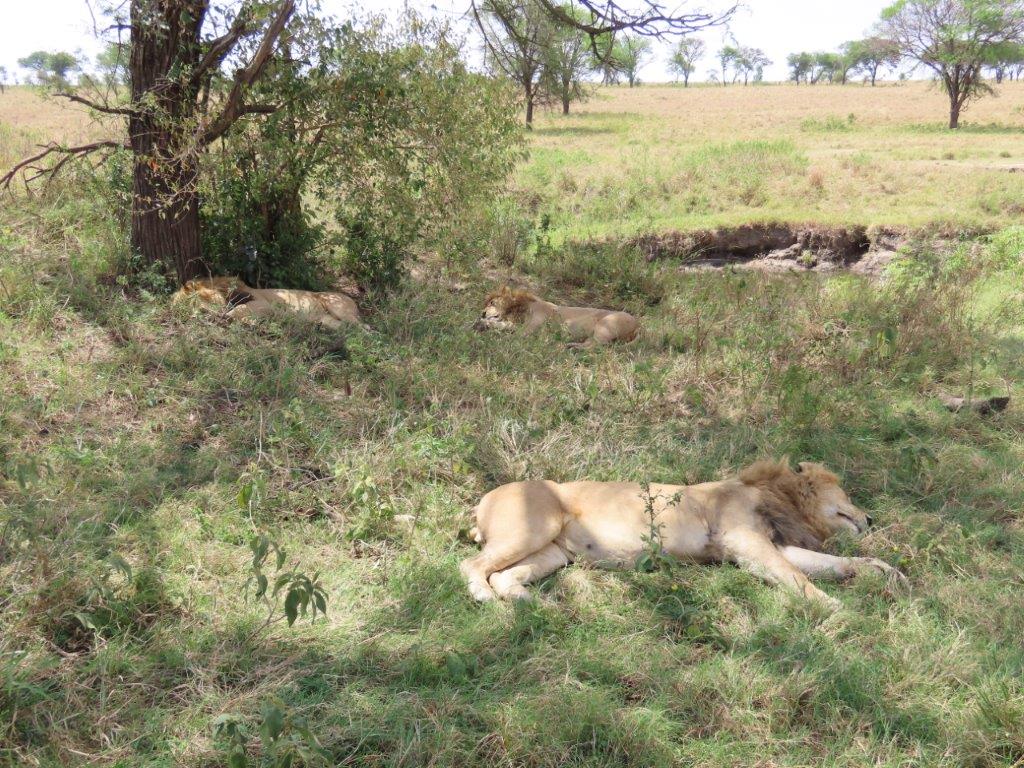
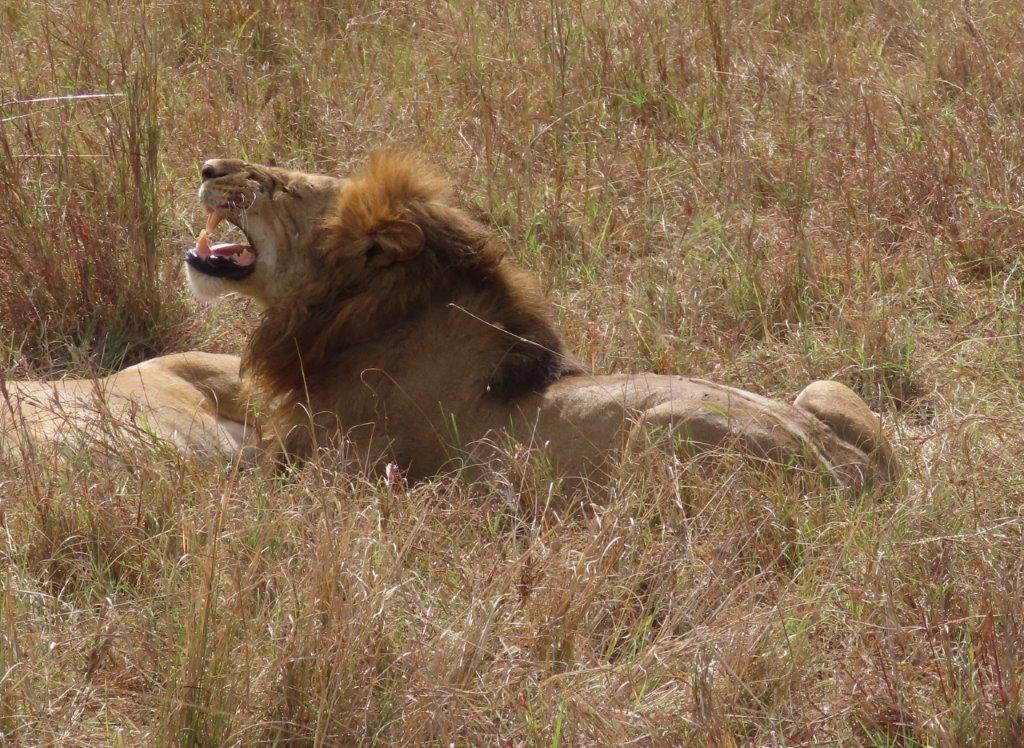
We later visited three sleeping male lions – Stewart startled them with the Land Cruiser when we pulled up, but then they went back to sleep. Stewart thought they were probably three brothers.
I used this opportunity to zoom in and capture their hair, their skin, their muscles. Because when will I ever get another chance to be so close to lions in the wild?
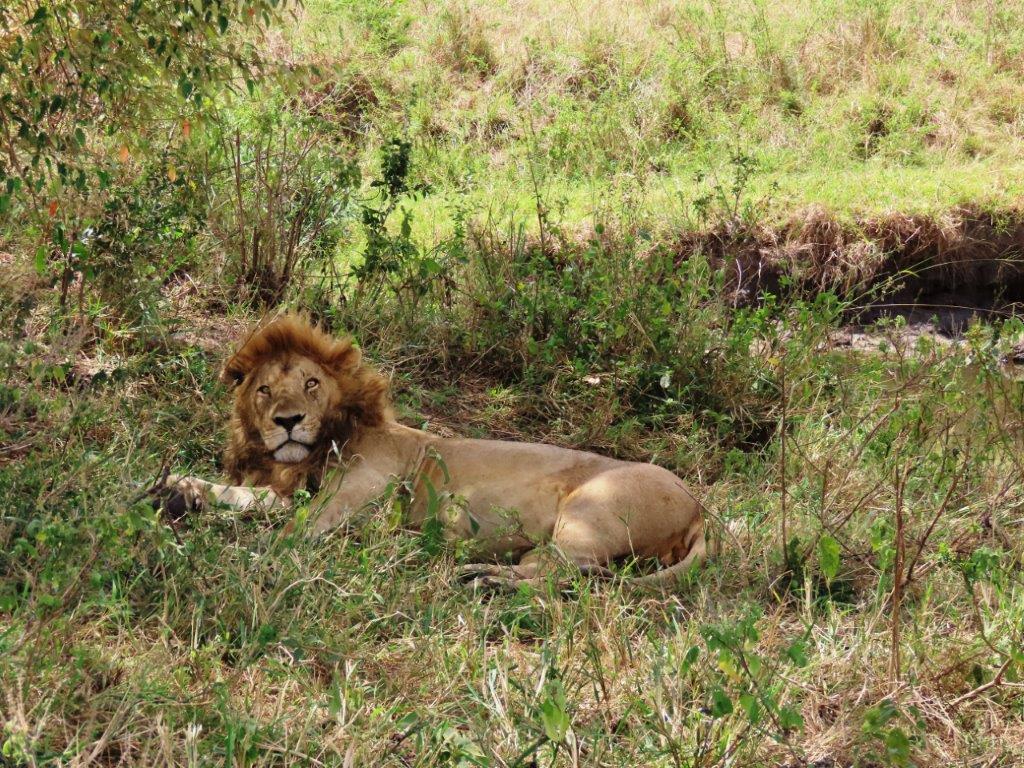
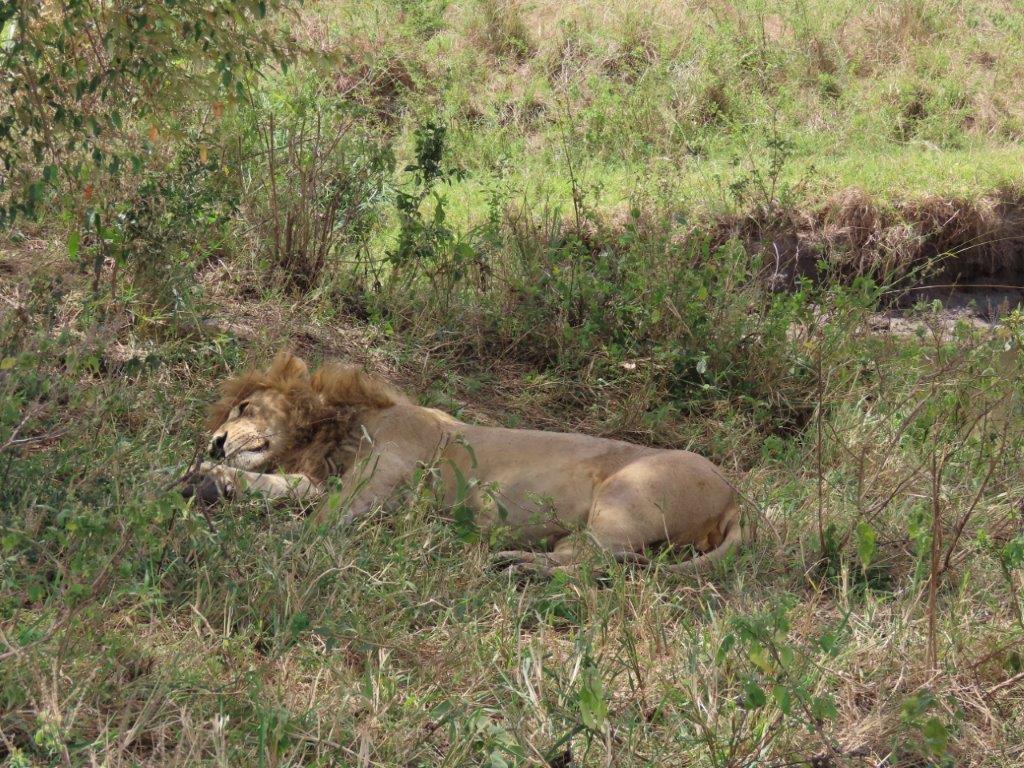


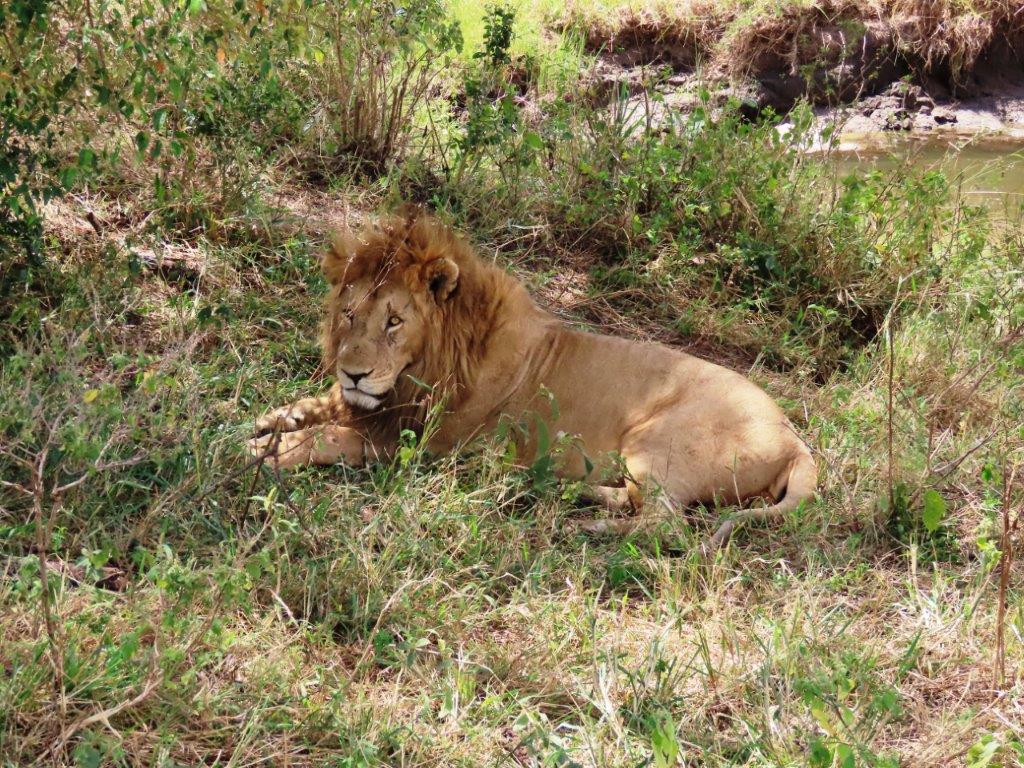
Towards the end of the day, we found a bunch of Land Cruisers watching a pair of lions. We think the lions were perhaps resting after “honeymooning” or mating?
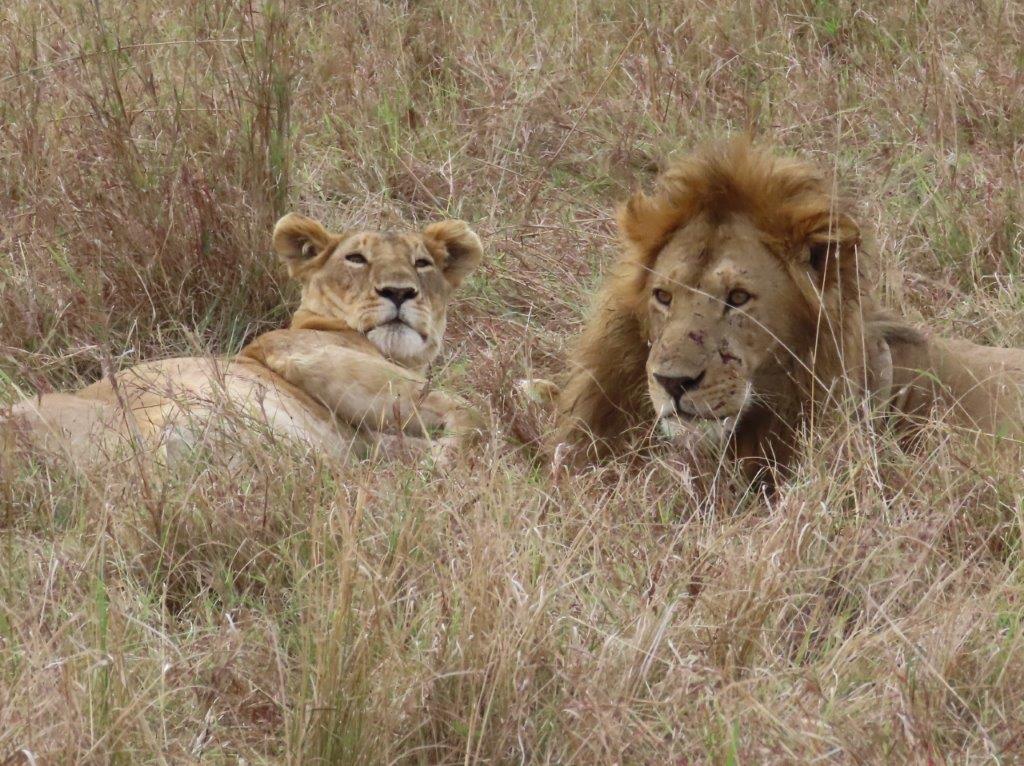
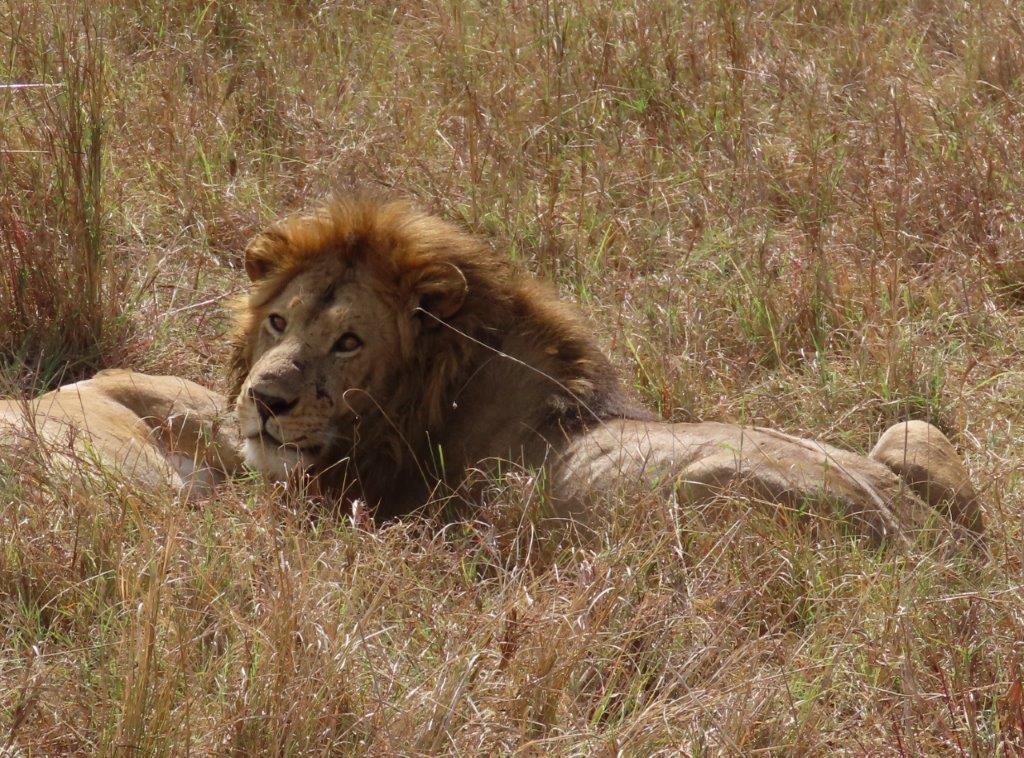


To see more photos and video of the animals we saw in Tanzania, visit our Photo Album.
We got back to the Kenzan Tented Camp about 5:00. All in All, an EXCELLENT Day of wildlife viewing!
Day 8 – A long day of driving
Today, we transitioned back to the Ngorongoro Crater area, driving through various parts of the Serengeti to reach it. We saw several animals, but we had to keep moving so we didn’t stop as often.
The low-light of the day was a short bout of diarrhea for me which necessitated a crazy high-speed drive to a bathroom (thanks Stewart) and then a roadside poop. Necessary, but very stressful too. Just another example of what a Tanzania Safari is really like!
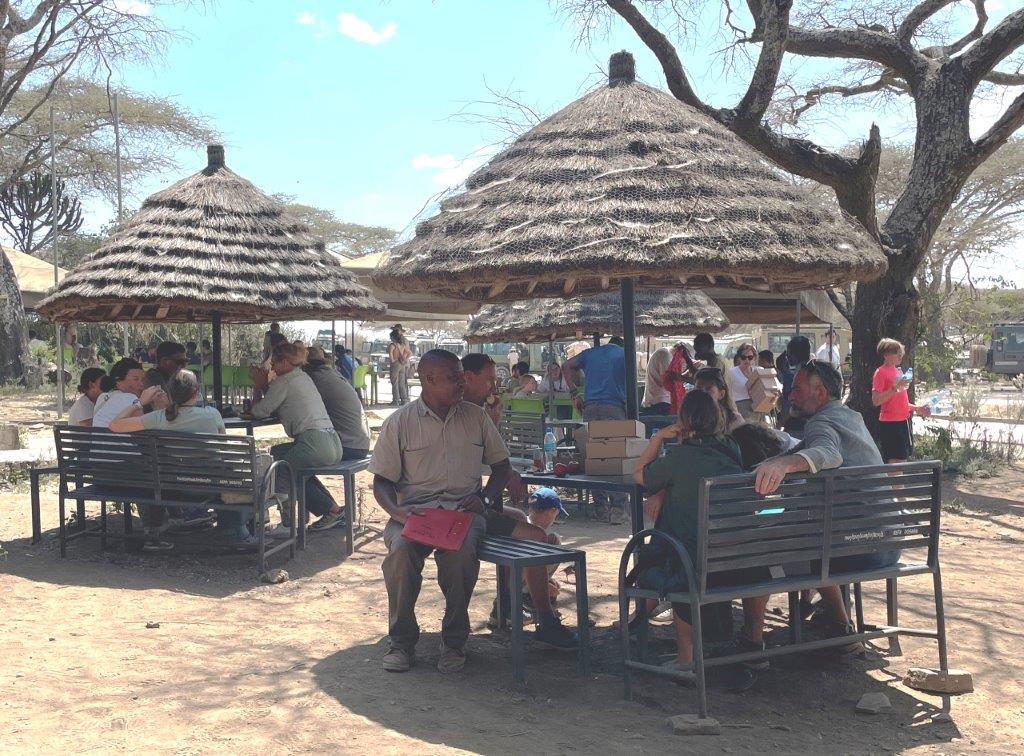
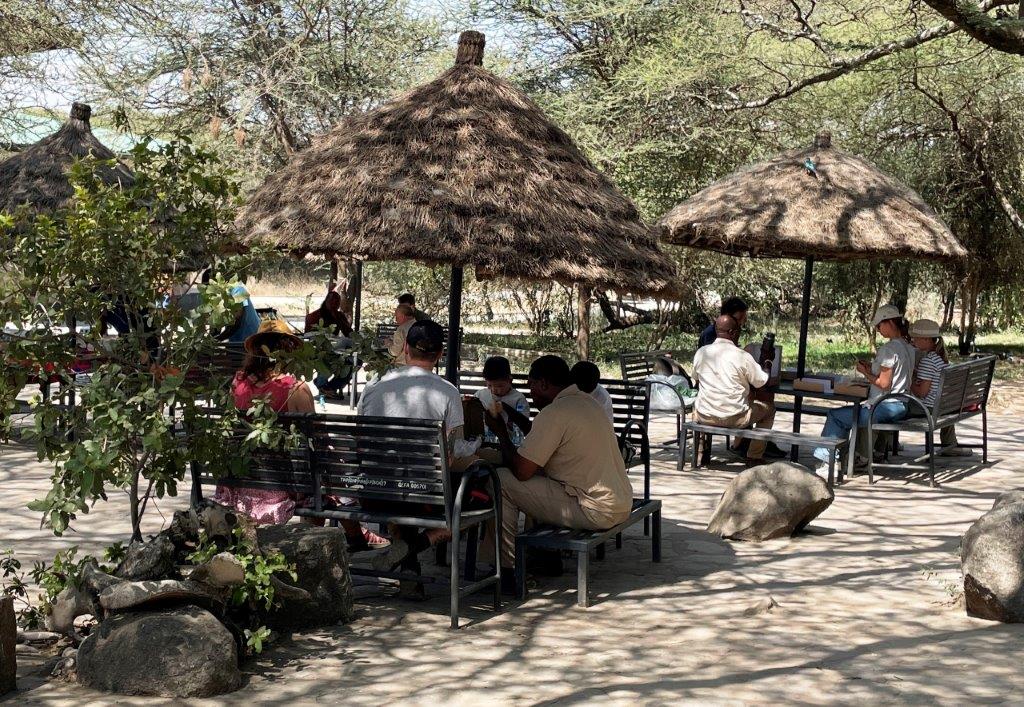
It was a very bumpy, very dusty and very long 9-hour ride through the Serengeti and the Ngorongoro Conservation Area. We did stop for lunch at the Serengeti Park Gate – here they have a nice picnic area with shade over the tables. And it’s safe to get out of the vehicle to eat!

The Rhino Lodge
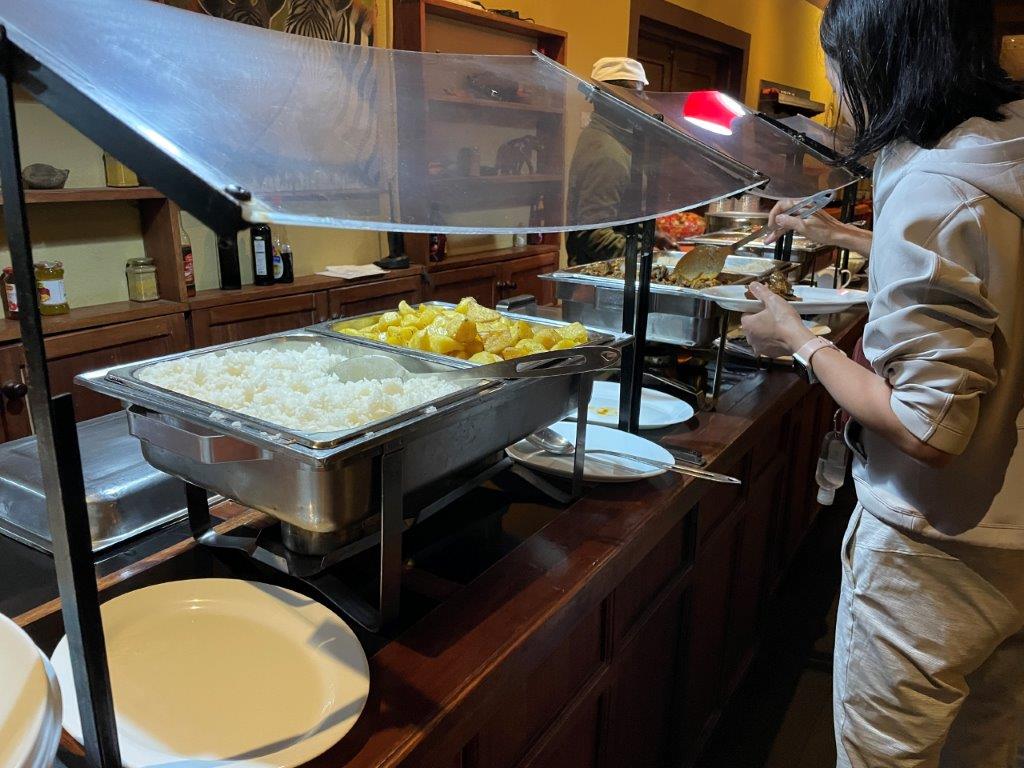
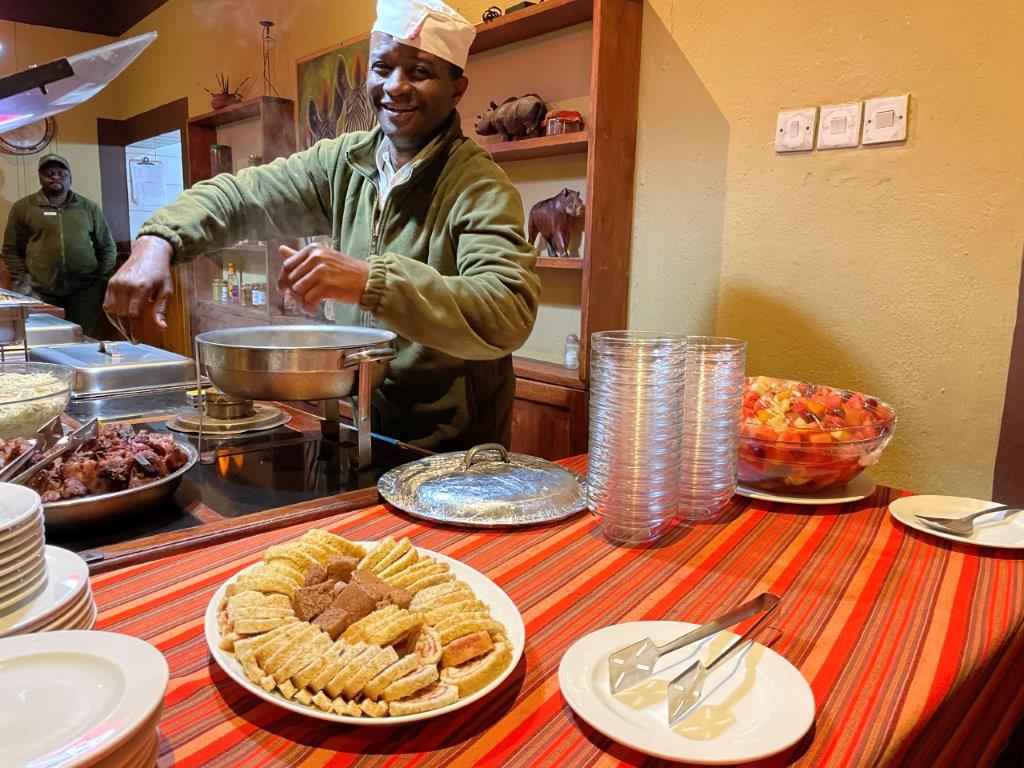
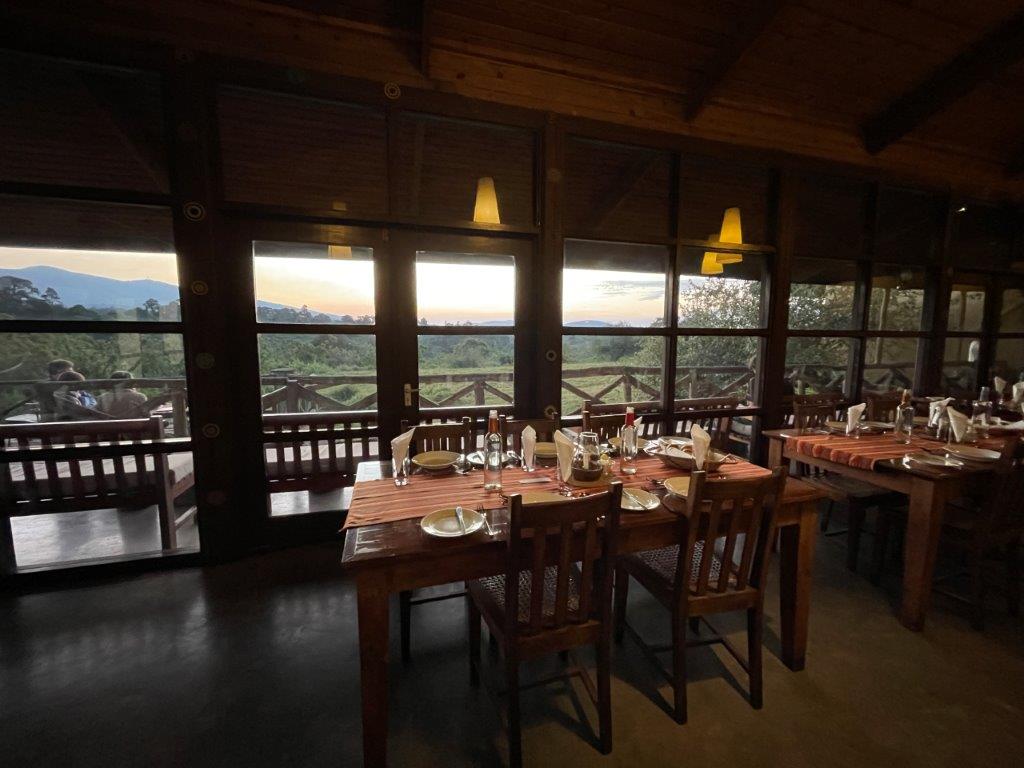
After a long day of bouncing around in the Land Cruiser, we were glad to arrive at the Rhino Lodge near the edge of the Ngorongoro Crater. It’s more of a traditional hotel with a large indoor restaurant. Very different from the tented camps!
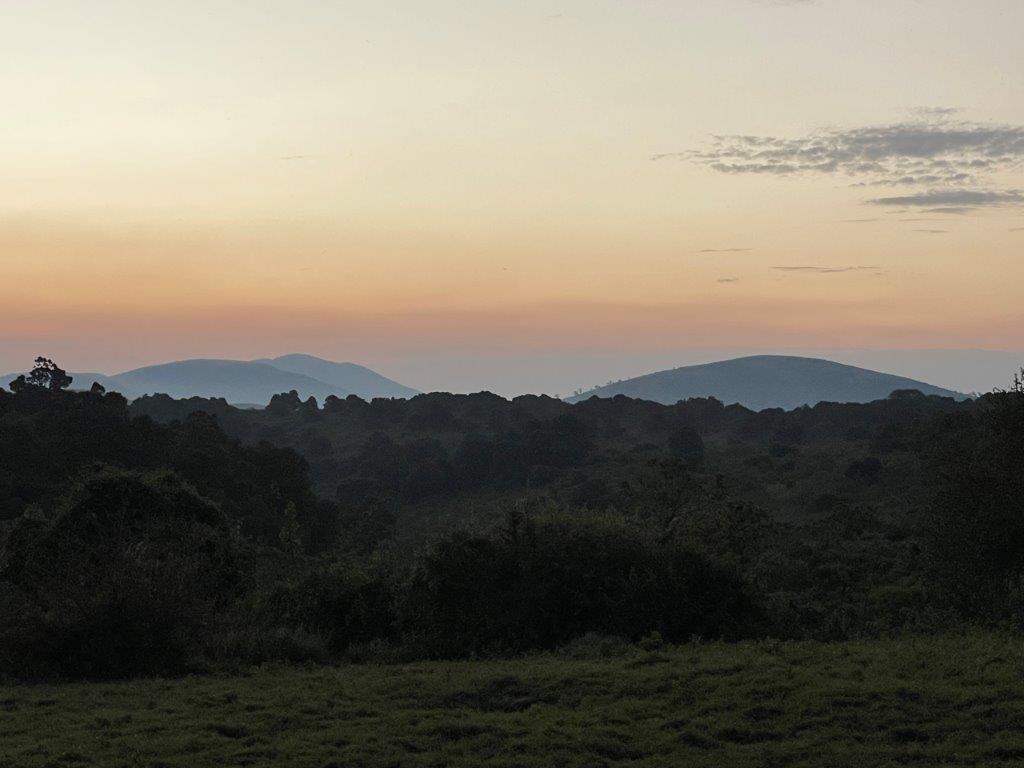
Our balcony overlooks a beautiful area – I wish we were going to be here longer to enjoy it. But this is our only “one-night” stop.
We were told that electricity is only available in our room from 4:00 – 9:00 PM – better charge the batteries right away! I’m glad I brought a dual battery charger.
At dinner, Stewart advised that we should get up really early in the morning to get into the Ngorongoro Crater before the mass of other vehicles descend.


Day 9 – Ngorongoro Crater
Finally, we had reached the Ngorongoro Crater! I had heard so many amazing things about it, both during my research, and from the other travelers we met.
It’s an enormous volcano caldera, with 102 square miles of grassland, 2000 feet below the rim. There’s only one road down, and one road back up out of the Crater. Lake Magadi is a large, shallow soda lake, attracting large number of Flamingos.
The Crater is part of the Ngorongoro Conservation Area which is a UNESCO Heritage Site. How do you pronounce Ngorongoro? Like this: “n-GORE-on-gore-oh”
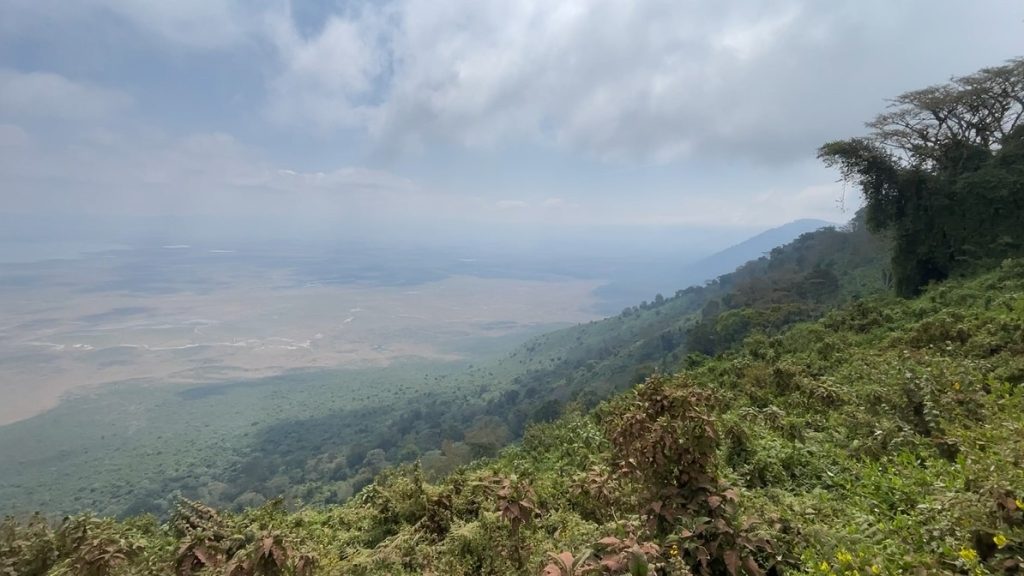
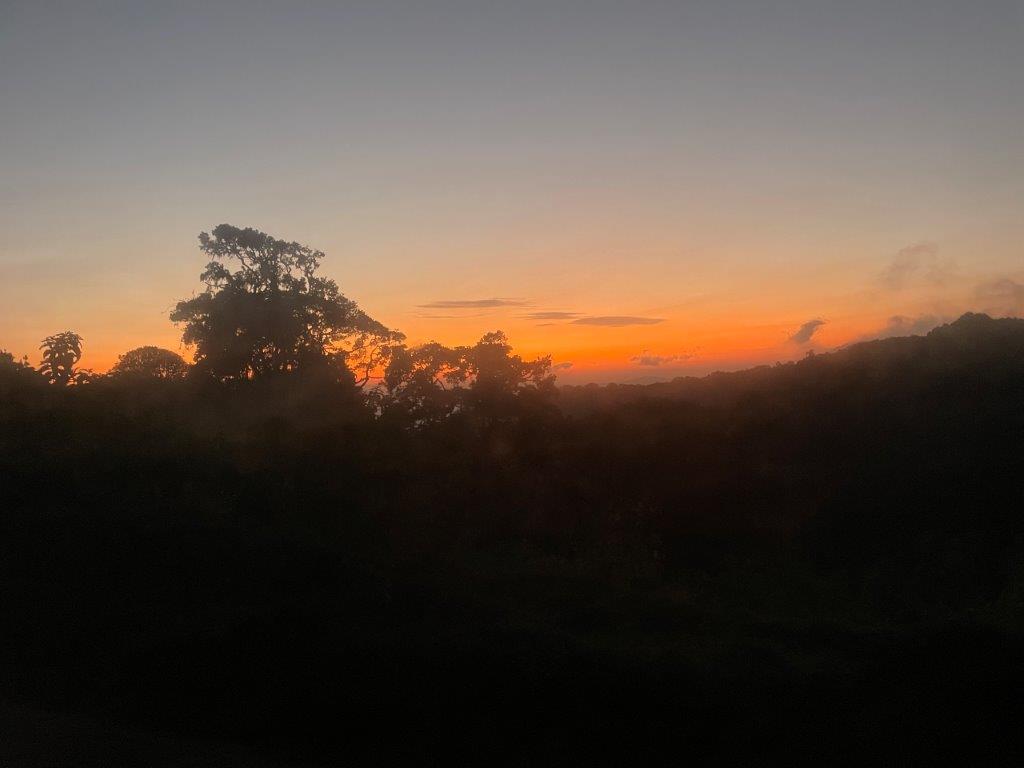
We got up REALLY early this morning (breakfast at 5:30 AM, checked out and left the Lodge at 6:00). There was a colorful sunrise as we descended down into the Crater.
It was really quite cold up on the rim. We wore our coats until halfway through the day and I shoved my hands in my pockets except for when taking pictures.
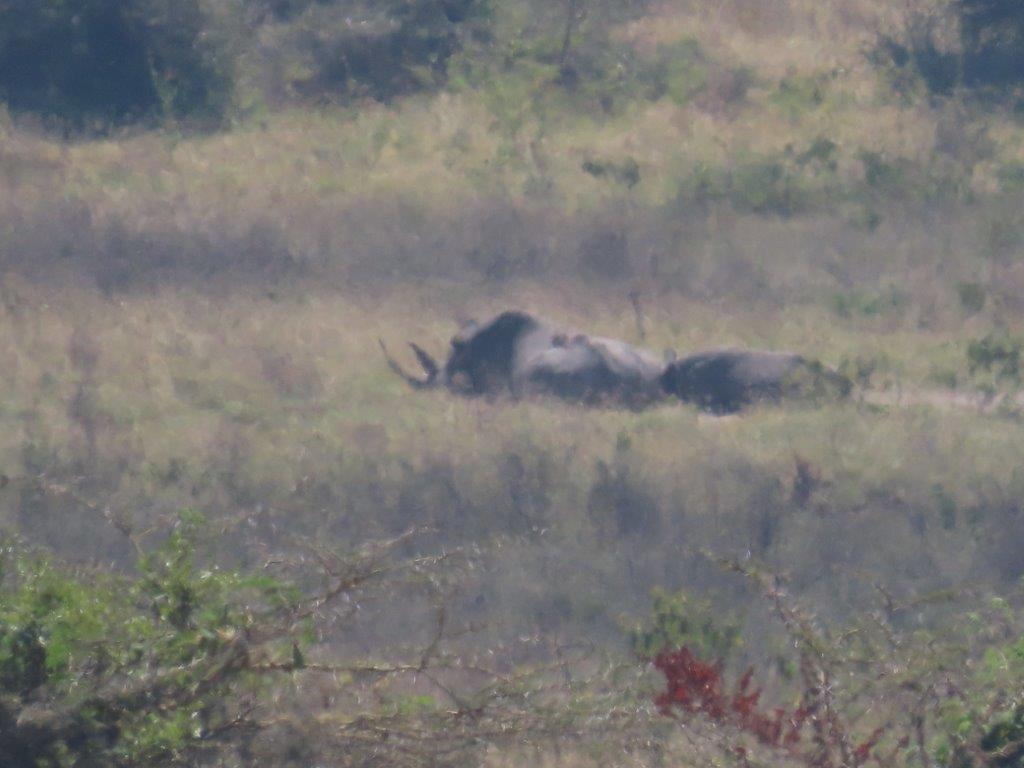
We spent the entire day looking for the black rhinoceros – the last one of the Big Five for us to see, and it is most often found in the Ngorongoro Crater for Tanzania. They have been poached extensively for their horns.
We saw lots of amazing animals, including two new ones – the hyena and the jackal. Plus tons of new birds, lots of hippos in and out of the water, tons of zebras and wildebeests. Flamingos and Glossy Ibis too.
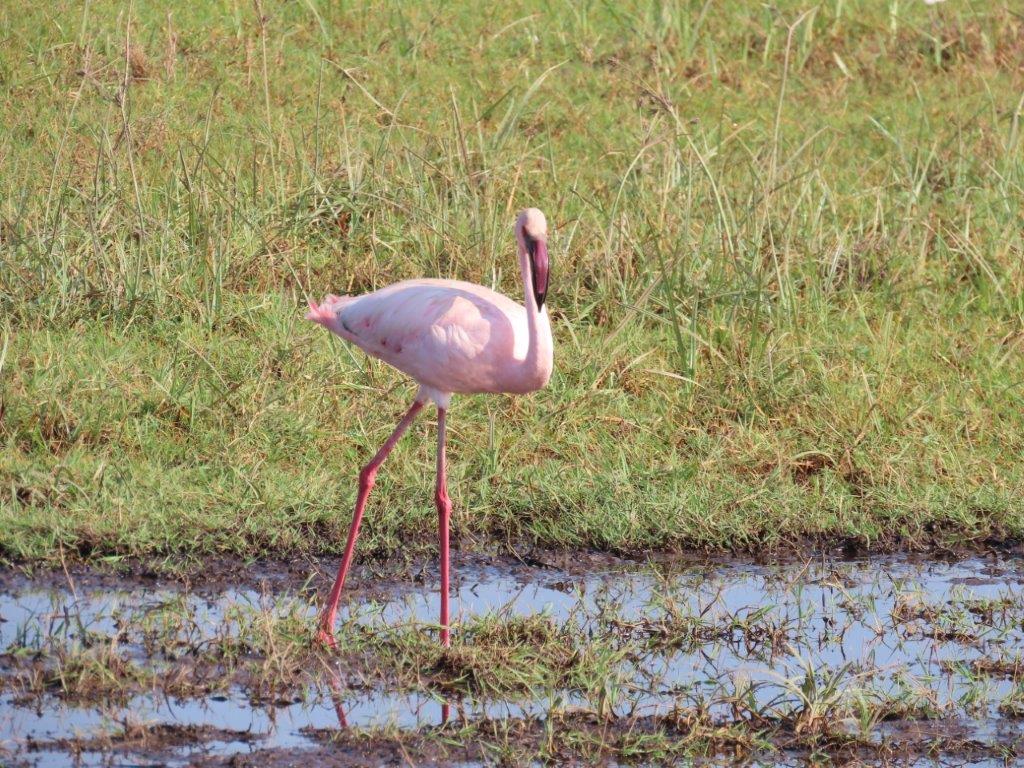
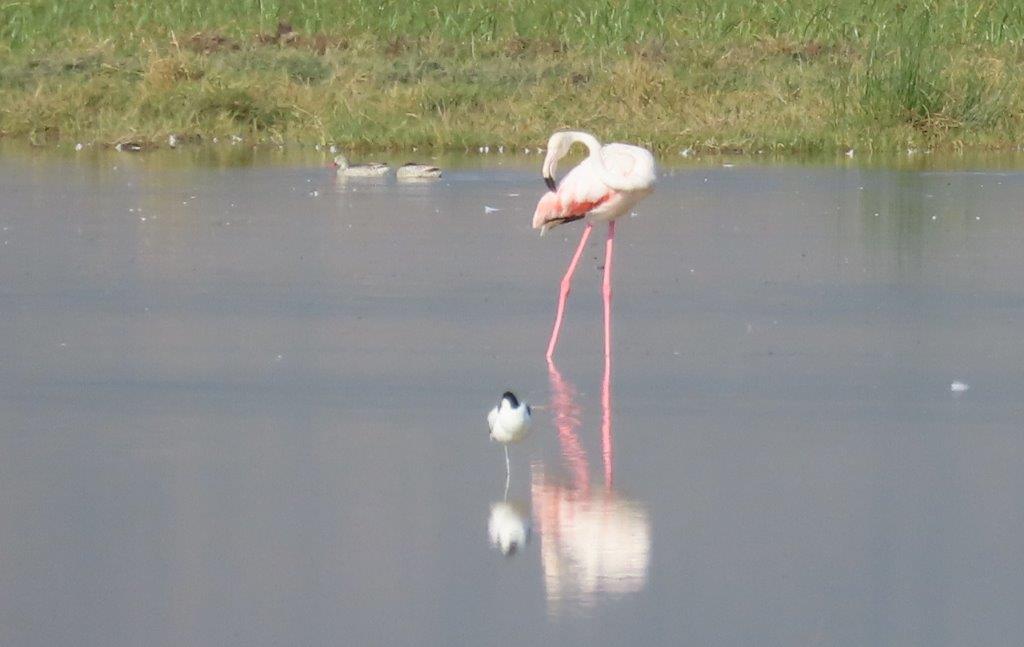
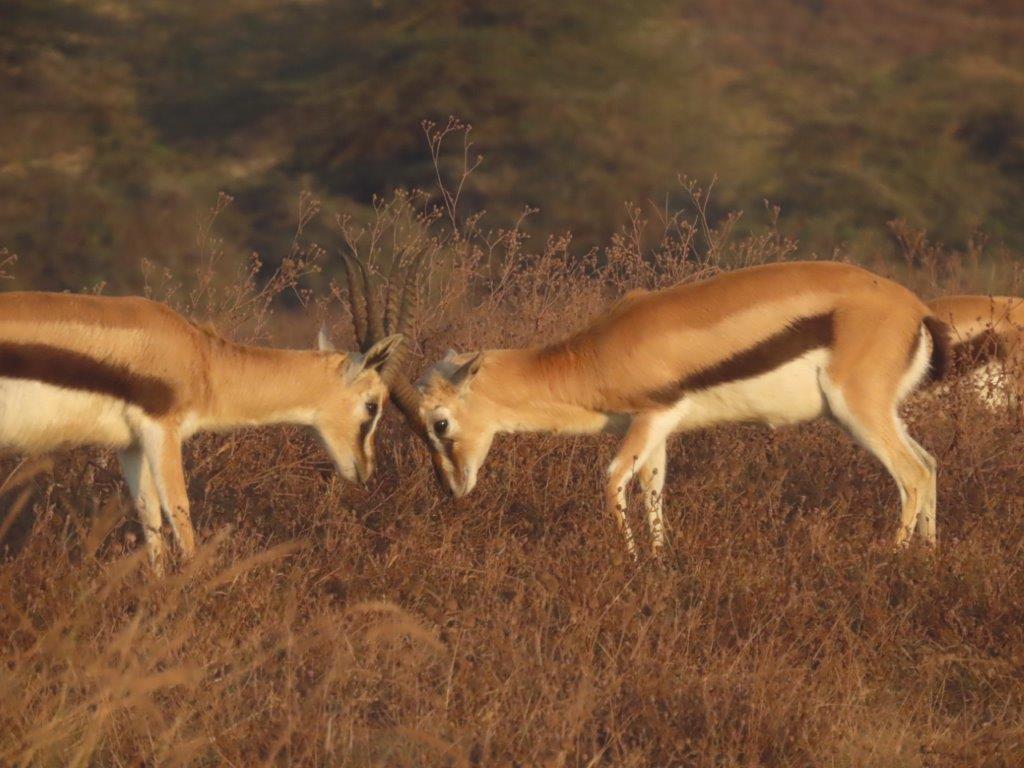
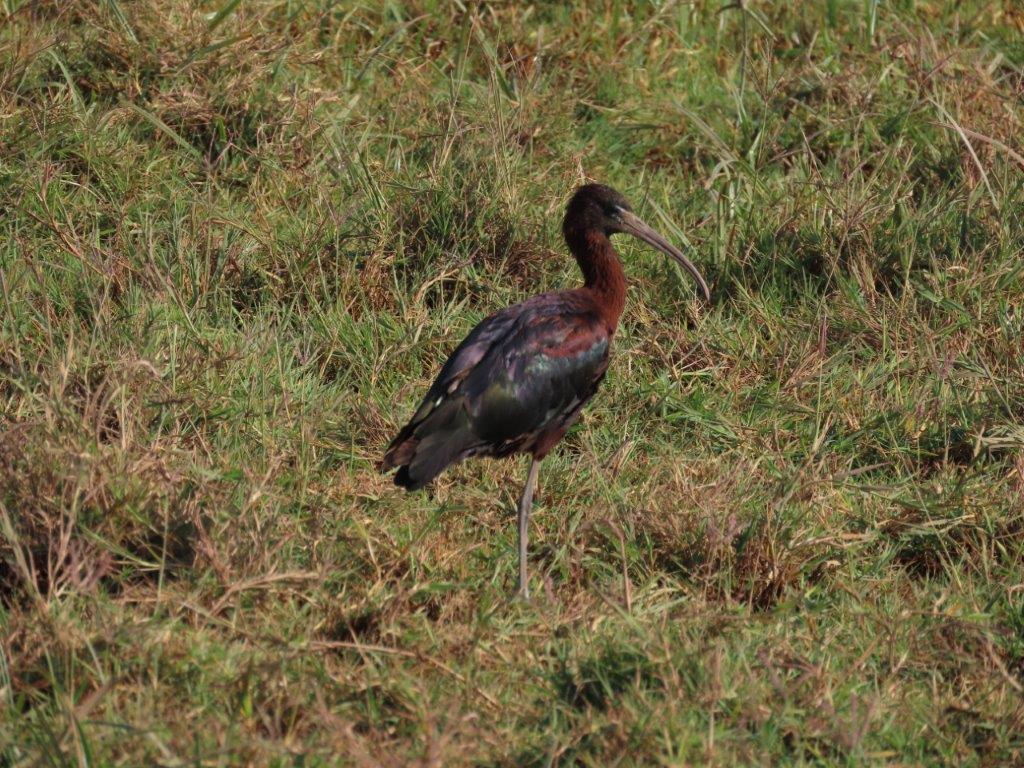
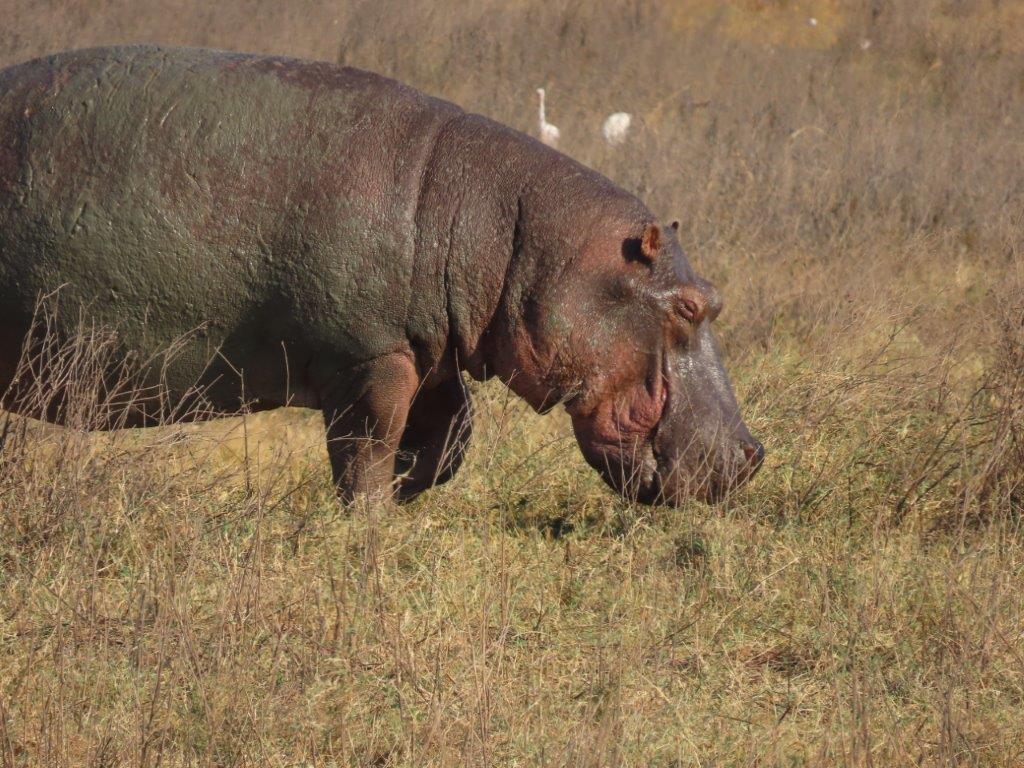
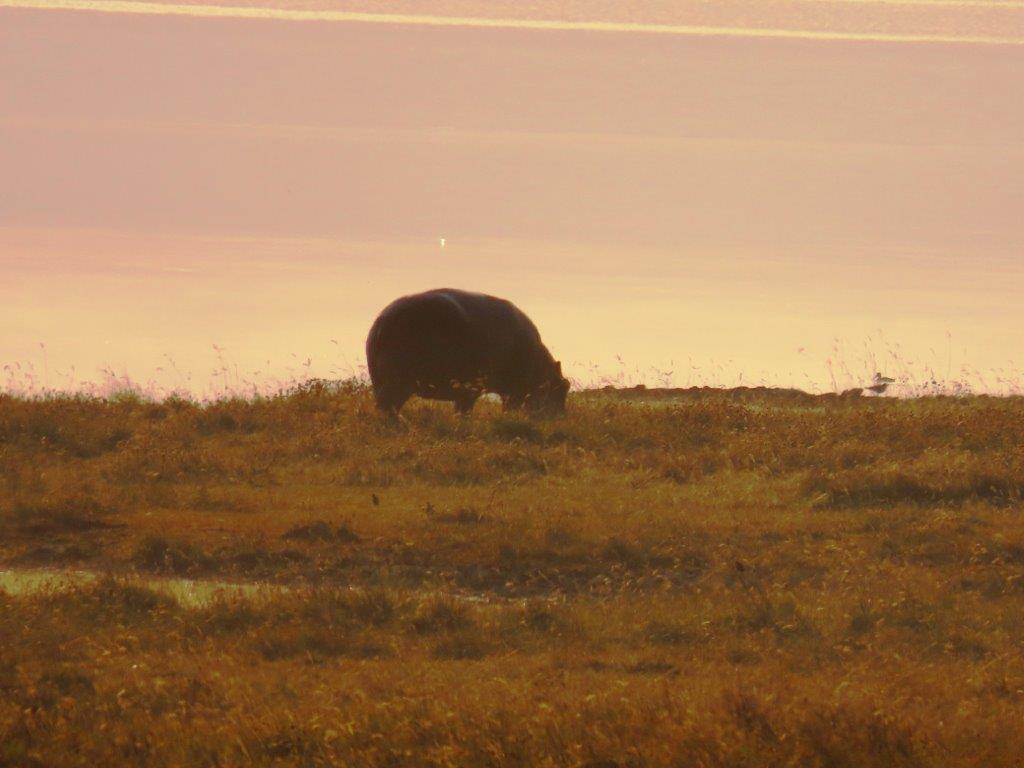
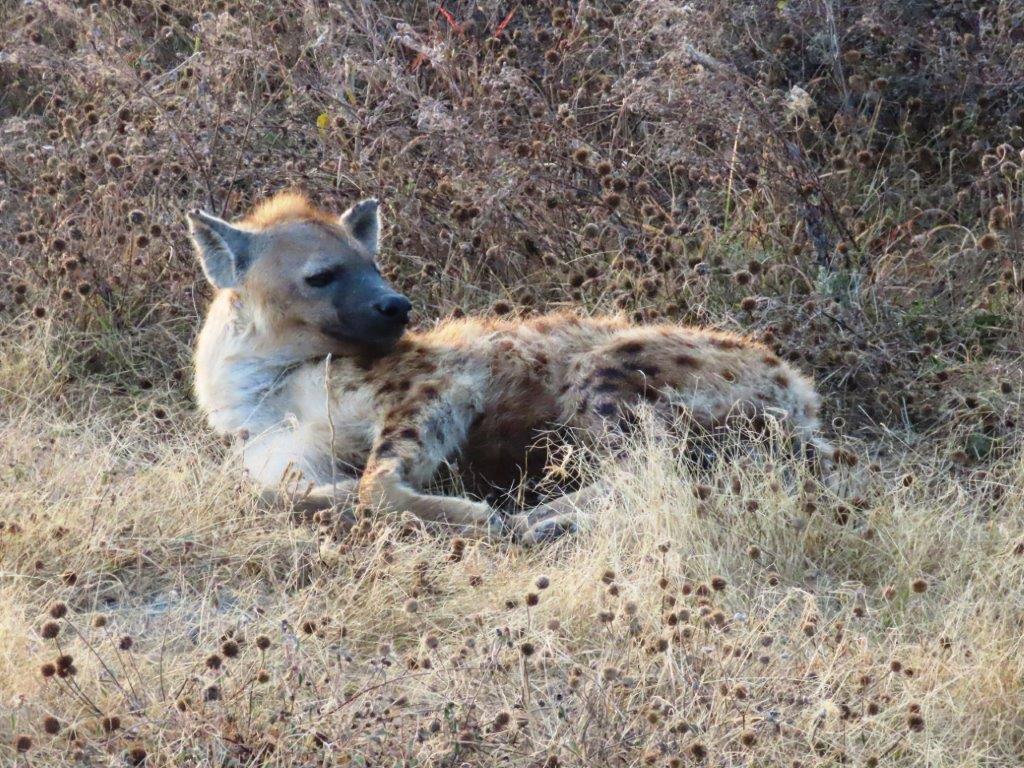

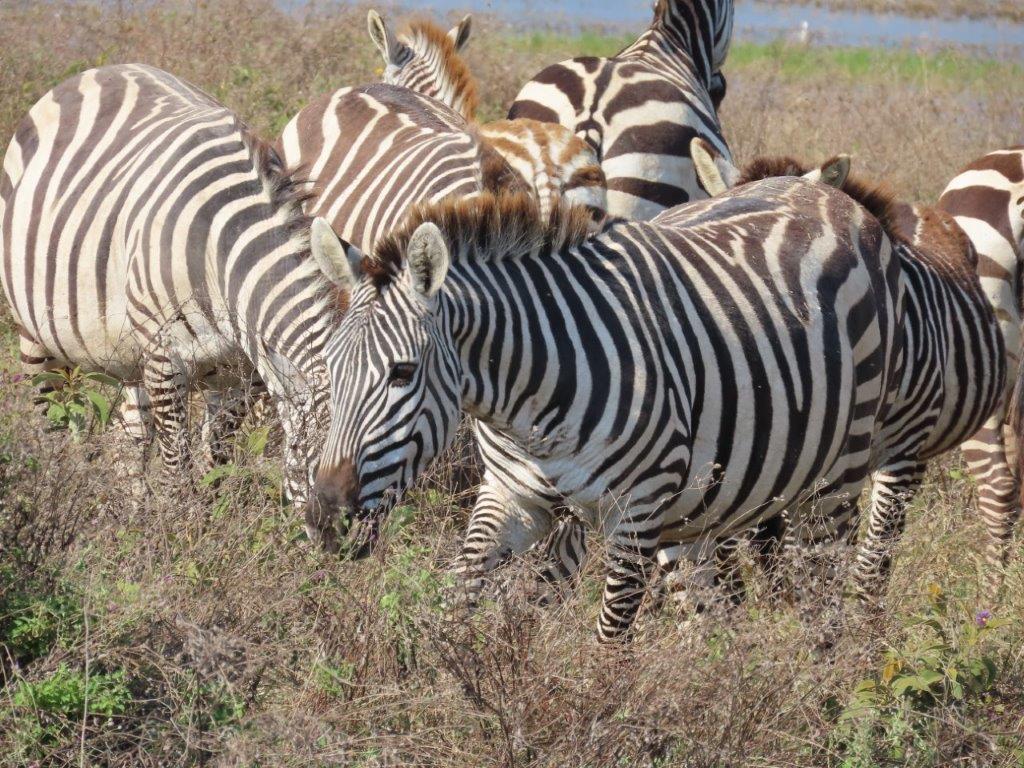
To see more photos and video of the animals we saw in Tanzania, visit our Photo Album.
Black Rhino (#5)
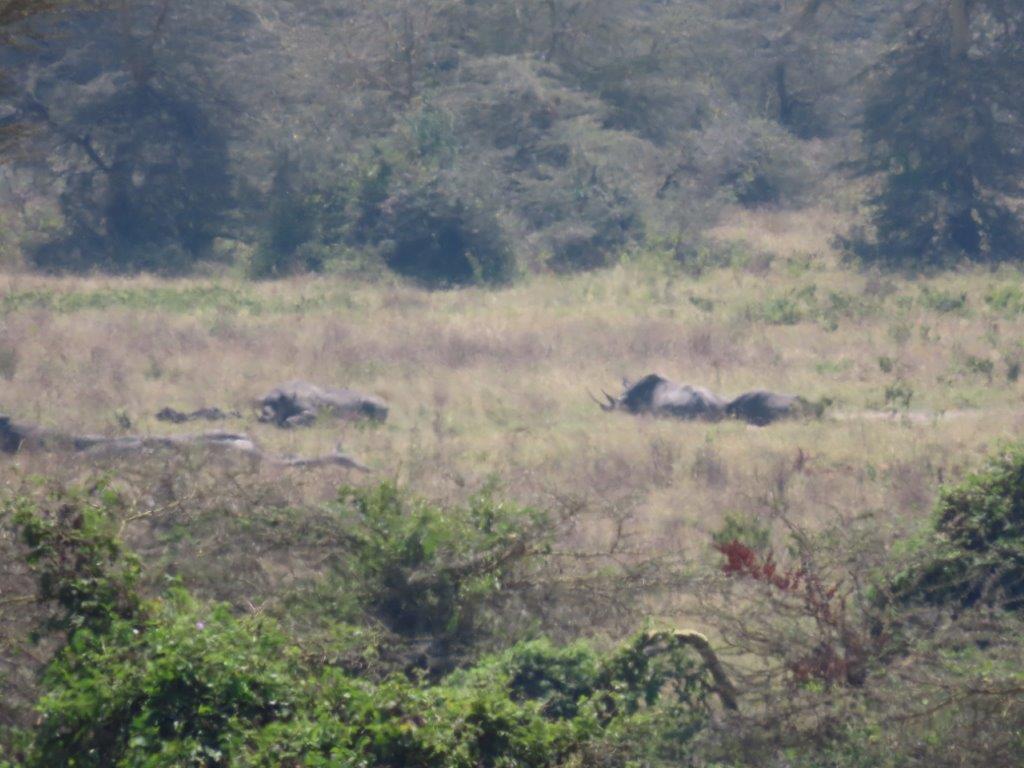
We were about to leave the crater to start driving back to Arusha, but suddenly Stewart headed in a different direction. Rhinos HAD been spotted, albeit WAY across the valley. At least half mile or more away. Stewart must have heard it on the radio and turned us around.
So we finally got the last of our Big Five – Elephant, Cape Buffalo, Leopard, Lion and Rhino, but it took until literally the last ½ hour of our safari! Due to the distance, these photos aren’t great, but they are proof that we saw them. Bucket List item checked!

We drove for four hours back to Arusha. It was great when we finally were on paved roads again after so many days of bumpiness. #Relief
We said good-bye to Charis at her hotel and then Stewart brought us back to the Didas Villa Hotel. We tipped him well for being an excellent guide.
Thanks for staying with us – we’re almost to the end. Do you feel like you understand now what’s a Tanzania safari really like?
After the Safari
We got back to Arusha on Wednesday evening, but our flight didn’t leave until Friday morning. So we had another day to wait in Arusha. We spent it napping, going through all the videos and photos we had taken, repacking all our stuff, and catching up on the Olympics.
Getting home to Minnesota
Unfortunately, our early Friday morning flights back to Minnesota ended up getting canceled at the last minute. Lufthansa rebooked us on different flights, but they didn’t leave until Saturday evening, 36 hours later. The airline put us up at a resort near the airport.
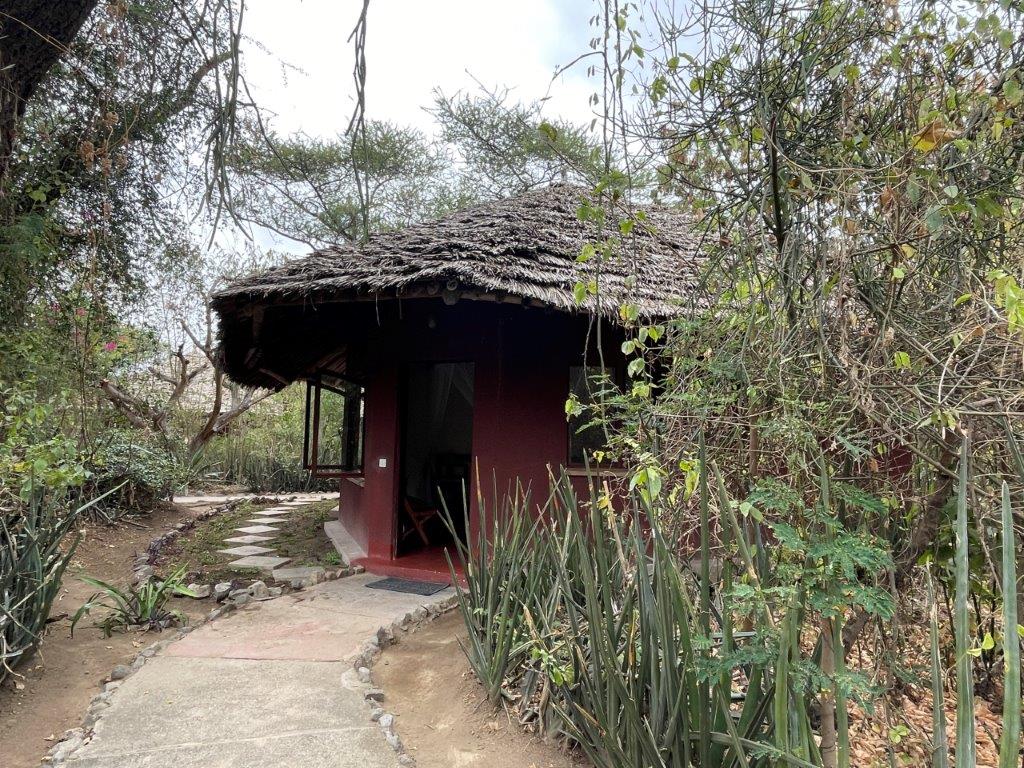
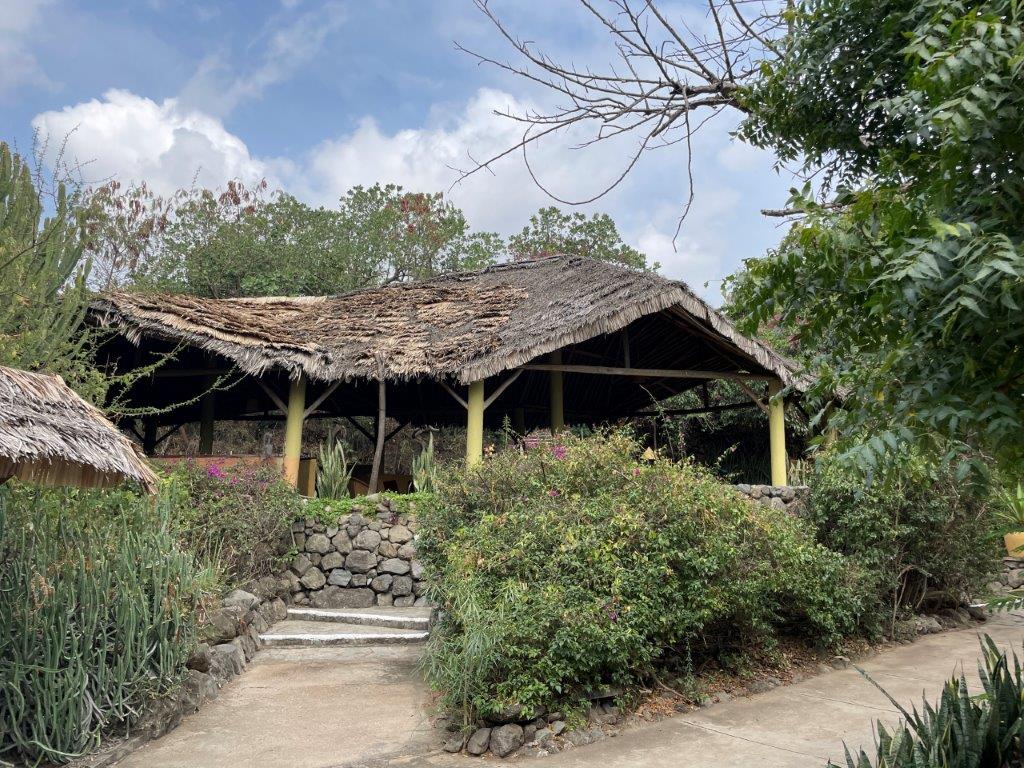
Kia Lodge Resort
It was a lovely place to wait out the time. We visited with other stranded travelers and listened to their safari stories. We ended up celebrating Bill’s birthday on our extra day there. And the airline covered all our expenses – gotta love that!




Saturday evening about 9:00, we finally left the Kilimanjaro International Airport. We arrived back in Minnesota on Sunday afternoon at 1:15 PM, which is about 24 hours later, having stops in Dar El Salaam, Tanzania and Amsterdam. Lufthansa booked us on KLM Airlines all the way back.
Why we chose this specific safari
I literally looked at hundreds of safari companies and packages before choosing this one. My goals were to:
- Maximize wildlife viewing – This tour offered full-day game drives on all 9 days. With lots of other packages, Day 1 is flying to Tanzania, Day 2 is getting picked up in Arusha, and the last couple of days are getting back to the airport and flying home. So a bunch of the days in their number, do not include any game drives.
- Have amazing photo opportunities – Stewart did an excellent job of getting us into position to take great pictures and videos of the animals
- See the Great Migration – On my bucket list
- Stay in locations for more than one night – Packing and unpacking every day is exhausting. Some other tours move every night. This tour had us for two nights in each of the first four locations, with only one one-nighter at the Rhino Lodge
- Sleep in a bed – We’re pretty simple in our accommodation needs, and we’re pretty frugal. But we didn’t want to sleep in a sleeping bag on the ground like some budget safaris offered.
- Minimize travel time between locations – Trying to avoid long days of driving between parks without seeing anything. This tour was laid out in an efficient pattern between the parks.
What our Safari Cost
- 9 day Safari Package – $2900/per person – included lodging, guide, transportation, all meals, water bottles, airport transfers = $322.22/pp/day
- Note: The cost was originally quite a bit higher than $2900/pp, but working with the safari company, I eventually negotiated it down to this price.
- Round Trip Airfare from Minneapolis to Kilimanjaro – $2028/per person – I found a killer deal during a very popular time. All the other flights during that timeframe were $4000-5000 per person.
- Hotel, Meals and Grocery shopping in Arusha for 4 days before and after the Safari – $209 for both of us. I used points to pay for most of our stay at the Didas Villa Hotel, but it was only $41/night
- Tips – $415 – most of that went to Stewart, but also some for airport transfer drivers, porters at the hotels, walking safari guide
- Wire transfer fee – $75 to send the final payment to the Safari company
- Total cost – $10,555 for 2 of us
- All prices shown in US Dollars
What’s a Tanzania Safari really like? A Summary
The Good:
- Seeing wild Animals in their native habitat was simply Incredible – and getting up so close to them was pretty awesome too
- The wide variety of animals we got to see, including the Big Five
- 100 new birds added to my Life List
- The Photography opportunities were just fantastic – I will enjoy these pictures for the rest of my life
- Everything was taken care of – where we stayed, what we ate, where we went. Compared to the travel Bill and I normally do where we have to make 100 decisions every day, this was (almost) relaxing!
The Not-So-Good
- With this kind of tour, you spend really long hours (9-10 per day) in a bouncy Land Cruiser on dusty and bumpy roads. All the dust can make it hard to breathe at times, and the endless bouncing is hard on the hips and knees.
- Sometimes, we went several hours without seeing any animals. That can get boring at times.
- The effort to get to Africa is pretty grueling – it took us just over 24 hours each way, but it could have taken much longer with different flight options.
- It’s the most expensive type of travel we’ve done, even after going all the way around the world.
Conclusion: Was it worth it?
ABSOLUTELY! It was an experience of a life time for me – and one I have always dreamed about doing. I don’t regret it for a moment. #BucketListChecked
Tanzania is an excellent place to do your first safari experience. Next time, I’ll visit a different African country – maybe Botswana, South Africa or Namibia?
If I were to go to Tanzania again, knowing what I know now, I might make some different choices. I might choose a package where we fly from one park to another, rather than drive over bumpy dusty roads. Or I’d ask companies I was researching about the age of their Land Cruisers – perhaps a newer one would be less bouncy?
And I might choose one that does more early morning game drives, hoping to see more animals in “action”, rather than so much resting or sleeping.
More information about Safaris
Here are some more posts about Tanzania, Safaris and Africa, including some that I’m still working on. If you’d like to receive emails when I’ve posted new content to the site, please complete the short form above.
- Best Camera for Safari? Simple to Use & Stunning Results
- Amazing Animals In Tanzania: A Safari Photo Adventure
- How to Take Amazing Wildlife Safari Photos – 20 Easy Tips
- What’s an African Safari really like? The Good & Bad Aspects
- What To Expect On A Safari – 12 Helpful Things to Know
- What to Pack for an African Safari (+ What to Leave at Home)
- Tanzania Travel Facts & Important Tips
Posts coming soon:
- Birds Seen on our Tanzania Safari – A Photo Album
- 25 Safari Tips – what we wish we knew before we left
- How to choose the right safari for you and why we chose the one we did
- What animals can you see in Tanzania?
- Safari FAQs
Find this post helpful? Save it to Pinterest for later!