
Here are lots of Tanzania facts that will be helpful to know as you plan an epic Bucket List trip. And I’ll provide you with lots of helpful Kari’s Travel Tips that I wish someone would have told me before we went. The devil is in the details and knowing some of these Tanzania facts will definitely improve your travel planning efforts!
The Table of Contents below will let you quickly find the topics you’re looking for, or you can just scroll through all the information to your heart’s content.

Currency
The official currency is the Tanzania Schilling – expressed as TZS or TSh; It’s currently converting at approximately 2,700 TZS for 1 USD. Or 1 TZS = $0.0004.
We always use the Xe app to check the most up-to-date exchange rates.

However, they readily accept US Cash in Tanzania. We used US money to buy supplies at the grocery store and to tip our guides. The prices on the menus were all given in USD.
We also used our VISA at several restaurants in Arusha with no problem.
Kari’s Travel Tip: We never did withdraw any Tanzania Schillings from the ATM – we just used US cash or our VISA credit cards.
Kari’s Travel Tip: We purchased Diet Pepsi and Rum in Arusha to bring on our safari journey, rather than buying beverages at the tented camps. We were lucky to have enough room in our Land Cruiser for a good sized box of bottles and it saved us a TON of $$.
Tipping
Tipping is part of the culture and is customary in Tanzania.
For Safari guides – Plan to tip them $10-20 per person per day, to be given at the very end of the trip, in either USD or Tanzania Schillings. They work SO hard during your safari to make sure everything goes smoothly and you want them to feel appreciated.
For Lodge/Camp Staff – There will be a tip box, prominently displayed in the Reception area or near the Dining Room. Leave whatever you feel comfortable with, depending on the level of service received.
Any tips left in the box will be shared with all employees across the entire camp, even the ones you never saw because they were working behind the scenes (in the kitchen, in the laundry, etc).
At restaurants (before and after our Safari) – We tipped 10% for our meals, although I have read that 3-5% is considered a normal amount.
Drivers – I have read that it is not necessary to tip drivers, but we did give them $5 for driving us to and from the airport (an hour away).
Language
Swahili and English are both official languages. The locals speak really rapid Swahili to each other, but English is spoken by everyone in the tourist and hospitality industry.
Here are some friendly words that they use all the time.
- Karibu = Welcome
- Jambo = Hello
- Mambo = Hi
- Asante = Thank you
- Hakuna Matata = No worries or You’re welcome
- Washroom = Bathroom
Kari’s Travel Tip: Here’s how to say the names of the National Parks we went to:
- Ngorongoro = “n-GORE-on-gore-oh”
- Tarangire = “TEAR-an-guy-er” – (Tear like tear up a piece of paper, not tear like crying)
- Serengeti = “SER-en-get-eee”
- Manyara = “man-YAR-ah”
- Arusha = “a-RU-sha”
Kari’s Travel Tip: If you’re not clear on what is being said to you, just ask! The people who work in hospitality are very friendly and they will try to help you understand.
Time Zone
Tanzania is in the East Africa time zone, 7-10 hours earlier than the US. For example, 3:30 PM in the Central Time Zone is 11:30 PM in Tanzania. On the World Clock on my iPhone, Dar es Salaam is the city to choose for Tanzania.
Date Format
Tanzania formats their dates in a DD-MM-YYYY format. This is different than the MM-DD-YY format that we American’s tend to use to say August 12, 2023 (08-12-23).
Kari’s Travel Tip: This date format becomes especially important when filling out your eVisa application (more on that below) – you want to get your birthdate, your passport issue date and your passport expiration date recorded properly.
Pay really close attention to how they display the information you are supposed to enter on the application!
International Phone Code
Tanzania’s country code is +255 (followed by the 9-digit local number).
To get the + sign to appear, press and hold the zero key for a second while in dialing mode. Then, you can add Tanzania’s country code (255) and the local number.
WhatsApp is what everyone uses for calls, texts, and file sharing in Tanzania (and many other places in the world such as Europe, South America and Southeast Asia).
They don’t use traditional texting or calling services like we do in the US.

Kari’s Travel Tip: Download WhatsApp before your trip and learn how it works. You will be using it to communicate with your drivers, guides, hosts, and the other travelers you meet.
We always use WhatsApp to stay in touch with family while we’re traveling abroad. As long as I’m using Wi-Fi or my Airalo eSim for data, I can avoid international roaming charges from my US based carrier.
WhatsApp uses your US phone number, but only with others who are using WhatsApp. If sharing your number with a new person, don’t forget to include the +1 before your area code. WhatsApp also lets you create a QR code for them to scan.
Airalo eSim
I always use an Airalo eSim to stay connected when traveling internationally.
Airalo offers a specific eSim for Tanzania, or a Regional eSim called Hello Africa that covers 36 countries. The Regional one is more expensive, but helpful if you will be visiting more than one African country during your trip.

Driving
In Tanzania, they drive on the left side of the road and the steering wheel is on the right side of the car – the opposite of what we do in the US.
We did not drive ourselves anywhere in Tanzania. We had a driver bring us from the airport to the hotel and then our safari guide Stewart drove us for the 9-day tour. Traffic is crazy and the roads are really bumpy so we were very grateful to have someone else do the driving.

Surprisingly, we also did not wear seatbelts at all while in the Safari Land Cruiser. Stewart said they were not needed. It was actually nice because we were climbing up on the seats all the time to take pictures, but it was kind of scary too, given how incredibly bumpy the roads are.
Seasons
In Tanzania, they refer to their seasons as “Wet” and “Dry”, rather than Summer and Winter.
- The Wet seasons occur in November and December, and from March to May.
- The Dry season occur in June through October.
- January and February are in between – a little rain is possible, but not as much as during the Wet Seasons
Kari’s Travel Tip: If you Google “when is the best time to go on Safari?”, you will get a thousand different answers. We went at the beginning of August and found the game viewing excellent, and the temperatures were mostly comfortable throughout the day. But it’s also “high season” and the costs (and crowds) will be higher. I’ve heard that going in January/February can also be a great time to go and the costs (and crowds) will be lower.
Plug Adapter
You will need a plug adaptor to plug in your American items into the electrical outlets. Tanzania uses Plug Adapter Type G (same as the UK) and a voltage current of 220. And sometimes, you need to turn on the toggle switch on to make the outlet “hot”.
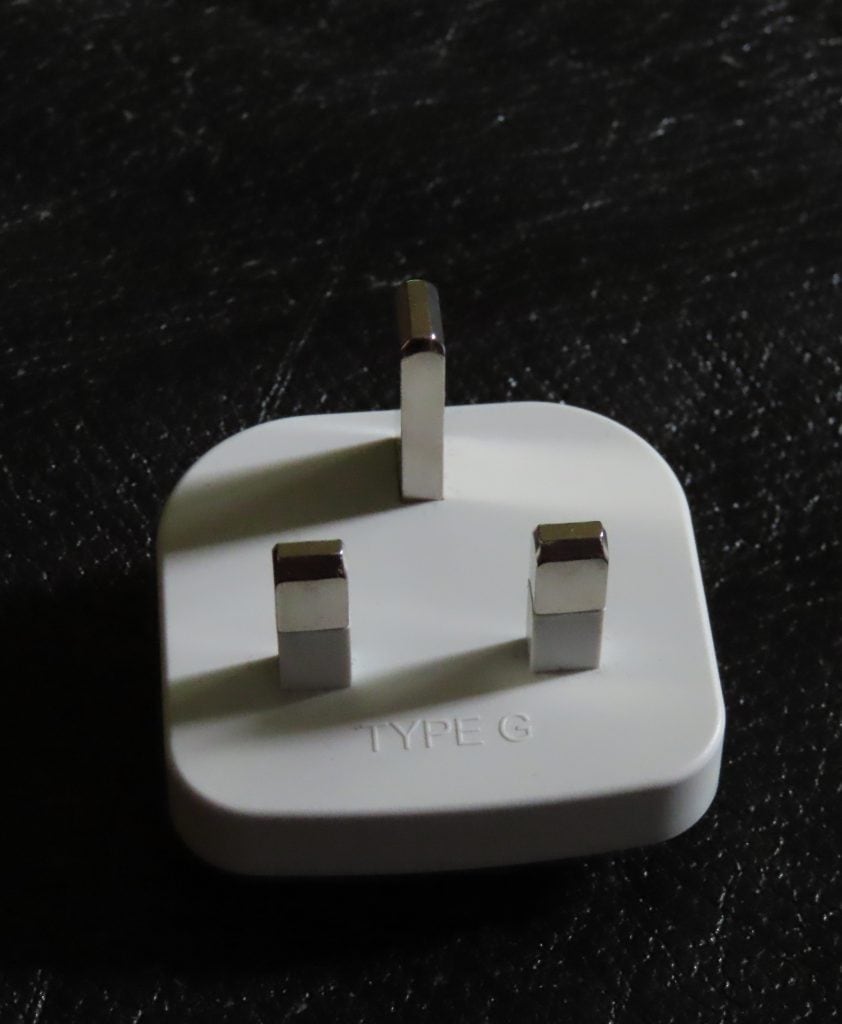

Kari’s Travel Tip: Make sure your devices are all “dual voltage”. Most computers and phones are automatically dual voltage. Hair dryers and curling irons are not.
I always travel with my Ceptiks Universal Travel Adapter Kit because I can plug multiple things into it at once. In the tents of Africa, there is often only one outlet so this lets you charge your camera batteries, your phone and your laptop all at once. This one has worked great for me, all around the world and in multiple countries.

Visa Requirements
From Travel.state.gov website: Visas: Tourists must obtain a one-year multiple entry visa for $100. Applicants can apply and pay online for an e-visa in advance of travel. If approved, the applicant will receive a “grant notice” via email which they present to the Immigration Officer upon arrival at the airport in Tanzania. U.S. citizens can also obtain a tourist visa upon arrival.
Entry Requirements:
- Passport with at least one blank page and six months’ validity.
- Visitors must present a round-trip ticket and be prepared to demonstrate they have sufficient funds for their stay.
Kari’s Travel Tip: Apply well in advance. We applied a month ahead and our applications were approved in about 4 days. Print out your approval documents (called the Grant Notice) and bring them with you to turn in to Immigration upon arrival.
Kari’s Travel Tip: When we arrived at the airport in Tanzania, there was a mad scramble for everyone to fill out these little paper declaration forms. After I filled them out, I realized that all the information was already included in our approval paperwork and we could have skipped that step.
Metric System Conversions
Tanzania (like most of the world) uses the metric system to measure distance (meters and kilometers), temperature (Celsius), weight (grams and kilograms) and volume (liters and milliliters). Kari’s Travel Tip: I’ll provide some conversion guides that I keep in the Notes section on my iPhone for handy reference.
Temperature: Celsius to Fahrenheit
- 0 C = 32 F
- 10 C = 50 F
- 15 C = 59 F
- 20 C = 68 F
- 25 C = 77 F
- 27 C = 80 F
- 30 C = 86 F
- 40 C = 104 F
- 45 C = 113 F
- Formula for calculating: C x 1.8 + 32 = F
Weight: Kilograms to Pounds
This is especially useful for checked and carry-on luggage limits on different airlines. Internationally, the limits are often quite a bit smaller than on US Airlines so it’s important to check. And they do tend to weigh the carry-ons sometimes.
- 7 kg = 15.4 lbs
- 10 kg = 22 lbs
- 15 kg = 33 lbs
- 20 kg = 44 lbs
- 25 kg = 55 lbs
- 30 kg = 66 lbs
- 32 kg = 70 lbs
- 35 kg = 77 lbs
Can You Drink the Water?

Tanzania Fact: The tap water is NOT safe for drinking or brushing your teeth. It is okay for bathing, showering and washing clothes.
Your lodges and accommodations will provide some amount of bottled water to you (like 1-2 bottles per person per day).
We chose to buy more bottled water at the grocery store. Our Safari guide also provided unlimited bottled water for us.
Toilet Things to Know
In Tanzania, you cannot flush the toilet paper. Wastebaskets are provided next to the toilet to place your paper in. Sometimes there is a sign, but not always. Always assume that you should NOT flush the toilet paper.
For me, this was super hard to remember each time because I automatically put it in the toilet without even thinking about it. It was a challenge to change my habits!
And very often at the washrooms in the parks, there was no toilet paper provided. We carried it with us in the Land Cruiser and I always put some in my pocket before going into the washroom.
Souvenir Opportunities
Often between parks, or when leaving the lodging in the morning, your guide will stop at “souvenir shops” for 15-20 minutes so you can shop for items to bring home. Things like Tanzanite jewelry, scarves, carved sculptures, etc. Often made by local tribes, your purchase helps support the local economy.
Kari’s Travel Tip: The sales tactics at these places were quite aggressive. They even followed us back to the Safari Land Cruiser and knocked on the windows. So if you are not interested in an item, be prepared to take a firm stand and say clearly “No”. Then stop making any eye contact with them until they go away.
Vaccinations
I am not aware of any specific vaccinations required for Tanzania. It’s always smart to check the CDC website, and to ask your personal physician for any recommendations.
Other Tanzania Facts / Notes / Observations
- We were smart to fly in a few days early – we had time to easily adjust to the time change.
- Cell phone coverage and Wi-Fi in Africa is “limited” at best. It often appeared that we had full coverage (full bars), but then many of our apps failed to connect.
- Tanzania strictly prohibits plastic bags, unless they are zip lock bags – those are acceptable. We read it before we left, and they announced it as our airplane was descending. But no one ever checked.
- Dress in Tanzania is conservative – no skin showing except maybe some arms. Women wore dresses and long skirts. Men wore pants. On safari, it’s acceptable to wear shorts, but not in the towns or among the locals.
- Don’t take photos of local or native people without asking permission. You may be asked to pay them for the privilege of taking their picture
- People in Tanzania have cell phones, but they aren’t out all the time like they are in other places. I think they pull them out when they need them and then put them back in their pocket.
- Most locals involved in the tourist trade speak very good, if imperfect, English. All are very friendly and helpful. But to other locals, they speak rapid-fire Swahili with lots of facial expressions.
- Stewart never once locked the Land Cruiser, even when all our gear was inside of it. At the lodges/camps, our tents were never locked when we went on game drives or to meals (except at one lodge, but that was to keep the baboons from unzipping the tent). Apparently, theft is not an issue? That’s hard to believe in Africa. But none of our stuff disappeared.
Conclusion:
I hope these fun Tanzania Facts and Travel Tips have given you insight that will be valuable and helpful as you plan your trip!
More information about Safaris
Here are some more posts about Safaris, Tanzania and Africa, including some that I’m still working on. If you’d like to receive emails when I’ve posted new content to the site, please complete the short form above.
- Best Camera for Safari? Simple to Use & Stunning Results
- Amazing Animals In Tanzania: A Safari Photo Adventure
- How to Take Amazing Wildlife Safari Photos – 20 Easy Tips
- What’s an African Safari really like? All the Good & Not-so-Good Parts
- What To Expect On A Safari – 12 Helpful Things to Know
- What to Pack for an African Safari (+ What to Leave at Home)
- Tanzania Travel Facts & Important Tips
Posts coming soon:
- Birds Seen on our Tanzania Safari – A Photo Album
- 25 Safari Tips – what we wish we knew before we left
- How to choose the right safari for you and why we chose the one we did
- What animals can you see in Tanzania?
- Safari FAQs
