Not sure what to pack for an African safari? Here’s exactly what I found useful — and what I’d skip next time.
Wondering what to pack for an African safari? This guide covers exactly what I brought on our African safari in Tanzania, what worked well, and what I would leave at home next time.
Bill and I spent 16 days in Tanzania overall, including 9 safari days, plus travel days and extra time in Arusha. That gave me a very clear sense of what to pack for an African safari, what was actually useful, and what I never needed.
If you want to pack smart for an African safari without overpacking, this guide will help you choose the right luggage, clothing, and gear based on real experience.

Quick Safari Packing Tips
- Bring a soft-sided duffel, not a hard suitcase
- Dress in layers for cold mornings and warm afternoons
- Choose neutral colors
- Prioritize comfort over fashion
- Pack less than you think you need
What To Pack For An African Safari
Luggage + Backpacks
The first decision when figuring out what to pack for an African safari is choosing the right luggage.
The Safari providers will tell you to bring a soft-sided duffle bag, not a hard-sided wheeled suitcase, because duffle bags are much easier to fit in the safari truck.

Duffle Bags
- Bill used the large red Eagle Creek “No Matter WhatTM Duffel (110L), which gave him tons of room and still packs down small when not in use.
- I carried the blue: Everest Sporty Gear Bag (56L), and it worked really well for safari. It had plenty of space, useful pockets, and a long strap that made it easy to carry over my shoulder.
Next time, I might try the smaller Everest Crossover Duffel Bag (31L)

Backpacks

- I love the High Sierra Swoop SG Backpack (30L)! It holds a surprising amount, has tons of pockets and compartments, and even includes a laptop sleeve.
The padded straps make it very comfortable to wear, even when it is fully loaded. I use it as my carry-on on longer trips, and I also used it for our daily game drives on safari.
- We also brought the ZOMAKE 35L Ultralight Lightweight Foldable Backpack. It has lots of pockets, folds up very small, and works well as a lightweight day bag. We also use it at home for hiking and bird-watching.

Luggage Accessories
Packing cubes help a lot on safari, especially if you want to stay organized without digging through your duffel bag every day. We also use a ton of clear plastic zip-lock bags!

- Bill likes the LeanTravel Compression Packing Cubes for their sturdy construction.
- We also use smaller clear toiletry bags for things like medicine, cooking spices and charging cables.
- BAGSMART Compression Packing Cubes – I bought this 6 piece set for our trip around the world. They worked great and saved me a ton of space in my luggage.

- Luggage Scale – make sure your luggage is within weight limits before flying.

Clothing + Shoes
When deciding what to pack for an African safari, these are the clothing tips that mattered most for me:
- Dress in layers. Mornings can be chilly, especially in places like the Ngorongoro Crater, but it usually warms up later in the day. We wore shorts and t-shirts most days, but a jacket and pants were needed in the morning and evenings.
- Choose function over fashion. Lightweight, breathable clothes with pockets are much more useful than cute safari outfits.
- Stick to neutral colors. Brown, khaki, green, olive, and cream blend in well. Avoid bright colors and busy patterns.


What we brought for clothes and shoes
- 1 pair long pants – The Baleaf long black Pants are my absolute favorite travel pants – lots of pockets, quick drying, water resistant
- 1 pair thin leggings – for layering at night
- 1 pair 5 pocket denim shorts – because I like extra pockets
- 3 long-sleeve shirts – a mix of t-shirts and button-up fishing shirts
- 3 short-sleeve t-shirts
- 1 tank top – in case it got hot
- 5 pair underwear
- 2 supportive bras
- 5 pair socks
- 1 pair Tennis Shoes
- 1 pair Kean’s Sandals – for crossing muddy areas
- 1 lightweight waterproof Raincoat
- 1 pull-over fleece sweatshirt
- 1 zip-up fleece jacket – I like the Columbia Benton Springs II Long Hoodie – long enough to cover my butt and has a hood
- 1 knit hat and gloves – I was glad I had them during one cold Ngorongoro morning
- 1 Swimsuit – if your lodges have a pool; bring a modest one since Tanzania is quite conservative
- Sun hat – mine folds up small and gives great sun protection. Charis, is stylish in her safari hat too. Bill wore a baseball hat much of the time.

KARI’S TIPs:
- We did laundry a couple of times, in the shower using shampoo. Some lodges and camps also offer laundry service for a fee.
- Ladies, bring a supportive bra. The bumpy safari roads are no joke. 😊
What’s a Tanzania safari really like? Learn more about our 9-day safari experience.
Cameras + Technology
Now for the fun part: capturing the memories. As a travel photographer, I think this is perhaps the most important part of what to pack for an African safari. You want to be able to see the animals, and capture everything you experience.
Here’s what I recommend bringing:
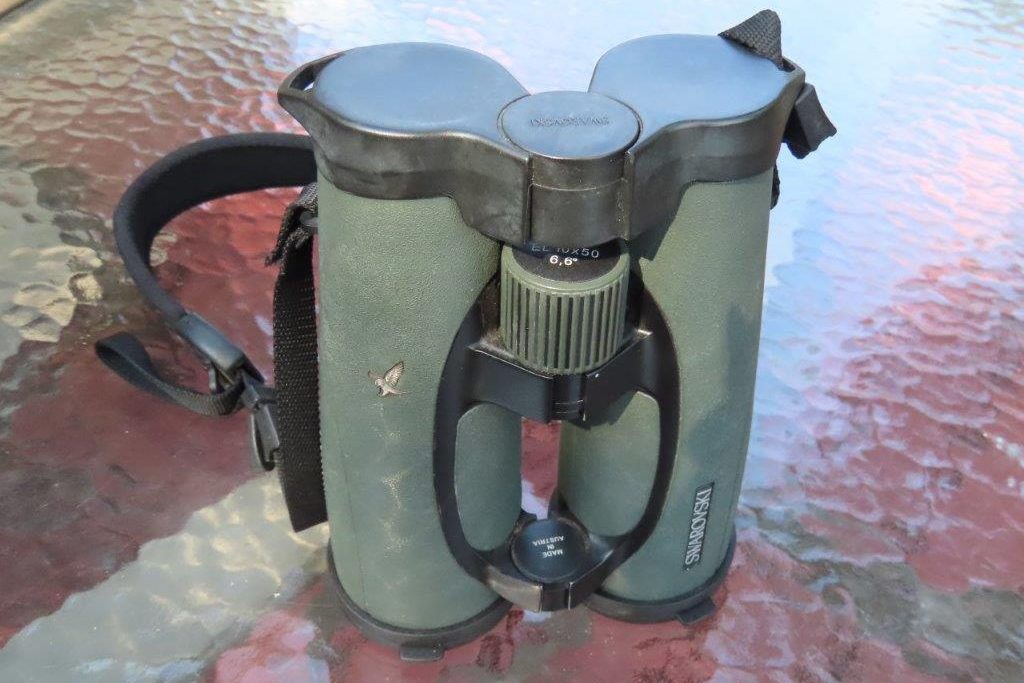
- Binoculars – A good pair makes a huge difference for spotting birds and distant wildlife. We use Swarovski binoculars and have used them all over the world, but they are a serious investment. For less expensive binoculars, Travel and Leisure magazine recommends this pair or this pair. REI has great information about how to choose a pair of binoculars.
- My camera – The Canon Powershot SX70 HS is a point and shoot camera with a fantastic zoom (65x optical, 130x digital) and great photo quality (20.3 Megapixels). I chose it after comparing a lot of options, and I honestly love my camera almost as much as I love Bill. LOL😊 Unfortunately, Canon just discontinued the SX70. I’ll update this once I find a quality replacement.
- Bill’s camera – Bill brought his Canon 7D with a 100–400mm lens and a 24–105mm lens. His setup is excellent, but it is also much heavier to carry around all day.
- Phones – Great for scenery, selfies, and starry night skies, but not good enough for close-up wildlife shots.
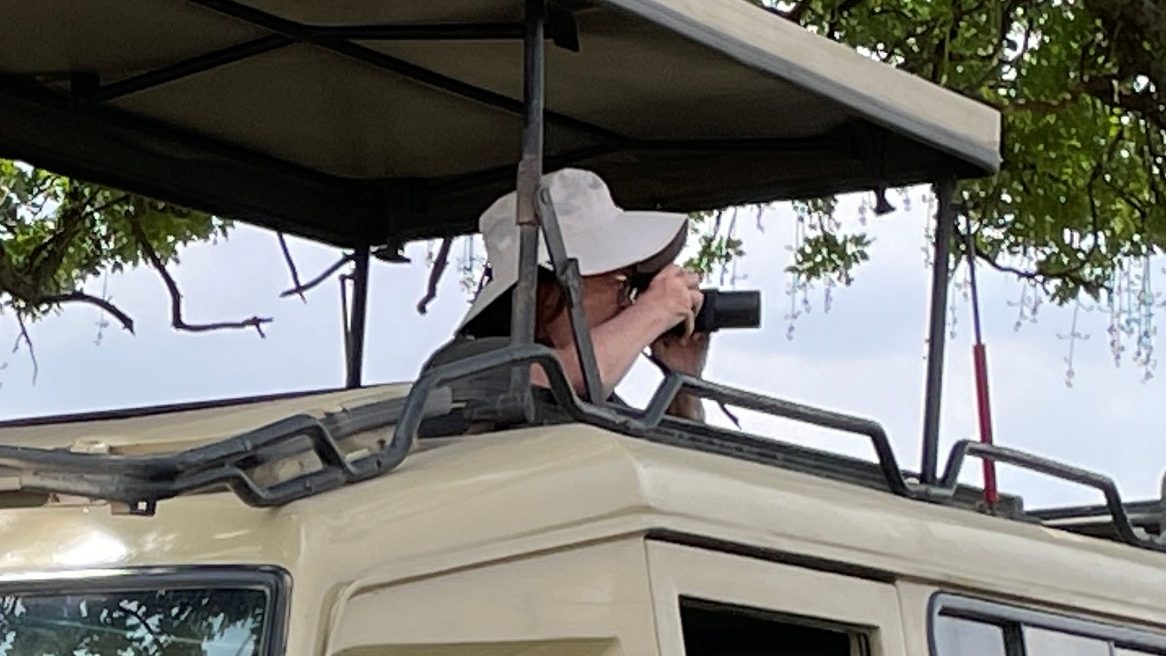
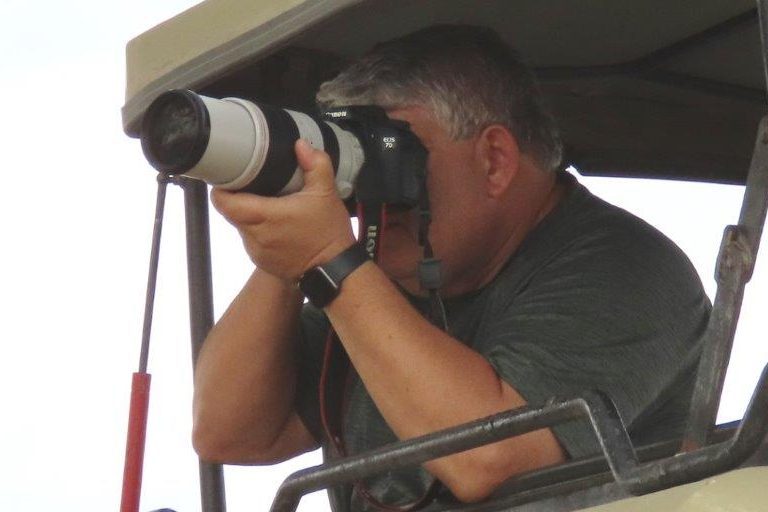
KARI’S TIP: Bring the best zoom you can reasonably afford. You won’t regret it when shooting animals that are 100-200 feet away.
Take Amazing Pictures on Safari – Easy Safari Photo Tips
Camera Accessories
I keep my camera accessories very simple, especially on longer trips. I carry the essentials in a quart-sized Ziplock bag:

- 8 camera batteries – I went through 3-4 each day
- Dual battery charger – especially helpful in lodges and camps with limited electricity
- 128 GB SD cards – I brought one in the camera plus 2 backups, just in case
- Card reader – I back up photos and videos to my laptop every night so that if something happened to my camera, I’d still have all my images.
- Lens cover and lens cloths – I always bring extras
- Padded camera strap – very comfortable for a full day of shooting, and mine has zippered pockets for extra batteries
- Rain sleeve protector – my newest camera accessory, helpful for both rain and dust, especially during Tanzania’s dusty dry season

Check out all the best videos and photos in our Safari Album
Computers & Charging Cables
Here’s the tech I was glad we brought on safari:
- Laptop – I use my Acer Swift 3 laptop every night to back up photos and jot down the highlights of the day. It’s lightweight, easy to type on, and does not take up much room in my backpack.
- iPad – Bill uses his iPad for email, movies, and tracking our budget.
- Travel Plug Adapter Kit – Bill uses the Ceptics Travel Power Strip and I have the Ceptics Universal Travel Adapter Kit. Each has two electrical outlets, at least one USB port (mine has two) and 6 different international plugs. You definitely need one of these on your list of what to pack for an African safari.


KARI’S TIP: Some lodges only have electricity during certain hours, so start charging your camera batteries and phone as soon as you check in before they turn the power off at 9:00 or 10:00 PM.
Airalo eSim
I always buy Airalo eSims when we travel internationally because I don’t have an international plan on my cell phone. I bought a Tanzania specific one with 2GB and 15 days for $8.
They also have a regional eSim called Hello Africa that covers 36 countries. Then you don’t have to buy a new one when you switch countries. Learn more here
What To Expect On A Safari in Tanzania – 12 Helpful Things to Know

Gadgets + Gear
These are the extra items I was glad to have on safari:
- Sunglasses
- Umbrella – small and compact
- Mosquito Netting Head Cover
- Face Mask – helpful for dusty game drives
- Cloth Bandana – useful for sweat, sun, or cooling off with cold water around your neck
- Small Flashlight/Headlamps – handy for dark lodge rooms or trips to the bathroom at night. This one is small, but powerful.
- Bug Spray/Mosquito Repellent
- Glasses Lens cleaners for all the dust – I used them several times a day
- Silk Sleep Sheet – useful if you are unsure about bedding, though everywhere we stayed was clean
- Microfiber Towel – just in case your lodging does not provide towels
- Compression Socks – great for the long flights
- Sarong – works as a wrap, towel, beach blanket, or folded-up pillow


Toiletries + Meds
Besides your usual toiletries, these are the extra items I recommend packing for an African safari:
- Prescription Medications – see note below
- Sunscreen – very important in the dry season
- Aleve / Advil – I was glad to have it after all the bouncing in the safari vehicle (see #8)
- Melatonin – to help get over jet lag
- Diarrhea medication and Antacids
- Motion Sickness medications – If you are prone to car sickness, bring non-drowsy Dramamine
- Eye Drops or Visine – it’s dry and dusty
- Zyrtec – for dust and allergies
- Travel Hairdryer – a dual voltage one
- Shampoo – not always provided at the lodges
- Lotion – was not ever provided at the lodges
- Bar Soap – camps usually had soap, but we still brought our own
- Wet Wipes – very useful for wiping dust off everything (see #9)
KARI’S TIP: Here’s my post about How to Travel with Meds, including tips about packing and going through TSA.
KARI’S TIP: Check with your doctor about any needed vaccinations. If you are bringing prescription medications, carry a note from your doctor in case Immigration asks questions.
KARI’S TIP: Once you leave Arusha, there are no stores available to purchase things on safari or pick up forgotten items. Bring it all with you.
Documents + Money
These are the important documents and money items I recommend packing for an African safari:
- US Passport – make sure it is valid for at least 6 months beyond the end of your trip. We used it at airports of course, and when checking in to some of the camps/lodges.
- Visa documentation – Americans need a Visa to enter the United Republic of Tanzania. We applied for ours online a month before we left. Bring the printout to turn in at Immigration. More info available here
- Credit Cards – your main one, and another one hidden deep inside your luggage
- Driver’s License – as a second form of ID
- US Dollars – mainly for tips, drinks, laundry, and other extras not included in your safari package. Learn more here
- Prescriptions – bring a printed copy of your prescriptions; we also carry our vaccination records
KARI’S TIP: Theft is a huge problem in some parts of Africa. Keep most of your cash hidden in your luggage or split between different bags instead of carrying it all on you.
KARI’S TIP: US dollars are widely accepted in Tanzania. We never needed Tanzanian shillings during our trip.
Read detailed descriptions about our safari experience here – including our lodging, the food, the animals, the costs, etc.
What NOT To Pack For Safari
These are a few items I would skip:
- Neck pillow – takes up too much luggage space for such limited use; ask the airline for an extra pillow instead
- Water bottle – bottled water was provided everywhere we stayed
- Notebook and pen – I took notes on my phone
- Jewelry – unnecessary, and shiny items can attract unwanted monkey attention in picnic areas
- Purse – I did not need one once the safari started
- Printed animal guidebook – our guide had one and gave us all the information we needed
- Hiking boots – for this type of safari, tennis shoes were enough
- Scented products – animals have a strong sense of smell, so it is better not to stand out
Other Things To Consider
What We Bought Tanzania Before Our Safari
- Bottled water – it’s not safe to drink from the tap; once the safari starts, bottled water is usually provided
- Diet Pepsi – not available while on safari, so we stocked up in Arusha
- Snacks – for the long game drives away from camp
- Alcohol – we bought rum in Arusha instead of paying expensive lodge prices
- Toilet paper – many national park bathrooms did not provide it, so I carried some with me at all times
What We Took On Our Daily Game Drives
- Camera, spare batteries, lens cloth
- Binoculars
- Jacket / Sweatshirt
- Sunscreen
- Sunglasses
- Bug Spray / Mosquito head covering
- Bandana / Face Mask
- Hairbrush / Hair clip
- Sun hat / Tilly Hat
- Water Bottles / Diet Pepsi / Snacks
- Medication
- Charging cable for my phone
- Toilet Paper
- Wet Wipes
Packing Tips
Tip #1: Practice pack before you go
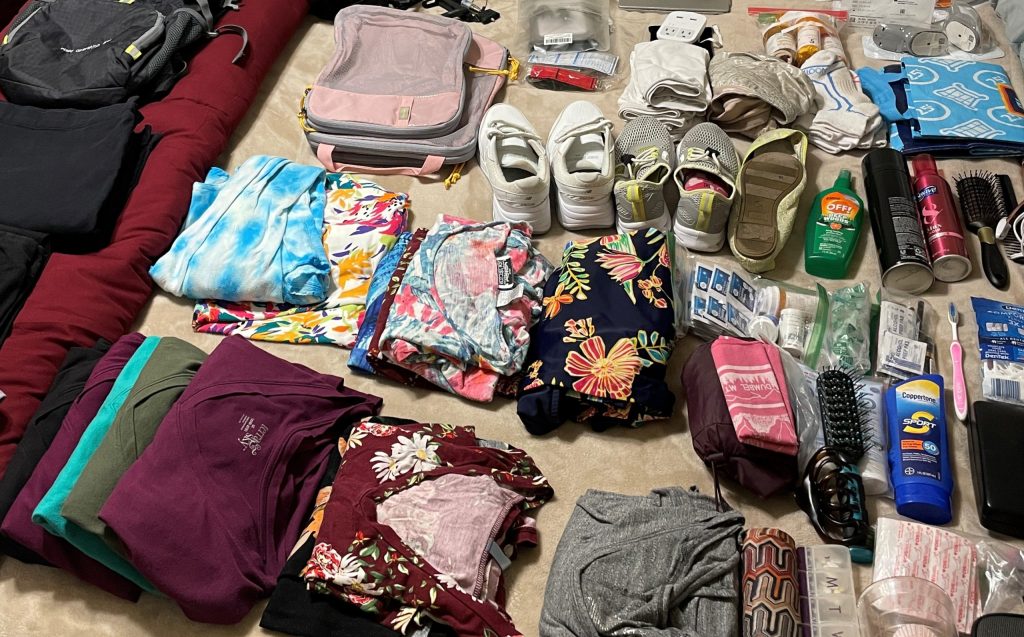
One of the best ways to figure out what to pack for an African safari is to do a practice pack a few weeks before your trip.
- Lay out everything you think you want to bring
- Pack it into your duffel and weigh it
- Take out about one-third
- Use packing cubes to compress what is left
- If possible, switch to a smaller duffel and repeat
Packing lighter almost always makes the trip easier.
Tip #2: Don’t Unpack More Than Necessary
When we arrive somewhere new, we take our packing cubes out of the duffel and place them on a shelf or in a drawer without fully unpacking them.
That makes it much faster to repack when it is time to move on.
FAQs
What kind of bag is best for African safari?
Most safari providers want you to bring a soft-sided duffel bag instead of a hard-sided suitcase. Soft bags are much easier to fit into the safari vehicle because they can squeeze into tight spaces. We treated our duffels and backpacks with water-proofing spray for extra protection.
If your trip includes small bush flights, there may be even stricter size and weight limits, so packing light matters even more!
Can I wear shorts in Tanzania?
Yes, shorts are fine on safari. But in towns like Arusha, Tanzania is much more conservative. We noticed local men wearing long pants and local women wearing long skirts or dresses, so I would recommend dressing more modestly when you are around town.
How much money should I take on an African Safari?
Once your safari is paid for, you mainly need money for drinks, laundry, souvenirs, meals in Arusha, and tips for your guide and driver. We spent about $600 USD total, and $360 of that was our guide tip.
What to wear at night on safari?
For sundowners, outdoor dinners, and evenings around camp, I was glad to have long pants and a jacket. For sleeping, whatever you normally wear at home is fine. It can get chilly at night, but our beds always had warm blankets.
Conclusion: What To Pack For An African Safari
I hope this guide to what to pack for an African safari helps you pack smarter, feel more prepared, and avoid bringing a bunch of things you do not really need.
A safari is a true Bucket List experience, and being packed well can make it even more enjoyable. Wishing you the most fabulous trip — and unforgettable wildlife sightings along the way.
If you are still planning your trip, check out my other Africa safari guides below. And if you have a specific question, feel free to reach out.
More Information About African Safaris:
Here are some more posts about Safaris, Tanzania and Africa. If you’d like to receive emails when I’ve posted new content to the site, please complete the short form above.
- Best Camera for Safari? Simple to Use & Stunning Results
- Amazing Animals In Tanzania: A Safari Photo Adventure
- How to Take Amazing Wildlife Safari Photos – 20 Easy Tips
- What’s an African Safari really like? All The Good & Not-so-Good Parts
- What To Expect On A Safari – 12 Helpful Things to Know
- What to Pack for an African Safari (+ What to Leave at Home)
- Tanzania Travel Facts & Important Tips
- How I Travel with Medications – 7 Important Tips
Posts still to come
- Birds of Tanzania – A Photo Album
- 25 Safari Tips – what we wish we knew before we left
- How to choose the right safari for you and why we chose the one we did
- What animals can you see in Tanzania?
- Safari FAQs
Find this post helpful? Save it to Pinterest for later!
