Airports have their own language and a lot of unwritten rules. Here’s the step-by-step walkthrough I’d give a friend who wanted to know exactly what to expect.
Every time Bill and I fly somewhere, I notice how much happens at an airport that nobody explains. Everyone seems to know where to go, when to board, and what all those announcements mean. But how would you know if this is your first time flying—or if you haven’t flown in decades?
If you’re nervous because you don’t know what to expect, I’ll walk you through the entire process, including the little things experienced travelers take for granted. I’ve done the research and flown enough to know where people get tripped up, so you can spend less time worrying and more time looking forward to your trip.
Quick Overview: Your First Time Flying From Start to Finish
Here’s the basic sequence:
- Book your flight
- Check in online
- Arrive at the airport
- Check your bag, if you have one
- Go through security
- Find your gate
- Board the plane
- Fly to your destination
- Get off the plane
- Collect your luggage or find your connecting gate
That’s really it!
Of course, there are a lot of little details hidden inside those steps (and a whole new language of words that are only used at airports). Let’s go through them in the order you’ll actually encounter them.


PLAN YOUR TRIP WITH OUR
FAVORITE TOOLS
– Best Lodging site: Booking.com
– Book Day Tours here: Viator.com
– Rent Cars here: DiscoverCars.com
Before Your First Flight: Booking Your Tickets
Booking a flight can be confusing because airlines give you so many choices. Before you start comparing flights, think about your dates, how much luggage you’ll bring and whether you need to be somewhere by a specific time.
If I’m flying somewhere for a cruise, safari, wedding or another event you absolutely cannot miss, I like to build in extra time. When Bill and I flew to Africa for our safari, we arrived three days early. That gave us some breathing room in case something went wrong with our flights, plus time to adjust to the new time zone before the safari started.
Same thing if we are going on a cruise. We don’t want the ship to sail without us if our flights are delayed.
Understand What Kind of Ticket You’re Buying
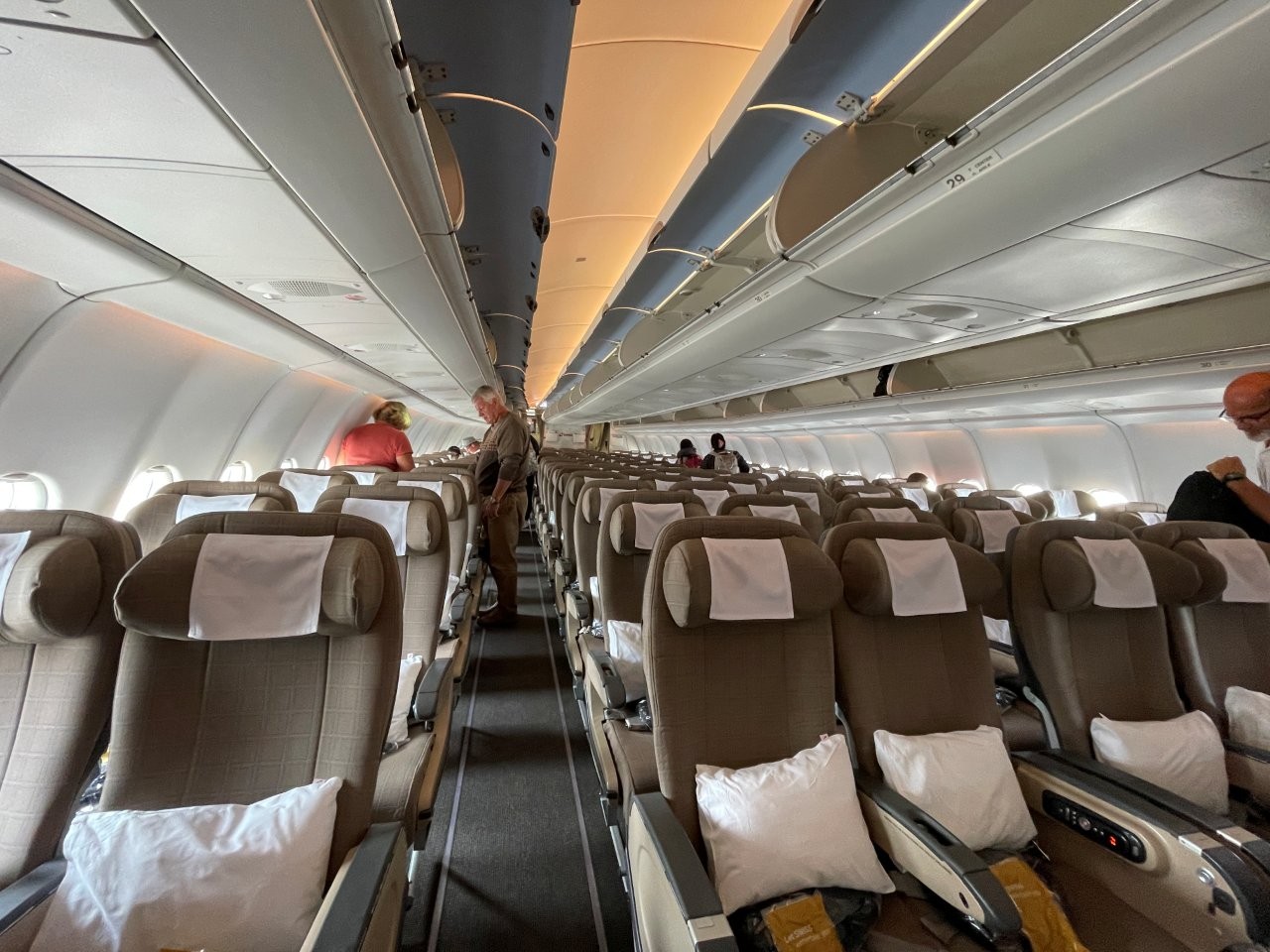
You’ll see different names for ticket classes depending on the airline, but generally there’s a very basic no-frills economy ticket, regular economy, one or more upgraded economy options, business class and first class.
Each class offers different benefits including baggage allowance, seat selection, cancellation or refund options so look at them closely.
Bill and I typically fly Economy because it’s the most affordable. On really long flights, we sometimes upgrade to Premium Economy or a similar class if the extra room and included benefits make the additional cost worthwhile.
Don’t assume the cheapest fare includes everything you need. Look at what comes with that particular ticket before buying it.
Know the Three Types of Luggage
Airlines generally divide luggage into three categories.
- A checked bag is the larger suitcase you give to the airline before going through security. It travels in the cargo area of the plane, and you won’t have access to it during the flight.
- A carry-on is the smaller suitcase, backpack or duffel you bring onto the airplane. It generally goes into the overhead compartment above the seats.
- Your personal item is your smallest bag—perhaps a purse, laptop bag or small backpack. You bring this onto the plane, too, but it needs to fit underneath the seat in front of you.
Each airline has its own size and weight limits, and what’s included in your ticket varies. Check your airline’s rules before you pack.
And as someone who travels a lot, I will always encourage you to pack LIGHT!
Nonstop Flights, Connections and Layovers
- A nonstop flight takes you from your starting airport to your destination without changing planes.
- A connecting flight means you’ll land somewhere along the way, get off that airplane and board another one. The time between those two flights is your layover.
If you’re nervous about your first time flying, a nonstop flight is certainly easier. But depending on where you’re going, that may not be possible—or it may cost considerably more.
If you do have a connection, pay attention to how long the layover is between flights. Large airports can take a surprisingly long time to navigate, and an international connection can add additional steps. For me, I would say 2 hours minimum, 3-4 hours if it’s a larger airport.
Choosing Your Seat
Most airplanes have window, middle and aisle seats.
- A window seat gives you the view—and something to lean against if you want to sleep.
- An aisle seat makes it easier to get up and use the bathroom.
- And the middle seat is exactly what it sounds like: you’re sitting between two other people.
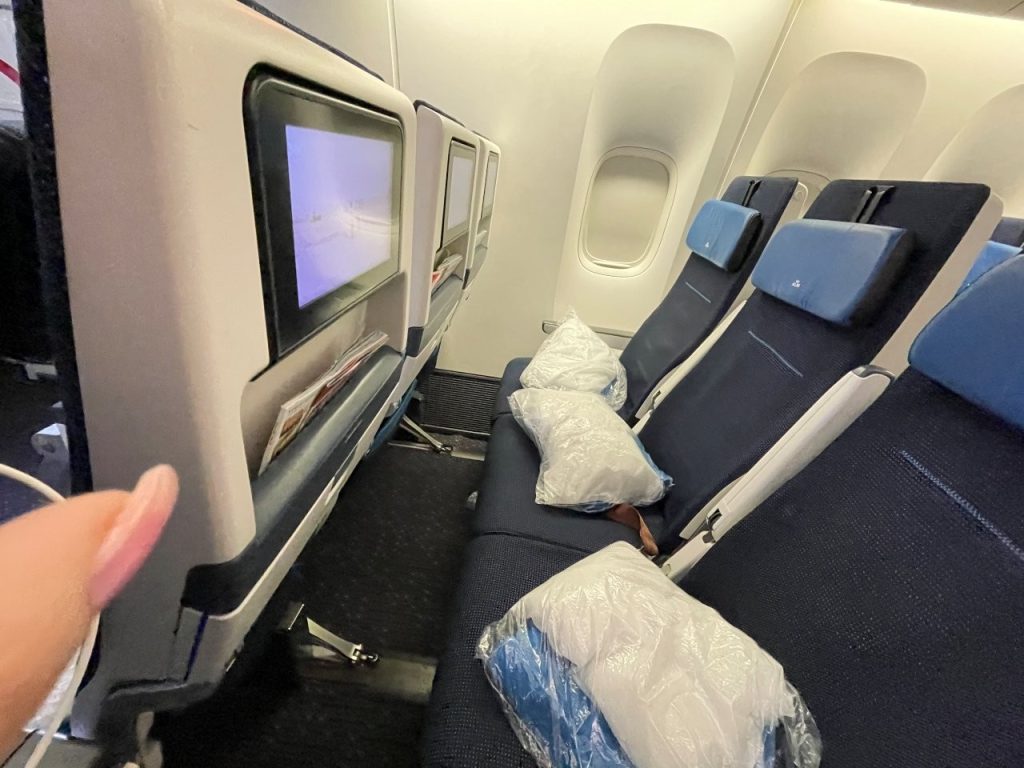
Seat selection depends on the airline and ticket type. Some fares let you choose a seat at no extra cost, while others charge for advance seat selection or assign you a seat at check-in.
Bill always wants an aisle seat on the right side of the plane, and he’s willing to pay more to reserve it. Frugal Kari usually says, “Nope. Not willing to pay extra for that.”
On shorter flights, I generally don’t care enough about where I sit to pay extra. One exception is when we have a tight connection. In that case, I may pay to sit closer to the front so I can get off the plane faster.
And when Bill pays for his aisle seat, I often end up assigned next to him anyway. I consider that a win.
Before You Click “Buy”
Double-check everything.
- Make sure your name (first/middle/last) matches the identification (passport or driver’s license) you’ll use for the trip.
- Confirm the dates, departure airport and destination airport. Larger cities can have multiple airports, so be sure to look at the three-letter airport code (ATL, MSP, RSW, etc.) as well as the city name.
Once you book, download the airline’s app. We use airline apps for check-in, boarding passes, gate changes, delays and other flight updates.
The Day Before Your Flight – Check In
Most airlines allow you to check in online beginning about 24 hours before departure. They will send you an email to remind you, or maybe a text from the app.
“Checking in” simply tells the airline, “Yes, I’m still coming.”
You can usually check in through the airline app or website. Once you’ve checked in, you’ll receive a boarding pass. You can keep it electronically on your phone, although you can also get a printed boarding pass at the airport.
Your boarding pass contains several pieces of information you’ll need later:
- your flight number
- seat assignment
- boarding group.
- Departure gate, although gates can change so double check on the monitors when you get to the airport.
Before leaving home, check your flight status and make sure you have the identification you need for your trip. Also make sure your luggage is within the airline’s weight limits so you don’t have to scramble at the airport.

Arriving at the Airport: What Do I Do First?
This is where I think a first-time flyer can look around and wonder, “Okay…now what?”
Give yourself plenty of time so you aren’t trying to learn all of this while rushing.
When you arrive at the airport, follow signs for Departures rather than Arrivals.
- Departures is where people leaving on a flight go
- Arrivals is generally where you would pick someone up after their flight.
A terminal is the main airport building or one major section of it. A large airport may have several terminals serving different airlines.
Once inside, look for your airline.
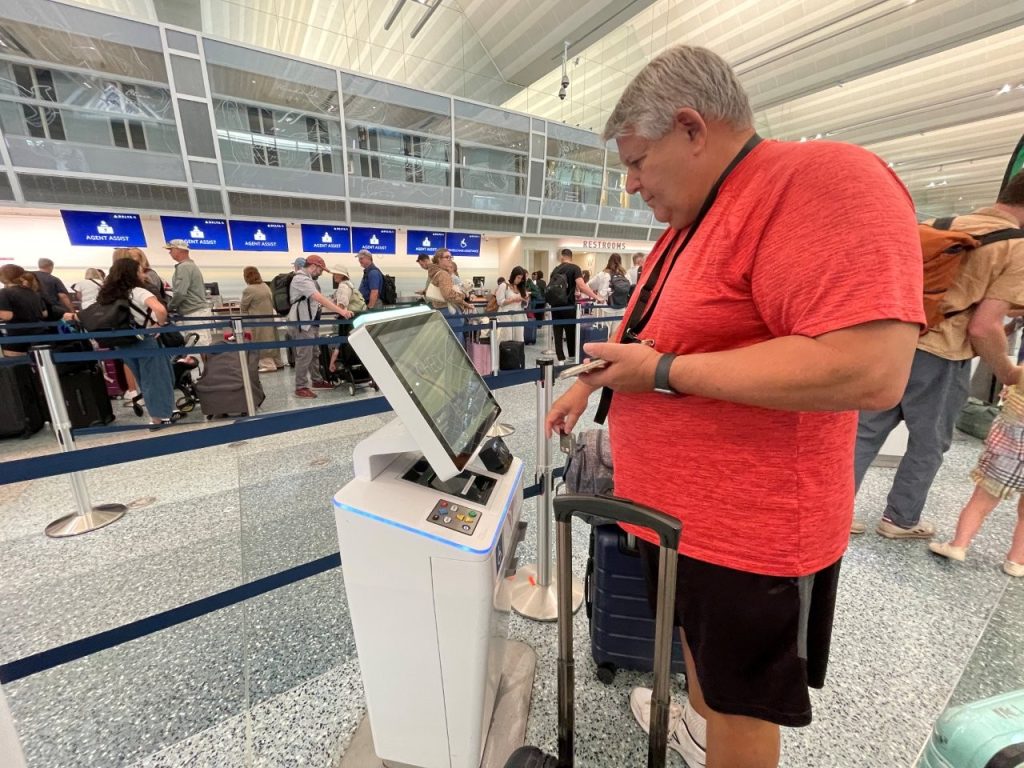
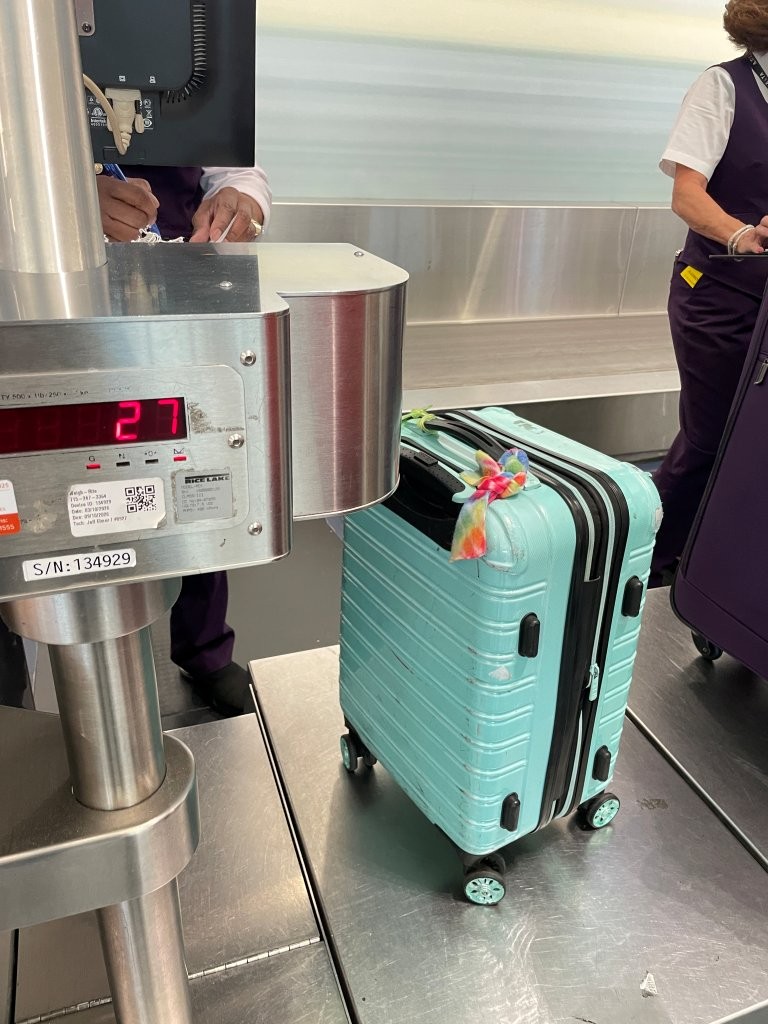
If you have a checked bag, you’ll need to take it to your airline’s ticketing/check-in area. Depending on the airport and airline, you may print a luggage tag at a kiosk yourself or have an airline employee do it for you.
They will weigh your bag to make sure it’s within the limits allowed. Your checked suitcase leaves your possession here. You won’t see it again after you reach your destination.
If you’ve already checked in online and only have carry-on luggage, you may be able to skip the airline counter entirely and head directly toward security.
Going Through Airport Security Step by Step
Airport security is one of those processes that can feel intimidating when everyone around you seems to know exactly what to do.
Since procedures can vary, pay attention to the signs and follow the instructions given by the security officers. This is the area where liquids are not allowed. But empty water bottles are fine.
Generally, you’ll first wait in the security line with your carry-on luggage and personal item. When you reach the front, you’ll show the required identification and/or boarding pass information.
Next comes the screening area.
You may be asked to remove certain belongings and place them in plastic bins or directly on the conveyor belt. Empty your pockets and follow the security officer’s instructions about removing shoes, belts, watches, laptops, or other belongings. The procedures can vary, so don’t worry if the person ahead of you is asked to do something different.
Your carry-on bags and personal item will also go through the scanner.
You’ll walk through a separate screening device yourself when the security officer tells you to proceed.
If you have a medical implant containing metal that might trigger the scanner, let the security officer know before you walk through the screening device.
If something in your bag needs a closer look, an officer may pull it aside. Don’t grab it yourself—wait for the officer to tell you what to do.
Once you’re finished, collect everything.
This is a good time to make sure you have your phone, wallet, identification and anything else you took out. If people are waiting behind me, I gather my belongings and move to a nearby bench or open area before putting everything back exactly where I want it.
You Made It Through Security—Now What?
Now you need to find your gate.
A concourse is the section of the airport containing a group of gates. Your gate is essentially the waiting area for your specific flight. Often, the concourse will have a letter and then the gates are numbered. So gate G6 will be on the G concourse, gate number 6.
Check your airline app or one of the departure monitors throughout the airport. Find your flight number and confirm the gate. Don’t rely entirely on what your original boarding pass says because gates can change.
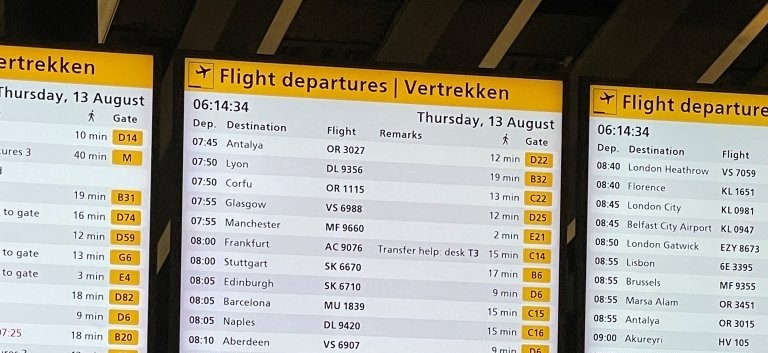
Then follow the airport signs.
Once you find your gate, you can relax a little. You’re where you need to be.
Depending on how much time you have, you can get something to eat, walk around the concourse, charge your devices or just find a seat. Keep an eye on the time and occasionally check that your gate hasn’t changed.
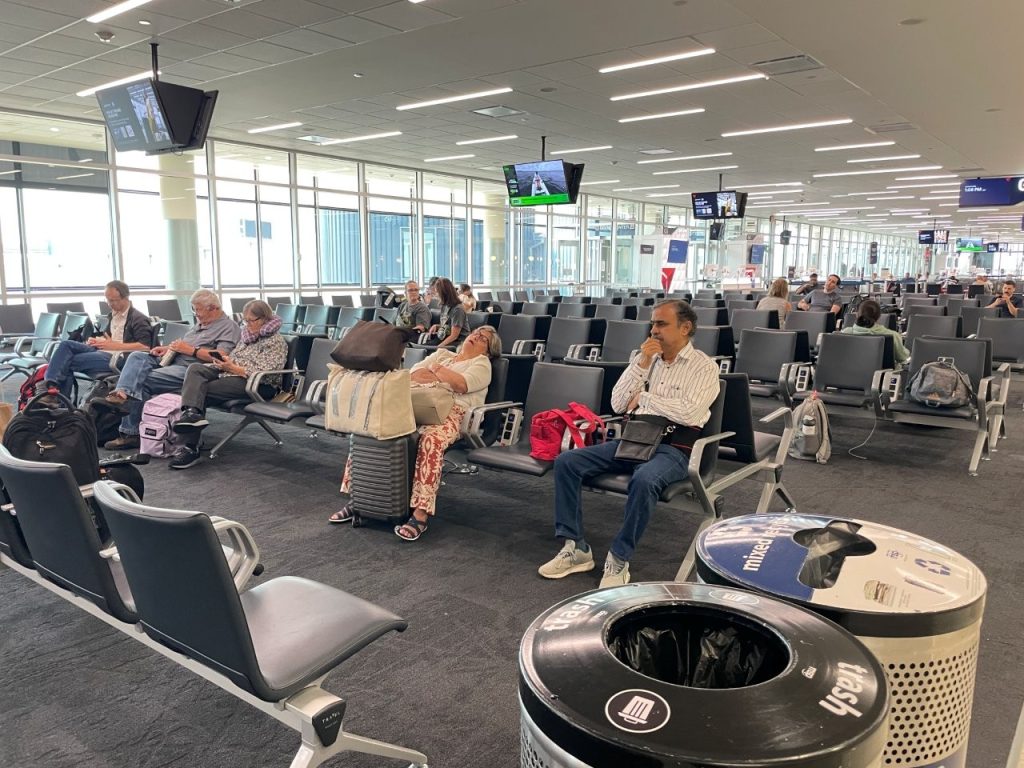
Before boarding begins, I use the bathroom, fill my water bottle and organize my personal items. Once you’re sitting on the airplane with luggage above your head and other passengers around you, digging through your suitcase is much more annoying.
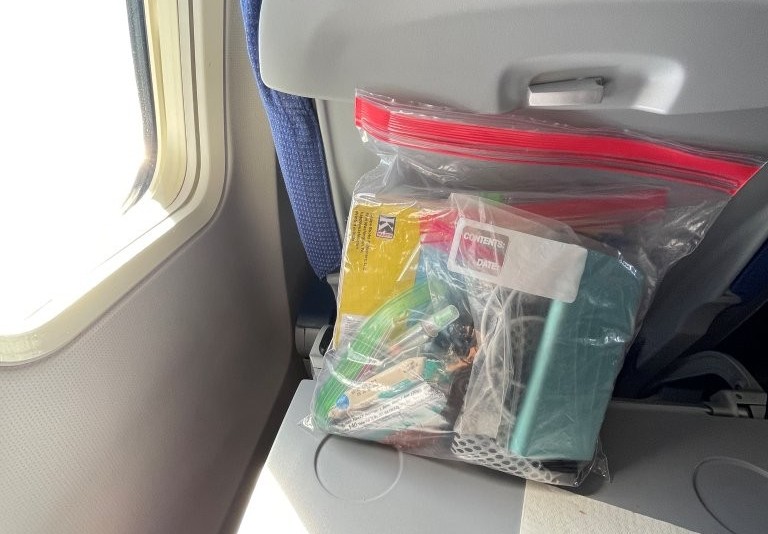
Kari’s Travel Tip: I put all my essential items in a zip lock plastic bag. I use it to hold small things I want access to during the flight—my phone, book, earbuds, granola bar, sleep mask, charging cord and other essentials—so they don’t disappear into the depths of the seat pocket. I put the bag in my personal item while I’m boarding, then in the seat pocket in front of me during the flight.
Boarding the Plane: The Unwritten Rules
This is another part of flying where everyone seems to know what’s happening without anyone actually explaining it. The gate agents will start making announcements about an hour before take off.
What Does “Now Boarding Group 3” Mean?
You do not need to jump up the moment people start forming a line.
Airlines divide passengers into boarding groups. Your boarding group should be shown on your boarding pass.
The gate agent will announce which group is currently allowed to board. There may be some passengers invited to board before the numbered groups begin (such as veterans, parents with small children or people with mobility issues), followed by different ticket classes and boarding groups.
Wait until your group is called. Then gather all your belongings and get into the appropriate line.
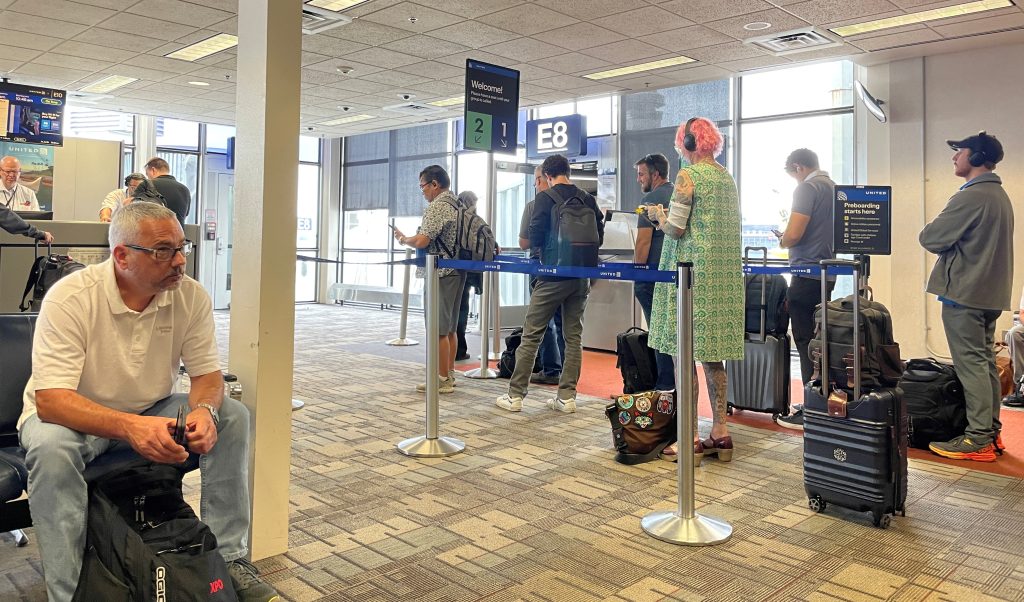
When you reach the gate agent, you’ll scan your boarding pass.
And congratulations—you’re officially ready to get ON the airplane.
Walking Onto the Plane
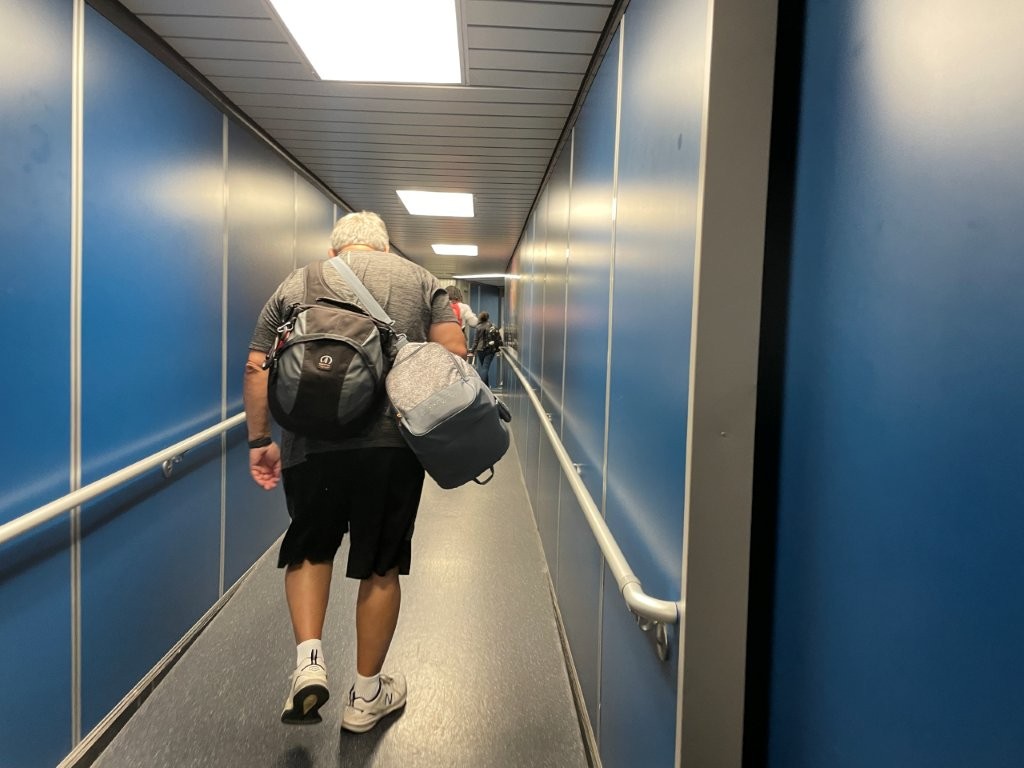
After your boarding pass is scanned, you’ll usually walk through an enclosed passageway connecting the airport to the airplane. That’s called the jetway.
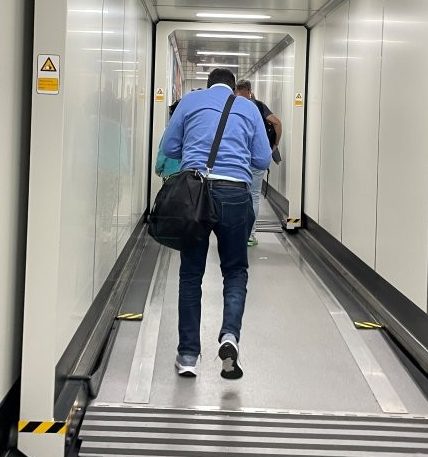
At the end of it, you’ll step onto the plane, where a flight attendant will usually greet you.
Now find your seat.
Your boarding pass will show a row number and a letter. You’ll see row numbers above the seats as you walk down the aisle. The letters tell you which seat within that row is yours.
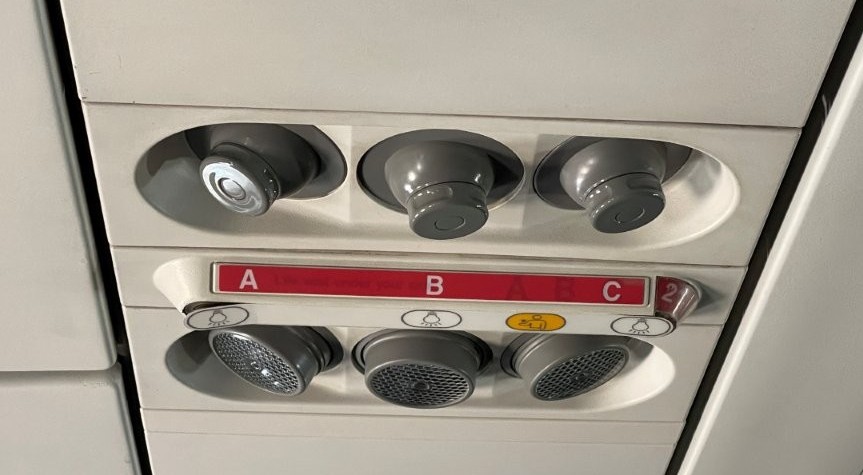
The exact seating configuration depends on the airplane, so use the diagrams above the seats rather than worrying about memorizing which letters should be on which side.
Where Do My Bags Go?
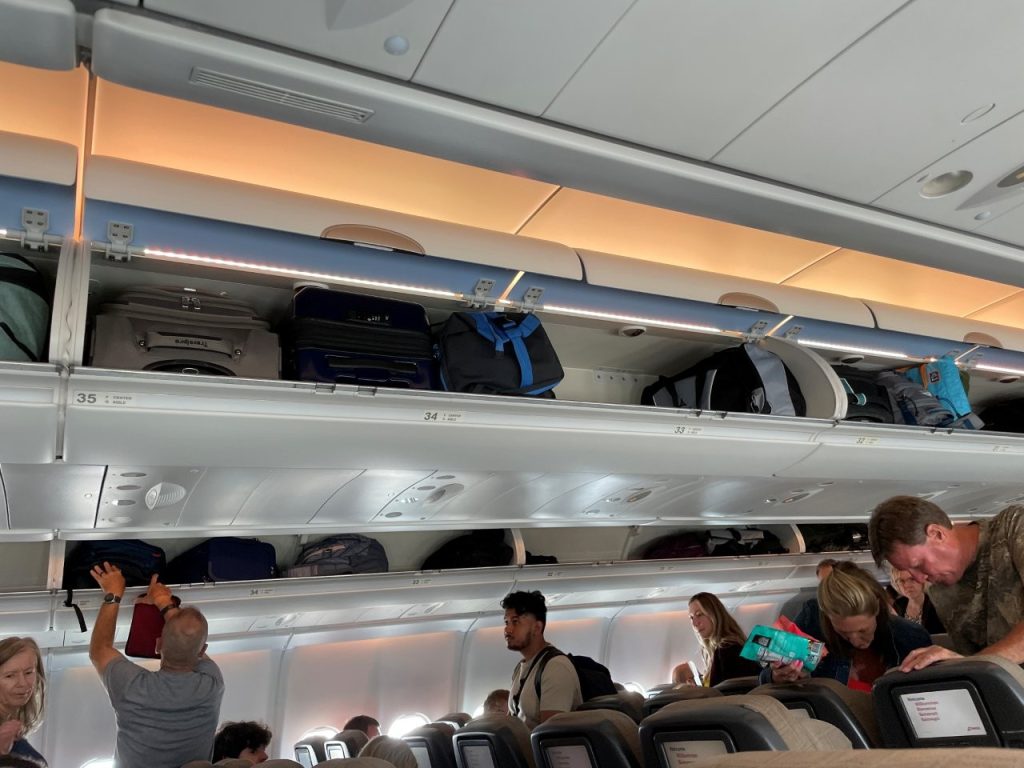
Your carry-on goes into an available overhead bin. Your personal item goes underneath the seat in front of you.
Try to get what you need and sit down without blocking the aisle any longer than necessary. There are probably dozens of people behind you trying to do exactly the same thing.
What Happens During Your First Flight?
Once everyone is aboard, the airplane doors close and the flight attendants prepare the cabin for departure.
You’ll be asked to buckle your seat belt and put your electronic devices into Airplane Mode.
Pay attention to the safety demonstration. Everyone around you may look like they’re ignoring it, but especially when it’s your first time flying, listen closely and refer to the safety card in the seat pocket.
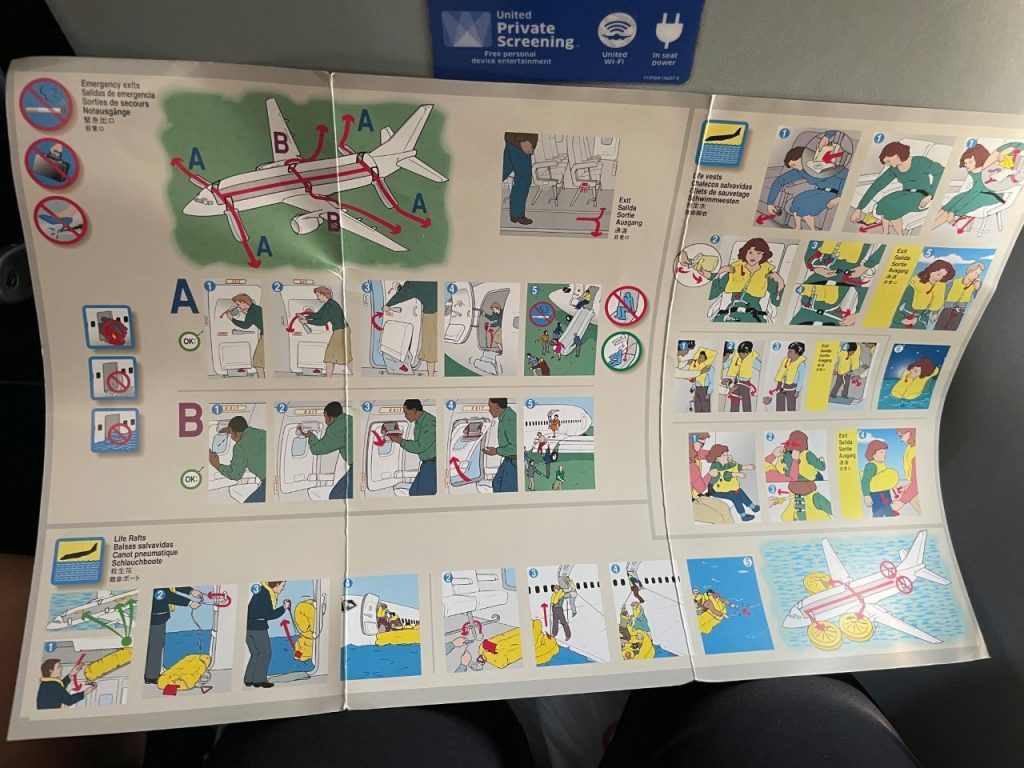
Before Takeoff
You may hear the word pushback. That’s when the airplane is moved backward away from the gate.
Next the plane will taxi, which simply means it travels along the ground (called the tarmac) toward the runway.
Depending on the airport, you might taxi for quite a while. There may be other airplanes ahead of yours waiting to take off.
When it’s your turn to leave, the airplane will accelerate quickly down the runway and lift into the air.
Takeoff can feel strange the first time. You’ll hear the engines, feel the acceleration and notice the angle of the airplane changing as you climb. All of that is part of the normal process.
During the Flight
Once you’re in the air, watch the seatbelt sign. When it’s turned off, you can generally get up if you need to use the bathroom or stretch your legs.
Even when the sign is off, I prefer to keep my seatbelt fastened while I’m sitting.
You may encounter turbulence—those bumps and movements you sometimes feel while flying. If the crew expects turbulence, the seatbelt sign may come back on and you’ll be asked to remain seated.
The flight attendants will make announcements throughout the flight and, depending on the length of the trip, may serve drinks, snacks or meals.
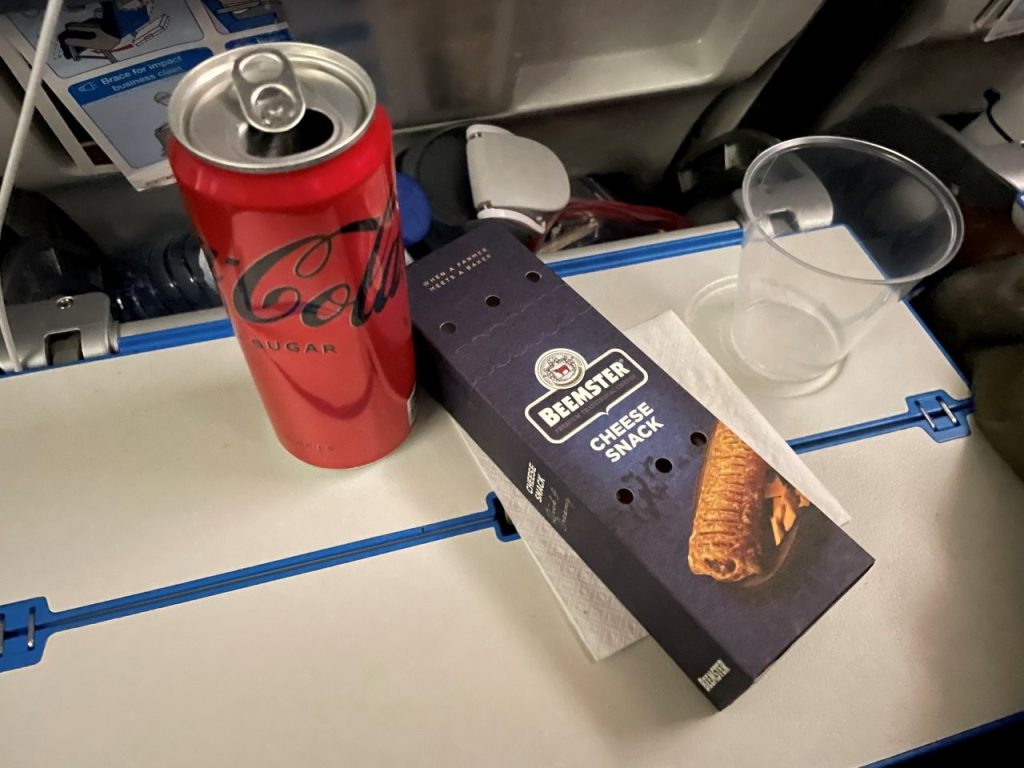
On some airplanes, you’ll have an entertainment screen on the seat in front of you. Others allow you to watch entertainment on your own phone or tablet. Wi-Fi availability also varies.
Bathrooms on airplanes are called lavatories, and yes, they are tiny. There will usually be a sign or light indicating whether one is vacant or occupied. Make sure you lock the door once you’re inside.
On long flights, Bill and I try to move around periodically, stretch our legs and stay hydrated. We also wear compression socks on really long flights.
A Few Airplane Etiquette Rules Nobody Tells You
There are also a few unwritten rules that make flying more pleasant for everybody.
- Don’t play music, movies or games out loud—use headphones or earbuds.
- Try not to block the aisle while other passengers are boarding.
- If someone in your row needs to get out to use the bathroom, let them out without making them feel guilty about it.
- Be aware of the person behind you before reclining your seat.
- And one widely accepted consolation prize for the unfortunate person sitting in the middle seat: let them have the armrests.
Mostly, just remember that everyone is sharing a very small space for a few hours. A little consideration goes a long way.
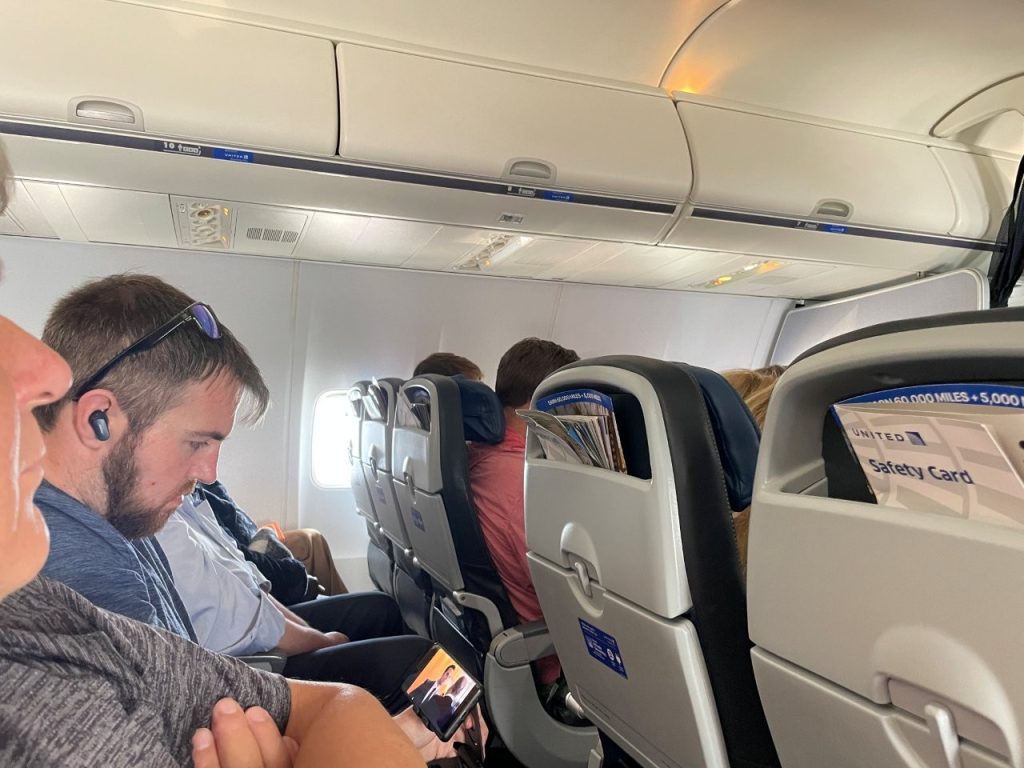
We Landed! What Happens Now?
Eventually, the captain will announce that you’re beginning your descent back to the Earth.
You’ll be asked to return to your seat, buckle your seatbelt and prepare for landing.
Most often the landing is smooth – you will feel a huge surge when the pilot hits the brakes to slow the airplane down before the end of the runway. That part always feels a little “intense” to me and I sometimes hold my breath for a second. Occasionally, the landing can be a little bumpy – just try to relax as it only lasts for a few seconds.
After the airplane touches down, it will taxi from the runway to the gate.
And here’s another unwritten rule: landing does not mean it’s time to stand up. Wait until the airplane reaches the gate and the seatbelt sign turns off.
Then people will begin getting their luggage from the overhead bins. On most flights, passengers leave from the front of the airplane toward the back. Getting off the airplane is called deplaning.
When it’s almost your turn, collect your carry-on and personal item. I put my plastic essentials bag back into my personal item. Check the seat pocket and underneath your seat for your phone, wallet, identification, earbuds or anything else you might have forgotten.
Then walk back through the jetway and into the airport.
You did it!
What Happens After You Get Off the Plane?
What you do next depends on whether you’ve reached your destination or have another flight. And whether this was a domestic or international flight.
If This Is Your Final Destination
If you don’t have a checked bag and it was a domestic flight from within the same country, follow the airport signs toward the exit (if someone is picking you up) or ground transportation if you are taking a bus or renting a car.
If you checked luggage, follow signs for Baggage Claim.
Check the monitors to see which carousel is assigned to your flight. Your suitcase will eventually appear on a moving belt called a baggage carousel. Wait for your bag to come around and then lift it off the belt.
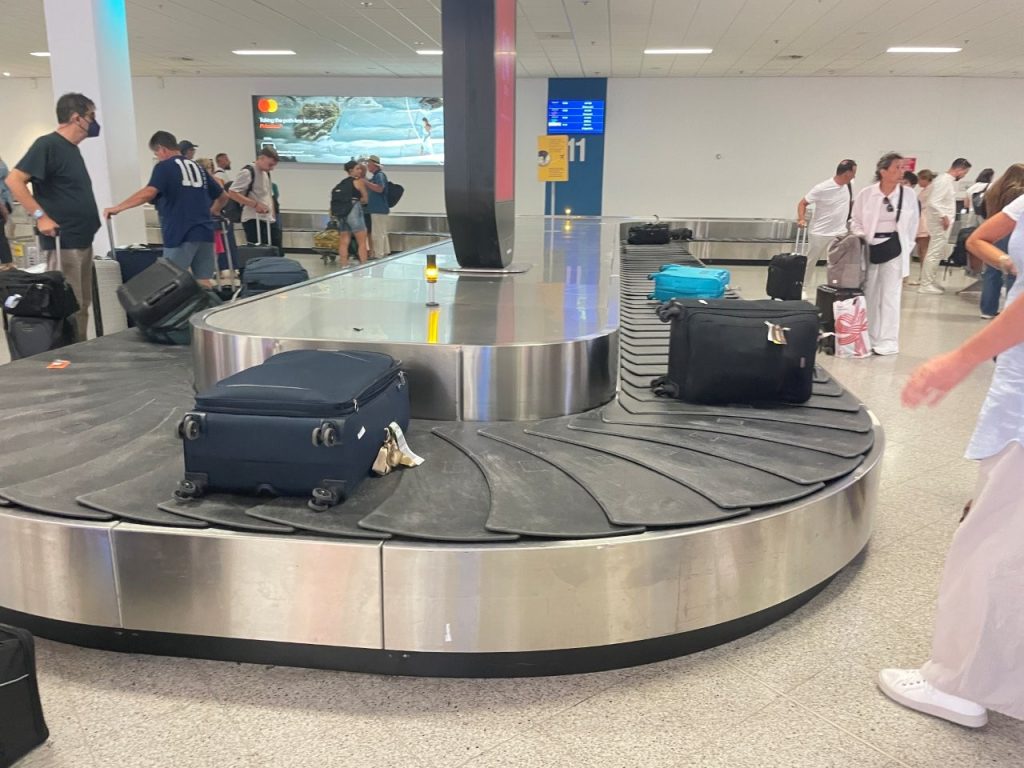
If you have a lot of luggage, there are usually carts available in the baggage claim area. Sometimes they are free, sometimes there is a cost. From there, follow signs for whatever transportation you’re using next.
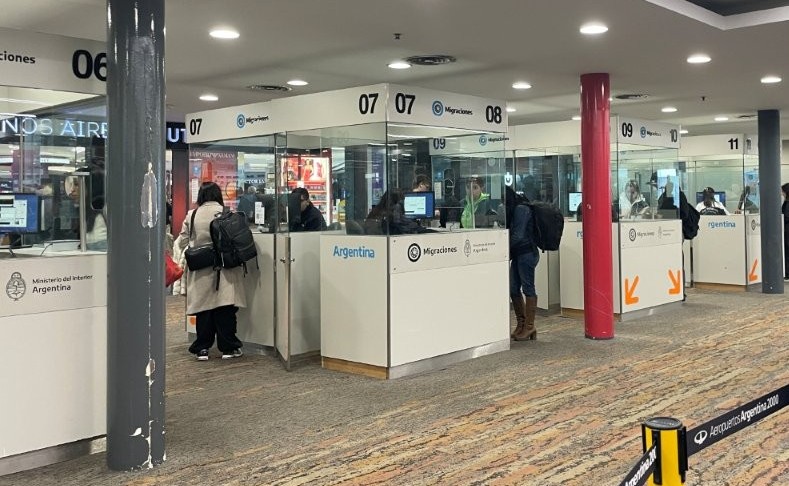
If it was an international flight from another country, you usually have to go through Immigration and Customs. Have your passport and boarding pass out and follow the signs.
If You Have a Connecting Flight
You usually won’t collect your checked luggage during a domestic connection. Instead, find your next flight on the airport monitors or airline app and confirm its gate. Proceed to the gate.
Don’t assume the gate printed on a boarding pass from several hours ago is still correct. We always check again.
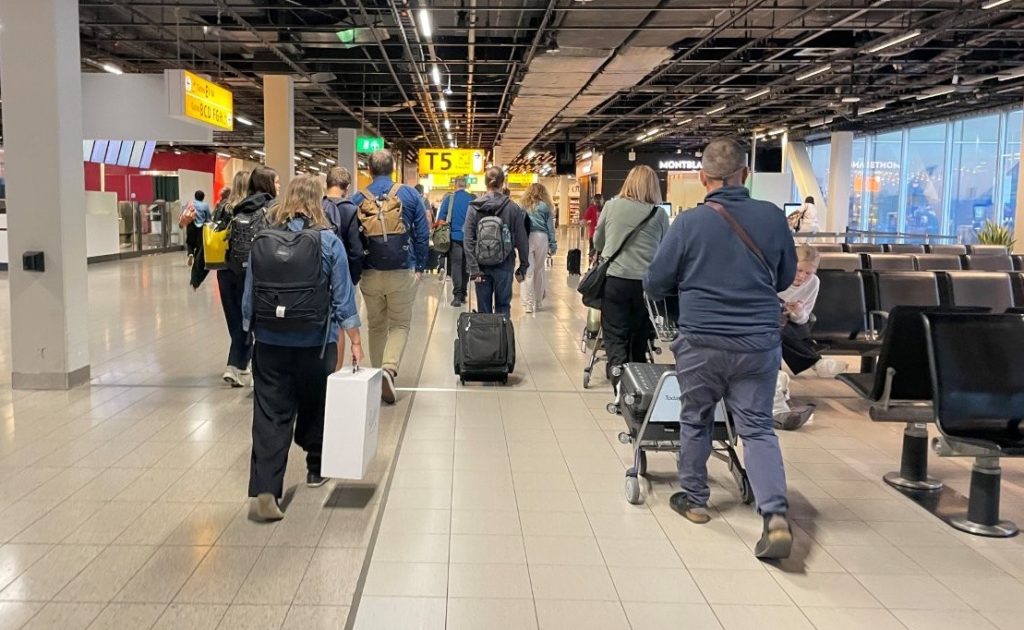
Large airports may require quite a walk—or even a train or shuttle—to get from one terminal or concourse to another.
International Arrivals
International flights often add Immigration (also known as Passport Control) and Customs to the process.
The exact order varies depending on the airport and country, so follow the signs and instructions when you arrive.
You may need to show your passport, answer a few basic questions about your visit (is your trip business or pleasure? how long are you staying?), collect your checked luggage and go through customs before leaving the airport or continuing your journey.
This is another situation where you don’t need to know every step in advance. Airports are designed to move arriving passengers through the required process. Follow the signs, watch what’s happening and ask an employee when you’re unsure.
Jet Lag: What I Do When Crossing Time Zones
If your first time flying takes you across several time zones, you may also encounter jet lag. This is when your body is thinking you are in the time zone back home, but your vacation is in a different time zone.
My best strategy is to start thinking in the destination’s time zone as soon as possible.
One of our biggest time changes was flying from Minneapolis to Chicago and then on to Zurich before continuing to Tanzania.
When we left Chicago, it was the middle of the afternoon at home—but it was already nighttime in Zurich. I changed the clock on my phone to Zurich time and we treated it like nighttime. We closed the window shades, skipped the temptation to watch movie after movie and tried to sleep.
We probably got four or five hours.
When we arrived in Zurich early the next morning, we were tired, but we worked hard to stay awake during our layover and our next long flight to Africa. We finally arrived in Tanzania around 7:00 PM that evening, exhausted and very ready for bed.
After a good night’s sleep, we were pretty well adjusted the next morning.
That approach works well for us. I try to eat and sleep according to the new time zone as quickly as I can. And if I absolutely need a nap after arriving, I set an alarm for an hour so a “quick nap” doesn’t accidentally become five hours.
Should You Join a Frequent Flyer Program?
Not before your first time flying. You already have enough new things to think about.
But if you finish that first trip and think, “Okay, I could do this again,” then it may be worth looking at airline frequent flyer programs.
These programs let you accumulate points or miles that can eventually be used toward travel and other benefits.
For now, though, I’d concentrate on taking that first flight. There’s plenty of time to learn the points-and-miles game later.
Kari’s Travel Tip: If you live near an airport dominated by one airline, you may naturally end up flying that airline more often. Examples of this are Delta in Atlanta and Minneapolis, United in Chicago and Frontier in Denver – those are airport “hubs” for those airlines.
A Few Other Important Tips
Two other things that are important to tell you about before your first time flying.
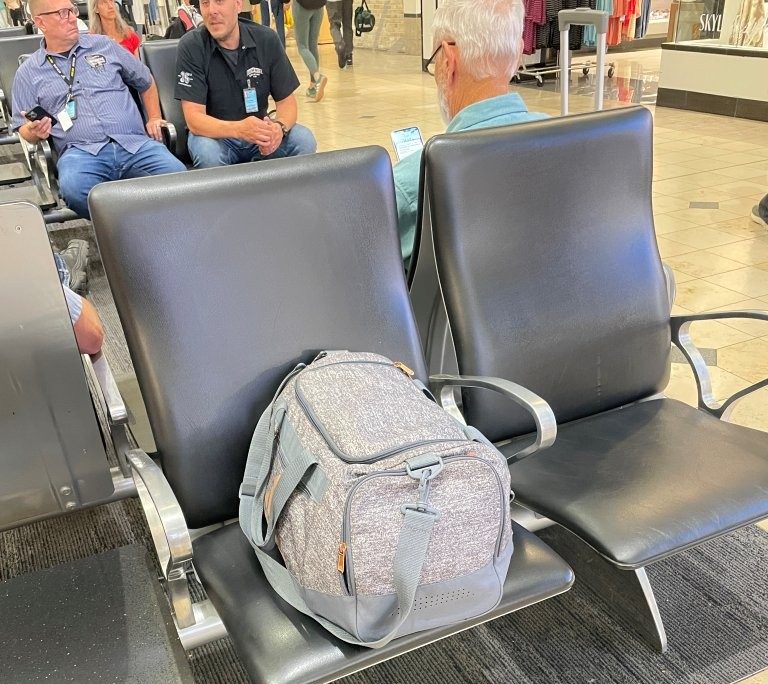
Don’t ever leave your bag unattended in the airport. If you’re traveling with someone, take turns watching each others bags while you go for walks, go to the restroom, etc. If you’re traveling solo, take it with you at all times.
Unattended bags draw a lot of scrutiny from Airport Security.
Second, airport time is a lot of waiting around and standing in lines. It gets boring so bring along a book to read, a downloaded movie to watch on your phone, a game to play on your phone. I have a book of SUDOKU puzzles to pass the time and I also like to walk as much as possible to keep moving before I sit on the airplane for hours.
First Time Flying FAQs
What happens if I don’t know where to go at the airport?
Ask. Seriously. Airport and airline employees answer these questions every day. Show them your boarding pass and ask where you need to go. I still ask for directions in unfamiliar airports.
What if I miss my connecting flight?
Go to your airline’s gate or ticket counter for help with your next flight. Exactly what happens will depend on the circumstances, so don’t panic and start buying another ticket before talking to the airline.
What if my gate changes?
This happens regularly. Check the airport monitors and your airline app. If your gate changes, simply follow the signs to the new one.
What if I’m nervous or don’t understand an announcement?
Ask the gate agent or a flight attendant. You aren’t expected to magically know everything, and it’s much better to ask than spend the next 20 minutes wondering whether that announcement applied to you.
Your Second Flight Will Already Be Easier
Hopefully this guide has explained everything you need to know before flying for the first time. The language is different, there are lot of unwritten rules that everyone else seems to know and each new airport is unfamiliar.
You don’t need to walk into the airport knowing everything. You just need to know what comes next. And once you’ve experienced first time flying, the next one will already feel a whole lot easier.
More Travel Planning Tools & Resources
Here are some more posts with helpful travel planning tools and tips. If you’d like to receive emails when I’ve posted new content to the site, please complete the short form above.
- Our Top Travel Tools and Resources
- How to Plan a Trip: 7 Simple Steps for Busy People
- How to Travel on a Budget: Where We Save & Where We Splurge
- How I Travel with Medications – 7 Important Tips from Someone Who’s Done it
- First Time Flying: Here’s Exactly What to Expect
- Travel Gear We Use and Recommend
- Driving on the Left Side of the Road – 10 Things to Know
- How to Create a Stunning Travel Photo Wall at Home
Many of the Destination Guides contain country-specific travel tips, packing lists, budget tips, things to do and where to stay.
