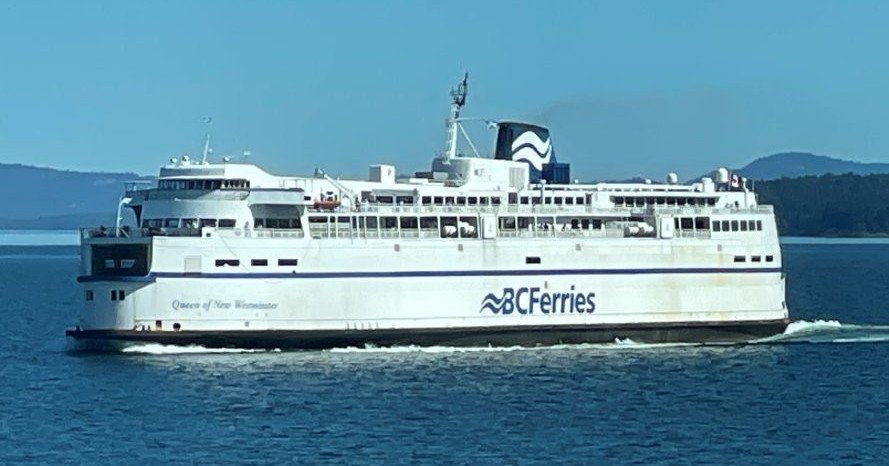
Wondering what it’s like taking your car on the ferry to Vancouver Island? Here’s everything you need to know, from booking to arrival.
Taking your car on a Ferry can feel intimidating the first few times—booking windows, lane numbers, terminal chaos. But after four crossings at five different terminals, we’ve learned what works (and what to avoid).
You’ll learn:
- How and when to book
- What boarding with a car really looks like
- What’s onboard (yes, there’s coffee)
- Tips to save money, avoid rookie mistakes, and enjoy the ride
We did all the research—and trial runs—so you can be prepared. Let’s get you on the Ferry to Vancouver Island, stress-free. Use the Table of Contents below to jump to the topic of interest, or just keep on reading.
What It’s Like to Take the Ferry to Vancouver Island
Taking the ferry from Vancouver to Vancouver Island is one of the most scenic, organized, and stress-free ways to travel—especially if you know what to expect. Here’s how it all works, step by step.
Booking Ahead (Highly Recommended with a Vehicle)
BC Ferries allows you to make a reservation in advance, and if you’re traveling with a car, you absolutely should. During the booking process, you’ll be asked to input the length and width of your vehicle—this determines where you’ll be placed on the ship.
Even though sailings from Vancouver (Tsawwassen Terminal) to Vancouver Island (Swartz Bay Terminal) leave every hour on the hour, spots do fill up—especially during summer and weekends.
Kari’s Travel Tip: For peace of mind, book your reservation at least 5-6 days in advance if you’re bringing a vehicle. On our return trip, we waited too long (4 days) and then had go “Standby” – it was WAY more stressful!! Don’t be like us – avoid the Standby stress and book at least 7 days ahead.
Checking In at the Terminal
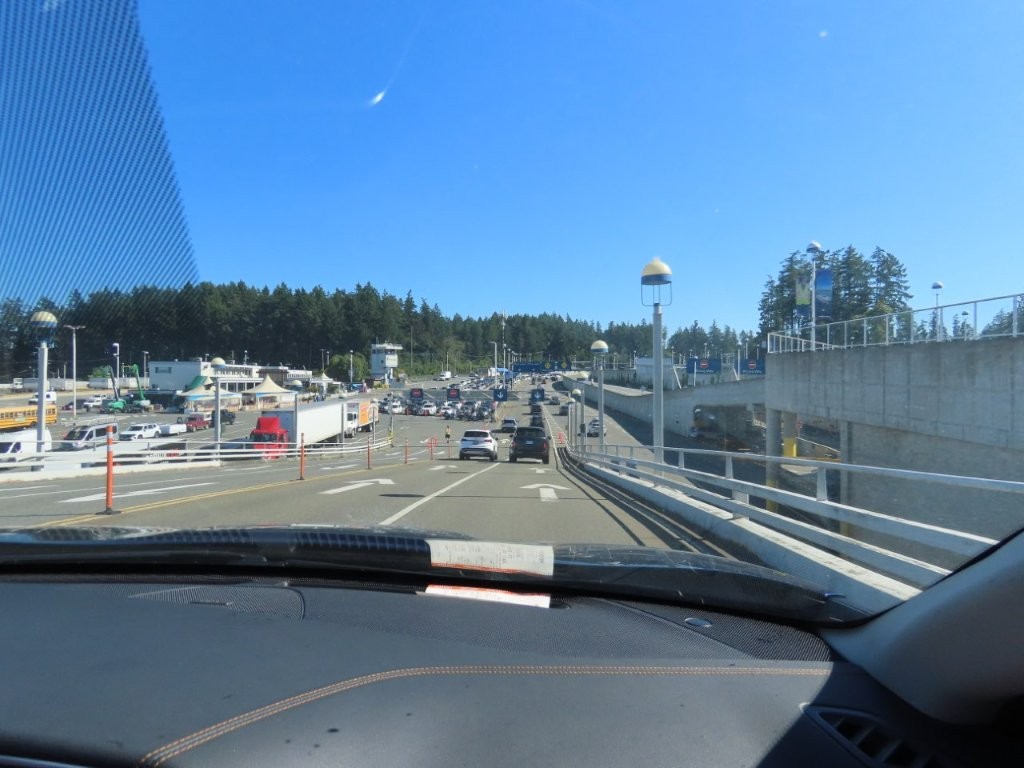
Once you arrive at the terminal, you’ll drive through a staffed check-in booth. If you’ve pre-booked and prepaid, they’ll simply scan your ticket and assign you a lane number.
Kari’s Travel Tip: The check-in window opens exactly 60 minutes before departure and closes 30 minutes before. Make sure to arrive during that window—or risk missing your sailing.
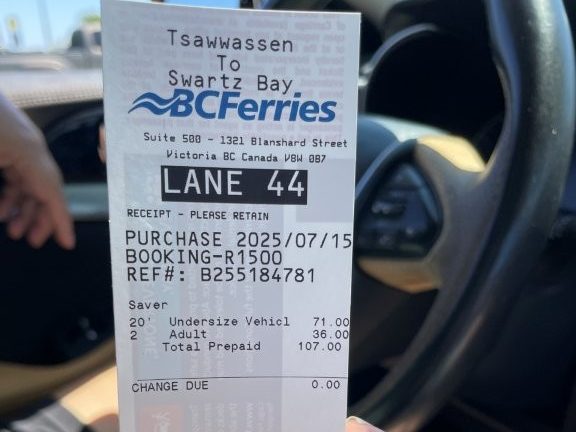
From there, you head to your lane to join all the other cars lining up, organized by reservation and vehicle size.
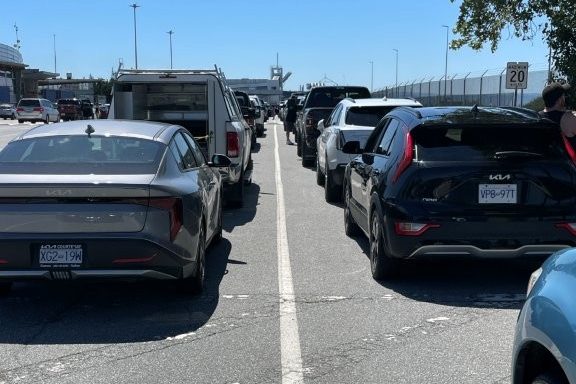

While you wait for up to an hour, you can:
- Use the restrooms
- Grab a bite or drink at the terminal snack bars or shops

- Browse a few shops (depending on the terminal)
- Take your kids to the playground
- Or just relax—some folks hung out in the shade.
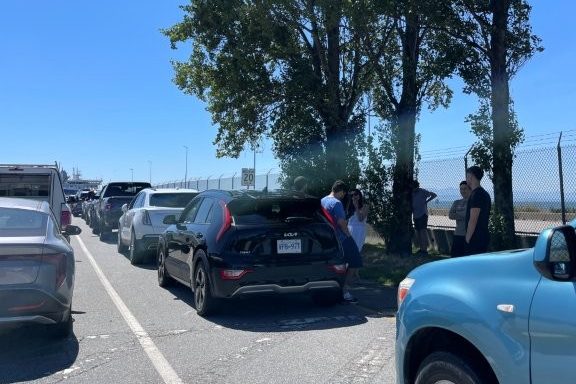
Kari’s Travel Tip: About 15 minutes before departure, they announce over the Public Address system to tell you to return to your vehicle to prepare to board the Ferry. You don’t want to be the one who misses that announcement and holds up the Ferry departure!
Boarding the Ferry (With a Car)
Once boarding begins, ferry staff will direct each lane of cars to roll onto the ship. It’s quick, efficient, and surprisingly stress-free.
You’ll be guided down a ramp onto the vehicle deck.
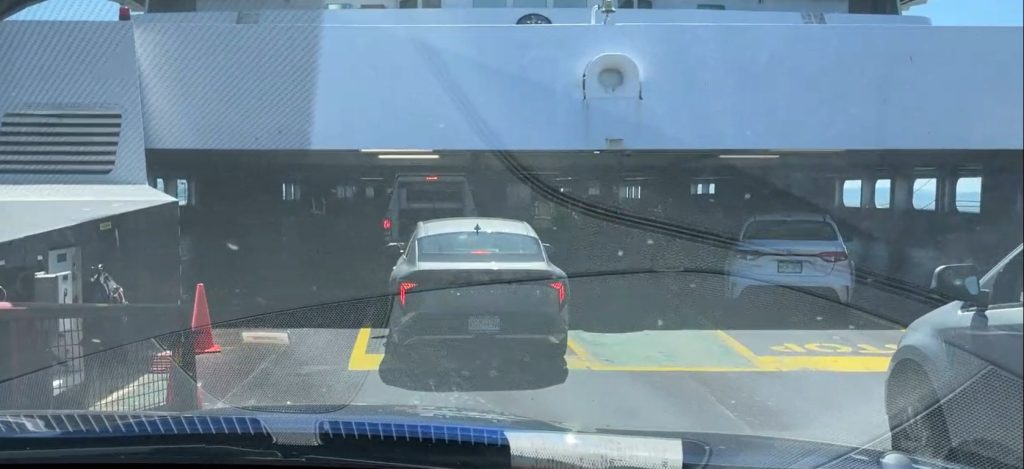
Cars are packed in tightly—just 12–18 inches apart—and you’ll be reminded to turn off your car alarm (a step many people forget… until the boat starts moving and the alarms start blaring).
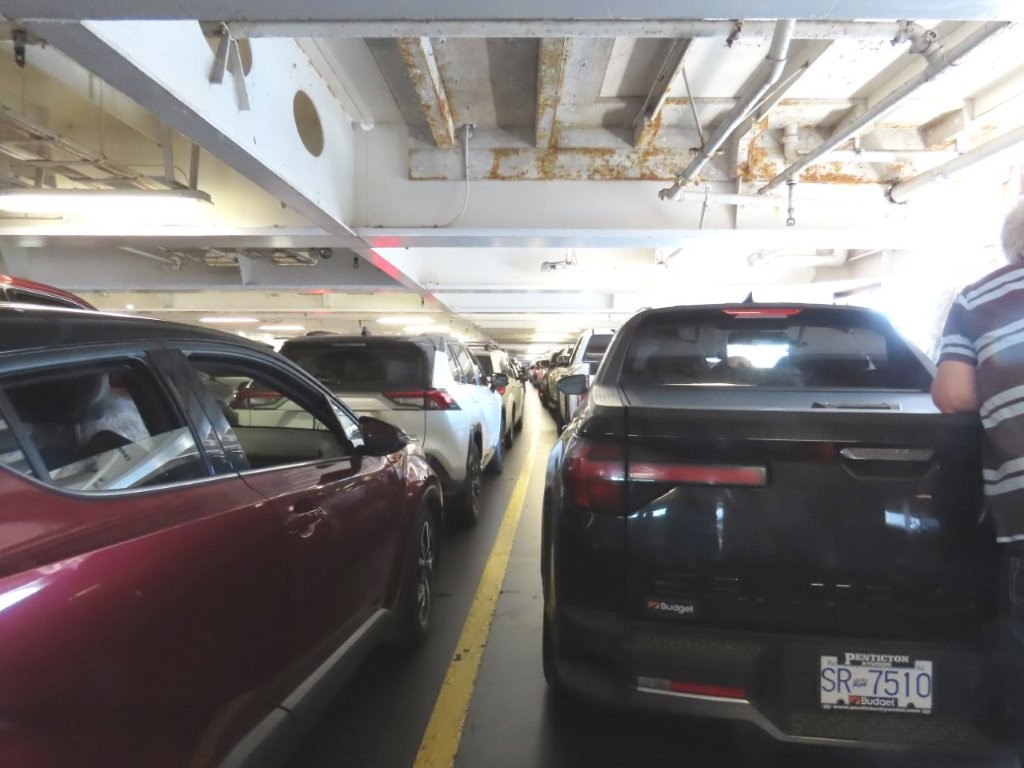
Kari’s Travel Tip: Before leaving your car, grab everything you’ll want during the sailing—snacks, a camera, jacket, phone, etc. Once you leave the vehicle deck, you can’t come back down until the ferry arrives.
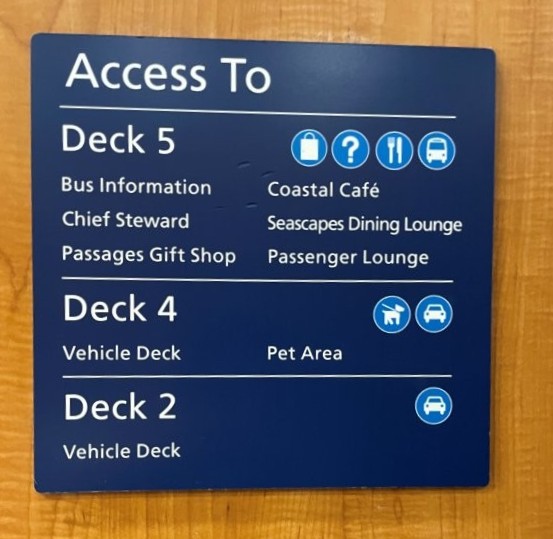
What to Expect On Board the BC Ferries
Once your car is parked and the ferry is underway, you’ve got about an hour and forty minutes to explore. And while this is technically “just transportation,” BC Ferries offers a surprisingly comfortable ride with plenty of amenities.
Passenger Areas: Spacious, Comfortable, and Well-Equipped
The passenger decks feel like a small airport terminal. There are multiple seating areas, with plenty of natural light and space to stretch out. You can wander around, sit near windows, or just relax while enjoying the views.
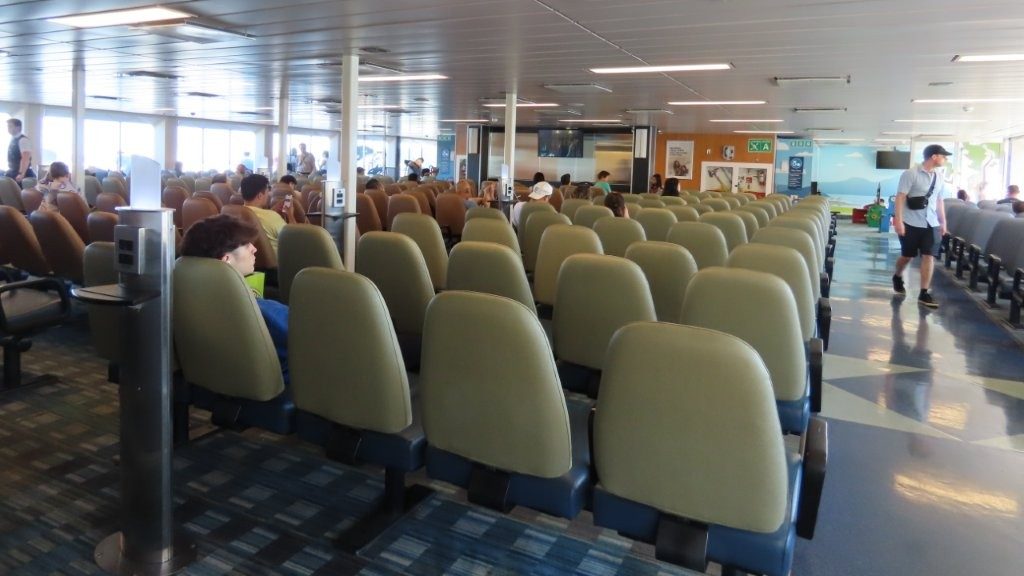
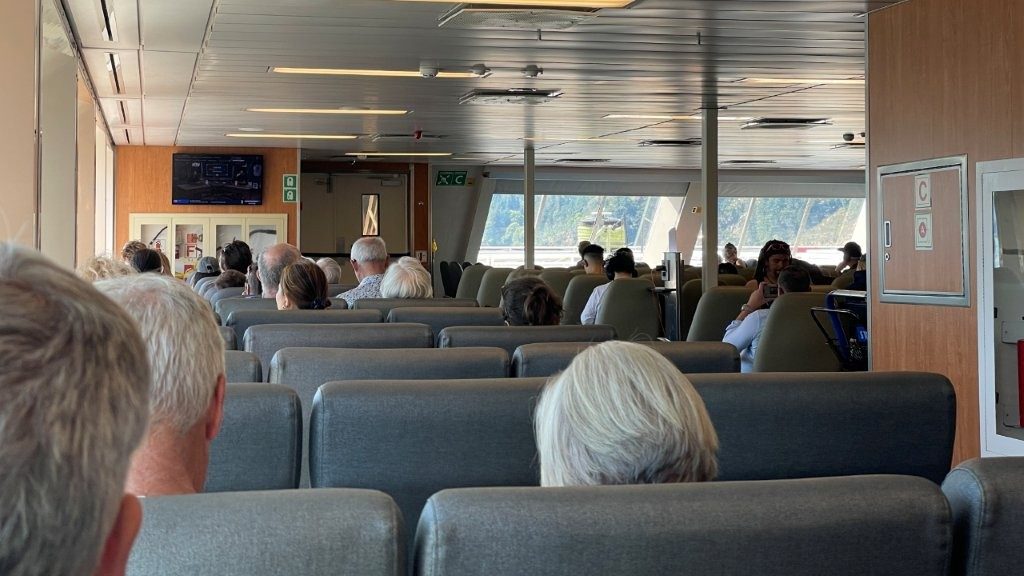
We spent most of our time in the lounge areas, which offered padded seats and large windows for watching the scenery roll by, or outside on the upper levels. The ship also had a large Gift Shop, a Parents Room for nursing mothers, a Kids Play Area and plenty of restrooms.
Kari’s Travel Tip: There’s NO WiFi on board, so download anything important (maps, books, podcasts) before you sail.
Food & Drinks: Options Onboard (But Pricey)
There are cafés, vending machines, and a small cafeteria-style restaurant serving snacks, drinks, and simple meals. The quality is solid for ferry fare, but—as you’d expect—prices are steep.
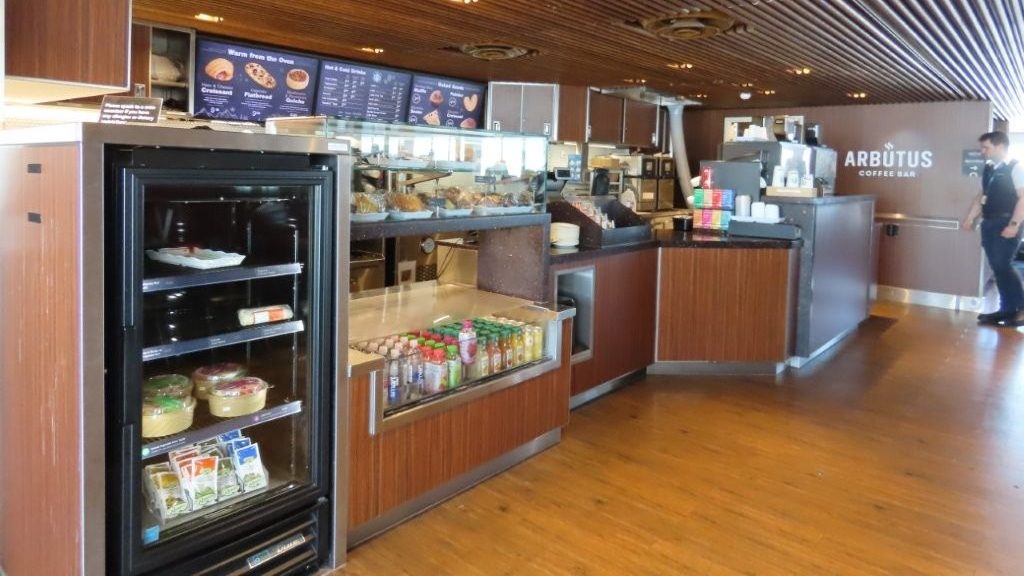

We brought our own sandwiches and drinks, which ended up being one of our smarter decisions.
Kari’s Travel Tip: If you’re on a budget, bring your own food and drinks. You’ll be glad you did when you see the price of a basic sandwich.
Outdoor Viewing Decks: Your Front-Row Seat to BC Beauty
If the weather is good, head up to the outdoor decks. The fresh air and views of the Gulf Islands are absolutely worth it. We caught stunning glimpses of Mount Baker, snowcapped and glowing in the distance, along with dozens of smaller islands dotting the horizon.
There’s limited seating outside, so it’s a good idea to claim a spot early if you want to stay out long.
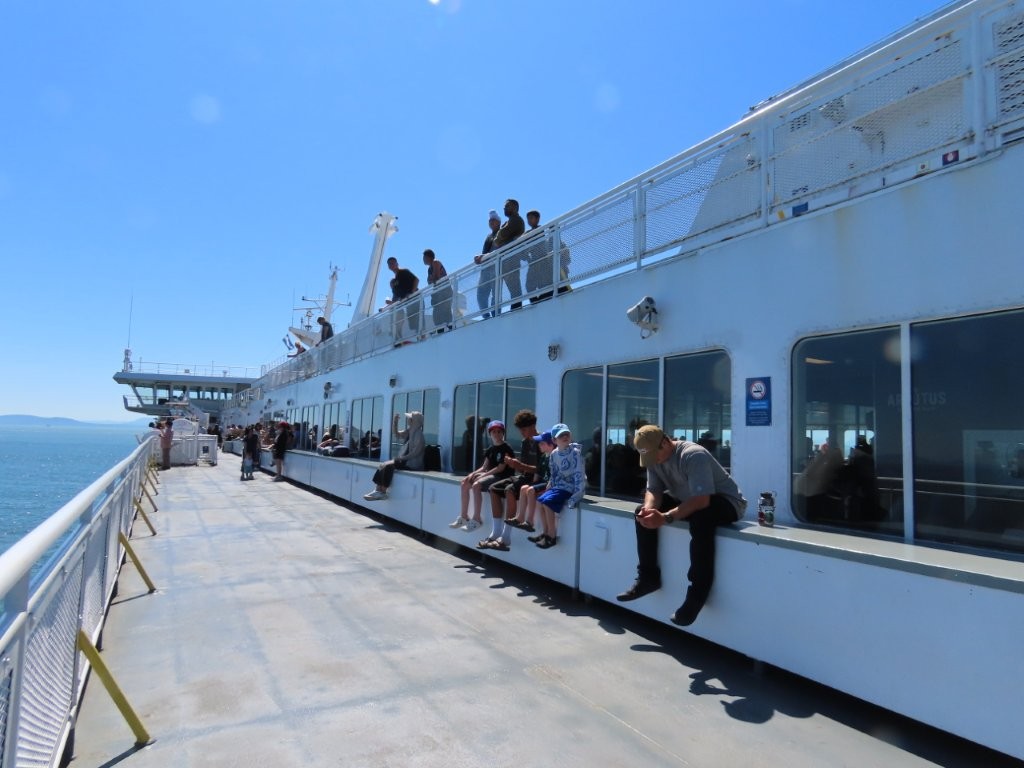
Kari’s Travel Tip: Bring a light jacket or windbreaker, even in summer. It gets breezy on deck—and you won’t want to miss these amazing photo ops.


Upgrade Lounges: Are They Worth It?
BC Ferries also offers optional paid lounges with upgraded seating, coffee, tea, light snacks, and more privacy. On our sailing, there was plenty of room throughout the ship, so the $14 CAD upgrade didn’t seem necessary. Those lounges only had 1-2 people in them during our trip.
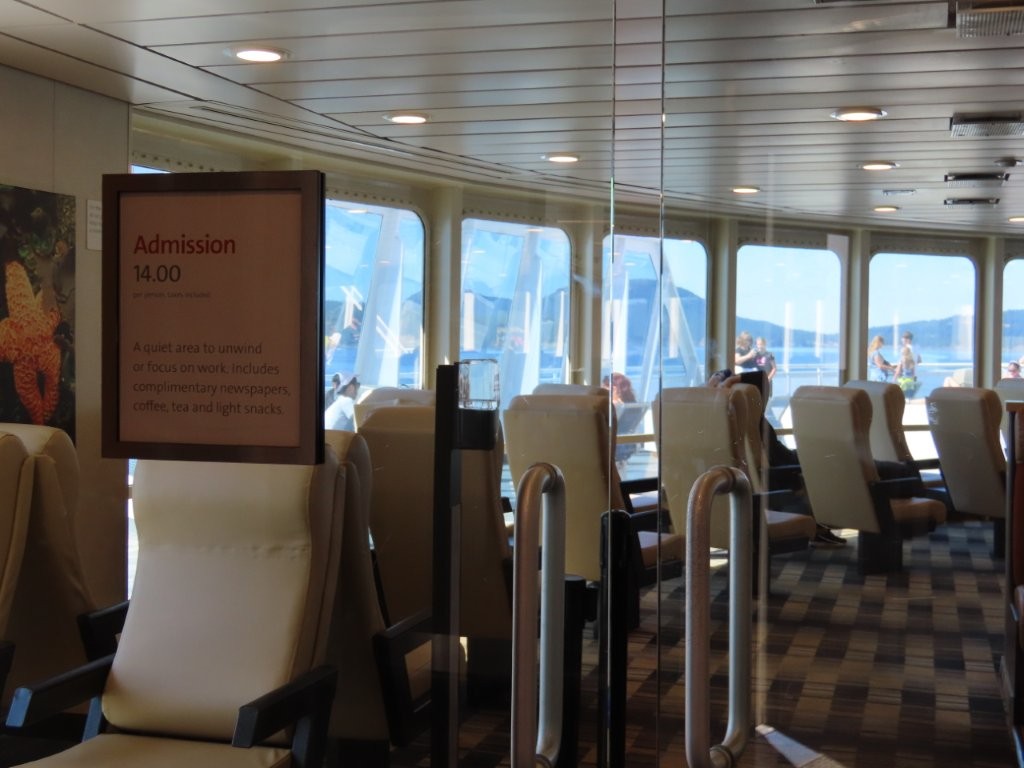
Kari’s Travel Tip: Unless you’re traveling during peak times or want a quieter space to work or relax, I wouldn’t pay extra for this service.
Disembarking: Smooth, Fast, and Straightforward
As the ferry nears its destination, an onboard announcement will let you know it’s time to return to your vehicle. From there, you simply wait in your car until directed off the ship by ferry staff.
At Swartz Bay, you’ll drive right down the ramp and straight onto the highway towards Victoria or other parts of Vancouver Island—no toll booth, no traffic, no confusion. It’s just as organized and seamless as boarding.
Route, Schedule & Terminals – What You Need to Know
Even though it’s just a short ferry ride, the logistics can feel confusing at first—especially with multiple terminals and daily departures. Here’s what first-time travelers should know.
The Main Route: Tsawwassen to Swartz Bay (and Why It Matters)
If you’re traveling from Vancouver to Vancouver Island, the most common route is from the Tsawwassen Terminal (about 45 minutes south of downtown Vancouver) to Swartz Bay, located roughly 30 minutes north of Victoria.
This route sails through the beautiful Gulf Islands, offering scenic views and frequent departures.
Kari’s Travel Tip: Swartz Bay is the best arrival terminal if you’re heading to:
- Victoria
- Salt Spring Island (via connector ferry)
- The southern and central parts of Vancouver Island
But it’s not your only option. If your destination is farther north up the island—like Campbell River, Parksville, Courtenay, or Tofino—you may want to consider routes that arrive in Nanaimo instead. That can shave hours off your driving time once you disembark.
How Long Is the Ferry Ride?
The crossing takes about 1 hour and 40 minutes from dock to dock.
We tracked our progress using Google Maps, but be aware—there’s no onboard WiFi, and cell signal can be spotty. Download maps and directions before departure.
Departure Frequency: Hourly in High Season
During summer and peak periods, ferries from Tsawwassen Terminal to Swartz Bay depart every hour on the hour from morning through evening. This makes it one of the most accessible ferry routes in the province.
Kari’s Travel Tip: Even with hourly departures, sailings can fill up fast. Reserve ahead, especially for weekends or holiday travel. We failed to book early enough for our return Ferry to Vancouver and it was sooo stressful going standby.
Return Routes & Alternatives
This guide focuses on Vancouver to Vancouver Island, but there are plenty of return and alternate options:
- Swartz Bay back to Tsawwassen
- Nanaimo to Horseshoe Bay (a northern Vancouver route – the one we did on our return trip)
- Salt Spring Island connections from both main terminals
We’ll cover those in future posts—especially since each terminal has its own quirks and surprises.
Cost of the Ferry (With or Without a Car)
Ferry pricing in British Columbia is based on a combination of passengers and vehicle type, and costs can vary depending on:
- Whether you prepay or pay at the terminal
- Your vehicle’s size (over or under 7 feet tall, over or under 20 feet long – don’t need exact measurements)
- Time of year
- Time of day – Fares are less before 9:00 AM or after
We traveled on a weekday, mid-afternoon in July 2025 with two adults and one standard vehicle, and we booked online in advance. Our one-way fare was $107 CAD or about $77 USD. Check current availability and fares at: https://www.bcferries.com/faresummary
What to Expect When You Book Online
The reservation process is simple. You’ll prepay a small fee to reserve your space, then pay the remaining balance either online or when you arrive at the terminal.
Kari’s Travel Tip: If you’re bringing a car, the best value is usually to prepay everything online. It’s cheaper than paying at the booth on the day of departure—and guarantees your spot.
If you only pay the reservation fee and opt to pay the rest later, expect a higher total fare at the terminal.
Can You Travel Without a Reservation?
Yes, but it’s risky. Without a reservation, you’ll be placed in the Standby Lane, and you’ll only get on board if space remains after all reserved vehicles have boarded.
We saw plenty of hopeful standby travelers at the terminal—but some didn’t make it on the Ferry.
Kari’s Travel Tip: If you have any sort of schedule you have to stay on—or just want to avoid the stress—don’t gamble with Standby. Book ahead.
Foot Passengers & Walk-On Options
If you’re traveling without a car, prices are significantly lower, and reservations aren’t typically required. Foot passengers can board closer to departure time and have their own separate boarding area.
We’ll cover foot passenger tips in more detail in a future post.
FAQs About Riding the Ferry to Vancouver Island
Can I bring my pet on the ferry?
Yes—but there are rules. Pets aren’t allowed in the main passenger areas. You can either:
- Keep them in your vehicle or
- Use the designated pet area on the car deck
Kari’s Travel Tip: Bring a leash, water bowl, and a comfy bed or blanket. The pet area is clean but basic.
Is there WiFi on board?
No, there is no public WiFi on this route, and cell service can be spotty once you’re out on the water.
Kari’s Travel Tip: Download your Google Maps, playlists, books, or podcasts before you board.
What should I bring with me during the sailing?
- A light jacket or windbreaker—even in summer, it gets breezy on the decks
- Food or snacks if you don’t want to pay onboard prices
- Your camera or phone for those incredible island and mountain views
Kari’s Travel Tip: Mount Baker is often visible shortly after leaving the Tsawwassen terminal—have your camera ready!

Is the Ferry to Vancouver Island Worth It?
Absolutely—especially when you know what to expect.
Whether you’re heading to Victoria for the weekend or using the ferry as the starting point for a longer road trip up the island, this isn’t just a way to get from A to B—it’s a relaxing, scenic, and surprisingly easy experience.
And if you were feeling anxious about the process? We’ve been there. But now that we’ve done it four times (at five different terminals), we can confidently say: With a little planning, the BC Ferries system works great.
Book ahead. Show up on time. Pack a snack. And bring your camera—your Vancouver Island adventure starts before you even dock.
More Info on Canada
Here are some more posts about Canada, British Columbia and Vancouver, including some that I’m still working on. If you’d like to receive emails when I’ve posted new content to the site, please complete the short form above.
- Quick Canada Facts & Travel Tips – 7 Things to Know Before You Visit
- British Columbia Birds: Birdwatching Adventures in Vancouver & Beyond
Vancouver:
- The Perfect Vancouver Itinerary Guide for First Time Visitors
- Stanley Park in Vancouver: Top Spots, Hidden Gems & How to Get Around
- Lynn Canyon Suspension Bridge in Vancouver – The Free Alternative to Capilano
- 9 Popular Activities for Outdoor Fun at Pitt Meadows Lake, BC
- 10 Top Attractions on Granville Island in Vancouver
- Queen Elizabeth Park in Vancouver – Full of Free Surprises at Every Turn
- Where to Stay in Vancouver: The 12 Best Hotels, Sorted by Budget
Vancouver Island:
- Taking the Ferry to Vancouver Island? Learn from Our Experiences (and Our Mistakes)
- Butchart Gardens: A Visual Tour of Canada’s Most Beautiful Garden
- Coming Soon: Things to do in Campbell River, BC
- Coming Soon: Things to do in Victoria