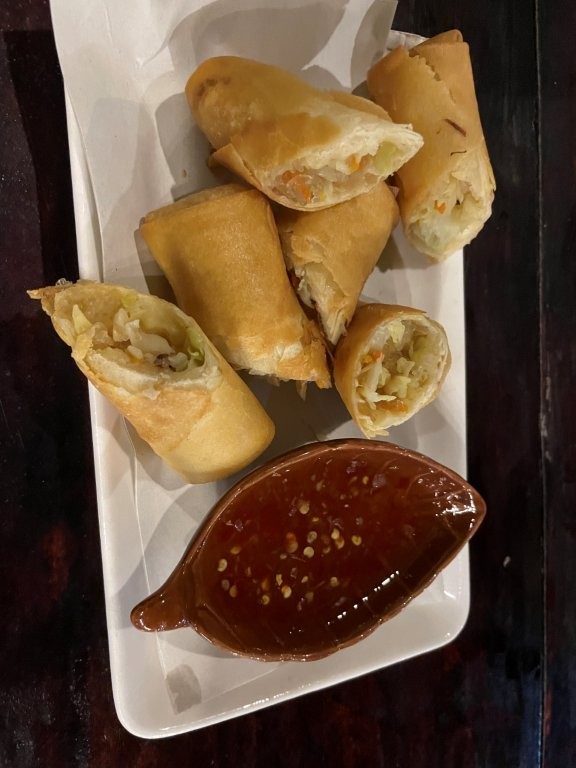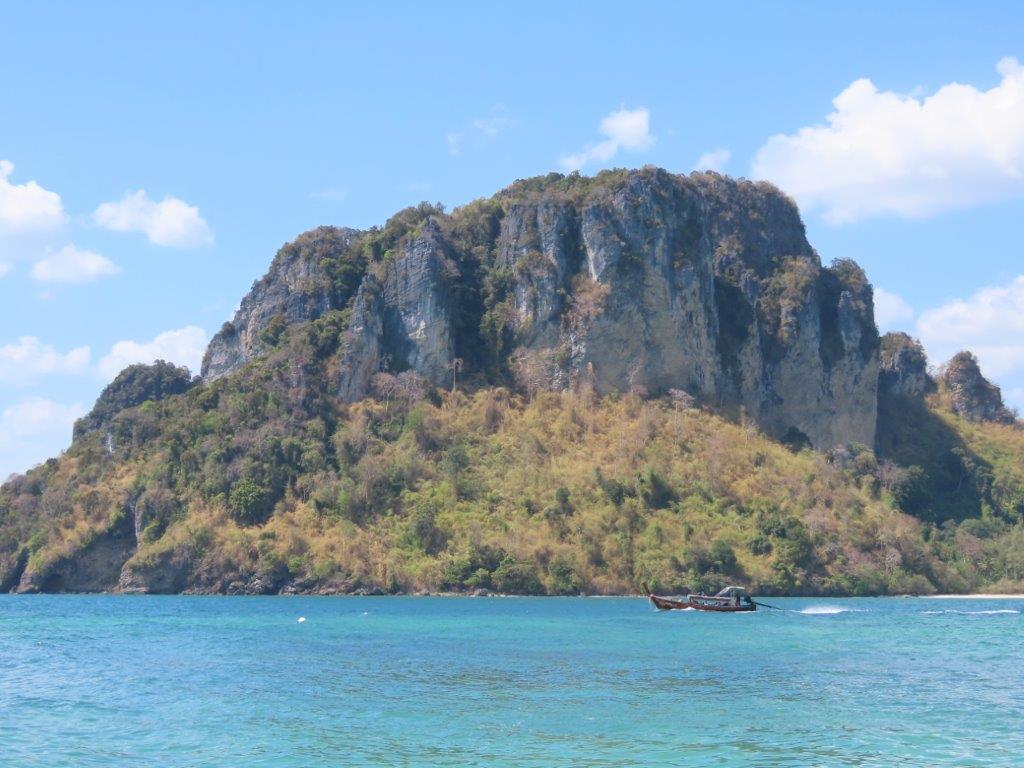
Thinking about a trip to Thailand, land of Islands and Temples? These Thailand Facts & Travel Tips will make your planning process easier. Save this post today!

Here are some essential Thailand facts you’ll want to know before embarking on your Bucket List trip. The details really do matter, and these Thailand facts will make your travel planning a whole lot easier!
Based on my many years of experience traveling across the U.S. and the world, I’m also passing along the Kari’s Travel Tips of things I wish I had known before we left for Thailand. Learn from my experience to make your trip go smoothly.
Use the Table of Contents below to jump to the topics that interest you most, or simply scroll through all the content at your leisure.

PLAN YOUR TRIP WITH OUR
FAVORITE TOOLS
– Best Lodging site: Booking.com
– Book Day Tours here: Viator.com
– Rent Cars here: RentalCars.com
Currency
Cash is the preferred method of payment in Thailand, especially at the markets and the smaller local shops. Visa and Mastercard are accepted in many hotels, restaurants and some larger stores. AmEx is not widely accepted in Thailand.
In Thailand, the official currency is the Thai Baht (THB or ฿). Bahts come in paper banknotes of 20, 50, 100, 500 and 100฿. They have coins for 1, 2, 5 and 10฿, plus some smaller coins for 50 and 25 satangs (like our cents)
Each of the paper bills is a different color. Pay attention because the red and brown colors are pretty close and you wouldn’t want to accidentally mistake a 100฿ note for a 1000฿.
Kari’s Travel Tip: Avoid buying anything from street vendors with a 1000฿ note – they won’t be able to make change. Use your 1000฿ bills at a 7-11 store or larger businesses. Street and Market vendors like getting paid in 1, 2, 5 and 10฿ coins, but they aren’t big fans of the satangs (cents) coins.
Currency Conversion
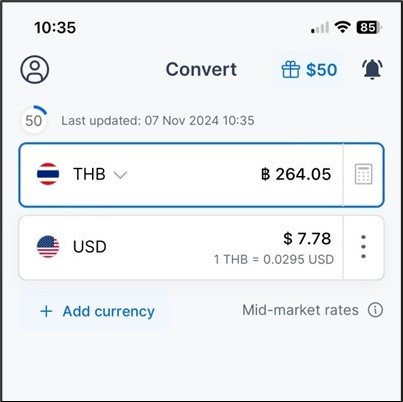
We always use the Xe app to check the most up-to-date exchange rates. In this article, $ refers to the US Dollar or USD.
Currently, the Thai Baht is just under 3% of a USD. To ball-park it, I divide the Baht price by 3 and then by 10. This over-estimates the amount by a bit, but it allows me to do quick math in my head when we are out and about.

Look how affordable food at the night market is! Fried shrimp for 25฿ = approximately 72 US cents. Chicken roll for 20฿ = approx. 58 cents. Vegetable Spring roll for 15฿ = approx. 43 cents.
YUM!!!
Where to get Baht
- Bank ATM – Always be aware of your surroundings. We only withdrew cash from the ATM during daylight hours
- Currency Exchange Stores – we didn’t try this, but they were located every few feet in the main commercial districts.
Kari’s Travel Tip: When using your credit or debit card, always choose to be charged in the local currency. This will help you reduce double conversion fees. Even with a credit or debit card that has no foreign transaction fees, you will still gain by not having the money convert twice.
Kari’s Travel Tip: Don’t forget to notify your bank about your travel dates and destinations. This ensures they won’t block your card for unusual activity.
Kari’s Travel Tip: If Cambodia is on your itinerary, they take US dollars there, but only if they are in absolutely perfect condition without any creases, tears or markings on them. I strongly recommend you visit one of the currency exchange stores in Thailand and convert to US Dollar bills there. Tell them that you are going to Cambodia and that you need perfect bills.
Tipping Culture in Thailand
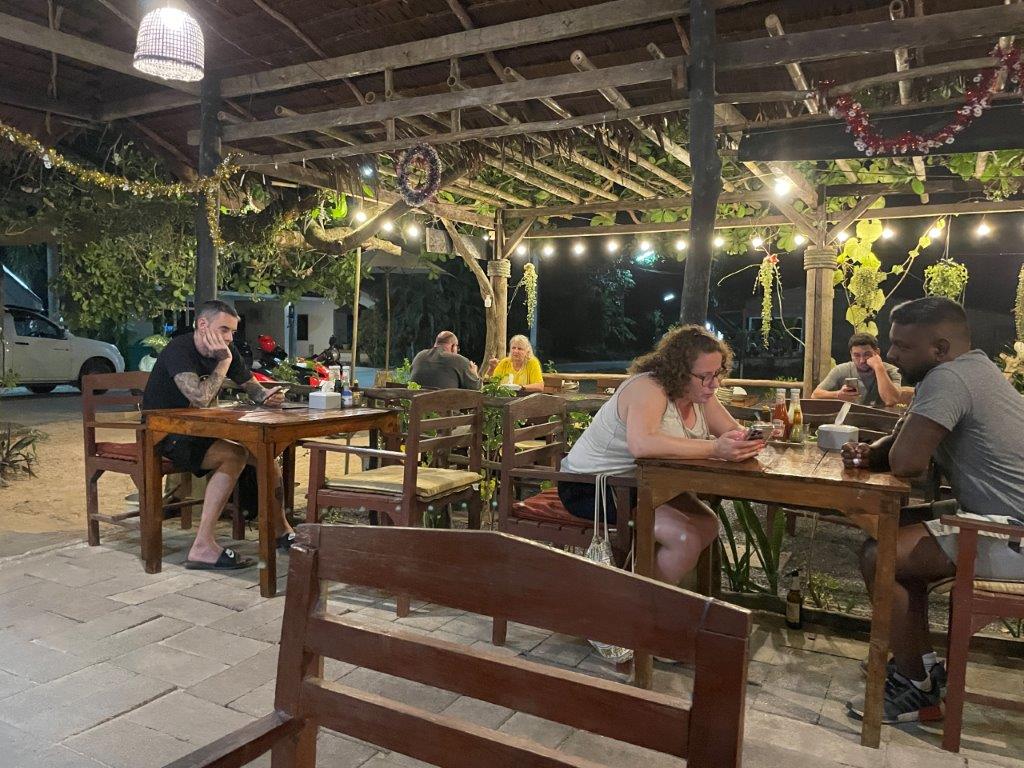
Tipping in Thailand is not expected like it is in the US, but it’s appreciated in certain circumstances. People in the tourist or hospitality industry work very hard for low wages and any extra bit can go a long way towards feeding their families. But it is up to you as the traveler to decide if and when to tip.
Here are some general guidelines:
Who not to tip:
- Street vendors, market vendors or any time you order at the counter – tipping is not necessary and they will try to give it back if you overpay. If the food was that delicious, place another order and enjoy.
- 7-11 Store cashiers or shop sales assistants
- Bus drivers or tuk-tuk drivers
When to tip if the service is good or exceptional:
- Restaurants and cafes – some businesses might add a service charge to your bill. In this case, no additional tip is necessary.
But smaller businesses are less likely to add a service charge so in this case, a tip of 10% is greatly appreciated. Another way to do it is to round up to the next 100 baht.
Higher end restaurants or those that cater to tourists (such as the one in your hotel), a tip of 10-15% is more customary if there isn’t already a service charge on the bill. - Hotel Stays – Housekeeping should receive 20฿ per day and Luggage porters should get 10-20฿ for each bag they bring to and from your room. Aim higher if they carry it up 4-5 flights of stairs!
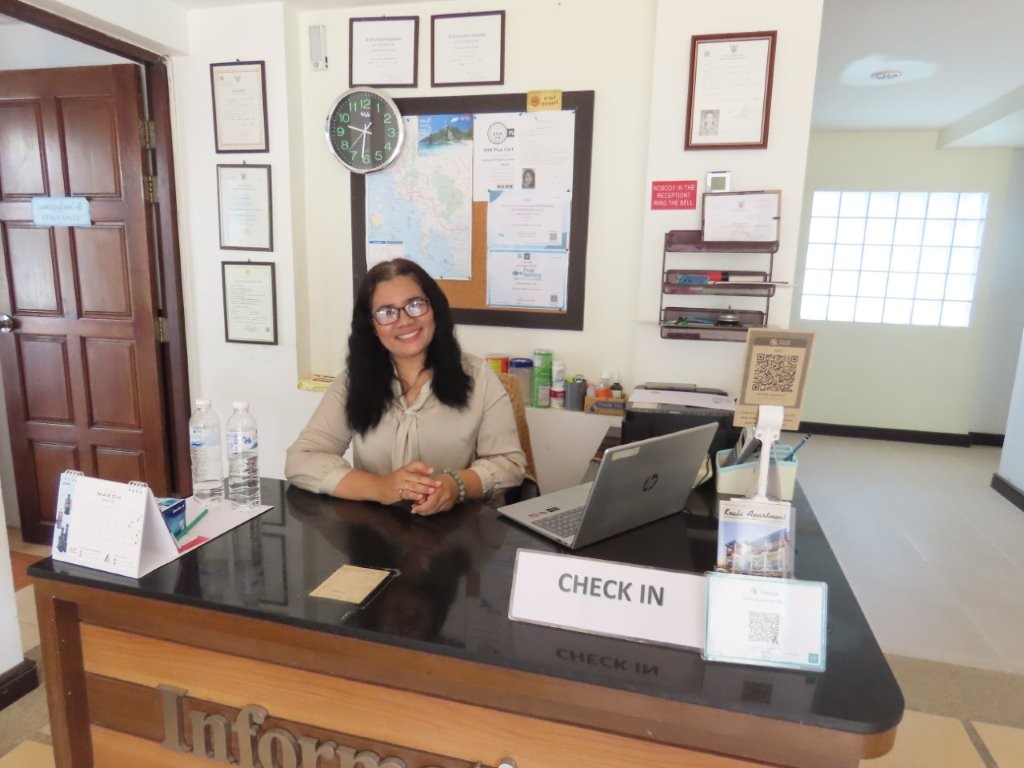
- The Concierge/Receptionist who helps you book excursions or goes out of their way to make arrangements for you should get anywhere from 500-1000฿ at the end of your stay.
- Massage shops – tips are appreciated, especially when paid directly to the masseur. If your bill is 300฿, tip 50-100฿
- Tour Guides – it depends on the level of service, how good they were, and how long you were with them. For a 2 hour walking tour, a tip of 100฿ is sufficient. If it’s a whole day tour and they were really helpful and entertaining, it’s not unheard of to tip 500฿.
- Drivers – 10% is customary for longer drives. For shorter ones, just round up to the next 100฿.
These are just general guidelines. Remember that the tipping culture in Thailand is entirely optional. It’s appreciated, but certainly not expected.
Kari’s Travel Tip: Always tip in the local currency.
Language
In Thailand, the official language is Thai, and it’s spoken very quickly by the locals.
The good news is that many Thai people, particularly those in the hospitality or tourism industry, can speak decent English. But you will also run into plenty of people who speak zero English.
Are you excited to travel internationally, but worried about not knowing the language?
DOWNLOAD our handy Translation Guide HERE
Kari’s Travel Tip: I always say “Hello” when I greet people—it’s a warm, friendly way to begin and signals that I speak English. And when I need to ask where the bathroom is, I just say “Toilette?” with a hopeful expression, and they show me the way.
Google Translate
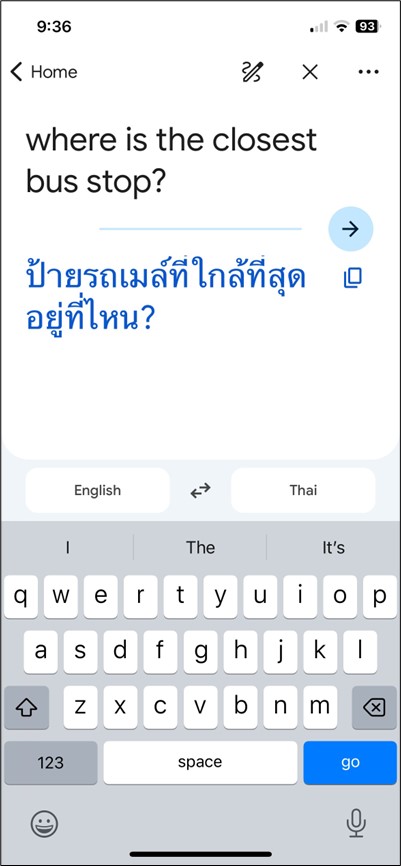
For everything else, I rely on the Google Translate app. It’s my trusty translation tool, whether I’m typing or using the microphone to speak into it.
I often use it when I’m shopping, asking things like, “I am looking for ham” or “Where are the onions?” I type it out or speak it, then show the translation to the employee.
And I also love using the camera feature! I can take a picture of a menu, food label or cooking instruction and it instantly translates the text for me.
Time Zone
Thailand is in the Indochina Time Zone, and it’s 12-15 hours ahead of the continental US, depending on your location in the States. They do not observe Daylight Savings Time so their clocks are consistent all year long.
I use Bangkok as the city in my iPhone World Clock to know what time it is in Thailand.
Kari’s Travel Tip: If we wanted to talk to our kids back in the US, say at 8:00 PM for them, it was often the next day already for us. For example, when it was Wednesday evening in US, it was Thursday morning in Thailand.
Kari’s Travel Tip: Be mindful of the time difference when you plan to watch live events like sports games or debates. We watched the Super Bowl live, but it was Monday morning where we were, and Sunday night back in the US.
Kari’s Travel Tip: Jetlag can be tough when you’re traveling far from home. Make sure your first few days in Thailand give you time to adjust. We have found that if we quickly adapt to the local time zone – especially sleep and meal schedules— we’ve found it helps beat jetlag pretty quickly
Are these Thailand Facts giving you the insights you were looking for? Keep reading for more great info and tips!!
Date Format
In Thailand, dates follow the D-M-YYYY format, which differs from the MM-DD-YY format that Americans are used. August 9, 2023 would be 08-09-23 in the US. In Thailand, it would be 9-8-2023. Note: If the date or the month are under 10, they use the single digit, rather than adding a 0 in front of it.
Kari’s Travel Tip: When filling out Visa forms or buying airline tickets, make sure you enter your birthdate, passport issue date, and passport expiration dates correctly. Be sure to double check the format the form is asking for!
The Buddhist Era Year System
Thailand also officially uses a different year system than the rest of the world does, based on the Buddhist Era. This might be found on official Thai documents, event posters, bills or contracts, food packaging and at museums.
You might see 29-1-2570 as a date. What the heck does that mean? Apparently, Buddha achieved enlightenment, or nirvana, 543 years before Christ was born which is what the Gregorian calendar is based on. So if you subtract 543 from 2570, you get 2027.
We were not aware of this during our time in Thailand and it did not affect us as travelers at all. But if you do see a date that appears to be really far out into the future, this is probably the reason why.
International Phone Code
Thailand’s country code is +66 (followed by the local number).
To add the + symbol, simply press and hold the zero key for a second while in dialing mode. The plus sign will appear, and then you can add Thailand’s country code (66) along with the local number.
WhatsApp is the main method for calling, texting, and sharing files across SE Asia (and many other parts of the world).
The Thai people don’t use traditional texting, iMessage, or calling services like we do in the US.

Kari’s Travel Tip: Download WhatsApp and get familiar with it before you leave. It’s essential for communicating with your driver, guides, hotel hosts, and anyone you meet during your trip.
WhatsApp uses your US phone number, but it only works for messaging or talking with other WhatsApp users.
We use WhatsApp to stay connected with our family and friends while traveling. As long as I’m on Wi-Fi or using my Airalo eSim for data, I don’t have to worry about international roaming charges from my US carrier.
When sharing your phone number with new people, don’t forget to add the +1 in front of your area code. You can also create a QR code on WhatsApp for them to scan.
Airalo eSim
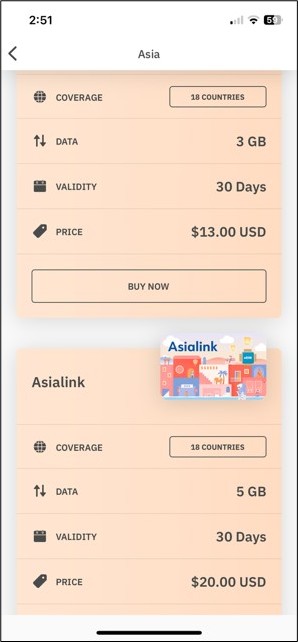
I rely on an Airalo eSim to get affordable mobile data while I’m traveling internationally. This saves me hundreds of dollars in international roaming charges.
Airalo offers a dedicated eSim for Thailand, or you can use their Asialink Regional eSim to cover 18 countries across Southeast Asia. That’s perfect if you will be visiting other countries on your travels.
It’s easy to install, activate, and manage. You can select which apps will use data through the eSim. I turn off apps I don’t need while traveling, such as weather apps or business apps from back home.
If you need more data, you can easily “top-it-off”.
Kari’s Travel Tip: Purchase and install your eSim before your trip, but wait to activate it until you’ve arrived at the airport and connected to the free Wi-Fi. This way, you’ll have data available as soon as you leave the airport and head to your first destination.
Kari’s Travel Tip: Ensure your phone is set up for international roaming and that it’s unlocked for the eSim. Call your cellular provider if you’re not sure.
Driving & Getting Around Thailand
The Thai people drive on the LEFT side of the road, just like in Australia, New Zealand, Ireland and the UK. That being said, I felt like the lanes in the roads were merely “suggestions”?
People drive crazy all over the place, swerving and curving on Bicycles, motor bikes, scooters, tuk-tuks, cars, buses and vans. Most of the intersections are uncontrolled, but there are a few stoplights here and there.
Thailand was the first place that we did not rent a car on our trip around the world. Instead:
- We walked everywhere we could
- We hailed a tuk-tuk or a taxi – they are everywhere along the streets
- We used Grab, the Asian version of Uber and Lyft.
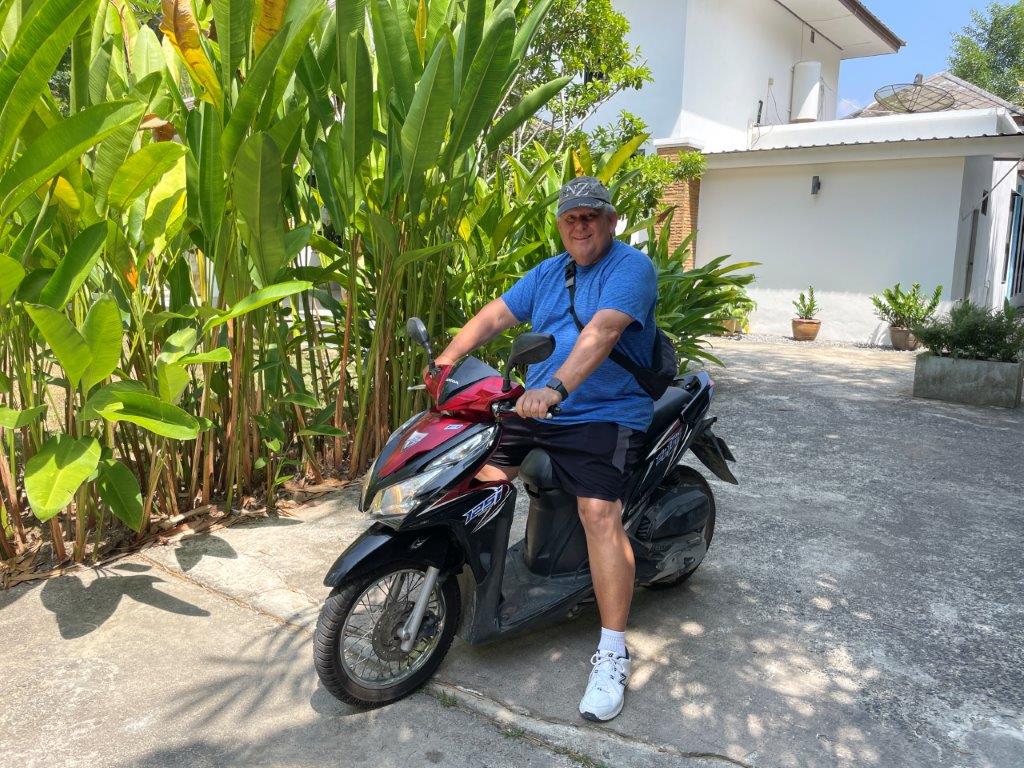
- We rented a scooter for $8/day in Khao Lak.
- If we booked an excursion such as snorkeling or a cooking class or a tour, the tour operator picked us up at our hotel and dropped us off at the end of the day.
Kari’s Travel Tip: Fares for tuk-tuks and taxis are very negotiable until you get into the car. Don’t be afraid to say “no, too much” and walk away. They will likely agree to a lower price then.
Kari’s Travel Tip: Once a tuk-tuk or taxi driver gives you a ride, they will try to engage you for future rides. If you feel comfortable, go ahead and exchange WhatsApp numbers. My WhatsApp Contact List is full of drivers who gave us rides all over SE Asia.
Across the Country
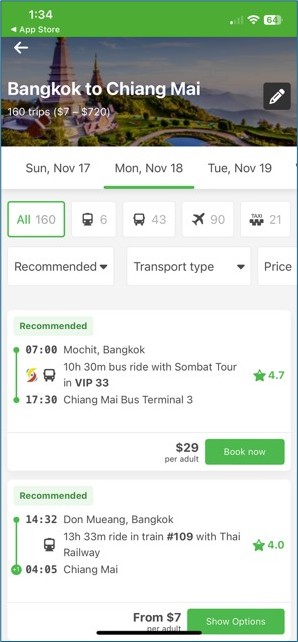
To get from town to town, Asia offers a vast network of transportation options, including trains, buses, ride-shares, planes, and ferries, making it easy to travel across the country.
12Go.Asia is a very helpful app for figuring out transport options across Southeast Asia. You can also use it on the web at https://12go.asia/en
It gives you estimates for both travel time and cost (in US dollars), which makes planning much easier.
This example gives you 160 options to get from Bangkok to Chiang Mai, ranging in price from $7 to $720. Tons of options!
Another way to arrange transportation is to use your hotel’s concierge/receptionist. They have drivers on speed dial and can arrange transportation for you.
- When we moved from Ao Nang to Khao Lak, our receptionist arranged a private driver with a very comfortable vehicle for us. For a 2-1/2 hour drive, it cost $70.
- Then the receptionist in Khao Lak arranged a private driver to take us to the airport in Phuket. That 1-1/2 hour drive cost $33 USD
Seasons in Thailand
The temperatures and humidity in Thailand are high year-round. Rather than defining by Spring, Summer, Fall and Winter, the seasons in Thailand are defined by how much rain they get:
- The Wet Season (May to October) – also known as the Rainy Season or the Monsoon Season. It rains pretty much every afternoon or evening for 1-2 hours. September and October have the heaviest rainfall. The extreme high humidity from the rain can be uncomfortable for those who don’t love that kind of weather.
- The Cool Season (November – February) – Cooler, drier air results in more comfortable temps and lower humidity. Some would say this is the best time of year to visit Thailand. The Andaman Sea along the west coast is calmer, making it a perfect time to visit. But the East Coast is still rainy with monsoons hitting between October and January.
- The Hot Season (March to May) – Most notable in the north part of Thailand. Warmer temps (approaching 100 degrees F) and very little wind/rain can make this uncomfortable for people who are not used to those conditions.
It’s also the Burning Season in the north where the farmers burn their fields to prepare them for the next season, creating a lot of smoke. That can start as early as January and be done by March, or start in March and continue into May.
We were supposed to be in Chiang Mai from the end of April to the end of May, but we canceled because that year, the Burning Season extended well into May and the smoke was extremely unhealthy. In the future, we will go in the October – November time frame.
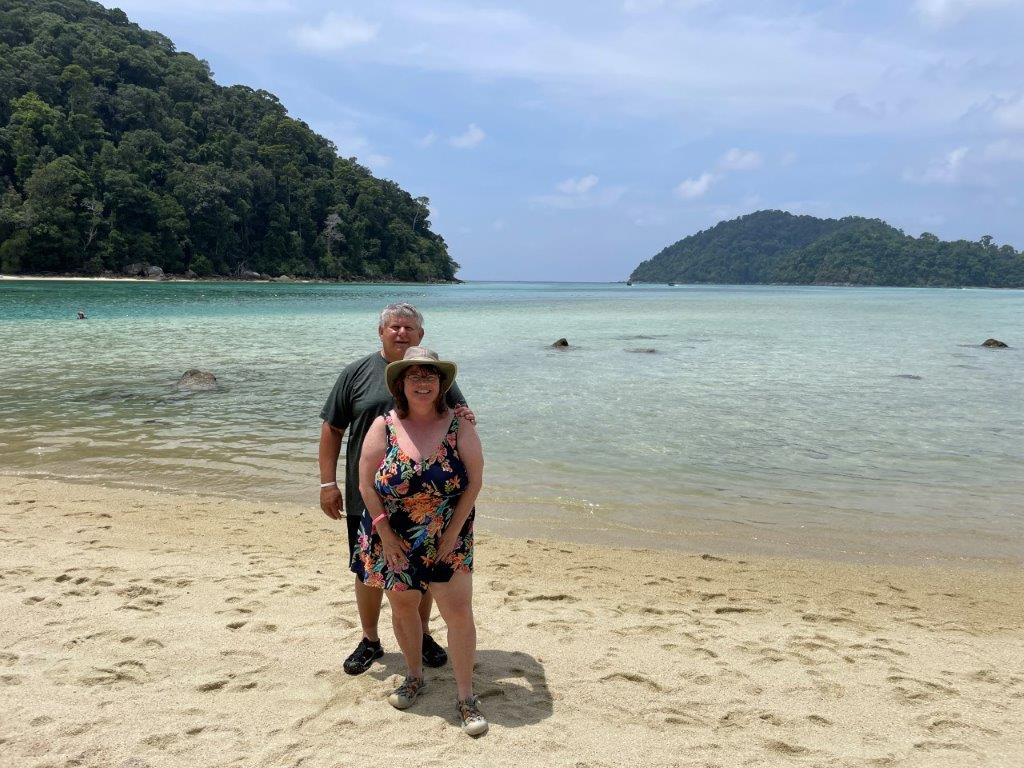
When is the Best Time to Go to Thailand?
If you want to visit the Gulf Coast or east coast, go between April and September.
Anywhere else, go between November and February. But that also makes it the high season where everything is busier and more expensive.
Plug Adapter
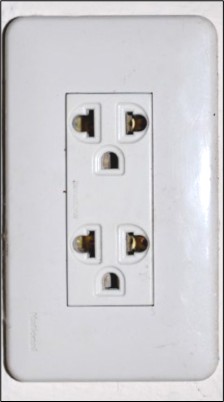
Thailand is unique in that several types of plugs will work here. Most outlets are designed to flexibly accept A & B (which we use in the US), C (which is commonly used in Europe) and/or Type O, which is unique to Thailand.
A good multi-country adapter kit will likely include all these types.


I highly recommend the Ceptiks Universal Travel Adapter Kit. It has worked great for me, all around the world and in multiple countries.

Kari’s Travel Tip: Most phones and laptops are already dual voltage ready, but if you’re bringing any other appliances like a hair dryer or curling iron, make sure they support dual voltage before using.
I hope these Thailand Facts are making your travel planning simpler and more enjoyable!
Can I drink the water?
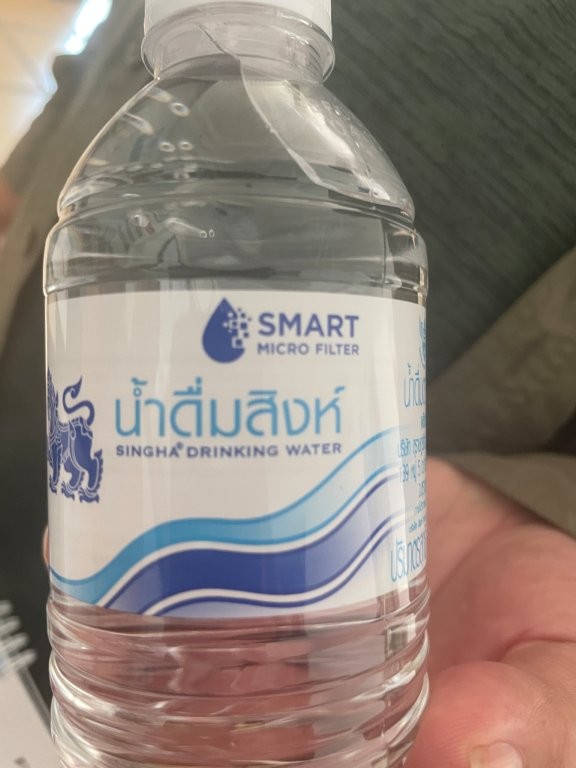
NO! You cannot use tap water in Thailand for drinking, brushing your teeth or cooking. It is okay to use for bathing and showering.
Most accommodations and hotels will provide some amount of bottled water to you on a daily basis, maybe 2 small bottles, maybe 2 large bottles. We bought a lot more at 7-11 or the grocery store so we wouldn’t run out.
Throughout SE Asia, the water is not safe to drink and you need to use bottled water. It is NOT environmentally friendly to be creating all these plastic bottles and I really dislike that, but we did our best to find places to recycle the empties.
Kari’s Travel Tip: Do not be tempted to think “it’ll be okay if I just rinse my toothbrush with tap water, right?” It is NOT. I learned the hard way when I caught cholera from doing that just once.
Toilet Things to Know
Important things to know about toilets that caught me by surprise:
- There are two types of toilets in Thailand – Western toilets like we have in the US and Thai toilets, also known as Squat toilets.
- Do not flush the toilet paper – place it in the wastebasket instead.
- If toilet paper is not provided, use the sprayer (also known as a bum gun) to wash off.
In our experience, all of our hotel rooms had Western toilets. Out and about, at more touristy places, I could usually find at least one stall with a western toilet. I learned to carry toilet paper in my pocket because it often was not provided. Hardest part for me was not flushing the TP, but putting it in the wastebasket.
Here are some great tips and tricks that I wish I had known before we went to Thailand, including how to use a squat toilet! And this toilet experience continued throughout much of Southeast Asia.
Visa Requirements
According to the US State Department, US citizens don’t need a visa to travel to Thailand as long as your stay is less than 60 days. You must have six-months of validity left on your US passport from the date you enter Thailand and you need at least one blank page in your passport.

Upon arrival at Immigration, you might be asked to show your onward transportation ticket to prove you will not stay more than 60 days.
Those who wish to stay in Thailand longer than 60 days can do a “border run” where you go to Laos, Cambodia or Vietnam for a few days, then return to Thailand and reset the 60-day clock.
Safety
I highly recommend visiting the US State Department website when traveling to another country. They provide valuable information about safety, crime and things to be aware of, ranking the countries from Level 1 (travel with normal precautions) to Level 4 (Do not travel).
They also have the STEP (Smart Traveler Enrollment Program) where you can register the dates and address of where you are staying. In the event of an emergency, they will alert you to dangers, protests, changes to embassy hours, etc. We have been alerted a few times to planned protests happening near us so we could avoid the area on that day.
Embassy Assistance for U.S. Citizens
U.S. Embassy Bangkok
95 Wireless Road
Bangkok 10330
Thailand
Telephone + (66) (2) 205-4049
Emergency +(66) (2) 205-4000
Fax +(66) (2) 205-4103
Email ACSBkk@state.gov
Website https://th.usembassy.gov/embassy-consulate/bangkok/
Is Thailand starting to feel even more exciting now? I hope these Thailand Facts are helping you plan an epic trip!
Vaccine Requirements
No vaccines are currently required for those arriving from the US. If you are coming from a country with active Yellow Fever, you may need a vaccination for that. I usually recommend talking with your personal doctor before doing any international travel.
Metric System Conversions
Thailand, like nearly every other country in the world, uses the metric system for distance (in meters and kilometers), temperature (Celsius), weight (grams and kilograms), and volume (liters and milliliters).
Kari’s Travel Tip: I keep a couple of conversion charts in a note on my iPhone to refer to whenever needed.
Temperature: Celsius to Fahrenheit
- 0 C = 32 F
- 10 C = 50 F
- 15 C = 59 F
- 20 C = 68 F
- 25 C = 77 F
- 27 C = 80 F
- 30 C = 86 F
- 40 C = 104 F
- 45 C = 113 F
- Formula for calculating: C x 1.8 + 32 = F
Weight: Kilograms to Pounds
This is especially useful for checked and carry-on luggage limits on different airlines. Internationally, the limits are often quite a bit smaller than on US Airlines so it’s important to check. And in Asia, they do tend to weigh the carry-ons sometimes.
- 7 kg = 15.4 pounds
- 10 kg = 22 pounds
- 15 kg = 33 pounds
- 20 kg = 44 pounds
- 25 kg = 55 pounds
- 30 kg = 66 pounds
- 32 kg = 70 pounds
- 35 kg = 77 pounds
- Formula: kg x 2.2 = Pounds

Area: Square Meters to Square Feet
This is helpful when you are looking for accommodations to know how big the space is. A standard hotel room in the US is about 300-350 square feet. Rooms in Asia are often quite a bit smaller.
- 20 square meters = 215 square feet
- 25 square meters = 269 square feet
- 30 square meters = 323 square feet
- 40 square meters = 430 square feet
- 70 square meters = 753 square feet
Distance: Kilometers to Miles
At first, we were constantly trying to convert all the kilometers over to miles. But after a while, we just adapted to thinking in terms of kilometers.
- Precise calculation: km x 0.621371 = miles
- Rough calculation: km x .6 = miles or km x 2/3 = miles
Conclusion: Thailand Facts
I hope these Thailand Facts and Travel Tips have provided some fun insights and helpful advice for planning your upcoming trip!
If you have any other great topics that could be added to the list, feel free to reach out with your suggestions!
More Information About Thailand
- Thailand Facts & Travel Tips – what you need to know
- Coming Soon: Things to Do in Ao Nang/Krabi
- Coming Soon: Where to stay in Ao Nang
- Coming Soon: Our Thai Cooking Class
- Coming Soon: Our Snorkeling trip to the PhiPhi Islands
- Coming Soon: Our Day Trip to Khao Sok National Park & the Emerald Pools
- Coming Soon: How to Get to Thailand
- Coming Soon: How to get around in Thailand
- Coming Soon: Thai Food Markets – so affordable and so good!
- Coming Soon: Things to do in Khao Lak
- Coming Soon: Hotels in Khao Lak
- Coming Soon: The Surin Islands – Most Amazing Snorkeling
- Coming Soon: How Traveling in SE Asia is the Same and Different from Europe
- Coming Soon: Birds of Thailand