
Is Ireland on your Bucket List? These Ireland Facts & Travel Tips will make your trip planning process easier. Bookmark this page today!
Here are some key Ireland facts that will come in handy when planning your Bucket List trip to the Emerald Isle. Trip planning is all about the details, and these facts will help improve your travel prep!
With extensive travel experience in the U.S. and internationally, I’m also sharing the Kari’s Travel Tips of things I wish I had known before we headed out.
The Table of Contents below allows you to quickly locate the topics you’re most interested in, or you can scroll through all the helpful info as you like.


PLAN YOUR TRIP WITH OUR
FAVORITE TOOLS
– Best Lodging site: Booking.com
– Book Day Tours here: Viator.com
– Rent Cars here: RentalCars.com
Currency
Ireland uses the Euro (€), which is the same currency used across the European Union.
The Euro comes in bills (5€, 10€, 20€, 50€, 100€) and coins (1€, 2€, and smaller cents). Credit and debit cards, including VISA and Mastercard, are generally accepted, but you’ll still need cash in certain places:
- Smaller local shops and restaurants might only accept cash.
- Restrooms may charge a small fee, usually 1€ or 2€.
- Many accommodations are paid for via credit card through booking platforms, but sometimes the city tax or bed tax will need to be paid in cash upon arrival.
Currency Conversion
We use the Xe app to check the current exchange rates.
Right now, the Euro is close in value to the US dollar, so we don’t usually worry too much about stopping to calculate the conversion rates. A 3€ snack equals roughly $3 USD.

Kari’s Travel Tip: The best exchange rates are generally available at your bank at home before you travel, so we recommend bringing Euros with you. If you need more, bank-owned ATMs (also known as cashpoints) usually offer the best rates and lowest fees. Avoid ATMs at airports and tourist spots, as they often have higher fees.
Kari’s Travel Tip: Always opt to be charged in the local currency when using your credit card. This potentially reduces conversion fees. We also used Apple Pay at several larger stores.
Kari’s Travel Tip: Be sure to contact your bank ahead of time and let them know you’ll be traveling. That way, you won’t risk your card being blocked.
Kari’s Travel Tip: Try to use up any leftover Euros, especially small coins and bills, before you leave the Schengen Zone. We like to spend them on food or drinks on our last day.
Tipping Culture

Tipping is more common in Ireland than in other European countries, but is also more relaxed than in the US.
It’s common to leave a 10-15% tip at restaurants, cafes, pubs and bistros if the service is good. Going above 15% is only for really exceptional service.
If you’re taking a tour, tipping your Guide or Driver at the end is always a nice gesture.
Language
Many people know that English is the major language spoken in Ireland. That’s why we started our trip around the world there. We thought we’d “ease” back into international travel, after not doing it for a few years, by starting in Ireland. It’d be simpler, right?
But did you know that officially, there are two languages of Ireland? Gaelic and English. Gaelic is commonly known as speaking Irish. Many Irish people frequently switch back and forth between the two. Our B&B hosts in Kerry County, Eilis and Billy certainly did!
The Gaelic was beautiful and poetic to listen to. Honestly, I could sit and listen to the Irish talk about anything, all day long. I just love hearing their accents!
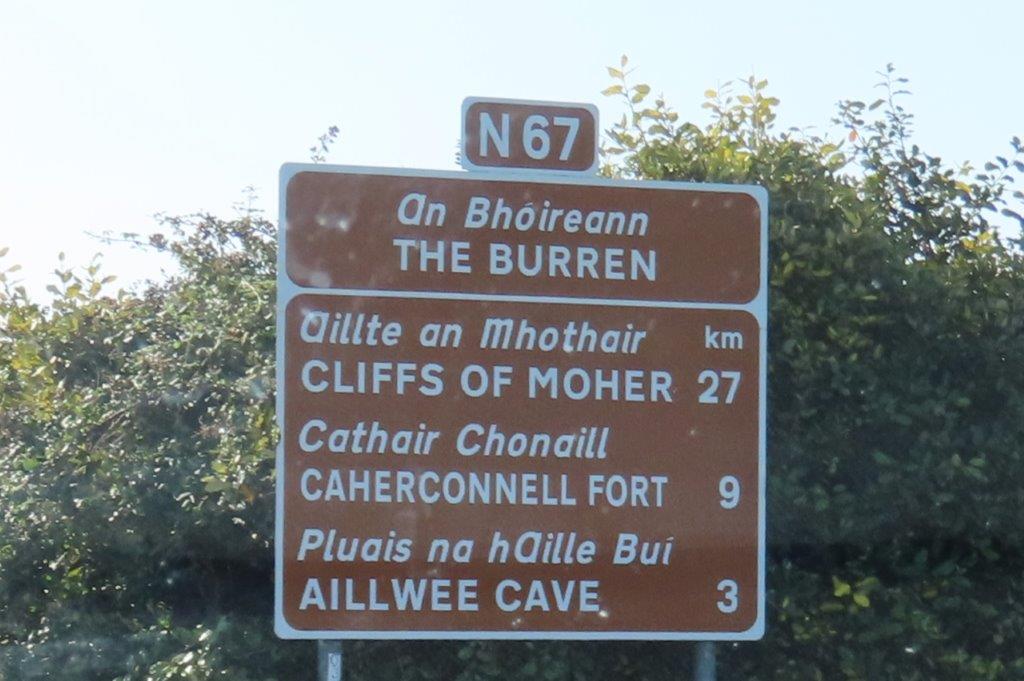
The road signs all feature Gaelic on top with English below:
Time Zone
Ireland is in the Greenwich Mean Time Zone (GMT), which means it’s 5-8 hours ahead of the continental US, depending on where you are. They also observe Daylight Savings Time, switching clocks in the Spring and Fall.
I use the city of Dublin in the World Clock on my iPhone to see the time in Ireland.
Are these Ireland Facts making your planning process easier? Keep going — there’s plenty more to discover!
Date Format
In Ireland, dates are written as DD-MM-YYYY, which is different from the MM-DD-YY format Americans use. For example, February 16, 1978 would be 02-16-78 in the US. In Ireland, that date would be displayed as 16-02-1978
Kari’s Travel Tip: This is particularly important when filling out any official forms or applications to buy tickets. Pay close attention to how you enter your birthdate, passport issue date, and passport expiration date. Ensure the format is the same as shown on the form!
Driving
The Irish drive on the left side of the road and the steering wheel is on the right side of the car – the opposite of what we have in the US.
This takes a little getting used to, but after a few days, it’s pretty easy.
You will enter Roundabouts (also known as traffic circles) veering to the left and then exiting to the left.
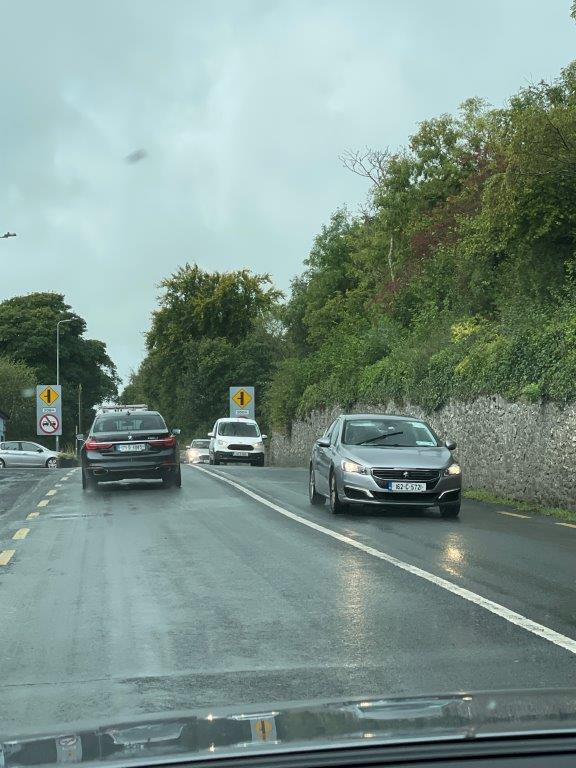
We had a rental car during our time in Ireland and we learned a lot. Many of the roads in Ireland are much narrower than we are used to in the US. And cars are parked all along the side of the road, further narrowing the space to drive and to pass.
Post Coming Soon: Safe Driving in Ireland – Things You Need to Know
If a rental car isn’t for you, don’t worry! There’s an excellent network of trains, buses, ride-shares, flights, and ferries that makes it easy to get around both Ireland and Europe.
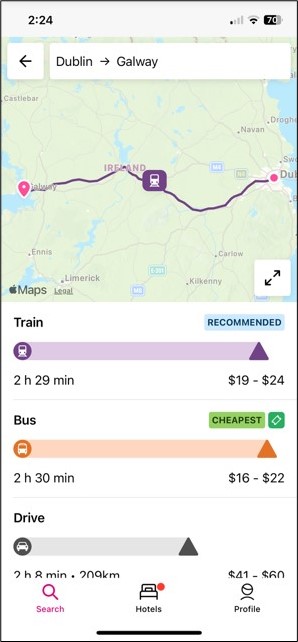
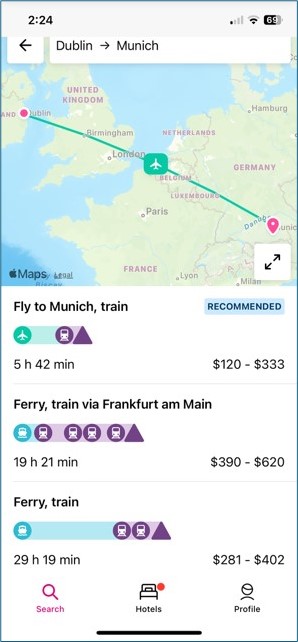
Rome2Rio is an app many travelers love using to plan their transport in Europe, whether within countries or between countries.
It shows you the duration of the journey and provides cost estimates, which is a real time-saver.
International Phone Code
Ireland’s country code is +355 (followed by the local number).
To input the +, just press and hold the zero key for a second in dialing mode. This will automatically add the plus sign. After that, you can enter Ireland’s country code (355) and the local number.
Most people in Europe (and many other parts of the world) use WhatsApp as their main method for calling, texting, and sharing files.
They don’t rely on traditional text messaging, iMessage, or calling like we do in the US.

Kari’s Travel Tip: I recommend downloading and getting comfortable with WhatsApp before you leave. It’s an essential app for staying in touch with your driver, tour guides, accommodation hosts, and new friends you meet.
We use WhatsApp to stay connected with family while traveling. As long as I’m on Wi-Fi or using my Airalo eSim for data, I don’t incur any international roaming costs from my cellular provider.
WhatsApp uses your US phone number, but you can only chat with others who are also on WhatsApp. When sharing your number with new people, don’t forget to include the +1 before your area code.
Airalo eSim

I highly recommend the Airalo eSim for affordable data while traveling internationally.
If you’re heading to Ireland, Airalo offers a country-specific eSim called Fáilte. Or, for trips across the continent, their Eurolink Regional eSim covers 42 European countries.
It’s easy to install, activate, and manage. You can select which apps will use your eSim data. I usually disable apps I won’t need while traveling, like weather or apps for businesses back home.
If you run low on data, you can quickly add more by “topping it off”.
Kari’s Travel Tip: Install the eSim before you leave, but don’t activate it until you’ve arrived and connected to airport Wi-Fi. This ensures you’ll have data ready to use as you leave the airport.
Kari’s Travel Tip: Be sure your phone is unlocked and registered with your carrier for international roaming so that it can work with the eSim.

Plug Adapter
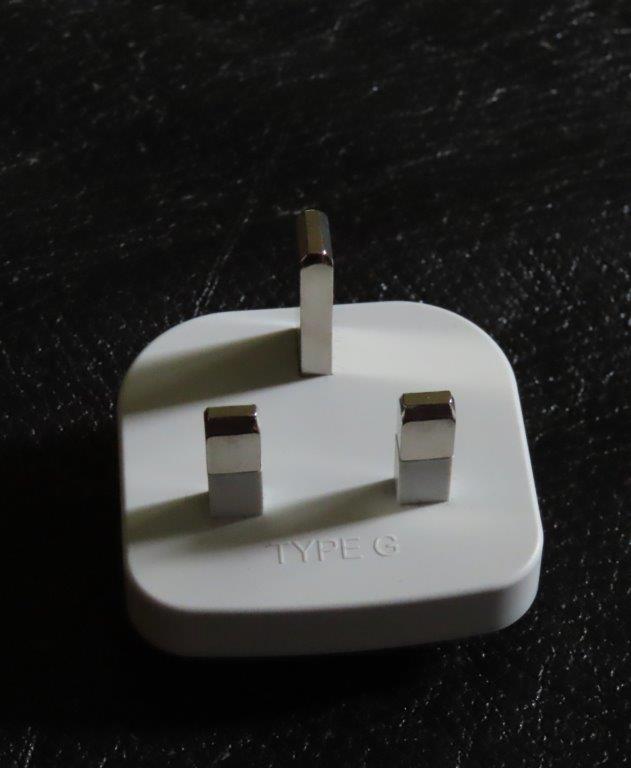
Ireland uses Plug Adapter Type G, which is also used in the United Kingdom and parts of Africa. But it’s different than what is used in most of Europe. A multi-region
adapter kit will typically include
Type G plugs.
I highly recommend the Ceptiks Universal Travel Adapter Kit. It has worked great for me, all around the world.

Kari’s Travel Tip: Phones and computers are usually dual voltage, but if you’re packing a hair dryer or any other device that use a lot of power, make sure it’s compatible with dual voltage to avoid damaging it.
I hope these Ireland Facts are helping your trip planning go smoothly and efficiently!
Can I drink the water?
Yes, the tap water in Ireland is safe for drinking, cooking, bathing and showering. However, some people say they don’t really care for the taste of water in Ireland. But we didn’t have any problems with it.
Visa Requirements
According to the US State Department, US citizens don’t need a visa to visit Ireland.
But your passport must be valid for the duration of your stay and have at least one blank page. You can stay for up to 90 days.

Directly from the US State Department website: “An increased number of U.S. citizens have been refused entry to Ireland or granted a limited stay because they failed to sufficiently demonstrate their travel intent to Irish immigration officials at the port of entry. You may be asked to provide evidence of sufficient funds to support your stay in Ireland regardless of your purpose of travel. For any travel other than tourism, please ensure you obtain the appropriate documentation prior to travel.”
You might also be asked to show a return plane ticket.
Schengen Zone Limits
Note that while the Republic of Ireland is part of the EU (European Union), they are NOT part of the Schengen Zone like many other European countries are. So the Schengen travel limitations do not apply for your Ireland stay.
But if your next stop is a Schengen country, then you will be subject to those passport requirements. The State Department offers plenty of detailed information, but this website makes it much easier to understand.
Safety
For those traveling abroad, I suggest checking out the US State Department’s website for important safety updates and travel tips. They rank all countries by their level of risk: Level 1 (travel with normal precautions), Level 2 (travel with increased caution), Level 3 (reconsider travel) and Level 4 (Do not travel).
Their STEP (Smart Traveler Enrollment Program) lets you register your travel details, including where you’re staying. In the event of an emergency, you’ll get alerts about any potential dangers, protests, or embassy changes. We’ve gotten useful notifications that allowed us to avoid protest areas.
Embassy Assistance for U.S. Citizens
U.S. Embassy Dublin
42 Elgin Rd
Ballsbridge
Dublin 4
Ireland
Telephone +(353) (1) 668-8777
Emergency +(353) (1) 668-8777
Fax +(353) (1) 668-8056
Email ACSDublin@state.gov
Website https://ie.usembassy.gov/
Getting excited for your trip to the Emerald Isle? I hope these Ireland facts give you the boost you need to plan!
Vaccine Requirements
No vaccines are needed for travel to Ireland. I recommend checking with your own physician before traveling internationally
Metric System Conversions
Ireland follows the metric system for things like measuring distance (in meters and kilometers), temperature (Celsius), weight (in grams and kilograms), and volume (liters and milliliters), which is the standard across most of the globe.
Kari’s Travel Tip: I always keep a few conversion charts handy in a note on my iPhone. I’m sharing them here so you can use them too.
Temperature: Celsius to Fahrenheit
- 0 C = 32 F
- 10 C = 50 F
- 15 C = 59 F
- 20 C = 68 F
- 25 C = 77 F
- 27 C = 80 F
- 30 C = 86 F
- 40 C = 104 F
- 45 C = 113 F
- Formula for calculating: C x 1.8 + 32 = F
Weight: Kilograms to Pounds
This is especially useful for checked and carry-on luggage limits on different airlines. Internationally, the limits are often quite a bit smaller than on US Airlines so it’s important to check. And they do tend to weigh the carry-ons sometimes.
- 7 kg = 15.4 pounds
- 10 kg = 22 pounds
- 15 kg = 33 pounds
- 20 kg = 44 pounds
- 25 kg = 55 pounds
- 30 kg = 66 pounds
- 32 kg = 70 pounds
- 35 kg = 77 pounds
- Formula for calculating: kg x 2.2 = Pounds

Area: Square Meters to Square Feet
This is helpful when you are looking for accommodations to know how big the space is. A standard hotel room in the US is about 300-350 square feet. Rooms in Europe are often quite a bit smaller.
- 20 square meters = 215 square feet
- 25 square meters = 269 square feet
- 30 square meters = 323 square feet
- 40 square meters = 430 square feet
- 70 square meters = 753 square feet
Distance: Kilometers to Miles
At first, we were constantly trying to convert all the kilometers over to miles. But after a while, we just adapted to thinking in terms of kilometers.
- Precise calculation: km x 0.621371 = miles
- Rough calculation: km x .6 = miles or km x 2/3 = miles
Conclusion: Ireland Facts
I hope these Ireland Facts and Travel Tips have helped spark some excitement and provided useful info for your trip planning!
If there are any more Ireland facts Categories that should be included, I’d love to hear from you with your suggestions!
More Information About Ireland
Tons more posts about Ireland are coming as soon as I find time to sit down and write them! To get email notifications when new content is added to Achieve Your Bucket List, please fill out the form above.
- Coming Soon: Things to do in Kerry County
- Coming Soon: Day Trips out of Kerry County
- Coming Soon: Where to stay in Kerry County
- Coming Soon: Things to do in Galway County
- Coming Soon: Day Trips out of Galway County
- Coming Soon: Where to stay in Galway County
- Coming Soon: Safe Driving in Ireland – Things You Need to Know